 Sudden Valley
 Building Decks That Hold Up in Yew Street's Climate
A deck in Yew Street doesn't fail the way a deck fails in a dry climate. It doesn't crack from sun exposure first — it rots from underneath, corrodes at the fasteners, and grows a slick coat of moss before the wood itself ever gives out. Whatcom County sits close enough to the water that salt-tinged air mixes with the near-constant marine moisture rolling off the Sound, and that combination is hard on any structure that sits outdoors year-round, exposed on all sides, with joints and connectors that trap water if they're built wrong. A deck built for a drier region — even a well-built one — will show problems here within a few seasons that it wouldn't show anywhere else.
We build and repair decks in this specific pocket of Whatcom County, and the difference between a deck that lasts fifteen-plus years and one that needs major rework in five almost always comes down to decisions made before the first board goes down: material choice, fastener selection, drainage planning, and how the ledger board is flashed against the house. This page covers what a Yew Street deck actually needs, what correct construction looks like, and how we handle the job from first visit to final walkthrough.
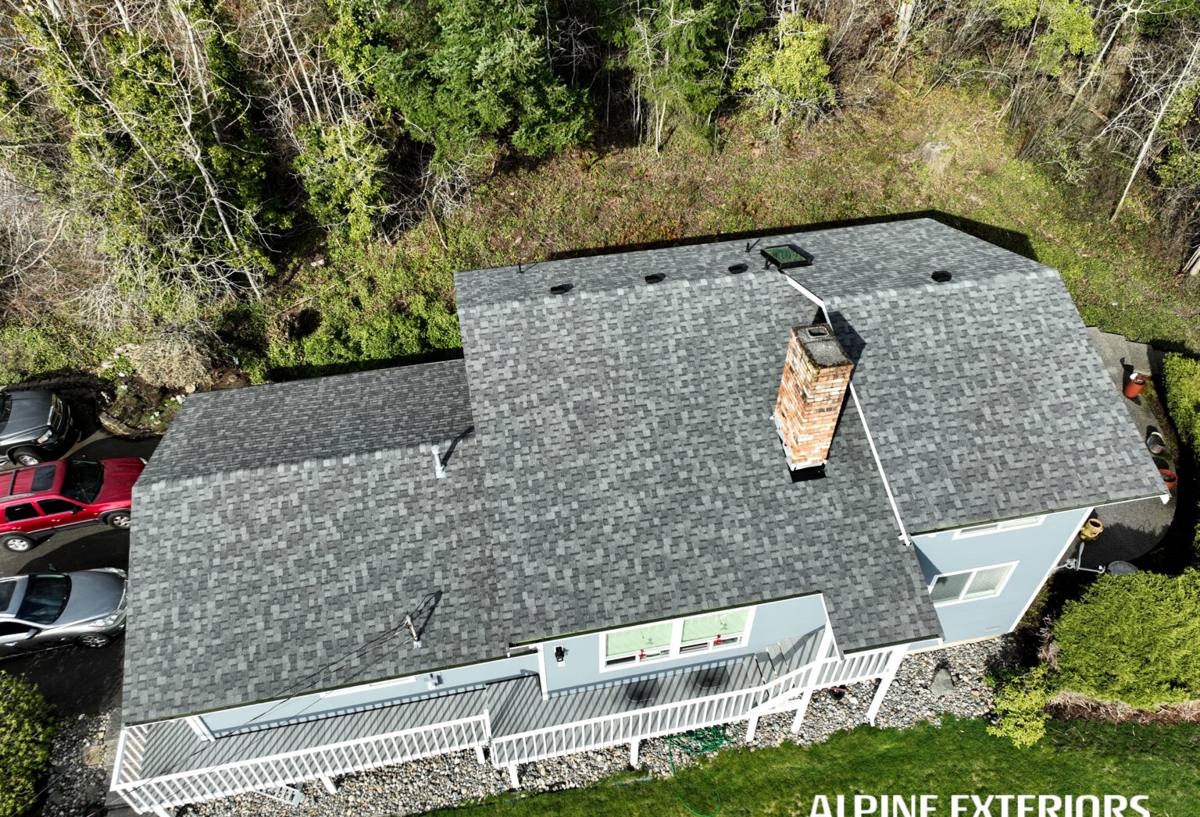
What Sudden Valley's Weather Does to a Deck
Moisture That Doesn't Let Up
Driving rain here isn't occasional — it's a season. Water gets pushed sideways under railings, into ledger connections, and between deck boards that are spaced too tight. Once moisture gets into a joint and can't dry out between storms, rot starts at the connection points long before the visible surface of the wood looks bad. That's why the framing and hidden hardware matter more than the decking itself in a climate like this.
A Long Moss Season
Moss doesn't need much — shade, moisture, and time, and Yew Street's tree cover and damp stretches supply plenty of both. Moss on a deck surface isn't just cosmetic. It holds water against the wood or composite surface, it's slippery when wet, and if it's allowed to establish in board gaps or on north-facing sections that don't get sun, it accelerates surface wear and can void some manufacturers' finish warranties.
Corrosion at the Metal
Salt-tinged coastal air moving through Whatcom County speeds up corrosion on fasteners, joist hangers, and post bases that aren't rated for it. A deck can look fine on the surface while the hidden hardware holding it together is rusting out underneath — which is exactly the kind of failure that doesn't show itself until something gives way.
Choosing the Right Decking Material for This Climate
There's no single "best" decking material — there's a best material for this climate and this budget. Here's how the common options actually perform under Whatcom County's rain-and-moss conditions, not just in a showroom.
| Material | How It Handles This Climate | Maintenance Burden | Typical Lifespan Here |
|---|---|---|---|
| Pressure-treated wood | Affordable, but needs consistent sealing to resist moisture and moss staining | High — annual cleaning, periodic sealing | 10–15 years with upkeep |
| Cedar | Naturally moisture- and insect-resistant, ages to a gray patina, still needs care in shaded/damp spots | Moderate to high | 15–20 years with upkeep |
| Composite decking | Resists moisture absorption well; moss can still grow on the surface film and needs washing | Low — periodic washing, no sealing | 20–25+ years, per manufacturer warranty |
| PVC/capped polymer | Best moisture resistance of the group; performs well in constant-damp, shaded areas | Low | 25+ years, per manufacturer warranty |
We don't push one material on every job. A sunny, open deck can do fine in cedar with regular maintenance. A shaded deck tucked under trees — common on wooded Yew Street lots — is a much better candidate for composite or PVC, simply because it will spend more of the year damp and won't get the sun exposure needed to dry out between rains. We'll walk the site with you and tell you honestly which category fits your specific spot, not just what's easiest to sell.
Why We Don't Install Certain Products the Way They're Sometimes Sold
Some cheaper composite blends and uncapped composite boards are marketed as low-maintenance, but in a consistently wet climate they can absorb moisture at the core over time, which shows up as swelling, discoloration, or mold at the board edges years later. That's not a defect in every product with that description — it's a mismatch between the product's design assumptions and this specific climate. Our standard is to spec capped composite or PVC in shaded, damp-prone areas and to be upfront when a cheaper option is likely to disappoint here, even if it would perform fine in a drier region.
What a Correctly Built Deck Requires Here
The decking surface is the part everyone sees, but the parts that determine whether a deck lasts are underneath it. In this climate, we treat the following as non-negotiable:
- Ledger board flashing: where the deck attaches to the house has to be properly flashed so water sheds away from the wall assembly instead of tracking behind the siding — this is the single most common source of hidden rot on attached decks.
- Corrosion-rated fasteners and hardware: hot-dip galvanized or stainless connectors and screws, matched to the decking material, so metal doesn't corrode faster than the wood or composite around it.
- Proper board spacing: gaps sized to let water drain and air circulate, not tight-butted for looks, which traps moisture and accelerates moss growth.
- Footings set below frost depth and on solid, well-drained soil: ground conditions vary across Sudden Valley's terrain, and footings that aren't set correctly move over time as the ground saturates and drains through the wet season.
- Post bases that keep wood off standing water: posts set directly in or against damp soil or concrete without a proper base are one of the fastest ways to rot a structural post from the bottom up.
- Ventilation underneath the deck: low-clearance decks without airflow underneath stay damp longer after every rain, which shortens the life of the framing even if the surface material is rated for wet climates.
Our Deck Building Process in Sudden Valley
1. On-Site Visit and Honest Assessment
We look at sun exposure, tree cover, drainage, and how the deck will tie into the house before we recommend a material. A shaded, low-airflow spot gets a different recommendation than an open, south-facing one, even on the same street.
2. Design and Material Selection
We walk you through the real trade-offs — cost, maintenance, and expected lifespan in this specific climate — so you're choosing with full information, not just picking off a brochure.
3. Permitting
Deck permits are handled through Whatcom County, and requirements depend on the deck's height, size, and attachment to the structure. We handle this step so it's done correctly the first time rather than becoming a problem at resale.
4. Framing and Structural Work
This is where the climate-specific decisions actually happen — footings, flashing, hardware, and spacing, done to hold up to driving rain and years of freeze-thaw and saturation cycles, not just to pass a quick look.
5. Decking, Railing, and Finish
Surface installation, railing to code, and any finishing (sealing, staining) if the material calls for it, done before the wet season sets in whenever the schedule allows.
6. Walkthrough
We go over how to maintain the specific material you chose — what it needs and what it doesn't — so you're not guessing.
Permits and Local Considerations
Most decks above a certain height or attached to the house require a permit through Whatcom County, and some Sudden Valley properties are also subject to an HOA or architectural review process on top of that. Requirements shift depending on deck size, height above grade, and whether it's attached to an existing structure, so we confirm the specifics for your property rather than assuming. Skipping this step doesn't just risk a fine — it can complicate a home sale down the road if an unpermitted structure shows up during inspection.
Maintenance Homeowners Should Expect
Every deck in this climate needs some maintenance — the differences are in how much and how often. A realistic maintenance checklist for a Yew Street deck:
- Sweep and clear debris regularly, especially under trees, so organic matter doesn't sit and hold moisture against the surface
- Wash the surface at least once a year to remove moss and algae before it establishes, more often on shaded sections
- Check railings and stair connections annually for movement or loose fasteners
- Inspect the ledger board area where the deck meets the house for signs of water staining or soft wood
- Reseal or restain wood decking on the manufacturer's or installer's recommended cycle — don't wait until it looks bad
- Keep gutters and downspouts near the deck clear so runoff isn't dumping directly onto or under the structure
- Check underneath the deck once a year for standing water, blocked airflow, or signs of rot at post bases
Why a Crew That Already Works Yew Street Matters
Deck building isn't just carpentry — it's carpentry that has to survive a specific climate, and that's a different skill than building the same deck in a dry inland region. A crew that already works Sudden Valley and Yew Street knows which lots stay shaded and damp longer, how the local soil drains, what the county permitting process actually requires, and which materials hold up versus which ones look fine for a couple of years and then start showing problems. That local pattern recognition is the difference between a deck that's built to a generic spec sheet and one that's built for the ground it's actually sitting on.
We're not guessing at what this climate does to a deck — we see the results of decks built wrong for this area, and we build to avoid those same failure points from the start.
If you're planning a new deck or need an honest look at an existing one in Yew Street or elsewhere in Sudden Valley, we're glad to come take a look. Fill out the form below for a free, no-pressure estimate.