 Sudden Valley
 Why Composite Decking Makes Sense in Deming
Deming sits in a part of Whatcom County where a deck spends a lot of the year wet. Rain moves through in long, soaking stretches rather than quick storms, and once the sun drops behind the trees or the ridgeline, a deck surface can stay damp for days. That combination — driving rain, shade, and a moss season that can run from fall into spring — is hard on any horizontal wood surface. Boards cup, fasteners back out, and the annual sanding-and-staining routine starts to feel like it never really ends.
Composite decking was built for exactly this kind of exposure. It doesn't absorb water the way solid wood does, it won't rot from the inside out, and it doesn't need to be refinished every year or two just to keep it from graying and splitting. That doesn't mean composite is maintenance-free — nothing that sits outside in Whatcom County weather truly is — but it removes the failure points that cause most of the deck problems we see across our service area, Deming included.
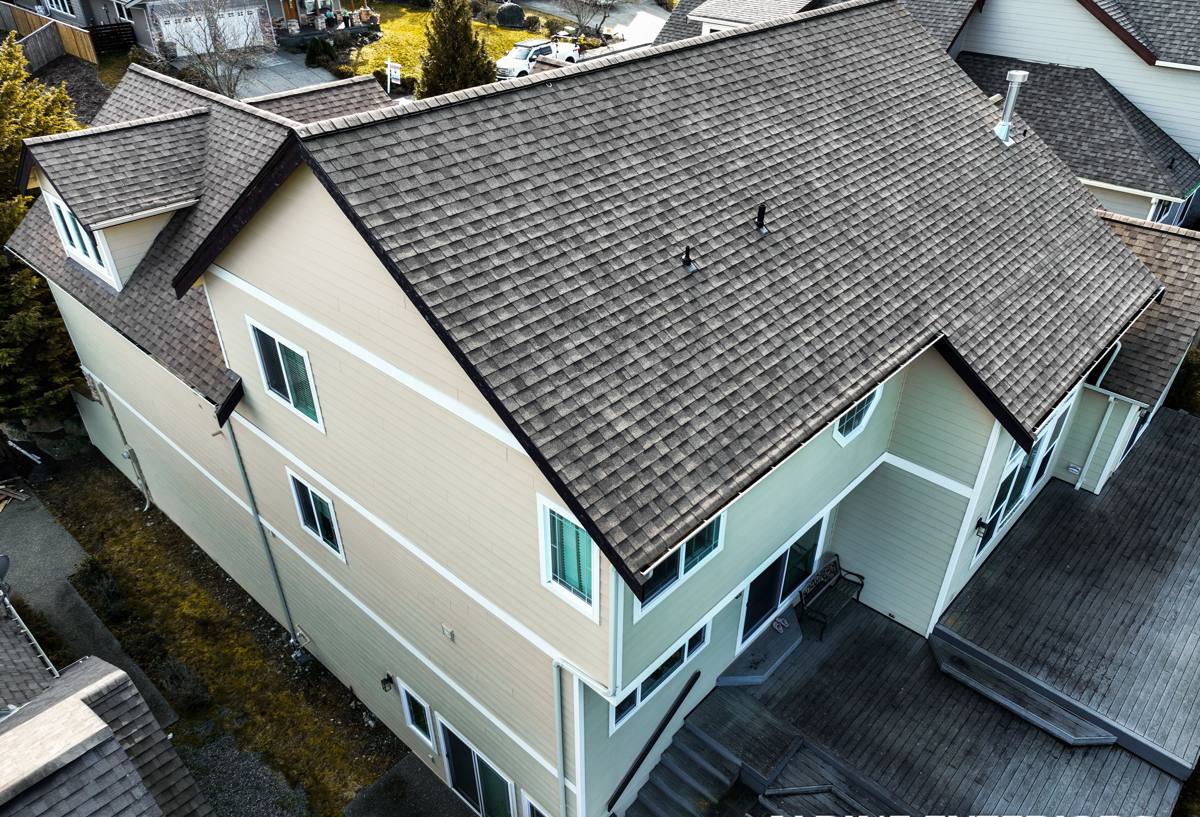
What Deming's Setting Adds to the Equation
River-valley moisture and tree cover
A lot of Deming properties sit close to the Nooksack River corridor with significant tree canopy overhead. That shade is nice in July, but it also means less direct sun to dry a deck out after rain, more organic debris (needles, leaves, seed pods) collecting between boards, and a longer window each year where moss and algae have what they need to take hold. Composite doesn't feed moss the way bare wood grain does, but any decking material will grow moss if debris is left to sit in a damp, shaded spot — the board profile and gap spacing we choose matters as much as the material itself.
Cooler nights and freeze-thaw swings
Deming runs a bit cooler than the lowland parts of our service area, being closer to the Mount Baker foothills. That means more days each winter where a wet deck surface freezes overnight and thaws by afternoon. Materials that absorb moisture and then freeze are the ones that crack, split, and delaminate over a few seasons. A quality composite board is designed to shed that moisture before it becomes a problem.
Less salt air, but the rest still applies
Compared to homes right on Lake Whatcom or closer to the coast, Deming gets less of the airborne salt that accelerates corrosion on fasteners and hardware. That's a genuine advantage inland. But the driving rain and the long moss season that define this region's climate don't stop at the water's edge — if anything, the tree cover and river-bottom humidity around Deming can hold moisture against a deck longer than a more open, breezy lot would.
What a Correct Composite Deck Build Involves
Composite boards are only as good as what's underneath them. Most of the decking failures we get called out to inspect in this region aren't the decking itself — they're a substructure or drainage problem that the composite surface eventually exposed.
Substructure comes first
Joists need to be sized and spaced correctly for the specific composite product going on top — composite generally wants tighter joist spacing than solid wood, especially on diagonal or picture-frame layouts. In a climate this wet, we also want to talk about what the joists themselves are made of: treated lumber needs to actually be rated for ground contact where it's low to grade, and any framing that will stay damp benefits from a coated or composite joist protection tape rather than being left bare.
Fasteners and board orientation
Most composite systems today use hidden fastener clips in a grooved-edge board rather than face screws. Done right, that gives a clean surface with no screw heads to collect water or rust streaks. Done wrong — clips set at the wrong spacing, or mixed with the wrong fastener metal — boards can loosen or "wave" within a couple of seasons. Board orientation also matters for drainage: running boards to shed water toward the low edge of the deck, rather than pooling against the house, keeps standing water off the surface longer between rains.
Drainage and ground clearance
Composite doesn't rot, but the framing underneath still can if airflow is blocked. We keep proper clearance between the underside of the deck and the ground or grade, and we make sure water has somewhere to go rather than sitting under the deck all winter. On sites with less slope, that sometimes means adding a small amount of grading or a simple drainage path before the first joist ever goes in.
Flashing where the deck meets the house
The single most common point of hidden water damage on any deck is the ledger board — where the deck attaches to the house. Proper flashing here, installed correctly and lapped with the house's own weather barrier, is what keeps years of rain from working its way behind the siding at that connection. This is the detail that's easiest to shortcut and the most expensive to fix later once rot has set into the rim joist or wall framing.
Composite Decking Options: What We Install and Why
Not all composite decking is built the same way, and the differences matter more in a climate like this one than they would somewhere dry.
| Type | How it handles moisture | Trade-offs |
|---|---|---|
| Capped composite | A protective polymer shell wraps the wood-plastic core, blocking most surface water absorption | Higher upfront cost; the standard we recommend for shaded, wet lots like much of Deming |
| Uncapped composite | The core itself is exposed to moisture and can absorb water over time | Lower cost, but more prone to surface fading, mold staining, and swelling in a wet climate |
| Solid PVC decking | No wood content at all, so it doesn't absorb moisture | Different look and feel underfoot than wood-composite blends; higher cost tier |
| Pressure-treated wood | Absorbs and releases moisture constantly; needs sealing to slow it down | Lowest material cost, but the most upkeep in this climate — sanding, staining, and eventual board replacement |
For most Deming projects, we steer homeowners toward a capped composite board. The upfront cost is higher than uncapped composite or wood, but the maintenance burden and the moisture-related warranty claims we see are almost entirely on the uncapped and wood side of that table. We're happy to install what a homeowner chooses, but our professional recommendation for this specific climate is a capped product.
Our Process, From Estimate to Finished Deck
- Site visit: we look at grade, drainage, existing structure (if any), tree cover, and how the deck will tie into the house.
- Substructure assessment: for a rebuild, we check the existing ledger, posts, and footings before assuming they're reusable — in this climate, hidden rot is common enough that we don't skip this step.
- Material selection: we walk through board tiers, color options, and railing systems based on budget and how the deck will be used.
- Permitting: Whatcom County generally requires a permit for new deck construction and many rebuilds, especially where structural framing or footings are involved; we handle that process as part of the job.
- Build: framing and flashing first, then decking, then railings and any stairs or lighting.
- Final walkthrough: we go over basic care so the deck holds up through its first wet season and beyond.
Cost Factors to Expect
Composite decking costs vary a lot based on structure, size, and finish level, so we don't quote a flat per-square-foot number without seeing the site. The factors that move the price the most are:
| Factor | Why it matters |
|---|---|
| Tear-off of an existing deck | Removing and disposing of old wood decking, plus assessing what's underneath, adds labor before the new build starts |
| Substructure condition | Rotted joists, posts, or footings found during a rebuild need to be replaced, not just covered over |
| Height and access | A ground-level deck is simpler than one requiring stairs, guardrails, or work over a slope |
| Board tier | Uncapped composite, capped composite, and PVC decking sit at different price points |
| Railing system | Composite or aluminum railing costs more than a basic wood rail but matches the low-maintenance goal of the decking |
| Permit and engineering | Larger or elevated decks may need engineered drawings in addition to the standard permit |
As a broad range, many composite deck projects in this region land somewhere in the mid-to-high tens of thousands for a full-size deck once tear-off, structure, and railing are included — but the only honest number is one built from an actual look at your site.
Maintenance in a Moss-Prone Climate
Composite cuts out sanding and staining, but a few habits go a long way toward keeping a deck looking and draining well through Whatcom County's wet months:
- Sweep leaves, needles, and seed debris out of board gaps regularly, especially under tree cover
- Rinse the surface a few times a year to keep pollen and organic film from building into a moss-friendly layer
- Keep gutters and downspouts near the deck clear so runoff isn't dumping directly onto the surface
- Check that furniture or planters aren't sitting in the same spot long enough to trap moisture underneath
- Have the substructure looked at every few years, even though the decking itself doesn't rot — framing still can
Why Hiring a Crew That Already Works Deming Matters
A lot of what makes a composite deck last in this area isn't visible once the project is done — it's the flashing behind the ledger, the joist spacing under the boards, and the drainage path nobody sees after the first year. Crews that don't regularly work in this climate can build a technically fine deck for a drier region and still miss the details that matter here: extra attention to ledger flashing given the rain load, board spacing sized for a longer wet season, and framing choices that account for the shade and moisture common on wooded, river-adjacent lots like many in Deming. We also already know the local permitting process for Whatcom County, which keeps the paperwork side from slowing the project down.
If you're weighing a new deck or a rebuild in Deming, we're glad to come take a look and talk through what your specific lot and layout call for. There's no cost and no pressure for a walkthrough and estimate — just an honest read on what the job actually needs.