 Sudden Valley
 Deck Repair in Barkley: Built for Whatcom County's Wet Side
Decks in Barkley take a different kind of beating than decks almost anywhere else in the country. You're not just dealing with sun and foot traffic — you're dealing with salt-laden air off the water, driving rain that comes in sideways during winter storms, and a moss season that can stretch from October well into May. Add in the shade from mature Western Washington trees and the ground moisture that never fully lets go, and you have a set of conditions that will find every weak point in a deck's construction. We repair decks in Barkley regularly, and the failure patterns we see here are consistent enough that we can usually tell what's wrong before we even pull the first board.
This page covers what deck repair actually means for a Barkley home — not a generic list of deck problems, but the specific issues our climate causes, what a proper repair involves, and how to tell the difference between a deck that needs a fix and one that needs to be rebuilt.
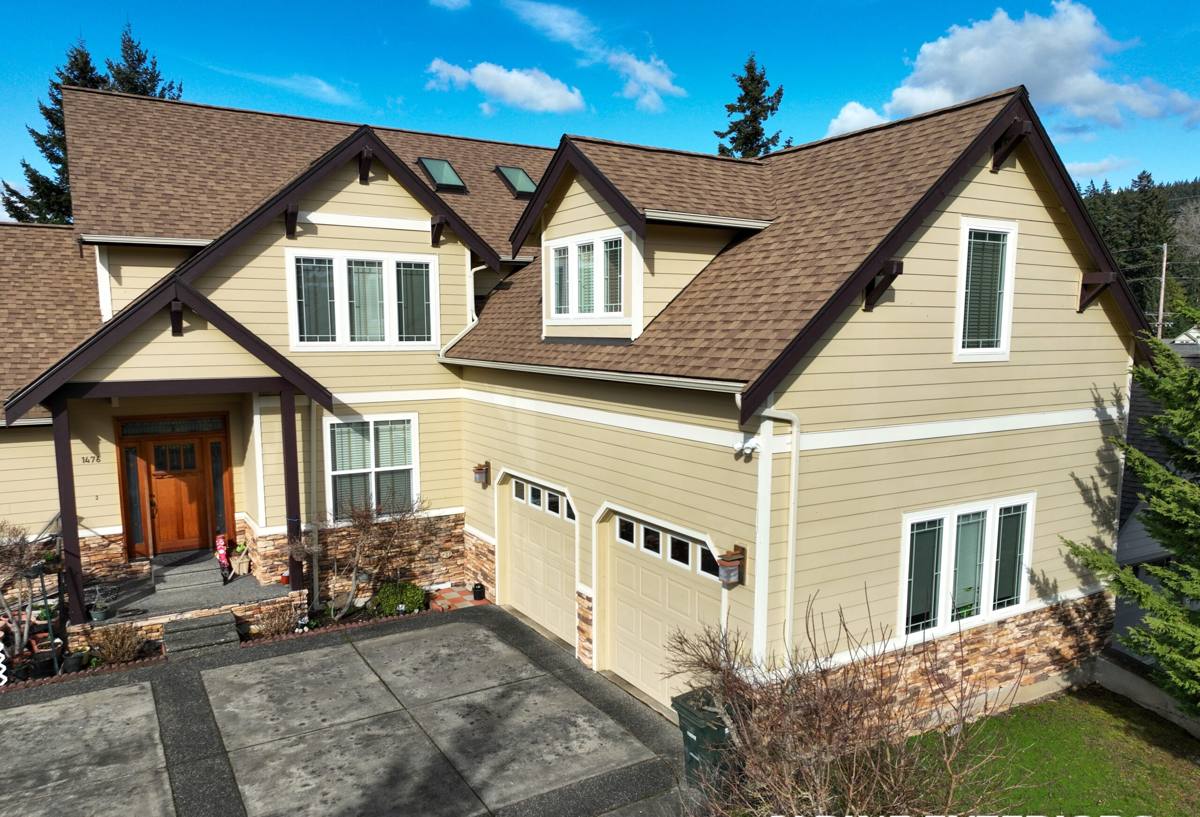
Why Barkley Decks Fail Faster Than the Brochure Promises
Moisture That Never Really Dries Out
Whatcom County doesn't get brutal winters, but it gets long, gray, damp stretches where wood never has a real chance to dry between rain events. Decking boards, ledger boards, and especially the framing underneath stay damp for days or weeks at a time. Untreated or poorly sealed wood starts to soften and rot from the inside before it ever looks bad on the surface.
Salt Air and Metal Fasteners
Proximity to the water means airborne salt settles on everything, including your deck's hardware. Nails, screws, joist hangers, and bolts that aren't rated for coastal exposure corrode faster here than they would inland. Once a fastener rusts and loses grip, the board or bracket it's holding starts to move — and movement accelerates every other kind of damage.
Moss, Algae, and Trapped Debris
A long moss season means organic growth gets a real foothold on horizontal surfaces, especially in shaded corners and along the gaps between boards. Moss and algae hold moisture directly against the wood surface, and needle or leaf debris does the same in the gaps. This is one of the most common reasons a deck that "looks fine" is actually rotting quietly underneath a green film.
UV and Temperature Swings
Even with our cloud cover, summer sun still dries and cracks exposed wood fibers and finishes, and the freeze-thaw cycles in winter open up small cracks that let water get deeper into the wood. It's a slower process here than in harsher climates, but it's constant.
The Problems We Actually Find on Barkley Decks
- Soft or spongy decking boards — usually the first visible sign of rot, often starting near board ends or where debris collects.
- Rusted or failing fasteners — nails backing out, screws snapped off, or joist hangers corroded and no longer holding their rated load.
- Ledger board separation — where the deck attaches to the house; this is a structural safety issue, not cosmetic, and it's one of the most serious problems we find.
- Loose or wobbly railings — often caused by post rot at the base or corroded connection hardware.
- Moss and algae staining — a maintenance issue that, left alone, becomes a moisture problem.
- Stair stringer cracking or sagging — stairs take concentrated loads and see a lot of foot traffic in wet conditions, so they wear faster than the deck surface.
- Gaps opening between boards — normal wood movement, but excessive gapping can mean the boards themselves are drying out and cupping.
What a Correct Deck Repair Involves
1. A Real Structural Inspection, Not Just a Surface Look
We check the ledger board connection, the posts and footings, the joists underneath, and the railing posts — not just the decking you walk on. A deck can look presentable on top while the framing underneath has real problems. This is especially true in Barkley, where shaded, damp crawl spaces under decks are common.
2. Isolating Rot, Not Guessing at It
We probe suspect boards and framing members with an awl or screwdriver to find the actual boundary of rot damage, rather than assuming it stops where it looks discolored. Rot spreads along the grain, often further than the visible staining suggests.
3. Matching or Upgrading Fasteners for Coastal Exposure
Given the salt air here, we use fasteners and hardware rated for coastal or treated-lumber exposure — stainless steel or heavy hot-dip galvanized, depending on the application — rather than standard-grade hardware that will corrode again in a few seasons.
4. Addressing the Cause, Not Just the Symptom
If a deck is rotting because water pools against the house, drains poorly, or gets no airflow underneath, we address that condition as part of the repair. Replacing a board without fixing the drainage or ventilation problem just buys you a few more years before the same spot fails again.
Repair vs. Rebuild: How We Make That Call
| Condition | Usually Repairable | Usually Needs Rebuild |
|---|---|---|
| Surface staining, mild moss | Yes — clean, treat, reseal | |
| A few soft boards, framing sound | Yes — spot replacement | |
| Loose railing, hardware corroded | Yes — hardware upgrade | |
| Ledger board separated from house | Often — depends on extent | |
| Widespread joist rot | Yes — framing compromised | |
| Multiple footing/post failures | Yes — structural integrity at risk |
The honest answer is that most of the decks we're called out to see in Barkley fall into the repairable category if they're caught early — which is exactly why waiting on a "soft spot" or a wobbly rail rarely pays off.
Our Process for Barkley Deck Repairs
- On-site assessment — we walk the full deck, check the framing where accessible, and test railings, stairs, and connection points.
- Written scope and estimate — you get a clear breakdown of what's being replaced, what's being reinforced, and why, before any work starts.
- Isolate and remove damaged material — only what's actually compromised, verified by probing, not guesswork.
- Repair with climate-appropriate materials — coastal-rated fasteners, properly treated or matched lumber, and attention to drainage and airflow.
- Finish and protect — sealing or finishing exposed wood so it's not starting the moisture cycle over again on day one.
- Final walkthrough — we show you what was done and flag anything worth watching going forward.
Cost Factors for Deck Repair in This Area
| Factor | Why It Matters Here |
|---|---|
| Extent of rot | Surface repair is far cheaper than framing replacement; catching it early keeps costs down |
| Ledger board condition | This connection is structural — repairs here take more time and precision |
| Access and elevation | Decks built up on slopes or over crawl spaces take longer to access and inspect |
| Hardware upgrade needs | Coastal-rated fasteners cost more than standard hardware but last far longer here |
| Board matching | Matching existing decking material affects both cost and appearance |
We don't quote deck repairs sight unseen, because the difference between "replace six boards" and "rebuild the frame" isn't visible from a photo. A short on-site look gives both of us an honest number.
Maintenance That Actually Extends a Barkley Deck's Life
- Sweep debris out of board gaps regularly, especially in fall when leaves and needles are heaviest.
- Address moss and algae growth as soon as it appears rather than letting it establish through a wet winter.
- Check railing posts and stair stringers for movement at least once a year.
- Keep gutters and downspouts near the deck clear so runoff isn't draining directly onto or under it.
- Reseal or refinish exposed wood on the schedule your finish product recommends — in this climate, stretching that interval usually costs more later.
Why Local Experience Matters for This Job
Deck repair looks straightforward from a distance, but the failure patterns specific to Sudden Valley and the wider Whatcom County area — salt exposure, prolonged dampness, heavy moss growth, shaded framing that never fully dries — aren't the same problems a crew from a drier climate is used to diagnosing. A contractor who works Barkley regularly knows where the moisture tends to collect on this style of home, which fastener grades actually hold up near the water, and how to tell early-stage rot from a board that just needs cleaning. That local pattern recognition is what keeps a repair from becoming a repeat visit two winters later.
If you've got a soft spot, a wobbly railing, or a deck that just needs an honest once-over, we're glad to take a look. Fill out the form below for a free, no-pressure estimate.