 Sudden Valley
 Metal Roofing in Bellingham: Built for What This Coast Actually Does to a Roof
Bellingham sits close enough to salt water, and gets enough sustained rain and shade, that roofing here has to answer to conditions a lot of manufacturers' spec sheets never mention. We're a Sudden Valley-based crew that works Whatcom County roofs year-round, and metal roofing has become one of our most requested upgrades for exactly that reason: it handles moisture better than most alternatives, sheds moss instead of feeding it, and holds up to the wind-driven rain that comes off Bellingham Bay and the Sound. This page covers what a metal roof needs to do here, what a correct installation actually involves, and how we run the job from first look to final walkaround.
Why Bellingham's Climate Changes the Metal Roofing Conversation
A metal roof performs differently depending on where it sits, and Bellingham's combination of salt air, near-constant winter rain, and heavy tree cover creates a specific set of demands.
Salt Air and Corrosion
Proximity to the water means airborne salt settles on exterior surfaces, including roofing. Not every metal roofing product handles that the same way. Fastener quality, panel coating, and flashing metal all need to be matched to a coastal environment, not just a "standard" spec. We pay attention to galvanic compatibility — mixing the wrong metals at fasteners or flashings is one of the most common causes of premature corrosion we see on older installs in this area.
Driving Rain and Water Management
Whatcom County doesn't just get a lot of rain — it gets wind-driven rain that hits roofs at an angle, which pushes water into laps, seams, and penetrations that a dry-climate installation might get away with cutting corners on. Underlayment choice, seam design, and flashing detail at every roof-to-wall and roof-to-chimney transition matter more here than in places with lighter, more vertical rainfall.
Moss and Shade
Bellingham's tree cover keeps a lot of roofs shaded for long stretches of the year, and shade plus moisture is exactly what moss needs. Metal roofing doesn't give moss the foothold that composite shingles do — there's no granulated surface for spores to grip — but valleys, low-slope sections, and areas that stay damp under overhanging branches still need to be designed and maintained with that in mind.
What a Correct Metal Roof Installation Involves
Metal roofing rewards good installation and punishes bad installation more visibly than most other roofing types — a sloppy seam or a missed flashing detail shows up as a leak, not just a cosmetic flaw. Here's what we consider non-negotiable on every job.
Deck Inspection and Prep
Before any panel goes down, the roof deck gets inspected for rot, soft spots, and proper ventilation. Installing new metal roofing over a compromised deck just hides a problem that will eventually cause a failure somewhere else, and it can void the manufacturer's warranty outright.
Underlayment
Given how much rain this region sees, we treat underlayment as a real layer of protection, not a formality. Synthetic underlayment rated for the panel system, with ice-and-water shield or equivalent at eaves, valleys, and penetrations, gives the roof a backup barrier if wind ever drives water past the panel seams.
Panel Fastening and Seams
Whether it's standing seam or exposed-fastener panel, the fastening pattern and seam engagement have to match the manufacturer's spec exactly. Standing seam systems rely on properly formed, weathertight seams; exposed-fastener systems rely on correctly torqued screws with intact washers. Both fail the same way if rushed — water finds the gap.
Flashing at Every Transition
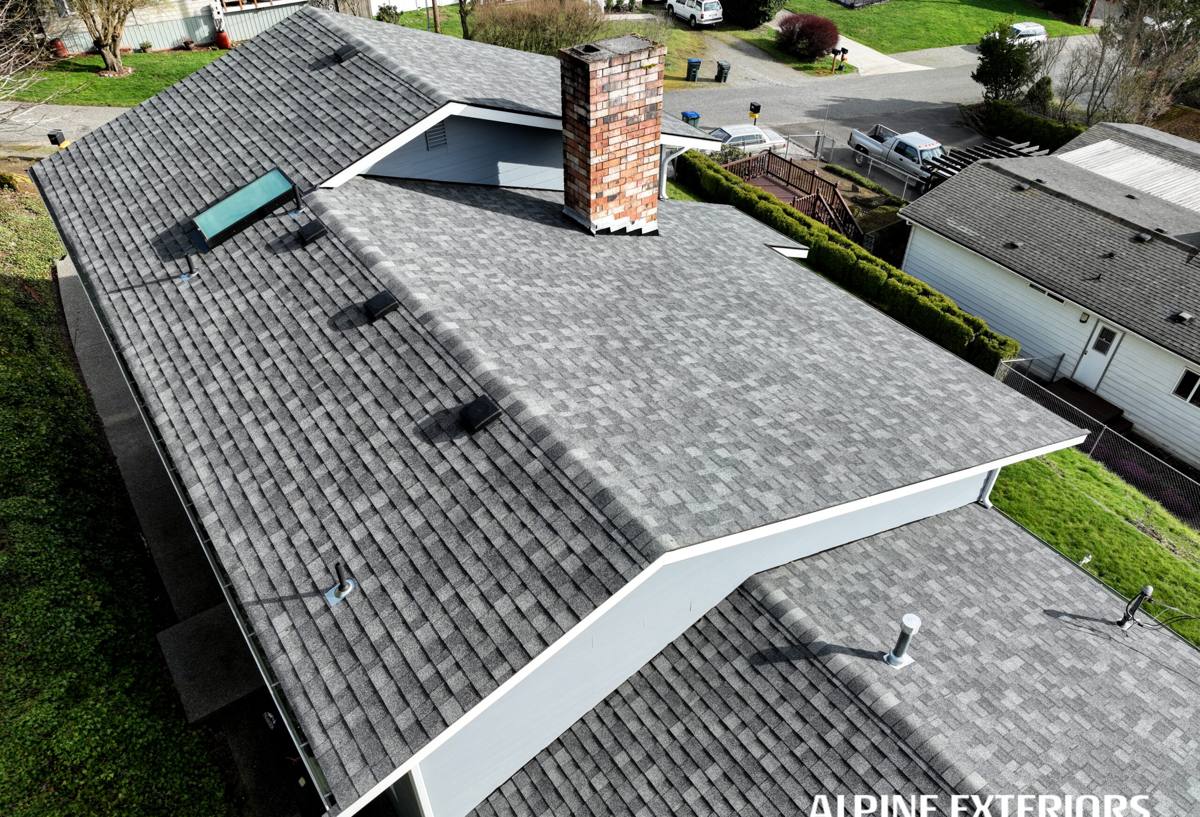
Chimneys, skylights, vent stacks, valleys, and roof-to-wall intersections are where the vast majority of roof leaks originate, on any roofing type. On metal roofs specifically, flashing needs to accommodate thermal expansion and contraction, which is more pronounced in metal than in asphalt. We custom-fit flashing rather than relying on generic trim pieces wherever the roof geometry calls for it.
Ventilation
A well-ventilated attic keeps condensation from forming on the underside of the roof deck, which matters in a climate as damp as ours. Metal roofing doesn't cause moisture problems, but a roof that's already poorly ventilated will show condensation issues faster once it's sealed up tight under new metal.
Metal Roofing Options: What Fits Bellingham Homes
| Panel Type | Typical Use | Coastal/Rain Performance | Maintenance |
|---|---|---|---|
| Standing seam | Full roof replacement, higher-end look | Concealed fasteners, strong performance in driving rain and salt air | Low — no exposed fasteners to fail over time |
| Exposed-fastener panel | Budget-conscious full replacement, some outbuildings | Good performance if fasteners and washers are maintained | Moderate — fastener washers degrade faster near salt air and need periodic checks |
| Metal shingle/shake profile | Homeowners wanting a traditional look with metal performance | Good, provided lap and fastening detail is correct | Low to moderate depending on profile |
We'll talk through which profile makes sense for your roof's slope, your home's style, and your budget rather than pushing one system across every job — the right choice depends on the specific roof.
Cost Factors for a Bellingham Metal Roof
Metal roofing costs more upfront than asphalt shingles, and homeowners deserve a straight explanation of why, and what actually moves the number.
- Panel type — standing seam runs higher than exposed-fastener panel due to material and labor complexity.
- Roof complexity — number of valleys, dormers, chimneys, and penetrations increases flashing labor significantly.
- Deck condition — any rot or sheathing repair found during tear-off adds cost, which is why we inspect before quoting a final number.
- Roof pitch and access — steep or hard-to-access roofs take longer and require more safety setup.
- Tear-off vs. overlay — we generally don't recommend installing new metal over old roofing; a clean tear-off lets us actually inspect and fix the deck.
We give firm, itemized quotes after an on-site inspection — not a phone-estimate range that changes once we're on the roof.
Our Process, Start to Finish
- On-site inspection. We walk the roof, check the deck and ventilation, and note every flashing point and problem area before quoting anything.
- Written estimate. You get a clear scope of work and price, with the panel system and any deck repair contingencies spelled out.
- Scheduling around the weather. Given how much rain Whatcom County sees, we plan tear-off and dry-in around forecast windows rather than leaving a roof exposed and hoping.
- Tear-off and deck repair. Old roofing comes off, the deck gets inspected again with everything exposed, and any rot or soft spots are repaired before underlayment goes down.
- Underlayment and flashing. Ice-and-water shield at vulnerable points, synthetic underlayment across the field, custom flashing fabricated for your roof's actual transitions.
- Panel installation. Panels go down to manufacturer spec, with attention to seam integrity or fastener torque depending on system.
- Final walkaround. We go over the completed roof with you, point out anything you should know for future maintenance, and clean the site.
Maintenance Checklist for Metal Roofs in This Climate
- Clear debris and needle buildup from valleys at least once or twice a year — trapped organic matter holds moisture against the panel.
- Check exposed fasteners (if applicable) every few years for washer wear, especially on roofs closer to the water.
- Keep overhanging branches trimmed back to reduce shade, debris, and abrasion against the roof surface.
- Inspect flashing around chimneys and vents after major storms for any movement or gaps.
- Watch gutters and downspouts — a metal roof sheds water fast, and undersized or clogged gutters can overflow onto siding and fascia.
Why a Local Sudden Valley Crew Matters for This Job
Metal roofing isn't a product you can install the same way everywhere and expect the same result. A crew that works Bellingham and the surrounding Whatcom County area regularly has already seen how salt air treats fasteners on a five-year-old roof, how moss behaves in the shaded valleys common to this area, and which flashing details actually hold up through a full Pacific Northwest winter. We're not flying in from another region or subcontracting out the flashing work — we live and work in this climate, and we stand behind what we install because we're the ones who'll be back if something needs attention.
Get a Straight Answer for Your Roof
If you're weighing metal roofing for a home in Bellingham or elsewhere around Sudden Valley, we'll come look at your roof, tell you honestly whether metal is the right fit, and give you a clear, itemized estimate — no pressure, no inflated scare-tactic pitch. Use the form below to request your free estimate.