 Sudden Valley
 Why Bellingham Roofs Age Differently Than Roofs Inland
A roof in Bellingham isn't dealing with the same conditions as a roof forty miles east. Homes near the water and throughout Whatcom County take on a steady combination of driving rain off the Sound, salt-laden air, and long stretches of shade and dampness that keep roof surfaces wet far longer than a drier climate would. That combination is exactly what shortens the useful life of a roofing system when it isn't installed with this specific climate in mind. Fasteners corrode faster in salt air. Underlayment and decking that stay damp for weeks at a time are more prone to rot if ventilation is inadequate. And moss, which needs almost nothing but shade and moisture to take hold, gets an extended growing season here that it wouldn't get in a drier part of the state.
None of this means Bellingham homes need exotic materials or gimmicks. It means the fundamentals — underlayment selection, flashing detail, ventilation, and fastener choice — have to be done correctly and with this climate in mind, not just to a generic code minimum. That's the difference between a roof that looks fine for a few years and one that actually performs for its full service life.
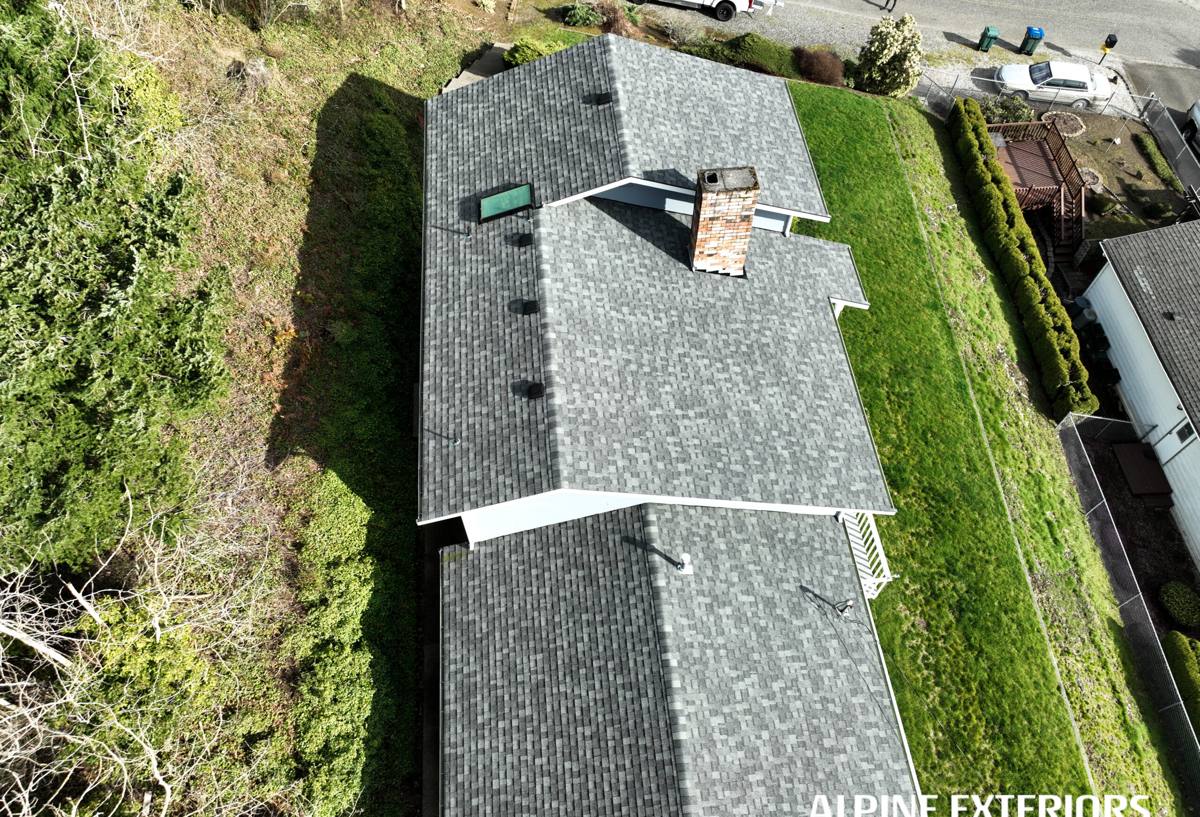
Signs a Bellingham Roof Needs Replacement, Not Another Repair
Roof repair has its place, but there's a point where patching becomes a way of spending money without solving the underlying problem. Common signs it's time to talk replacement instead of another repair visit:
- Granule loss heavy enough that you're finding shingle granules in gutters or at downspouts
- Shingles that are cupping, curling, or cracking across large sections rather than just one spot
- Soft or spongy decking felt underfoot during an inspection, especially near valleys or eaves
- Daylight visible through the roof deck from inside the attic
- Recurring leaks in different spots each season rather than one isolated failure point
- Heavy, persistent moss growth that keeps returning within a season or two of cleaning
- A roof at or past the manufacturer's rated lifespan, especially if it was installed without proper ventilation
Any one of these on its own might still be repairable. Two or three together, especially on a roof already past the midpoint of its expected life, usually means repair costs start approaching replacement costs without actually buying you more years.
What a Correct Roof Replacement Actually Involves
Tear-Off and Deck Inspection
A full tear-off removes the old roofing material down to the deck so it can actually be inspected, not just re-covered. This matters more in a wet climate than a dry one — soft, delaminating, or rotted decking sections are common after years of a coastal Whatcom County winter, and they have to be found and replaced before anything new goes down. Skipping this step, or only tearing off part of a roof, is how new shingles end up over a compromised deck.
Underlayment and Ice/Water Protection
Underlayment is the roof's second line of defense, and in a climate with this much sustained rainfall it earns its keep. Synthetic underlayments generally outperform old-style felt for moisture resistance and durability during the install window itself, and self-adhered ice-and-water membrane belongs at eaves, valleys, and any area prone to wind-driven rain or ice damming.
Ventilation
Proper intake and exhaust ventilation keeps the attic close to outdoor temperature and moisture levels, which protects the deck from the inside and helps prevent the kind of condensation that rots sheathing over time. A roof can be installed with excellent shingles and underlayment and still fail early if the attic underneath it can't breathe.
Flashing
Flashing around chimneys, skylights, vents, and roof-to-wall transitions is where the majority of roof leaks actually originate — not out in the open field of shingles. Correctly formed and properly lapped flashing, tied into the underlayment in the right order, is not optional detail work; it's the part of the job that determines whether the roof actually sheds water the way it's supposed to.
Choosing a Roofing Material for This Climate
There's no single "best" roofing material for every home — the right choice depends on budget, roof pitch, home style, and how much long-term maintenance an owner wants to take on. Here's an honest comparison for the conditions Bellingham and Whatcom County actually deliver:
| Material | Typical Lifespan | How It Handles This Climate | Maintenance Reality |
|---|---|---|---|
| Architectural asphalt shingle | 25–30 years | Good performance with proper underlayment and ventilation; algae-resistant options help with the long damp season | Periodic moss/debris removal; most cost-effective option |
| Standing seam metal | 40–50+ years | Sheds moisture and moss very effectively due to smooth, steep-shed surface; fasteners and flashing must be corrosion-rated for salt air | Low ongoing maintenance, higher upfront cost |
| Cedar shake/shingle | 20–30 years with upkeep | Traditional look, but sustained dampness and moss pressure here demand real diligence | Highest maintenance burden; periodic treatment and moss control required |
| Synthetic composite (rubber/polymer) | 40–50 years | Resists moisture absorption and moss better than wood; performs consistently in wet climates | Low maintenance, mid-to-upper cost range |
We don't push one product on every home. We'll walk through what your roof's pitch, exposure, and budget actually call for, and we're upfront about the maintenance trade-offs of each option rather than just selling the one with the best margin.
Moss, Algae, and Salt Air: The Long-Term Maintenance Reality
Moss isn't just cosmetic. Once it establishes on a roof, its root structure holds moisture against the surface and can work under shingle tabs, which accelerates granule loss and can eventually create a path for water intrusion. Shaded, north-facing roof sections and areas near overhanging trees are especially prone to it here, and that's a year-round risk in Whatcom County rather than a seasonal one.
Salt air compounds the problem in a different way — it accelerates corrosion on exposed metal fasteners, flashing, and hardware faster than it would inland. That's why fastener and flashing material selection matters as much as the shingle or panel choice itself on a replacement job near the water.
A few practical habits extend the life of any roof installed correctly for this climate:
- Keep overhanging branches trimmed back to reduce shade and debris buildup
- Clean gutters and valleys at least twice a year so water actually drains instead of backing up
- Have moss treated or removed before it spreads across large sections, not after
- Schedule a roof check after major storms, not just when a leak shows up
Our Roof Replacement Process
The process is straightforward, and we walk every homeowner through it before work starts:
- On-site inspection and estimate — we look at the current roof, attic ventilation, and any problem areas, and give you an honest read on repair-versus-replace.
- Material selection — we go over the trade-offs above based on your home, budget, and how much maintenance you want to take on long-term.
- Scheduling and prep — we coordinate around weather windows, since a proper tear-off shouldn't sit exposed to rain any longer than necessary.
- Tear-off and deck inspection — old material comes off, decking is inspected, and any soft or damaged sections are replaced before anything new goes down.
- Underlayment, flashing, and ventilation install — the parts of the job that actually determine how the roof performs over time.
- Final material installation — shingles, panels, or shakes installed to manufacturer specification.
- Cleanup and final walkthrough — site cleared of debris and nails, and we walk the finished roof with you.
Cost Factors for a Bellingham Roof Replacement
Every roof is different, but the factors that move the price are consistent. As a broad range, most full asphalt shingle replacements on a typical single-family home run somewhere in the $9,000–$20,000 range, with metal and higher-end materials running higher — actual pricing depends on the specifics below.
| Factor | Why It Affects Cost |
|---|---|
| Roof size and pitch | Steeper roofs take longer and require more safety setup; larger roofs mean more material and labor |
| Number of layers to remove | Tear-off of multiple existing layers adds labor and disposal cost |
| Deck condition | Rotted or soft decking sections found during tear-off need replacement before new roofing goes down |
| Material choice | Asphalt, metal, cedar, and synthetic products span a wide cost range, as shown above |
| Roof complexity | Valleys, dormers, skylights, and chimneys each add flashing work and labor time |
| Ventilation upgrades | Adding or correcting intake/exhaust ventilation is worth the added cost for long-term roof health |
Why Local Experience in Whatcom County Matters
A crew that works Bellingham and the surrounding Whatcom County area regularly already knows which roof details tend to fail here and why — where moss pressure is worst, which flashing details need extra attention near the water, and how to schedule tear-offs around a weather pattern that doesn't always cooperate. That's different from a crew installing to a generic spec sheet without accounting for a marine climate. It also means we're around after the job is done — for questions, for a warranty issue, or just to look at something that's bothering you a year or two down the road.
Questions to Ask Before Hiring a Roofer
Whether you hire us or someone else, these are worth asking any roofing contractor before signing anything:
- Are you licensed and insured to do roofing work in Washington State?
- Will you do a full tear-off and deck inspection, or are you proposing to roof over the existing layer?
- What underlayment and ice/water protection do you use, and where specifically will it go?
- How will you address attic ventilation as part of the job, not as an afterthought?
- What's the manufacturer's warranty versus your own workmanship warranty, and what's the difference between them?
- Can you walk me through how you handle flashing at chimneys, skylights, and valleys?
- Do you have a plan for weather delays given how much it rains here?
If a contractor can't answer these clearly and specifically, that's worth paying attention to.
If your roof is showing its age or you just want an honest opinion on whether it's time to replace it, we're happy to take a look. Fill out the form below for a free, no-pressure estimate — we'll tell you what we actually see, not just what sells the biggest job.