 Sudden Valley
 How Bellingham's Weather Wears Down Old Windows
Homes near Bellingham deal with a specific combination of weather that's harder on windows than most people realize. Salt air drifting in off the bay slowly corrodes aluminum frames and hardware. Driving rain, pushed sideways by wind off the water, finds its way past worn weatherstripping and aging caulk lines that would hold up fine in a drier climate. And the long stretch of gray, damp months every year — what folks around here just call moss season — keeps wood trim and sills wet for weeks at a time instead of letting them dry out between storms.
None of this is dramatic on its own. It's cumulative. A window that was installed correctly twenty or thirty years ago starts to lose its seal, the wood sill underneath starts to hold moisture instead of shedding it, and by the time you notice fogging between the panes or a soft spot in the sill, the damage has usually been building for a while. In Whatcom County specifically, we see this play out faster on north- and west-facing walls that catch the worst of the wind-driven rain, and on older homes where the original windows were never flashed the way current best practice calls for.
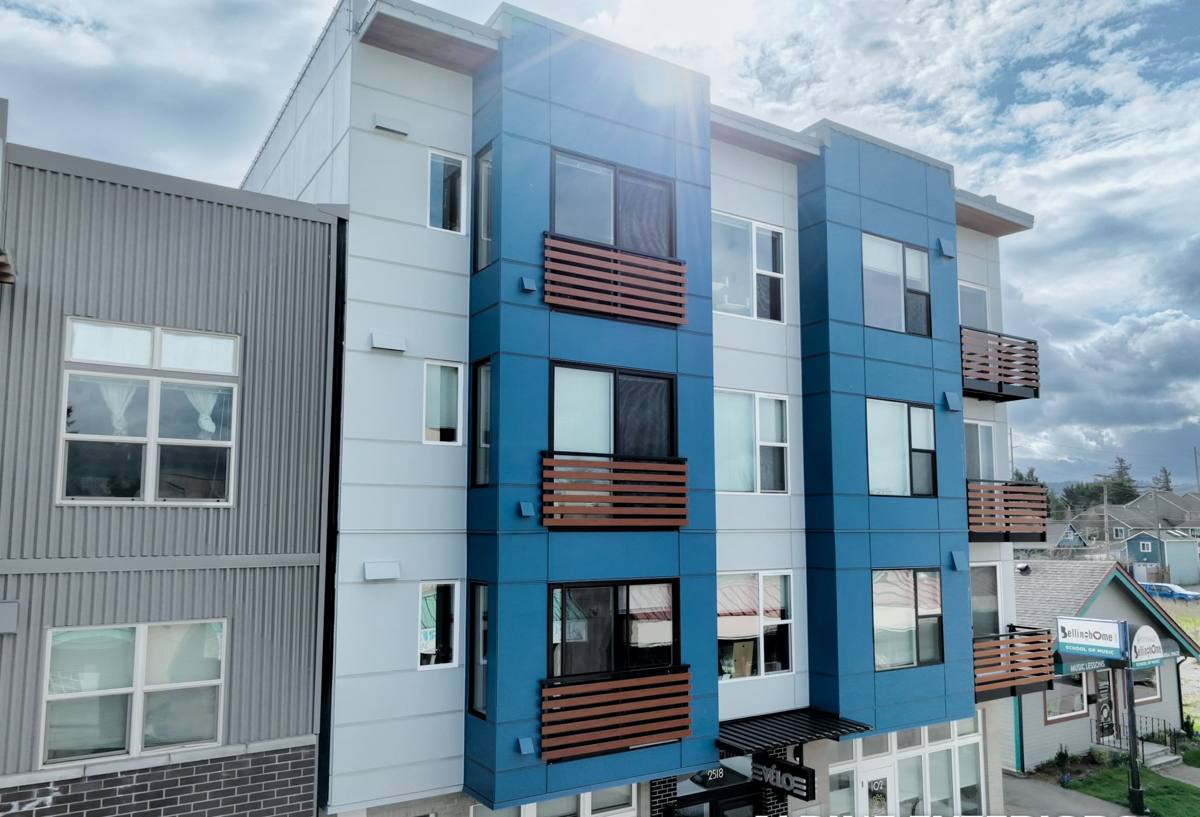
Signs It's Time to Replace, Not Repair
Not every window problem means a full replacement. But there's a point where patching stops making sense — where the frame, glass, and seal have all degraded together and repair just delays the same job at a higher eventual cost. Here's what we look for:
- Fog, haze, or visible moisture between the panes of a double-pane window — the seal has failed and can't be fixed, only replaced
- Wood trim or sills that feel soft, spongy, or show dark staining, especially on walls that take direct rain
- Windows that are noticeably harder to open, close, or lock than they used to be
- Visible daylight or a draft you can feel around the frame when it's windy
- Condensation forming on the inside of the glass regularly, even in normal indoor humidity
- Paint or finish that keeps failing on the frame no matter how often it's touched up
- A noticeable jump in heating costs with no other explanation
If you're only seeing one or two of these on a single window, a repair or reseal might still make sense. If it's several windows on the same wall, or the wood underneath is already compromised, replacement is usually the more honest recommendation — and we'll tell you that directly rather than sell you a patch job that won't last.
What a Correct Window Replacement Job Actually Involves
The window unit itself is only part of the job. Most window failures we get called out to fix — leaks, rot, drafts — trace back to how the window was installed, not the window itself. A correct installation in this climate has to assume it will be tested by wind-driven rain, and it has to shed that water instead of trapping it against the wall.
Flashing and Weatherproofing Come First
Before a new window ever goes in, the opening needs a properly lapped sill pan and flashing that ties into the house's water-resistive barrier — the house wrap or building paper behind the siding. Water has to be directed out and down, never allowed to pool at the sill or get trapped behind the trim. This step is invisible once the job is done, which is exactly why it's the step that gets skipped by crews trying to move fast. It's also the single biggest factor in whether a window lasts five years or twenty-five in a climate like ours.
Full-Frame Replacement vs. Insert Replacement
There are two basic approaches, and the right one depends on the condition of what's already there.
| Approach | What it involves | Best for |
|---|---|---|
| Insert (pocket) replacement | New window fits inside the existing frame; original frame and trim stay in place | Frames that are still structurally sound and dry, with no rot |
| Full-frame replacement | Old window, frame, and trim are removed down to the rough opening; new flashing and sill pan installed | Any sign of water damage, rot, or a frame that's out of square |
Insert replacements are faster and less invasive, but they only make sense when the existing frame is genuinely sound — installing a new window into a frame that's already trapping moisture just seals the problem in. We'll check the frame condition during the estimate and tell you honestly which approach the window actually needs, not which one is quicker for us.
Sealing and Insulation Details That Get Overlooked
Once the window is set, the gap between the unit and the rough opening needs to be insulated — typically with low-expansion foam rather than packed fiberglass, which can settle and leave gaps. The exterior gets sealed with a quality sealant rated for exterior exposure, not standard caulk that will crack and shrink within a season or two. These are small details, but they're the difference between a window that performs for decades and one that starts leaking again in three years.
Choosing Windows That Hold Up in Whatcom County
Frame Material
Vinyl is the most common choice for good reason — it doesn't corrode, doesn't need repainting, and handles moisture well as long as the drainage weep holes are kept clear. Fiberglass costs more but holds up slightly better under temperature swings and can be a better fit on homes where the look of the original wood trim matters. We steer most homeowners away from bare aluminum frames for street-facing, weather-exposed walls — not because aluminum is a bad material outright, but because it conducts cold and, near salt air, is more prone to corrosion at the hardware and fasteners over time, which becomes a maintenance burden nobody wants to deal with later.
Glass Package
Double-pane with a Low-E coating and argon gas fill is the standard now, and it's a real upgrade over older single-pane or early double-pane units in both comfort and condensation resistance. Triple-pane is available and does add a bit more insulating value and sound dampening, but the added cost doesn't pencil out for every home — it tends to make the most sense on north-facing rooms or homes right along the water where wind exposure is highest. We'll walk through the actual difference for your specific windows rather than upsell triple-pane across the board.
Our Process, Start to Finish
- Walkthrough and assessment — we look at each window from both sides, check the frame and sill condition, and note anything unusual about the opening before quoting anything
- Honest recommendation — insert or full-frame, which materials make sense for that wall's exposure, and why
- Written estimate — clear line items, no vague allowances
- Measurement and ordering — precise measurements are taken before the units are ordered so the fit is correct the first time
- Removal and prep — old units come out, the opening is inspected for hidden damage before anything new goes in
- Installation — proper flashing, sill pan, air-sealing, and insulation as described above
- Exterior and interior finish work — trim, caulking, and paint touch-up to match the surrounding surface
- Final walkthrough — every window opens, closes, and locks the way it should before we call the job done
Why a Crew That Already Works This Area Matters
Window replacement done wrong doesn't usually fail right away — it fails a year or two later, after the crew is long gone and hard to track down. That's a bigger risk with an out-of-area contractor who took the job as a one-off. We work Sudden Valley, Bellingham, and the rest of Whatcom County regularly, which means we're not guessing about how these homes are built or what this climate does to them over time — we're already familiar with the local building patterns, the common exposure issues on lakefront and water-facing homes, and what tends to go wrong when a window job is done without accounting for the rain and moisture this area gets. It also means if something needs a look after the job is finished, we're not far away and not hard to reach.
What Affects the Cost
Every home is different, so we don't quote sight unseen — but these are the factors that actually move the number, and it's worth knowing them before you start collecting bids.
| Factor | Why it matters |
|---|---|
| Insert vs. full-frame | Full-frame costs more because it involves removing trim and rebuilding flashing, but it's the right call when there's rot or moisture damage |
| Frame material and glass package | Vinyl with standard Low-E double-pane sits at the lower end; fiberglass and triple-pane options cost more per unit |
| Number of windows | Doing several windows in one visit generally costs less per window than one-off jobs, since setup and crew time are shared |
| Existing damage | Rotted sheathing or framing found once the old window is out adds cost, but it's cheaper to fix now than to seal a new window over it |
| Access | Second-story or hard-to-reach windows take more time and sometimes equipment |
As a general guide, straightforward vinyl replacement windows in this region typically run somewhere in the low-to-mid hundreds per window installed, with full-frame jobs, upgraded materials, or damage repair pushing individual windows higher. The only way to get a real number is a walkthrough — broad ranges online won't account for your specific frames or exposure.
Caring for Your New Windows
- Vacuum or brush out the weep holes at the bottom of the frame once or twice a year so water can keep draining out
- Wipe down tracks and hardware periodically, especially if the windows face the water or catch salt air directly
- Re-check exterior caulking every year or two — it's a five-minute inspection that catches small gaps before they become leaks
- Keep gutters and downspouts clear above window openings so water isn't sheeting down the wall
- Watch for any moss or algae starting to build on nearby trim, since it holds moisture against the surface longer than bare wood or vinyl
If you're dealing with drafty, foggy, or hard-to-operate windows anywhere in the Bellingham area, we're happy to take a look and give you a straight answer about what's actually needed — whether that's a full replacement or something simpler. Reach out for a free, no-pressure estimate using the form below.