 Sudden Valley
 Board & Batten Siding, Built for Fairhaven's Weather
Fairhaven sits close enough to Bellingham Bay that salt-laden air is a real factor in how exterior materials age, and it sits inside a stretch of Whatcom County that gets a long, wet fall-through-spring season of driving, wind-pushed rain. Add the shade from mature conifers and the moss that thrives in it, and you have three separate stressors working on a home's siding at once — not just occasional weather, but a near-constant condition. Board and batten is one of the more demanding siding profiles to get right in a climate like this, because its vertical boards and raised battens create more seams, more shadow lines, and more places for water to either shed cleanly or get trapped, depending on how the job was done.
This page is specifically about board and batten siding for homes in and around Fairhaven — what the style needs from an installer here, what a correct job looks like, and why we only install it in James Hardie fiber cement rather than the wood, vinyl, or engineered-wood alternatives that are also sold under the "board and batten" name.
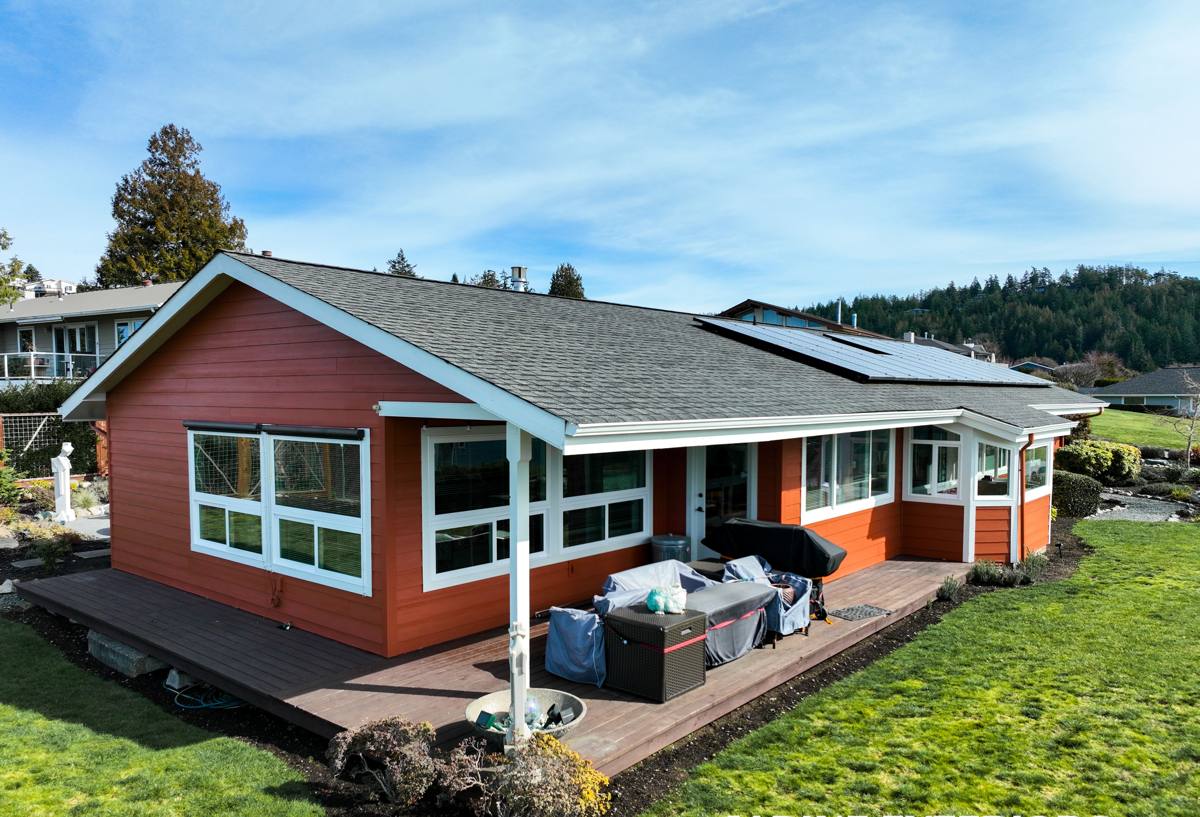
Why Board & Batten Fits This Neighborhood
Board and batten has deep roots in Pacific Northwest building style — it shows up on farmhouses, Craftsman-era homes, and the mix of historic and updated construction you'll find in a neighborhood like Fairhaven. The vertical lines read as more architectural and less "production siding" than horizontal lap, which is a big part of why homeowners here ask for it specifically, whether they're matching an existing historic look or adding a modern accent to part of a home's exterior.
The trade-off is that vertical siding profiles are less forgiving of moisture mistakes than horizontal lap. Water runs down a board and batten wall in a straight line, which means any gap, any missed flashing detail, or any batten fastened wrong becomes a direct path for water to travel rather than shed away. In a climate that delivers sustained rain events rather than quick showers, that difference matters more here than it would in a dry climate.
Where It Works Best
- Full-house exteriors on Craftsman, farmhouse, or cottage-style homes where vertical lines suit the architecture
- Accent applications — gables, dormers, entry surrounds — paired with lap siding on the main body
- Additions or remodels where the goal is a deliberate visual break from the original siding
What Correct Board & Batten Installation Actually Requires
Board and batten looks simple from the curb — vertical boards, battens over the seams — but the assembly behind it is what determines whether it lasts twenty-plus years or starts showing problems in five.
Drainage Plane and Rain Screen Gap
Every board and batten installation needs a weather-resistive barrier behind it, and in a climate that sees as much sustained rain as Whatcom County does, we install with a rain screen — a ventilated gap, typically created with vertical furring strips, between the back of the siding and the barrier. That gap lets any moisture that gets past the siding drain and dry out instead of sitting against the wall assembly. Skipping the rain screen is one of the most common shortcuts taken on board and batten jobs, because it adds labor and material cost, but it's also one of the details most likely to cause hidden rot behind the siding over time.
Fastening and Batten Spacing
Battens need to be fastened into structural framing or properly blocked sheathing, not just through the panel into thin air, and fastener spacing has to follow the manufacturer's engineering — not a generalized "every foot or so" guess. Batten width and spacing also affect how the wall handles water: too narrow a gap between boards, or battens that don't fully seat, and water can wick sideways instead of running straight down and off.
Flashing and Transitions
Every horizontal transition — window and door heads, water tables at the foundation line, roof-to-wall intersections, deck ledgers — needs flashing that directs water out and away from the wall assembly, lapped correctly with the weather-resistive barrier underneath. On a board and batten wall these transitions get more scrutiny than on lap siding because there's no overlapping course of siding doing extra shedding work above them.
What Salt Air, Driving Rain, and Moss Actually Do to Siding
These three conditions don't act independently — they compound each other, and that's the real challenge for exteriors in this part of Whatcom County.
- Salt air accelerates corrosion on exposed metal fasteners, hinges, and trim connectors, and it contributes to faster breakdown of field-applied paint finishes, especially on the west- and southwest-facing walls that catch prevailing weather.
- Driving rain — rain pushed sideways by wind rather than falling straight down — tests every seam, joint, and fastener penetration on a wall. It's a much harder test than vertical rainfall, and it's common in this region for a large share of the year.
- Moss takes hold fastest on shaded, north-facing, or tree-covered walls where surfaces stay damp longer between dry spells. Moss and the organic debris it traps hold moisture directly against the siding surface, which is a serious problem for any wood-based product and a slower but real cosmetic and maintenance issue even for materials that resist rot.
None of these conditions are unique to Fairhaven, but the combination — proximity to salt water, heavy tree cover, and a wet regional climate — is why we treat every board and batten install here as a moisture-management project first and a cosmetic upgrade second.
The System We Install: James Hardie Board & Batten
We install James Hardie fiber cement exclusively — no vinyl board and batten, no engineered wood, no primed spruce or cedar battens. For vertical applications we use Hardie's engineered panel and trim products, factory-finished with ColorPlus Technology, which bakes the color into the product rather than relying on a field-applied coat of paint that has to hold up on its own against salt air and UV exposure.
Fiber cement doesn't feed mold or moss growth the way untreated wood substrates can, and it holds its shape and fastening integrity in wet-dry cycling far better than wood composites, which is a direct answer to the moss and driving-rain conditions common here. James Hardie's HZ5 product engineering is built specifically for the wetter, colder climate zones on the Pacific coast — it's not a generic national product with a regional color added on.
We back every install with manufacturer-backed material warranty coverage on top of our own workmanship guarantee, and because it's a factory finish, touch-up and color-matching down the road is far more predictable than trying to match a field-mixed paint years later.
What Drives Cost on a Board & Batten Project
| Factor | Why It Matters |
|---|---|
| Existing siding removal | Tear-off, disposal, and sheathing repair add labor before new siding installation can begin |
| Rain screen system | Furring strips and drainage components add material and install time but are essential in this climate |
| Batten spacing and pattern | Narrower spacing means more battens, more fasteners, and more labor hours per wall |
| Trim and transition complexity | Gables, dormers, and multiple roof lines multiply the number of flashing and transition details |
| Height and access | Two-story walls, steep grades, or limited equipment access affect staging and labor time |
| Full-house vs. accent application | Whole-home board and batten costs more than using it selectively over lap siding on the main field |
Our Process for Fairhaven Board & Batten Projects
- On-site assessment — we look at the existing siding condition, sheathing, moisture history, sun/shade exposure, and any moss or staining patterns before quoting anything
- Tear-off and substrate check — old siding comes off, and we inspect sheathing for hidden rot or water damage before covering it back up
- Weather-resistive barrier and rain screen install — the drainage plane and furring system go on correctly, not skipped or substituted
- Hardie board and batten installation — fastened, spaced, and flashed to manufacturer specification, with attention to every transition point
- Trim, caulking, and final detailing — factory-finished ColorPlus product limits the amount of field caulking and touch-up needed compared to painted wood systems
- Final walkthrough — we go over the completed work with the homeowner before calling the job done
What to Ask Before Hiring for a Board & Batten Job
- Will you install a rain screen gap, or is the siding going directly over the weather-resistive barrier?
- What fastener type and spacing will you use, and is it engineered to the manufacturer's specification?
- How will window heads, water tables, and roof-to-wall transitions be flashed?
- Is the product factory-finished, or will it need field painting now and repainting later?
- Do you have experience installing board and batten specifically, not just lap siding, in this climate?
- What warranty covers the material, and what warranty covers your workmanship?
Why It Matters That We Already Work in This Area
A crew that regularly works Fairhaven and the surrounding Whatcom County communities has already seen how local exposure — salt air off the bay, shaded and moss-prone walls, sustained driving rain — plays out on real homes over years, not just on a spec sheet. That experience shows up in small decisions: where we push for a rain screen even when it adds cost, which wall orientations need extra attention to flashing, and how we sequence a job around the wetter months so the substrate isn't exposed longer than it needs to be. It's the difference between a crew installing a product and a crew installing a product correctly for this specific place.
If you're weighing board and batten for a Fairhaven home, we're happy to take a look and walk you through what a correct installation involves for your specific walls and exposure — no pressure, no obligation. Use the form below to request a free estimate.