 Sudden Valley
 Why Columbia Homes Take a Beating from the Local Climate
Homes in the Columbia neighborhood near Sudden Valley sit in one of the tougher exterior environments in Whatcom County. You've got moisture coming from multiple directions at once — damp air moving off Lake Whatcom, driving rain that hits siding sideways during fall and winter storms, and long stretches of overcast, humid weather that never quite lets a wall system dry out completely. Add in the salt-tinged air that reaches inland from the Puget Sound region, and you have conditions that are genuinely hard on exterior building materials, not just cosmetically but structurally.
Salt Air and Coastal Moisture
Salt-laden moisture accelerates corrosion of fasteners and metal flashing, and it speeds up the breakdown of paint films and caulk joints. Siding that isn't engineered to handle that exposure tends to show fading, chalking, and edge deterioration years before it should.
Driving Rain Off Lake Whatcom
Wind-driven rain doesn't just run down a wall — it gets pushed sideways and upward into laps, seams, and trim joints. If a siding system doesn't have a real drainage path behind it, that water finds its way into the sheathing, and you don't see the damage until it's already rotted framing.
The Long Moss Season
Whatcom County's moss season runs longer than most of the state's — shaded, north-facing walls and anything near tree cover can stay damp for months at a stretch. Moss and algae don't just look bad; they hold moisture directly against the siding surface, which is exactly the condition that causes cheaper or improperly sealed materials to swell, delaminate, or rot.
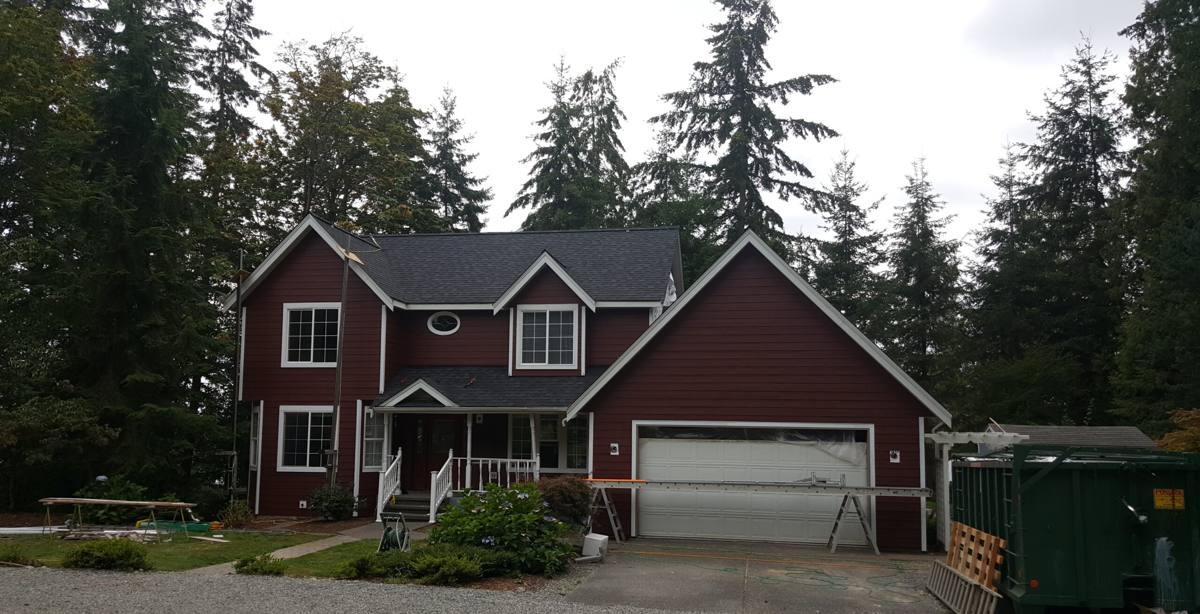
What "Correct" Fiber Cement Installation Actually Means Here
Fiber cement siding is only as good as the assembly behind it. In a climate like Columbia's, the installation details matter more than they would in a drier region, because there's less margin for error before trapped moisture becomes a real problem.
Drainage Plane and Rainscreen Gap
A code-compliant water-resistive barrier is the minimum. On homes that catch heavy wind-driven rain, we build in a drainage gap behind the siding so any moisture that gets past the cladding has somewhere to go besides the sheathing. This detail alone is one of the biggest differences between a siding job that lasts and one that doesn't.
Flashing and Sealed Penetrations
Every window, door, vent, and hose bib penetration is a potential entry point. Correct step flashing, head flashing, and properly lapped house wrap at these transitions are non-negotiable — caulk is a backup, not the primary defense.
Fastener Pattern and Clearances
James Hardie's installation instructions specify fastener spacing, minimum ground clearance, and gaps at butt joints for a reason. Skipping these to save time is exactly how you end up with wicking at the bottom edge or cracked boards at fastener points a few winters later.
Why We Install Only James Hardie Fiber Cement
We don't offer LP SmartSide, vinyl, cedar, or other fiber cement brands, and that's a deliberate standard, not a limitation on what we're capable of installing. James Hardie's fiber cement is non-combustible, dimensionally stable in wet-dry cycling, and available in climate-engineered HZ product lines built specifically for wetter regions like ours. The factory-applied ColorPlus finish is baked on under controlled conditions, which gives it better adhesion and fade resistance than field-applied paint — a real advantage in an area that gets this much rain and this little sun. Hardie also backs its products with a strong, transferable limited warranty, which matters to buyers if you ever sell. We'd rather stand behind one system we know performs in this climate than spread our expertise across several products with different moisture behavior and installation requirements.
Comparing Siding Options for a Columbia Home
Homeowners often ask how fiber cement stacks up against the alternatives once local climate is factored in. Here's an honest comparison based on how these materials actually behave in a wet, moss-prone environment:
| Material | Moisture & Moss Resistance | Salt Air Durability | Maintenance Burden | Typical Lifespan Here |
|---|---|---|---|---|
| James Hardie fiber cement | Excellent — dimensionally stable, won't swell or rot | Strong; factory finish resists chalking and fading | Low — occasional wash, repaint only on trim eventually | 30+ years with correct install |
| Vinyl siding | Can warp/buckle with temperature swings; traps moisture behind panels if not vented | Fair; can become brittle over time | Low, but panels can't be repaired individually if damaged | 15-25 years |
| Cedar / wood siding | Poor without diligent upkeep; prone to rot, moss growth, and insect damage | Fair to poor; needs frequent refinishing | High — refinishing every few years | 10-20 years without heavy maintenance |
| Other fiber cement brands | Variable — depends on formulation and finish quality | Variable | Moderate — often field-painted, so repaint cycles come sooner | Varies by brand and install quality |
The pattern that matters most for this area isn't upfront cost — it's how a material handles sustained dampness and salt exposure without needing constant attention.
Our Installation Process, Start to Finish
- Assessment: We inspect existing siding, sheathing, and trim for hidden moisture damage before quoting anything.
- Tear-off and sheathing check: Old siding comes off and we look at what's underneath — this is where rot from a previous poor installation usually shows up.
- Water-resistive barrier and drainage plane: House wrap or building paper goes on correctly lapped, with a rainscreen gap built in where the exposure calls for it.
- Flashing and trim: Windows, doors, and penetrations get flashed before any siding goes up around them.
- Hardie installation: Panels or lap siding go on to manufacturer spec — correct fastener placement, clearances, and joint treatment.
- Caulking and touch-up: Factory-matched caulk and touch-up paint at cut edges and joints, keeping the ColorPlus finish's protection intact.
- Final walk-through: We go over the finished job with you before calling it done.
Maintaining Fiber Cement Siding in a Moss-Prone Climate
Hardie siding is low-maintenance, not no-maintenance. In a climate that grows moss on north-facing roofs and fences without much effort, a little seasonal attention goes a long way toward protecting your investment.
- Rinse siding annually with a garden hose and soft brush — avoid high-pressure washing, which can force water behind panels or damage the finish
- Trim back shrubs and tree branches to keep air moving across shaded wall sections
- Check caulk joints around windows, doors, and trim every year or two, and re-caulk if you see cracking or separation
- Look at the bottom edge of the siding near grade for splashback staining, which can signal a drainage or clearance issue
- Clear gutters and downspouts before the fall rains so overflow doesn't run down the wall face
- Watch for green or black staining on shaded sections and clean it early, before it holds moisture against the surface for months
Cost Factors for a Columbia Fiber Cement Project
Every home is different, but the same handful of variables drive most of the price difference between jobs in this area:
| Factor | Why It Matters |
|---|---|
| Home size and number of stories | More wall area and higher scaffolding/lift needs raise labor time |
| Condition of existing sheathing | Hidden rot from past moisture intrusion adds repair work before siding can go on |
| Trim and architectural detail | Dormers, bump-outs, and multiple roof lines take more cutting and flashing work |
| Product line and profile | HardiePlank lap siding, panel siding, and shingle-style products carry different material costs |
| ColorPlus color selection | Factory finish is included in the product cost and eliminates a separate paint job |
We walk every project through these factors during the estimate so there are no surprises once work starts.
Why Local Experience in Sudden Valley and Columbia Matters
A crew that only occasionally works this side of Whatcom County can miss the details that matter here — how much rainscreen a particular exposure needs, which wall orientations are worth extra attention for moss, or how the salt-and-rain combination changes fastener and flashing choices. Crews who work Sudden Valley and the surrounding Columbia area regularly build these judgment calls into every quote and every install, rather than treating every job as a generic siding replacement. That local pattern-recognition is often the difference between a siding job that needs attention again in ten years and one that doesn't.
If your Columbia home's siding is showing its age or you're planning ahead of a needed replacement, we're happy to take a look and talk through what correct fiber cement installation would involve for your specific house. Reach out for a free, no-pressure estimate using the form below.