 Sudden Valley
 Decks Built for Silver Beach's Terrain and Weather
Silver Beach sits in the hills above Lake Whatcom, and that setting shapes almost every deck we build there. Homes are tucked into tree cover, lots slope toward the water, and the air stays damp for months at a stretch. A deck in this neighborhood isn't just an outdoor living space — it's a structure that has to shed water fast, resist moss and mildew, and stay solid on ground that isn't always flat or well-drained. We've built and repaired decks throughout Whatcom County long enough to know that a design that works fine in a drier climate can fail here within a few seasons if it isn't detailed correctly from the framing up.
This page covers what actually matters for a custom deck in Silver Beach: the site conditions we plan around, the materials that hold up, how our build process works, and what it takes to keep a deck looking and performing well year after year in a region known for driving rain and a long moss season.
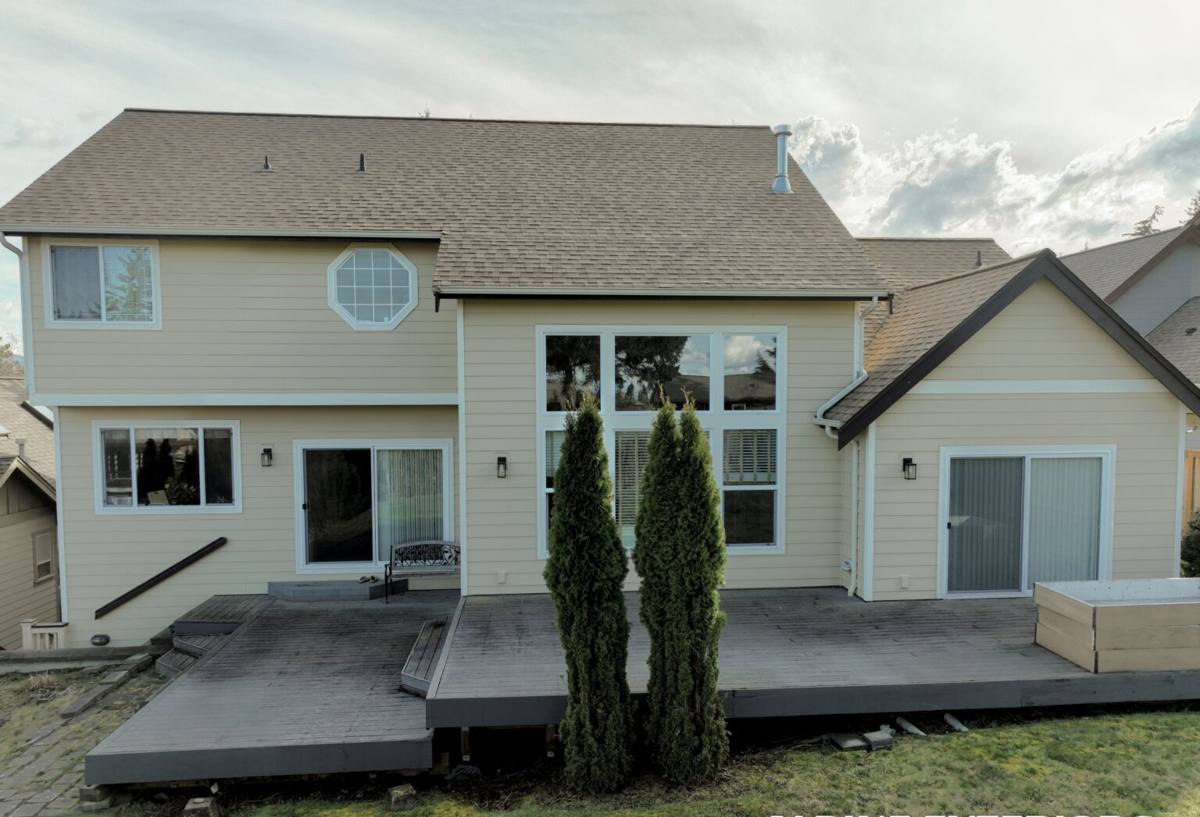
What Makes Silver Beach Deck-Building Different
Slope and Tree Cover
Many Silver Beach properties step down toward Lake Whatcom, which means a lot of decks here are elevated — sometimes significantly — rather than sitting a foot or two off grade. That changes the engineering: footing depth, post sizing, and lateral bracing all need to account for height and, in some cases, for soil that's saturated much of the year. Heavy tree canopy is common too, which keeps decks shaded and slower to dry out after rain, and drops needles and debris that trap moisture against boards and hardware if a deck isn't designed with airflow and drainage in mind.
Moisture, Moss, and Air Quality Near the Water
Whatcom County's marine-influenced climate means long stretches of damp, low-sun weather from fall through spring. Add proximity to the lake and shade from mature trees, and you get surfaces that stay wet longer than they would in an open, sunnier yard. That combination is exactly what moss and algae need to take hold, and it's why generic deck advice — the kind written for drier regions — doesn't always apply here. A deck built for Silver Beach needs material choices, fastener selection, and a maintenance plan that all account for this.
Choosing the Right Decking Material
There's no single "best" decking material — the right choice depends on your budget, how much upkeep you're willing to do, and how much shade and moisture the deck will see. Here's how the common options actually perform in a Silver Beach setting:
| Material | How It Handles Our Climate | Maintenance | Typical Lifespan |
|---|---|---|---|
| Pressure-treated wood | Affordable, but needs consistent sealing to resist moss and rot in shaded, damp spots | Annual cleaning and re-sealing recommended | 10–15 years with upkeep |
| Cedar | Naturally rot-resistant and handsome, but still needs periodic finish to stay that way in constant moisture | Cleaning plus finish every 1–2 years | 15–20 years with upkeep |
| Composite decking | Resists rot and doesn't need sealing; some capped products shed moss better than others | Periodic washing to keep surface film from building up | 25–30+ years |
| PVC decking | Fully synthetic, handles constant moisture well, least food source for algae/moss | Occasional washing | 25–30+ years |
We install all of these and will tell you honestly which one fits your situation. If a shaded, low-airflow spot near mature trees is where the deck is going, we'll usually steer you toward composite or PVC — not because wood is a bad product, but because a heavily shaded wood deck in this climate is a real maintenance commitment, and we'd rather you know that up front than find out after year two.
What a Correctly Built Deck Needs Underneath
The decking surface is what you see, but the framing underneath is what determines whether the deck lasts. In a climate with this much sustained moisture, a few details matter more than they would elsewhere:
- Ledger board flashing: Where the deck attaches to the house, proper flashing keeps water from working behind the siding — one of the most common sources of hidden rot on older decks we've been called to repair.
- Joist tape or protective coating: Covering the tops of joists reduces water intrusion into the wood where screws penetrate, extending the life of the frame significantly.
- Corrosion-resistant fasteners and hardware: Hangers, screws, and post bases rated for ground contact and sustained moisture, not just standard exterior-grade hardware.
- Adequate footing depth and drainage: Especially on sloped Silver Beach lots, footings need to reach stable, well-draining soil, and grading around posts needs to move water away rather than let it pool.
- Board spacing and airflow: Small, consistent gaps between boards and clearance underneath the deck let air move through, which is one of the simplest ways to slow moss growth.
These aren't upgrades — they're what a deck actually needs to hold up here. We build to this standard on every project, not as an add-on.
Our Process for a Silver Beach Deck Project
1. On-Site Assessment
We walk the site with you, note the slope, shade pattern, drainage, and how the space will be used, and talk through material options honestly based on what we see.
2. Design and Estimate
We put together a design and a written estimate that accounts for the actual site conditions — not a generic flat-lot assumption — so there aren't surprise costs once we're into the framing.
3. Permitting
Deck projects in Whatcom County often require a permit, particularly for elevated structures or anything attached to the house. We handle that process as part of the job.
4. Framing and Build
We build the structure first — footings, posts, beams, joists, flashing, and protective detailing — before decking ever goes down. This is where a deck's long-term durability is actually decided.
5. Decking, Railing, and Finish
Surface material, railing system, and any finish work go on last, along with a final walk-through so you know exactly what maintenance, if any, the material you chose will need.
Keeping a Silver Beach Deck in Good Shape
Whatever material you choose, a little regular attention goes a long way in this climate. A simple seasonal routine:
- Sweep off leaves, needles, and debris regularly — they trap moisture against the surface and feed moss growth
- Wash the deck surface at least once or twice a year with a deck-safe cleaner to remove algae and moss film before it takes hold
- Check that gaps between boards stay clear so water can drain through instead of sitting on the surface
- Inspect and re-seal wood decking on the schedule appropriate to that product — don't wait until it's visibly gray or worn
- Confirm ledger flashing and any visible hardware aren't showing rust or gaps after major storms
- Trim back overhanging branches where practical to reduce shade and debris on the deck
None of this is complicated, but skipping it is exactly how decks in shaded, damp spots end up needing early repair or replacement.
What Affects the Cost of a Custom Deck
| Factor | Why It Matters |
|---|---|
| Deck size and shape | More square footage and complex layouts (multiple levels, angles) increase material and labor |
| Height and slope of the site | Elevated decks on sloped Silver Beach lots need deeper footings and more structural framing |
| Decking material | Composite and PVC cost more upfront than wood but less over time in maintenance |
| Railing style | Cable, glass, and custom railing systems cost more than standard wood or metal baluster railing |
| Access to the site | Tight, wooded, or sloped lots can add labor time for material staging and equipment access |
| Permit and engineering requirements | Elevated or complex structures may require engineered plans, which adds to project cost |
Every site is different, which is why we give real, project-specific estimates rather than a flat per-square-foot number that doesn't account for your slope, shade, or access.
Why Hire a Crew That Already Works in Silver Beach
Building a deck that holds up in Silver Beach isn't about following a generic checklist — it's about knowing how the local combination of shade, slope, and sustained Whatcom County moisture actually behaves on a real structure over years, not just on install day. We've worked on homes throughout this area and know which details — flashing, fastener choice, footing depth, board spacing — matter most for lots like this one. That local experience means fewer surprises during the build and a deck that's designed for the conditions it will actually sit in, not for a climate somewhere else.
If you're planning a new custom deck, or dealing with an older one that's showing moss, soft spots, or rot after one too many wet seasons, we're happy to take a look. Reach out for a free, no-pressure estimate — use the form below to get started.