 Sudden Valley
 Custom Windows for Happy Valley, Built for the Weather We Actually Get
Happy Valley sits inside the broader Sudden Valley area of Whatcom County, and homes here take a specific kind of beating year after year. It's not one dramatic storm — it's the steady combination of driving rain off the water, damp marine air, and a moss season that seems to run longer every year. Windows are one of the first places that combination shows up, whether it's a sill that's started to soften, a frame that won't seal tight anymore, or glass that fogs between the panes. Replacing windows correctly in this climate is different from replacing them in a dry inland town, and it's worth understanding why before you sign a contract.
This page is specifically about custom window work for Happy Valley homes — not a general product catalog. Custom, in this context, usually means your window openings aren't standard factory sizes, or your home has architectural details (deep trim, angled walls, older framing) that a stock window won't match without extra work. Getting that fit right the first time is most of what separates a window job that lasts fifteen-plus years from one that starts leaking in five.
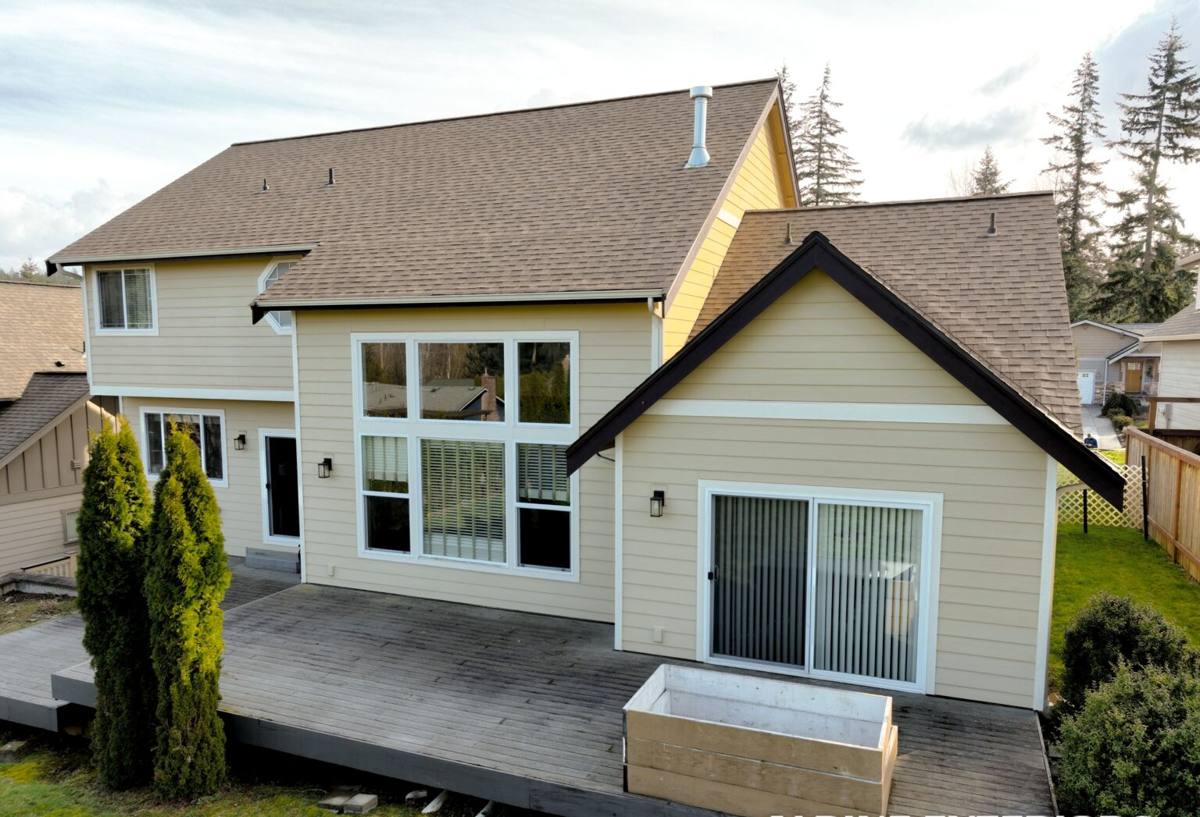
Why "Custom" Matters More Than It Sounds
A lot of homes in this area were built in phases, by different builders, over several decades. That means window openings are rarely perfectly square, and they're rarely a stock size you can order off a shelf. When a contractor tries to force a standard window into a non-standard opening, they usually end up doing one of two things: shimming and packing the gap with extra trim (which hides problems instead of solving them), or cutting the opening larger, which disturbs siding, sheathing, and flashing that were working fine before.
Custom window installation means the window itself — or the way it's framed and flashed — is built to match your actual opening, not the other way around. That's a more careful process, but it's also the only way to get a weathertight seal on an older or irregular home without tearing more of the wall apart than necessary.
Common Reasons Happy Valley Homes Need Custom Sizing
- Older construction with hand-framed, slightly out-of-square openings
- Additions or remodels where the window opening doesn't match current standard sizes
- Homes with deep window trim or interior sill details original owners want to preserve
- Replacing a single unusual window (a picture window, a corner unit, an angled gable window) without matching stock options
- Upgrading from single-pane or early dual-pane units installed decades ago, where the rough opening has settled or shifted slightly over time
What Local Homes Are Actually Up Against
Driving Rain and Wind-Driven Moisture
Whatcom County doesn't get the heaviest rainfall totals in the state, but it gets a lot of wind-driven rain, and wind-driven rain is what actually causes window leaks. Rain that falls straight down mostly runs off. Rain that's pushed sideways by wind gets forced up under trim, into gaps around the frame, and behind flashing that isn't lapped correctly. Over years, that's how you get soft framing, stained drywall below a window, or a musty smell in a room you can't quite place.
Moss, Mildew, and Shaded Lots
A lot of homes around Sudden Valley sit under tree cover or on north-facing slopes that don't get much direct sun. That shade is nice in July and miserable for building materials the rest of the year — it means surfaces stay damp longer, moss gets a foothold on sills and trim, and wood components take longer to dry out between rain events. Vinyl and fiberglass frames don't feed moss the way wood trim can, but the trim, caulking, and flashing around any window are still vulnerable if they're shaded and slow to dry.
Temperature Swings and Condensation
Lake-adjacent and low-lying areas get cool, damp mornings even in summer, and a real cold snap a few times each winter. That temperature swing is what drives condensation on older, poorly-sealed windows — and it's also a stress test for the seal between the glass unit and the frame. If that seal has failed, you'll see fogging between the panes that never clears. That's not a cleaning problem; it means the insulated glass unit itself needs to be replaced.
Frame Material Options
We don't push one brand or material on every job — the right choice depends on your home, your budget, and how much upkeep you actually want to do. Here's how the common options compare for this specific climate.
| Material | Moisture Resistance | Maintenance | Typical Fit |
|---|---|---|---|
| Vinyl | Very good — won't rot, doesn't feed moss | Low; occasional cleaning | Best value for most replacement projects |
| Fiberglass | Excellent — very stable in wet/cold swings | Low | Good for larger openings or where extra rigidity matters |
| Wood-clad (exterior-clad, wood interior) | Good on the exterior; interior wood needs care | Moderate — exterior clad is low-upkeep, interior wood should be checked and finished periodically | Homes wanting a traditional wood interior look |
| Solid wood | Requires diligent upkeep in this climate | High — regular painting/sealing needed to prevent moisture damage | Historic or period-accurate restorations only, by owner preference |
For most Happy Valley replacement projects, we steer people toward vinyl or fiberglass because they hold up with the least ongoing maintenance in a climate that stays damp for long stretches of the year. Solid wood frames can look great, but given how long our moss season runs, they demand a level of upkeep most homeowners don't want to sign up for — that's a maintenance trade-off, not a knock on wood as a material.
What a Correct Installation Actually Involves
The window unit itself is maybe half of what determines whether the job holds up. The other half is what happens around it — flashing, sealing, and how it ties into the wall assembly. This is where a lot of leaks trace back to, years after the fact.
- Sill pan flashing installed under the window so any water that does get past the frame drains back out, instead of sitting on the framing
- Proper flashing sequence — house wrap or weather-resistive barrier lapped correctly over the window's flanges, not just caulked at the surface
- Backer rod and sealant at the right joints, not sealant used as a substitute for proper flashing
- Insulation around the frame that fills the gap without over-compressing and bowing the frame out of square
- Interior and exterior trim reset cleanly, matching existing trim details where the home calls for it
- Level, plumb, and square check before final fastening — a window that's slightly racked will bind, won't seal evenly, and will wear its hardware faster
If a contractor's plan for your window job skips any of these steps — especially the sill pan and flashing sequence — that's worth asking about directly. It's the single biggest predictor of whether a window leaks in year three versus year fifteen.
Our Process From Estimate to Final Walkthrough
- On-site assessment. We look at your existing openings, note any non-standard sizing, and check the condition of the surrounding siding, trim, and sheathing — not just the window itself.
- Honest scoping. We tell you upfront if a window replacement is likely to uncover water damage or soft framing once the old unit comes out, so there are no surprise change orders mid-project.
- Custom measurement and ordering. Openings are measured precisely; where sizing is irregular, we account for it in the order instead of forcing a stock size to fit.
- Removal and prep. Old units come out carefully, with the opening inspected and any compromised framing or flashing addressed before the new window goes in.
- Installation with full flashing detail. Sill pan, weather-resistive barrier integration, insulation, and sealant — done in the right order, not shortcut.
- Trim and finish work. Interior and exterior trim reset to match your home, with attention to a clean, tight reveal line.
- Final walkthrough. We check operation, seals, and finish with you before calling the job done.
Tying Windows Into Your Siding and Trim
Window replacement and siding work overlap more than most homeowners expect, because the flashing at a window opening has to integrate with whatever's covering the wall around it. If your siding is aging or already showing gaps at the trim, replacing windows without addressing that boundary just moves the leak risk a few inches over. This is one advantage of hiring a crew that does both siding and windows: we're not treating your window as an isolated product install, we're treating it as one piece of a wall system that has to shed water as a whole. If your siding is due for attention in the same area, it's worth discussing both at once — it's more efficient than opening the same wall twice.
Cost Factors Worth Understanding
We don't publish flat per-window pricing because the honest answer is "it depends," but these are the real factors that move the number, in rough order of impact:
| Factor | Why It Matters |
|---|---|
| Standard vs. custom sizing | Non-standard openings cost more to measure, order, and fit correctly |
| Frame material | Vinyl is typically the most budget-friendly; fiberglass and wood-clad cost more upfront |
| Condition of the existing opening | Rot or water damage found during removal adds repair scope before the new window can go in |
| Number and size of windows | Larger units and multi-window projects have different labor and material needs than a single small window |
| Trim complexity | Matching detailed existing trim takes more time than a simple, plain reveal |
The only way to get a real number is a site visit — we'll always give you a written estimate before any work starts, and we'll flag anything that could change the price once we're into the job.
Why a Crew That Already Works Happy Valley Matters
Every neighborhood has its own quirks, and knowing them ahead of time saves you money and headaches. Working regularly in and around Sudden Valley means we're already familiar with the kind of construction common to the area's homes, the drainage and moisture patterns that come with lakeside and wooded lots, and — for homes that are part of a community association with architectural or design guidelines — how to plan a project that fits within those requirements instead of running into them mid-job. We're not learning your area's climate and building patterns on your dime.
If you're ready to talk about custom windows for your Happy Valley home, we're happy to come take a look and give you a straightforward, no-pressure estimate — just fill out the form below and we'll get in touch.