 Sudden Valley
 Why Decks in Sehome and Sudden Valley Wear Out Faster Than You'd Expect
A deck in Whatcom County doesn't fail the way a deck in a dry climate fails. Out here, the enemy isn't one big storm — it's months of low-grade exposure that never really lets up. Salt-tinged air off the Sound, driving rain that gets pushed sideways under railings and against ledger boards, and a moss season that can run from October well into spring all work on wood and fasteners at the same time. By the time a homeowner notices a problem, it's usually been building for a year or two underneath the surface.
Sehome's mix of older homes and mature tree canopy means a lot of decks sit in partial shade for much of the day, which slows drying time after every rain. Add moss and algae holding moisture against the boards, and you get a slow, steady breakdown of wood fiber that a quick pressure wash in July won't fix. We see the same pattern on the Sudden Valley side, where lake proximity and heavy tree cover create similar shade and humidity conditions, just with a different set of prevailing winds.
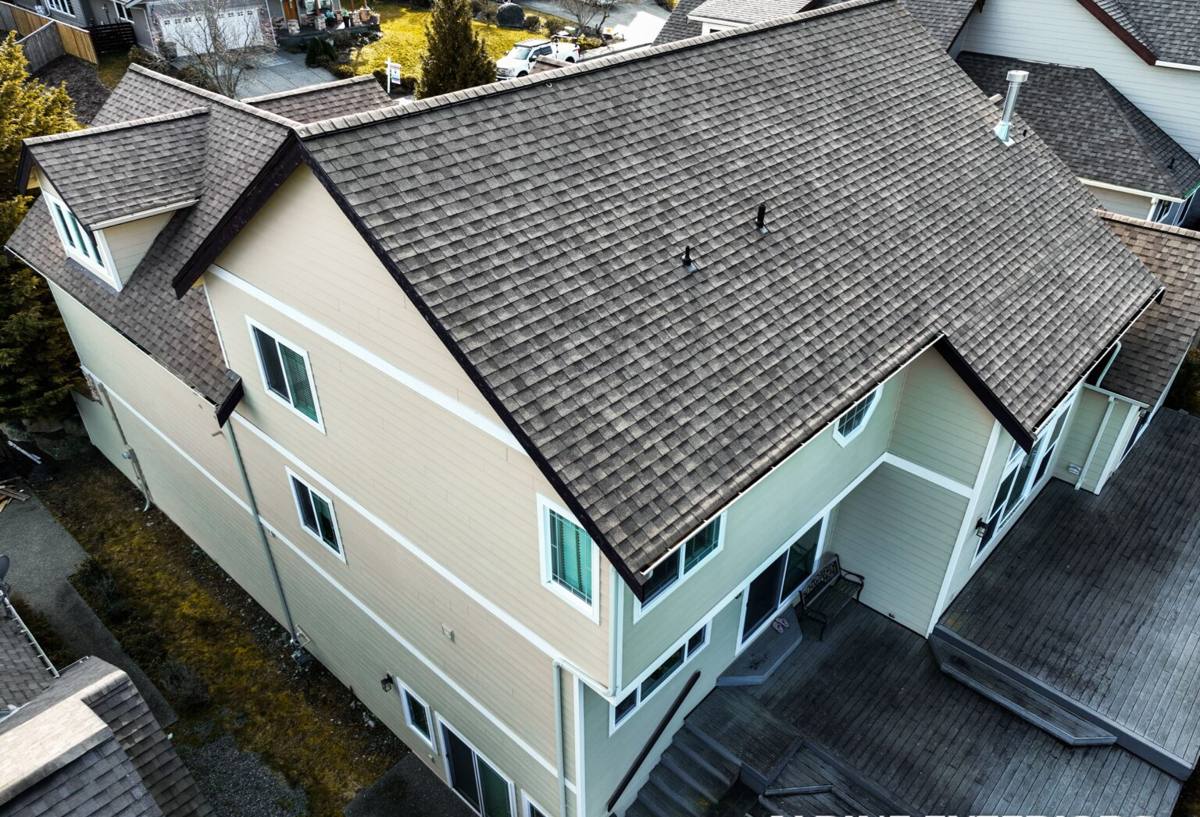
Signs Your Deck Needs Repair, Not Just a Cleaning
Most decks give warning signs long before anything becomes dangerous. The trouble is that a lot of those signs look cosmetic at first — a stain, a soft spot, a bit of moss — when they're actually pointing at something structural underneath.
- Boards that feel spongy or flex noticeably when you walk on them, especially near the house
- Persistent moss or dark staining that comes back within weeks of cleaning
- Rust streaks below joist hangers, post bases, or fastener heads
- Gaps opening up between the ledger board and the house siding
- Railings that wiggle side to side or posts that feel loose at the base
- Stairs that have started to twist, cup, or pull away from the stringers
- A musty smell coming from underneath the deck, especially after rain
Any one of these on its own might be minor. Two or three together, especially involving the ledger or the posts, usually means it's time for a proper inspection rather than another round of surface cleaning.
What a Proper Deck Repair Actually Involves
Structural Framing and the Ledger Board
The ledger board — the piece that bolts the deck to the house — is the single most important part of the structure and the most common source of hidden failure. If flashing was installed poorly, or not at all, water tracks behind it every time it rains and slowly rots the framing from the inside. We check ledger flashing, the condition of the rim joist behind it, and every joist hanger for rust, cracking, or fastener pull-out before we ever touch the visible decking.
Decking Boards and Fasteners
Individual board replacement only works if the framing underneath is sound. We pull suspect boards, check the joists beneath them for soft or discolored wood, and replace fasteners as we go — this is a climate where standard galvanized screws corrode faster than people expect, so we match fastener coating to the decking material rather than grabbing whatever's fastest.
Railings and Guardrails
Railing failures are a safety issue first and a code issue second. A post that's loose at the base is usually a sign of rot in the framing it's attached to, not just a loose bolt. We re-anchor posts into sound wood, not just re-tighten existing hardware into material that's already failing.
Repair vs. Rebuild: How We Make the Call
Not every deck with problems needs to come down. But pouring money into cosmetic fixes on a deck with failing framing wastes a homeowner's budget. Here's roughly how we think through it:
| Condition Found | Usually Repairable | Usually Needs Rebuild |
|---|---|---|
| Ledger board and flashing | Minor gaps, isolated flashing failure | Widespread rot behind ledger, structural rim joist damage |
| Joists and beams | One or two soft spots, localized | Rot or splitting across multiple joists |
| Decking boards | Scattered cupped or split boards | Majority of boards soft, delaminating, or gapped |
| Posts and footings | Surface rot at the base, sound footing | Footing movement, undersized or missing footings |
| Railings | Loose hardware, isolated post | Multiple posts loose, non-compliant height or spacing |
The honest answer is that most decks we're called out to fall in the middle — sound overall structure with a handful of problem areas we can address without a full teardown. We'll tell you plainly when a repair isn't worth it, and we'll tell you just as plainly when it is.
Our Deck Repair Process
- Full inspection — we get underneath the deck, check the ledger, joists, posts, and footings, not just the walking surface
- Written scope — you get a clear breakdown of what's failing, what's still sound, and what your options are
- Material selection — matched to what the rest of your deck is built from, or a clear conversation if we recommend a change
- Structural repairs first — framing, flashing, and post bases get addressed before any cosmetic work
- Surface repair or replacement — boards, railings, and stairs brought back to a safe, solid condition
- Final walkthrough — we check the whole deck together before calling the job done
Materials We Use and Why
Pressure-Treated Lumber
Still the most common material for deck framing, and for good reason — it's affordable, widely available, and holds up well when it's properly flashed and fastened. The trade-off is that it needs periodic maintenance: sealing or staining every couple of years to keep moisture out, especially in a climate that stays damp as long as ours does.
Composite and Cedar Decking
For visible decking boards, composite materials trade a higher upfront cost for lower long-term maintenance and better resistance to moss staining — a real advantage given how long moss season runs here. Cedar has a warmer, natural look but needs more consistent upkeep to resist the same moisture and moss pressure. We'll talk through the honest maintenance burden of each rather than push whatever's easiest for us to install.
Fasteners and Hardware
This is an area where cutting corners causes problems years down the road, not immediately. We use fasteners and connector hardware rated for the specific decking and framing material involved, since mismatched metals or under-rated coatings are exactly what produces the rust streaking and fastener failure we see on older repairs.
Permits, Code, and Working Locally in Whatcom County
Deck repairs that touch structural framing, footings, or railings can trigger permit requirements depending on scope, and guardrail height and baluster spacing are governed by code, not preference. We handle that conversation as part of the scope-of-work discussion so there are no surprises mid-project. Knowing how that process works locally — not guessing at it from a generic checklist — is part of what a Whatcom County-based crew brings to the table.
Maintenance Checklist to Extend the Life of Your Repair
A repair done right will last a long time, but a little seasonal attention makes a real difference in a climate like this one:
- Clear leaves and debris out of gaps between boards before fall rains set in
- Treat moss and algae buildup early rather than letting it sit through winter
- Check railings and stair rails for movement once or twice a year
- Look under the deck after a heavy rain for standing water or new staining
- Reseal or restain wood decking on the schedule the product calls for, not just when it looks bad
- Keep gutters and downspouts clear so runoff isn't draining directly onto or under the deck
Why Hiring a Crew That Already Works Sehome and Sudden Valley Matters
Deck problems here follow patterns tied to local shade, drainage, and exposure that don't show up the same way everywhere. A crew that regularly works in Sehome and Sudden Valley has already seen how moss builds up on north-facing decks under mature trees, how salt-influenced air affects fastener life near the water, and which older construction habits in this area tend to cause ledger problems down the line. That familiarity means fewer surprises, a faster and more accurate inspection, and repair decisions based on what actually happens to decks in this specific climate — not a one-size-fits-all national playbook.
If your deck has soft spots, moss that keeps coming back, or railings that don't feel as solid as they used to, we're happy to take a look. Reach out for a free, no-pressure estimate using the form below.