 Sudden Valley
 Why Edgemoor Decks Take More Planning Than Most
Edgemoor sits close enough to the water that homes here deal with a combination most inland Whatcom County properties don't: salt-laden air off the Sound, driving rain that comes in sideways during winter storms, and a moss season that can stretch from October well into May. A deck built with generic, big-box specs might look fine for a year or two, then start showing soft spots, rusting hardware, or a slick green film that never fully goes away. None of that is inevitable. It's a sign the deck was built for a drier, calmer climate than the one it's actually sitting in.
We build custom decks for homeowners throughout the Sudden Valley area, including Edgemoor, and the difference between a deck that lasts 10 years and one that lasts 25+ almost always comes down to decisions made before a single board goes down: material selection, framing details, fastener grade, and how water is directed away from the structure. This page covers what we've found actually matters for decks in this specific stretch of Whatcom County.
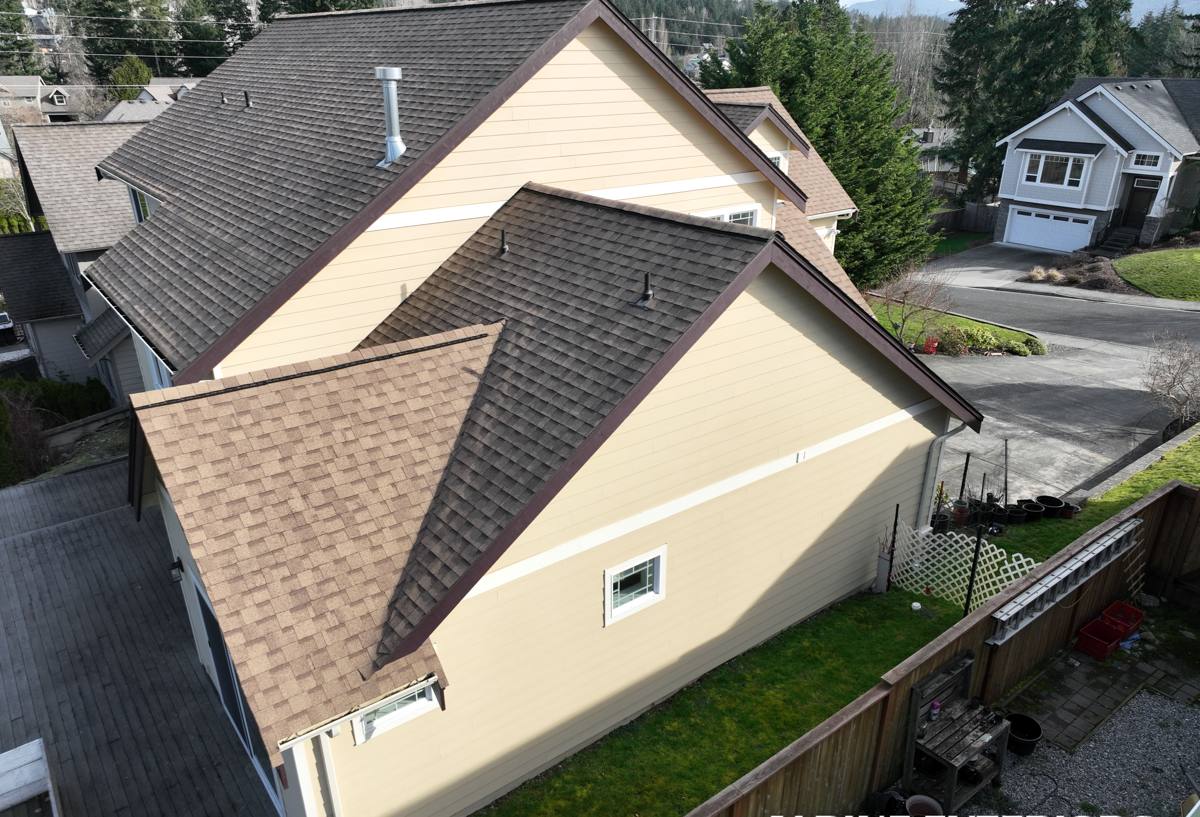
What Salt Air, Rain, and Moss Actually Do to a Deck
Salt Air and Metal Fatigue
Airborne salt accelerates corrosion on anything metal — fasteners, joist hangers, railing brackets, and structural screws. On a standard-grade deck, that means the parts you can't see (the ones holding the whole thing together) can be quietly failing years before the decking surface shows any wear. Once corrosion starts on a hanger or screw, it doesn't stop; it just gets harder to catch until something moves or sags.
Driving Rain and Water Intrusion
Rain that comes in at an angle, which is common with the wind patterns off the water near Edgemoor, doesn't just fall straight down onto a deck surface — it gets pushed against the house, up under railings, and into any gap that isn't properly flashed or sealed. Over time this shows up as rot at the ledger board (where the deck attaches to the house), soft spots around post bases, and staining or cupping in the decking boards themselves.
Moss and the Long Wet Season
Moss needs shade, moisture, and time — Edgemoor's tree cover and long stretch of overcast, damp weather provide all three. Moss on a deck isn't just cosmetic. It holds moisture against the surface far longer than open air would, which softens wood fibers, degrades sealants faster, and creates a genuinely slippery, unsafe walking surface on stairs and ramps.
Choosing a Decking Material That Fits This Climate
There's no single "best" decking material — there's a best material for a given budget, sun/shade exposure, and how much maintenance you're willing to do. Here's how the common options actually perform in a salt-air, high-moisture environment like Edgemoor.
| Material | How It Handles Local Conditions | Maintenance | Typical Lifespan |
|---|---|---|---|
| Pressure-treated lumber | Affordable, but needs consistent sealing to resist moisture and moss; softer under long-term wet exposure | Annual cleaning and re-sealing recommended | 10–15 years with upkeep |
| Cedar | Naturally moisture- and insect-resistant, handles our climate well, but greys and can host moss if not cleaned periodically | Periodic cleaning, occasional oil/stain | 15–20 years with upkeep |
| Composite decking | Resists rot and moisture intrusion well; surface texture matters — smoother caps shed moss more easily than heavily wood-grained ones | Low; occasional wash-down | 25–30 years |
| PVC/capped polymer | Fully sealed surface, best moisture resistance of the group, doesn't absorb salt air moisture | Lowest; wash-down only | 25–30+ years |
For Edgemoor specifically, we lean toward composite or capped polymer decking on shaded, north-facing, or heavily treed lots where moss pressure is highest, and we're comfortable recommending cedar or well-maintained pressure-treated lumber on more open, sun-exposed sites where airflow does some of the drying work for you.
Fastener and Hardware Grade
This is the part that's easy to cut corners on because it's invisible once the deck is finished — and it's the part we won't compromise on near the water. We use stainless steel or heavy hot-dip galvanized fasteners and connectors rated for coastal/high-corrosion exposure, not the standard-duty hardware that's fine 20 miles inland but starts rusting within a few seasons out here.
Framing and Structure: What's Underneath Matters More Than the Surface
A deck's structural frame — the ledger, joists, beams, and posts — does all the real work. Surface-level problems (a cupped board, a stain) are annoying; structural problems are dangerous, and they're the ones that get missed because they're hidden under the decking.
- Ledger attachment: Properly flashed and lag-bolted or through-bolted into the house framing, with a water-diverting flashing detail above it — not just caulked and screwed.
- Joist spacing and sizing: Matched to the decking material and span, since composite and PVC boards often require tighter joist spacing than solid lumber.
- Post bases: Set on proper footings above grade, with post base hardware that keeps end grain off standing water — a common rot-starting point on older decks.
- Joist tape or protective barrier: A moisture barrier on top of each joist keeps rain from wicking into the wood through fastener holes, which matters more here than in drier parts of the state.
Drainage: The Detail Most Decks in This Area Get Wrong
Standing water is the enemy of any deck, and Edgemoor's rain volume makes drainage planning non-negotiable rather than optional. We grade and gap decking to shed water quickly, keep the space underneath a raised deck ventilated so it can dry between storms, and, where a deck sits over living space or a patio below, install a proper under-deck drainage system rather than relying on gaps alone. We also make sure grading around post footings directs water away from the structure instead of pooling against it — a detail that's easy to overlook and expensive to fix later.
Railings and Guards Built for Wind and Salt
Homes closer to the water tend to get more wind exposure, and railings take the brunt of it. We specify railing hardware and post connections rated for the loads involved, use corrosion-resistant fasteners throughout, and avoid railing systems with hidden moisture traps in their design — cable rail and certain metal picket systems, in particular, need connection points detailed carefully so they don't become rust points within a few years.
Our Process for a Custom Deck Build
- On-site assessment: We walk the property, note sun/shade exposure, tree cover, wind exposure, and existing drainage patterns before recommending materials.
- Design and material selection: We talk through decking material, railing style, and layout based on how you'll actually use the space and how much maintenance you want to take on.
- Permitting: We handle the permit process where required, which keeps the project compliant with Whatcom County building requirements.
- Framing: Structural work first — ledger, footings, posts, beams, and joists — inspected before decking goes down.
- Decking, railing, and finish work: Surface material, railings, stairs, and any built-ins (benches, planters, lighting) installed to spec.
- Final walkthrough: We go over care and maintenance specific to the material you chose so you know what upkeep, if any, is actually needed.
What a Realistic Budget Looks Like
Costs vary a lot based on size, material, height off grade, and railing complexity, but the biggest cost drivers on an Edgemoor project are usually the ones below. We'll always give you a firm, itemized quote before work starts — no surprise change orders for things we could have flagged up front.
| Cost Factor | Why It Matters Here |
|---|---|
| Decking material | PVC and composite cost more up front than lumber but reduce long-term maintenance in a wet, mossy climate |
| Height above grade | Taller decks need more substantial footings, posts, and often guardrails, which adds labor and material |
| Site drainage work | Sites with poor natural drainage may need added grading or an under-deck drainage system |
| Fastener/hardware grade | Coastal-rated stainless or galvanized hardware costs more than standard hardware but avoids early corrosion |
| Railing style | Cable, glass, and certain metal railing systems cost more than standard wood or composite balusters |
Maintaining an Edgemoor Deck Year-Round
Even a well-built deck needs some seasonal attention in this climate. Here's what we recommend regardless of material:
- Sweep leaves and debris off the surface regularly in fall — trapped organic matter is what moss and mold feed on.
- Rinse the deck surface, including between boards, a couple of times a year to clear salt residue and organic buildup.
- Check railing connections and fasteners annually for early rust or looseness, especially on hardware closest to the ground.
- Keep gutters and downspouts clear so roof runoff isn't dumping extra water onto or near the deck.
- Reseal or re-oil wood decking on the manufacturer's recommended schedule — don't wait until it's visibly grey and dry.
- Trim back overhanging branches where possible to reduce shade and speed up drying time after rain.
Why It Matters That We Already Work in Edgemoor
A crew that mostly builds decks inland, in drier microclimates, doesn't always default to coastal-rated hardware, moisture barriers, or drainage detailing unless a homeowner specifically asks for it — because in their usual conditions, it's optional. Out here, it isn't. We build decks throughout the Sudden Valley area and know which lots hold moisture longer, which exposures get hit hardest by wind-driven rain, and which materials actually hold up rather than just looking good on a sample board. That local pattern recognition is part of what you're paying for as much as the labor itself.
If you're planning a new deck or replacing one that's showing its age, we're happy to come take a look and put together a straightforward, no-pressure estimate — just fill out the form below.