 Sudden Valley
 Roofing in Edgemoor: What the Climate Actually Demands
Edgemoor sits in one of the wetter, greener corners of Whatcom County, and that combination is hard on roofs in a specific way. Homes here deal with salt-tinged marine air, long stretches of driving rain off the water, and heavy tree cover that keeps roof surfaces shaded and damp for months at a time. None of that is dramatic on its own, but stacked together over a Pacific Northwest winter, it adds up to accelerated wear that a lot of roofing materials and installation shortcuts simply aren't built to handle.
The biggest year-round issue isn't wind or hail — it's moisture that never fully dries out. Moss doesn't just sit on a roof looking bad; its root structure lifts shingle edges, holds water against the surface, and works granules loose over time. Combine that with fasteners and flashing exposed to salt air, and you get corrosion and seal failure years before a roof in a drier inland climate would show the same wear. A roof replacement done right for an Edgemoor home has to be planned around this reality from day one, not patched around it later.
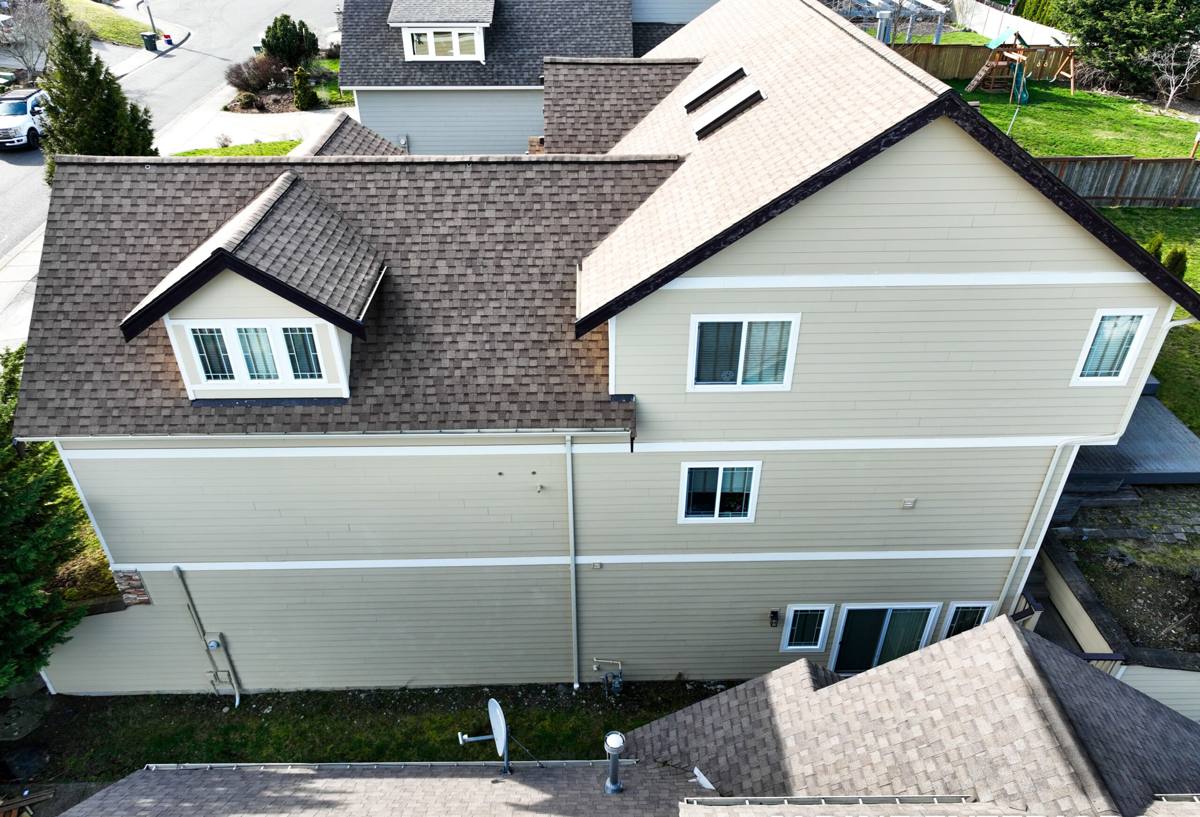
Signs Your Edgemoor Roof Needs Replacing, Not Repair
Not every roofing problem calls for a full replacement. But in this climate, certain signs mean repairs are just delaying a bigger, more expensive failure. If you're seeing more than one or two of the following, it's worth getting a straight assessment before spending money on patches.
- Shingles that are cupping, curling at the edges, or missing granules in patches, especially on north-facing slopes that stay shaded
- Moss or dark streaking that comes back within a season or two of cleaning, even after treatment
- Soft spots in the decking you can feel when walking the roof, or sagging visible from the ground
- Daylight visible through the attic roof boards, or damp insulation and musty smell in the attic
- Rust or granule buildup around flashing, vents, and valleys — often the first place salt air and standing water do damage
- A roof that's 20+ years old on standard asphalt, or showing wear well ahead of its expected lifespan
- Interior ceiling stains that reappear after rain, even if a prior repair seemed to fix it
If a roof is only a few years from the end of its useful life and already needs repairs, patch-and-wait usually costs more over time than doing the replacement once, correctly.
What a Correct Roof Replacement Actually Involves
A roof replacement is more than swapping old shingles for new ones. In a climate that stays wet as long as Whatcom County's does, the layers underneath the shingles matter as much as the shingles themselves.
Tear-Off and Deck Inspection
We remove the existing roofing down to the deck rather than layering over it. That's the only way to actually see the plywood or plank sheathing underneath — and in a shaded, damp neighborhood like Edgemoor, hidden rot around valleys, vent penetrations, and eaves is common even when the roof looks fine from the ground. Any soft or delaminated decking gets replaced before anything new goes down. Skipping this step is the single most common shortcut that leads to early roof failure.
Underlayment and Flashing
Underlayment is your backup layer if wind-driven rain ever gets under the shingles, which happens more often here than in drier regions. We use synthetic or self-adhered underlayment appropriate to the roof's slope and exposure, with extra protection at eaves, valleys, and any low-slope sections where water sits longer. Flashing around chimneys, skylights, and wall intersections gets replaced, not reused — old flashing is a leading cause of slow leaks that show up as interior stains months later.
Ventilation
Proper intake and exhaust ventilation keeps the attic dry and close to outdoor temperature, which slows moss growth on the roof surface and prevents condensation damage from the inside out. A lot of older Edgemoor-area homes were built with minimal or blocked ventilation, and that's often invisible until you're inspecting decking that's rotting from underneath rather than from weather exposure above.
Choosing the Right Material for This Climate
There's no single "best" roofing material — the right choice depends on your home's exposure, roof slope, budget, and how much long-term maintenance you're willing to do. Here's how the common options stack up for a shaded, wet, salt-air environment like Edgemoor's.
| Material | Typical Lifespan | Moss & Moisture Behavior | Maintenance |
|---|---|---|---|
| Architectural asphalt shingles | 25–30 years | Good with proper ventilation and zinc/copper strips; moss-resistant granule options available | Periodic moss treatment and gutter cleaning |
| 3-tab asphalt shingles | 15–20 years | More prone to curling and granule loss in constant shade/moisture | More frequent inspection as it ages |
| Standing seam metal | 40–50+ years | Sheds moisture fast, minimal moss growth on smooth panels | Low; occasional fastener and sealant check |
| Composite/synthetic shake | 30–50 years | Resists moisture absorption better than wood shake | Low to moderate |
| Wood shake | 20–30 years (climate-dependent) | Absorbs moisture, higher moss and rot risk in shaded, damp settings | High — regular treatment needed |
For most Edgemoor homes, a quality architectural shingle with proper ventilation and moss-inhibiting strips hits the right balance of cost and durability. Metal is worth considering on lower-slope sections or homes with heavy tree cover where moss is a constant fight. We'll walk you through what fits your specific roof rather than pushing one product across every job — that's a professional judgment call, not a one-size answer.
Our Process, Start to Finish
- On-site inspection. We walk the roof and attic, check decking condition, ventilation, and flashing, and photograph anything that affects the scope or price.
- Written estimate. You get a clear breakdown of materials, labor, and any decking or flashing repairs anticipated, plus what could add cost if hidden damage turns up during tear-off.
- Scheduling around the weather. Given how much rain this area gets, we plan install windows carefully and keep the roof protected if conditions shift mid-job.
- Tear-off and deck repair. Old roofing comes off, decking is inspected and replaced where needed, and the site is protected throughout.
- Underlayment, flashing, and material installation. Installed to manufacturer spec and matched to your roof's actual exposure, not a generic template.
- Ventilation check and final inspection. We confirm intake and exhaust are working together, then walk the finished roof with you.
- Cleanup. Magnetic sweep for nails, full debris removal, and haul-away — your yard and driveway should look untouched when we leave.
What Affects the Cost of a Roof Replacement
Every roof is priced individually, but the same handful of factors drive most of the cost difference between a straightforward job and a more involved one.
| Factor | Why It Matters |
|---|---|
| Roof size and number of planes | More square footage and complexity means more material and labor time |
| Roof pitch and access | Steep or hard-to-access roofs require more safety setup and slow the work |
| Decking condition | Rot or soft spots found at tear-off add material and labor not visible in a ground inspection |
| Material choice | Asphalt, metal, and composite options carry different material and installation costs |
| Number of penetrations | Chimneys, skylights, and vents each need flashing work, adding time |
| Tear-off layers | Removing multiple old layers of roofing takes longer than a single-layer tear-off |
We'd rather flag likely cost drivers during the initial inspection than surprise you mid-project — if we can see a soft spot or ventilation issue from the attic, it goes in the estimate up front.
Why a Crew That Already Works Edgemoor Matters
Roofing crews that work the same neighborhoods repeatedly build a practical feel for how local conditions actually behave — which slopes hold moss longest, where tree cover keeps a roof shaded most of the year, and what ventilation setups tend to be original-builder shortcuts versus proper installs. That's not something you get from a crew that's driving in from out of the area for a one-off job.
There's also the practical side: familiarity with Whatcom County permitting and inspection requirements, realistic scheduling around this area's rain patterns, and knowing which material and ventilation choices actually hold up here rather than just on paper. A local crew has a reputation to protect in the community it works in — that's a real incentive to do the job right the first time.
Keeping a New Roof Performing After Install
A correctly installed roof still needs basic upkeep in this climate to hit its full lifespan. None of this is complicated, but skipping it is how moss and moisture problems creep back in.
- Clean gutters at least twice a year, more often if you're under heavy tree cover
- Have moss treated at the first sign of growth rather than waiting for it to spread
- Keep overhanging branches trimmed back to reduce shade and debris buildup on the roof
- Check attic ventilation isn't blocked by insulation or storage after any attic work
- Schedule a roof check-up every couple of years, even if nothing looks wrong from the ground
If you're seeing signs of wear on an Edgemoor-area roof, or just want an honest read on whether repair or replacement makes sense for your situation, we're happy to take a look. The estimate is free, there's no pressure attached to it, and you'll get a straight answer either way — just fill out the form below to get started.