 Sudden Valley
 Why Edgemoor Homes Wear Out Siding Faster Than You'd Expect
Edgemoor sits close enough to the water that homes here deal with a different set of stresses than siding thirty miles inland. Salt-laden air off Bellingham Bay works into seams and fastener heads. Driving rain off Puget Sound doesn't fall straight down — it hits siding sideways, which means every lap joint, corner, and butt seam is under more pressure than the installation manual's baseline assumptions. And then there's moss. Whatcom County's long wet season, with tree cover common in Edgemoor's older residential lots, keeps north- and west-facing walls damp for weeks at a stretch. Put those three things together and you get a simple truth: siding that would hold up fine in a drier, more exposed part of the state can fail early here if it's the wrong product or the installation cuts corners.
This isn't a scare story — it's why we're specific about what we install and how we install it in this neighborhood. Homes in Edgemoor deserve a siding system engineered for exactly these conditions, put on by a crew that has already worked the quirks of this stretch of coastline.
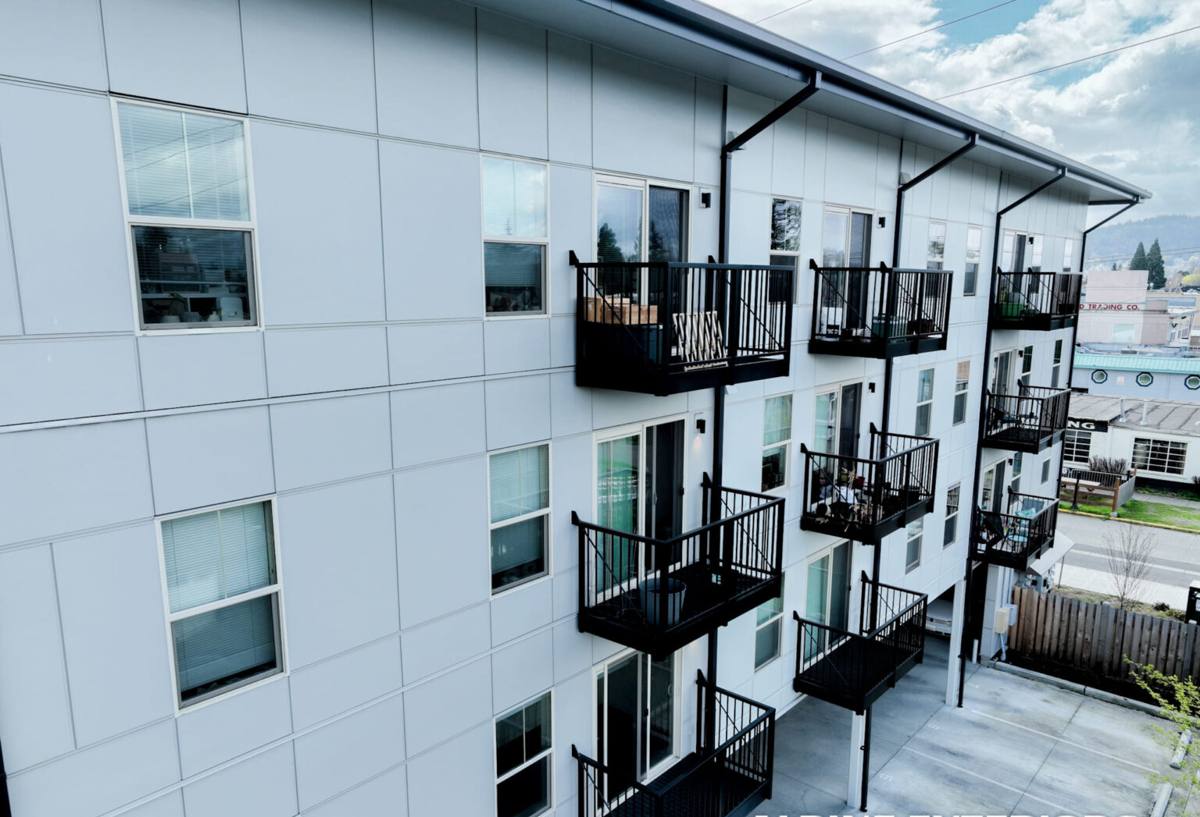
What Edgemoor's Climate Actually Demands From Siding
Salt Air and Metal Fasteners
Salt air accelerates corrosion on anything metal — nail heads, flashing, trim fasteners. Over years, corroding fasteners can loosen, stain the siding face, or eventually let water find its way behind the cladding. The fix isn't complicated, but it has to be done on purpose: corrosion-resistant fastener specs, correct flashing details at every penetration, and a siding material that doesn't rely on a painted surface alone to keep water out.
Driving Rain and Wind-Driven Moisture
Wind off the water pushes rain sideways and upward under eaves, around window trim, and into corners that would stay dry in a calmer inland location. This makes water-resistive barrier detailing, proper lap overlap, and correctly caulked and flashed penetrations more important here than almost anywhere else in Whatcom County. A siding job that looks fine on a dry day can leak for years before anyone notices, because the damage happens behind the wall.
Moss, Shade, and Extended Dampness
Edgemoor's tree cover and marine humidity mean shaded wall sections can stay damp long after a storm passes. Moss and algae growth on siding isn't just cosmetic — sustained moisture against a wood-based or poorly sealed product is exactly the condition that leads to swelling, soft spots, and paint failure. Siding here needs to shed water fast and resist moisture absorption at the material level, not just at the paint layer.
Why We Only Install James Hardie Fiber Cement
We standardized on James Hardie fiber cement siding for every home we work on, including Edgemoor, and we don't install vinyl, LP SmartSide, cedar, primed spruce, Cemplank, or Allura. That's a deliberate professional standard, not a sales pitch, and it's worth explaining plainly.
- Non-combustible core: fiber cement doesn't feed a fire the way wood-based siding can — a meaningful factor as wildfire smoke seasons have become a regular part of Pacific Northwest summers.
- Moisture behavior: Hardie's fiber cement doesn't swell, rot, or delaminate the way engineered wood products can when they take on sustained moisture, which matters directly in a damp, shaded, salt-air environment like Edgemoor.
- Factory-applied ColorPlus finish: the color and protective coating are baked on at the factory under controlled conditions, not brushed on in the field, which gives more consistent, longer-lasting coverage than field-applied paint on raw wood substrate.
- Climate-engineered product lines: Hardie's HZ10 formulation is specifically engineered for wetter, harsher-weather climate zones, which fits this part of Washington better than a one-size-fits-all product.
- Warranty structure: Hardie backs its siding with a strong, transferable limited warranty, which protects the investment for the current owner and adds resale value for the next one.
Vinyl siding is inexpensive and low-maintenance, but it can warp in heat, crack in cold snaps, and it relies on plastic seams and clips rather than a rigid, paintable surface — trade-offs we're not willing to put our name behind. Wood-based and primed-spruce products can look beautiful, but they demand more diligent field-painting and repainting cycles than most homeowners realize, and any lapse in that maintenance in a wet climate like this one shortens the product's life fast. We'd rather install one product correctly, every time, than offer five options and let the climate sort out which one fails first.
What Correct Siding Installation Actually Involves
Fiber cement siding is only as good as the installation behind it. James Hardie's own installation guidelines are specific for a reason — skipping steps is the single biggest cause of premature siding failure, moisture intrusion, and voided warranties. A correct job includes:
Weather Barrier and Flashing First
Before a single board goes up, the wall needs a continuous, correctly lapped water-resistive barrier, with flashing integrated at every window, door, and penetration so water is directed out and down, never trapped behind the cladding.
Proper Clearances and Gaps
Hardie siding needs specific clearance from grade, roof lines, decks, and other trim to avoid capillary draw and standing moisture — a detail that's easy to shortcut and expensive to ignore, especially in a wet marine climate.
Fastening to Spec
Corrosion-resistant fasteners, correct spacing, and correct penetration depth into structural framing — not just sheathing — keep the siding secure through wind events and prevent the loosening that lets water behind the wall over time.
Caulking and Sealant Discipline
Joints and trim need the right sealant in the right places — and just as importantly, siding shouldn't be over-caulked in spots that need to stay open for drainage. Correct field priming and painting of cut edges is essential too, since a factory-finished board that's cut on site exposes raw material that needs to be sealed before it's exposed to weather.
Our Process for Edgemoor Projects
| Step | What Happens | Why It Matters Here |
|---|---|---|
| 1. On-site assessment | We walk the exterior, check existing siding, sheathing, and moisture entry points | Salt air and shade patterns vary house to house even within Edgemoor |
| 2. Tear-off and sheathing check | Old siding removed, sheathing inspected for hidden rot or damage | Long-term moisture exposure can hide damage behind old cladding |
| 3. Weather barrier and flashing | New water-resistive barrier and flashing installed at every penetration | This is the layer that actually stops wind-driven rain, not the siding face |
| 4. Hardie installation to spec | Fastening, clearances, and joint treatment per manufacturer guidelines | Protects the warranty and the wall assembly for decades, not years |
| 5. Trim, caulk, and final detail | Corners, trim boards, and penetrations sealed correctly | Prevents the small gaps that let moss and moisture get a foothold |
| 6. Walkthrough | We review the finished work with the homeowner | You know exactly what was done and why |
Why It Matters That We Already Work Edgemoor
A crew that's worked this neighborhood before isn't guessing about how the wind hits a west-facing wall near the water, or which lots hold moisture longest under tree cover. That familiarity shows up in small decisions — where to add extra flashing attention, which trim details need reinforcing, how aggressive to be about ventilation behind the cladding. It also means we're not learning Whatcom County's building and moisture realities on your home; we're applying what we've already confirmed works here.
Local experience also means straightforward logistics — we know permitting expectations in the area, we're not routing a crew in from out of the region, and we can be responsive if something needs a follow-up visit after the job is done.
Signs Your Edgemoor Home May Need New Siding Soon
- Visible moss or algae staining that returns quickly after cleaning
- Soft spots, bubbling, or warping, especially on shaded or water-facing walls
- Paint that's peeling or chalking faster than a normal repaint cycle would suggest
- Gaps opening at seams, corners, or trim boards
- Visible fastener corrosion or rust streaking down the siding face
- Rising energy bills that may point to a compromised wall assembly behind the siding
Cost Factors Specific to This Kind of Job
| Factor | Why It Affects Cost |
|---|---|
| Home size and wall complexity | More corners, dormers, and trim details mean more labor and material |
| Condition of existing sheathing | Hidden moisture damage found during tear-off adds repair scope |
| Siding profile and accessories | Lap width, trim style, and corner details affect material cost |
| Access and site conditions | Tree cover, slope, and tight lots common in Edgemoor can affect labor time |
| Existing siding removal | Full tear-off versus siding over an existing surface changes scope |
We give straightforward, itemized estimates rather than vague ballpark numbers, so you know what you're paying for and why.
Maintenance After Installation
One advantage of Hardie fiber cement with a factory ColorPlus finish is how little ongoing maintenance it asks for compared to wood-based siding. Even so, a few habits extend its life further in this climate: rinse siding periodically to keep salt residue and organic growth from building up, keep gutters clear so water isn't cascading down wall sections, and trim back vegetation that keeps a wall shaded and damp longer than necessary. None of this is heavy lifting — it's the kind of upkeep that takes an afternoon a year and pays off over decades.
If you're weighing a siding replacement or repair for a home in Edgemoor, we're happy to take a look and give you a straightforward, no-pressure estimate — just fill out the form below.