 Sudden Valley
 Windows Built for Cordata's Wet, Salt-Tinged Climate
Cordata sits in the northern reach of Whatcom County, close enough to Bellingham Bay and the Strait of Georgia that salt-laden air is a constant, low-level presence on every home's exterior. Add in driving rain off the water, long stretches of overcast humidity, and a moss season that can run from October well into April, and you have a climate that is genuinely hard on windows. Frames swell and shrink with moisture cycles, seals get tested by wind-driven rain hitting at an angle, and any gap in flashing or weatherstripping becomes an invitation for rot, mold, or a cold draft that shows up in your heating bill before you ever see it on the glass.
Energy-efficient windows are not just about lower utility costs, though that matters. In this part of Whatcom County, the bigger issue is usually moisture management and air sealing done correctly the first time. A window that looks fine but was installed with the wrong flashing sequence or insufficient sill pan protection can quietly cause damage behind the wall for years before anyone notices a soft spot in the siding or a musty smell in a closet.
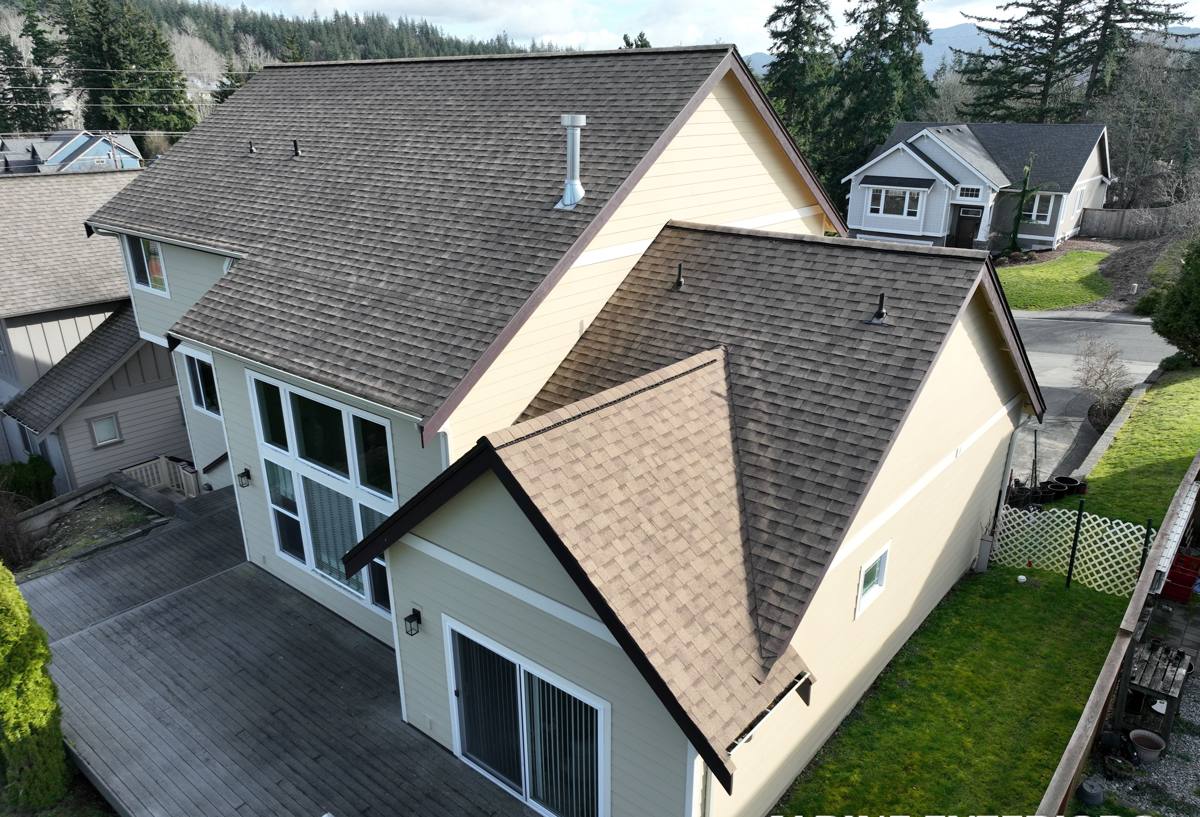
What Cordata Homes Actually Need From Their Windows
Homes in this neighborhood run the gamut from older single-pane builds to more recent double-pane construction, but the underlying performance needs are similar across the board:
- Reliable water shedding at the sill and head flashing, since wind-driven rain off the bay hits window walls harder than most people expect
- Low-maintenance frame materials that won't wick moisture or feed mold growth during the long wet season
- Tight air seals to stop the drafts that make furnaces and heat pumps work overtime through a Whatcom County winter
- Glass packages that manage condensation, since cool, humid air against a poorly insulated window is what causes fogging and eventual seal failure
- Hardware and finishes that hold up to salt exposure without corroding or pitting over a few seasons
None of this is exotic. It's the basic physics of a marine climate meeting a window assembly. The difference between a window that performs for twenty-plus years and one that fails in five almost always comes down to the installation details, not just the product label.
Why Moss Season Matters More Than People Think
Moss doesn't grow on window glass, obviously, but a long moss season is a proxy for the conditions that do affect windows: sustained dampness, limited direct sun, and slow drying times. Trim boards, sills, and the wood or composite framing around a window opening stay wet longer here than in drier parts of the state. If a window was installed without proper drainage planes or if caulk was used as a substitute for correct flashing, that moisture has nowhere to go. It sits, and over a few wet seasons it starts to compromise the wood framing around the opening, not just the window itself.
What a Correct Window Installation Involves
A proper energy-efficient window job in this climate is a sequence, not a single step. Skipping or rushing any part of it is where most window failures in this area actually start.
1. Assessing the Existing Opening
Before any new window goes in, the rough opening needs to be checked for square, level, and — critically in this climate — for hidden water damage. If there's been a slow leak behind the old window, that has to be addressed before a new one is installed, or you're just sealing a problem inside the wall.
2. Sill Pan and Flashing
A sloped sill pan directs any water that gets past the window itself back outside rather than letting it pool at the framing. Head and side flashing are integrated with the home's weather-resistive barrier in the correct shingle-lap order so water always moves down and out, never behind the next layer.
3. Setting and Sealing the Window
The window is shimmed for square and level, fastened per the manufacturer's schedule, and sealed with the right combination of flexible sealant and backer rod at joints that need to move with temperature and moisture changes — not just caulked shut, which cracks and fails within a couple of seasons.
4. Insulating the Gap
The space between the window frame and the rough opening gets filled with a low-expansion foam or mineral wool insulation, not stuffed with fiberglass batting, which does little to stop air movement and can hold moisture against the frame.
5. Interior and Exterior Trim
Trim is reinstalled or replaced with attention to keeping water-shedding surfaces sloped away from the window, and any exterior trim is back-primed or sealed on all sides before installation, a step that's easy to skip and expensive to regret.
Glass and Frame Options Worth Considering
There's no single "best" window for every Cordata home — it depends on your home's age, exposure to wind and rain, and budget. Here's how the common choices stack up for this specific climate:
| Frame Material | How It Handles Local Conditions | Maintenance Consideration |
|---|---|---|
| Vinyl | Good moisture resistance, won't rot or corrode from salt air | Low maintenance; color options can fade over many years of UV and weather exposure |
| Fiberglass | Excellent dimensional stability through wet/dry and temperature swings | Low maintenance; higher upfront cost, longer expected service life |
| Wood-clad | Attractive interior finish, but cladding integrity at joints is critical near salt air | Requires attentive sealing and periodic inspection of cladding seams |
| Aluminum | Strong but a poor insulator unless thermally broken; can be prone to condensation | We generally steer homeowners toward thermally broken options only, given our winters |
For glass, a double-pane unit with low-E coating and an argon or krypton gas fill is the practical baseline for this region's heating-dominated climate. Triple-pane glass offers a further step up in insulation and sound dampening, which can be worth it for homes closer to busier roads or for owners planning to stay long-term and wanting to minimize heating costs over the life of the window.
Cost Factors Homeowners Should Understand
Window pricing varies widely based on size, frame material, glass package, and how much carpentry or flashing repair the opening needs. Rather than quote a number that won't reflect your actual home, it's more useful to understand what drives the cost up or down:
| Factor | Effect on Cost |
|---|---|
| Number and size of openings | Larger and more numerous windows naturally increase material and labor cost |
| Frame material chosen | Vinyl is typically the most budget-friendly; fiberglass and wood-clad run higher |
| Hidden water or rot damage | Framing repair adds cost but is far cheaper to address now than after further seasons of moisture exposure |
| Glass package | Triple-pane and specialty coatings add cost but reduce long-term energy spend |
| Trim and finish work | Custom or matched trim profiles add labor time beyond a basic install |
We always recommend getting a firsthand look at your specific windows before committing to a number — a lot of what drives cost in this climate is what's happening behind the old window, not just the new unit itself.
How Our Process Works
Our approach is built around the reality of installing windows in a wet, salt-exposed climate, not a generic checklist:
- An on-site assessment of your current windows and openings, including a look for signs of moisture intrusion or framing damage
- A straightforward walkthrough of frame and glass options suited to your home's exposure and your budget
- A written scope that spells out flashing, sealing, and insulation details — not just "install windows"
- Careful removal of existing units with attention to protecting siding and interior finishes
- Correct sill pan, flashing, and sealing sequence on every opening, regardless of whether it's visible once trim goes back on
- A final walkthrough so you understand what was done and what to watch for over the coming seasons
Why Local Installation Experience Matters
Window installation instructions from a manufacturer are written for general conditions across the country. They don't account for the specific reality of a home in Cordata facing sustained wind-driven rain off the water, or a moss season that keeps trim and sills damp for months at a stretch. A crew that already works homes in this part of Whatcom County has seen what actually goes wrong here — where water tends to find its way in, which flashing details matter most, and which frame materials hold up versus which ones struggle. That local pattern recognition is often the difference between a window job that lasts decades and one that needs revisiting in a few years.
We're not interested in pushing a single brand or material as the answer for every home. Honest trade-offs — maintenance burden, moisture behavior, how sensitive a product is to installation quality, and how its warranty actually holds up over time — are part of every conversation we have with homeowners here.
Signs Your Current Windows May Be Costing You
Not every window problem is obvious. Here are some signs worth a closer look, especially heading into another wet Whatcom County winter:
- Visible condensation or fogging between panes, which usually means a failed seal on a double-pane unit
- Drafts you can feel near the frame even with the window fully latched
- Difficulty opening, closing, or locking, which can point to frame warping from moisture
- Soft or discolored trim or sill material around the window
- A noticeable jump in heating costs without another clear explanation
- Visible gaps or cracked caulk lines at the exterior trim
Any one of these on its own might not be urgent, but a couple together are usually worth a professional look before the next round of fall rain sets in.
Get a Free, No-Pressure Estimate
If you're weighing whether to repair, replace, or simply get a professional opinion on your current windows, we're happy to take a look and walk you through what we find — no pressure, no obligation. Use the form below to request a free estimate for your Cordata home.