 Sudden Valley
 What Silver Beach's Climate Actually Does to Siding
Silver Beach sits inside a stretch of Whatcom County that doesn't get a real break from moisture for most of the year. Salt-tinged marine air moves through, driving rain comes in sideways off the water more often than most homeowners expect, and the shaded, tree-covered lots common in this part of the county mean siding stays damp longer after every storm. Add in a moss and algae season that can run from fall through spring, and you've got a set of conditions that will find every weakness in a siding system within a few years, not a few decades.
This isn't a climate that punishes bad siding choices slowly. It punishes them fast. Caulk joints open up, paint chalks and peels, seams wick water, and anything with exposed wood or wood byproduct starts to swell, soften, or grow moss at the joints before the rest of the wall even looks tired. The right siding material and the right installation details matter more here than they do in a drier part of the state.
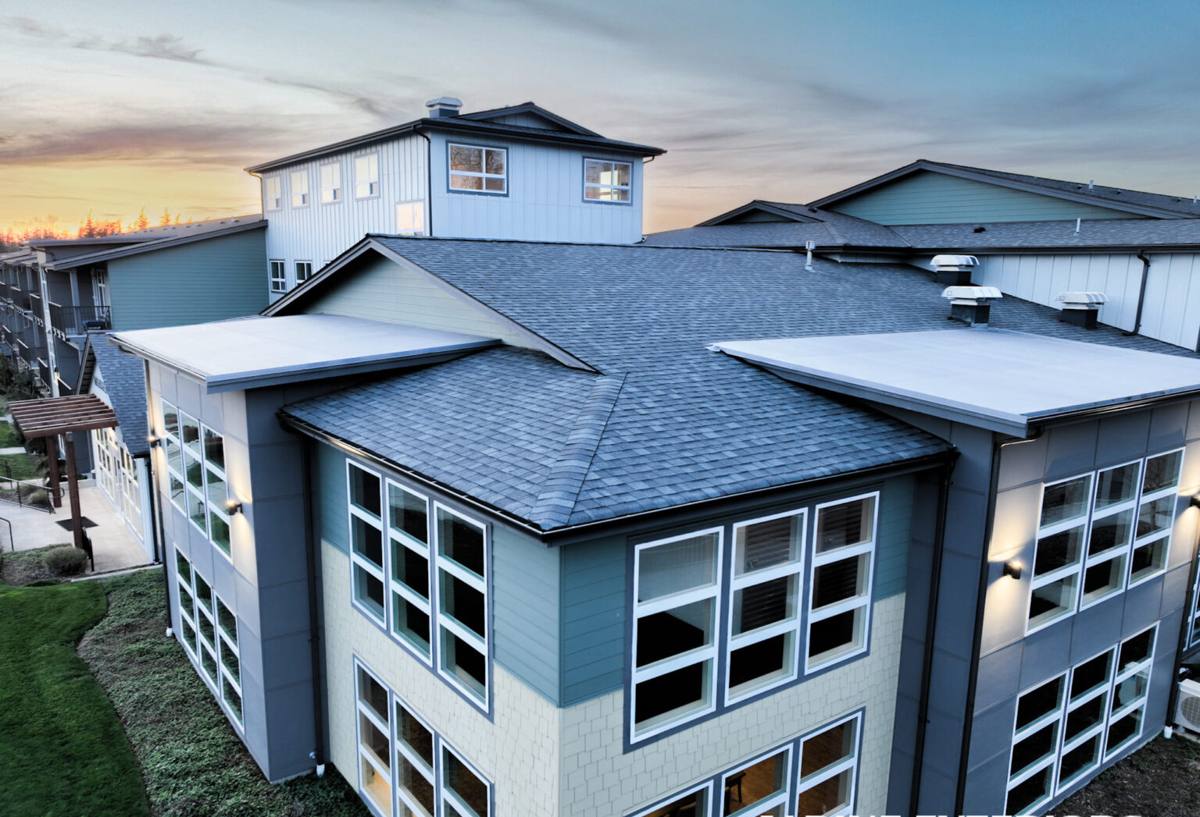
Why Fiber Cement Is the Right Material for This Neighborhood
Fiber cement is cement, sand, and cellulose fiber pressed into a dense, stable board. It doesn't absorb water the way wood or wood-composite products do, it doesn't rot, and it won't feed the moss and algae that thrive on organic siding surfaces the way cedar or primed spruce can. It also doesn't expand and contract with humidity swings the way vinyl does, so seams and reveals stay tight year after year instead of gapping or buckling in the damp-to-dry cycles common along the lake.
None of that means fiber cement is maintenance-free or install-proof. It's a material that rewards correct detailing — flashing, clearances, fastening — and punishes shortcuts just as fast as any other product does when water gets behind it. The material solves the "what is this wall made of" problem. It doesn't solve the "was this installed correctly" problem, which is where most siding failures in this area actually start.
Why Moss and Algae Matter More Here
Moss doesn't just look bad — it holds moisture against the siding surface and, on organic materials, can accelerate rot at the joints. On fiber cement, moss and algae can still grow on the surface film in shaded, damp areas, but they're growing on an inert, cement-based board rather than feeding on it. That's a meaningful difference on a lot with a lot of tree cover or a north-facing wall that rarely sees direct sun.
Why We Install Only James Hardie
There are several fiber cement brands on the market, and a few other exterior products marketed as low-maintenance alternatives. We install James Hardie exclusively, on every job, in every neighborhood we work. That's not a marketing position — it's a standard we hold to because of three things: Hardie's climate-engineered product lines, its factory-applied ColorPlus finish, and the strength and structure of its warranty coverage when the job is installed to spec.
Hardie boards are manufactured for specific climate zones rather than one-size-fits-all. Western Washington falls into what Hardie designates its HZ5 zone — engineered for cold, wet, freeze-thaw conditions rather than hot, humid ones. That distinction matters in a county that sees real winter rain and periodic freezes. We'd rather stand behind one system we know inside and out than juggle multiple brands with different install specs, different warranty terms, and different failure points.
Non-Combustible Matters Here Too
Washington's wildfire risk has crept west in recent years, and fiber cement's non-combustible core is a genuine advantage over vinyl and wood-based sidings, independent of moisture performance. It's not the primary reason we recommend it for a lake-adjacent neighborhood like Silver Beach, but it's a real, honest part of the case for the material.
What a Correct Fiber Cement Install Involves
Most siding problems we get called out to inspect on homes in this area didn't start with the wrong material — they started with installation details that were skipped or rushed. Fiber cement is unforgiving of shortcuts in a few specific spots.
Water Management Behind the Boards
A weather-resistive barrier and correctly lapped, sealed flashing at every window, door, and penetration matter more than the siding itself. Fiber cement is only as good as the drainage plane behind it. In a climate with this much driving rain, we treat the water-resistive barrier and flashing details as the real waterproofing system, with the siding as the outer defense layer.
Fastening and Clearances
Hardie specifies fastener type, spacing, and embedment depth for a reason — over- or under-driven nails are one of the most common causes of premature failure. Ground clearance and clearance from roof lines, decks, and grade also have to follow manufacturer minimums, or the board sits in standing water and moisture year-round regardless of how good the material is.
Caulking and Gaps
Butt joints, trim intersections, and penetrations need the right sealant, applied correctly, with proper gaps left where Hardie's install guide calls for them rather than caulked tight everywhere out of habit. Over-caulking traps moisture as often as it keeps it out.
Factory Finish vs. Field-Applied Paint
ColorPlus is a baked-on, multi-coat finish applied at the factory under controlled conditions, and it's backed by its own finish warranty separate from the substrate warranty. Field-painted primed Hardie board still performs well structurally, but it depends entirely on the quality of the paint job and future repainting cycles. For homes exposed to this much rain and salt air, we default to ColorPlus wherever the color palette allows it.
Choosing the Right Hardie Line and Profile
Hardie makes several siding profiles, and the right one for a given home in Silver Beach usually comes down to the existing architecture, HOA or neighborhood expectations where they apply, and how exposed the walls are to weather.
| Hardie Product | Best Fit For | Notes for This Area |
|---|---|---|
| HardiePlank lap siding | Most single-family homes | Widely used look; smooth or cedar-textured finish; performs well under sustained rain exposure |
| HardieShingle | Accent gables, dormers, character homes | Mimics cedar shake without the moisture and moss vulnerability of real cedar |
| HardiePanel | Modern or board-and-batten styles | Clean vertical lines; needs correct batten spacing and flashing at every seam |
| HardieTrim | Corners, fascia, window and door trim | Pairs with any of the above; keeps trim from being the weak point in the system |
All of these come engineered to the HZ5 specification for our region, which is the version we install regardless of which profile a homeowner chooses.
Our Process, Start to Finish
- On-site assessment of existing siding, sheathing, and any moisture or rot damage already present
- Discussion of profile, color, and trim options based on the home's style and your preferences
- Written estimate with a clear scope — what's included, what isn't, and why
- Tear-off and inspection of the sheathing underneath, with repairs addressed before anything new goes on
- Installation of the weather-resistive barrier and flashing package
- Hardie siding installed to manufacturer fastening, clearance, and joint specifications
- Final walkthrough and cleanup
We don't cover damaged or rotted sheathing with new siding and hope it holds. If we find it, we tell you before we close the wall back up, not after.
What Drives Cost on a Silver Beach Job
| Factor | Why It Matters |
|---|---|
| Home size and wall complexity | More corners, gables, and cutouts mean more labor and more cut waste |
| Existing siding removal | Tear-off of old wood, vinyl, or damaged siding adds time before install even starts |
| Sheathing repair | Rot found underneath old siding has to be fixed before new siding goes on, and isn't always visible from a curbside estimate |
| Profile and trim choices | Shingle accents and detailed trim packages take more labor than straight lap siding |
| Color | Factory ColorPlus finishes vary by shade; some premium colors cost more than primed board |
| Site access | Steep lots, limited driveway access, or proximity to the lake can affect staging and scaffolding |
We don't publish a flat per-square-foot number because these factors move the price too much to make one meaningful — an accurate number comes from actually looking at your walls.
Living With Fiber Cement in This Climate
Fiber cement cuts down on maintenance significantly compared to wood siding, but "low-maintenance" isn't "no-maintenance," especially in a wet, shaded environment like this one.
- Rinse siding with a garden hose once or twice a year to clear pollen, dust, and early moss growth before it takes hold
- Keep gutters clean and downspouts directed away from the wall — overflow is one of the most common causes of localized staining and moisture damage
- Trim back shrubs and trees so siding gets airflow and at least some sun exposure, especially on north-facing walls
- Inspect caulk joints at trim and penetrations every year or two and have gaps re-sealed before they open up
- Watch for any soft spots, cracking, or paint failure at the bottom courses near grade, where splashback and standing water do the most damage
Why Hiring a Crew That Already Works in This Area Matters
A crew that installs siding across the county but hasn't spent real time on homes in and around Silver Beach and Sudden Valley is guessing at things a local crew already knows: how much shade a given lot gets through the year, how hard the rain actually drives on exposed walls near the water, and how fast moss establishes itself on a north wall versus a south one. That knowledge shows up in small decisions — where extra flashing attention goes, which walls need a rinse-friendly color, how clearances get handled on a sloped lot — that don't show up on a generic estimate but matter over the life of the siding.
It also matters for accountability. A local contractor is the one who'll be around in five or ten years if something needs a look, and has a reputation in the community worth protecting. That's a different incentive structure than a crew that installed your siding once and left the county.
If you're weighing your options for a home in Silver Beach, we're glad to come take a look and give you a straightforward, no-pressure estimate — what we'd recommend, why, and what it would actually cost to do right.