 Sudden Valley
 Roof Replacement in Geneva: Built for This Corner of Whatcom County
Geneva sits along the Lake Whatcom basin, in the part of Whatcom County where a roof rarely gets an easy stretch of weather. Salt-tinged marine air moves through the region year-round, driving rain settles in for long runs through fall and winter, and the tree cover that wraps much of the lake basin keeps shaded roof planes damp well after the rest of the county has dried out. Put those three together and you get a moss season that can feel like it never fully lets up. Sudden Valley Siding handles roof replacement for homes throughout Geneva and the surrounding lake communities, and the approach on every job starts from that climate, not from whatever shingle happens to be cheapest that month.
This page focuses specifically on roof replacement for Geneva-area homes — what the local climate demands, what a correctly installed roof actually involves underneath the visible material, and how our process works from the first look to the final walk-through.
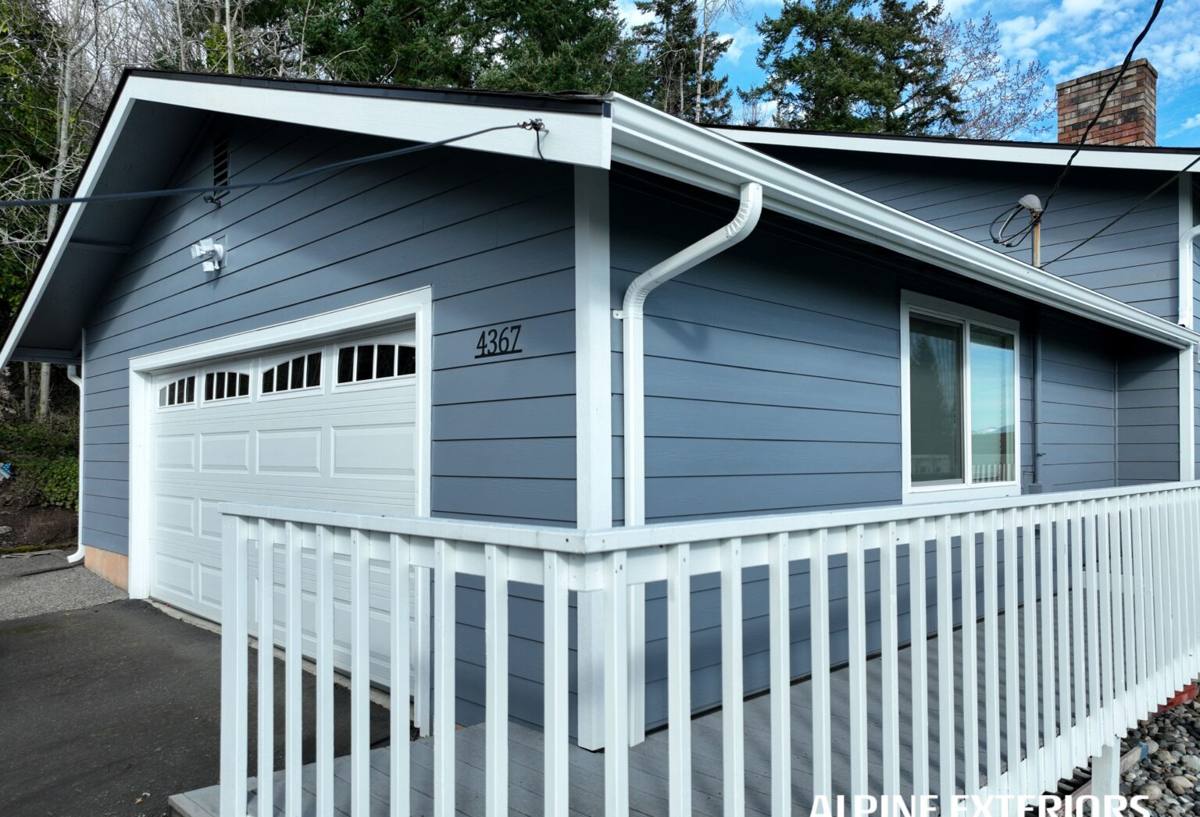
What This Climate Does to a Geneva Roof
Salt Air and Corrosion
Marine air carrying salt moves through this part of Whatcom County continuously, and it does its damage quietly. Exposed fasteners, flashing, vent stacks, and gutter hardware all corrode faster here than they would forty miles inland on a drier site. A fastener spec that would hold up fine in a dry climate can start rusting within a few years on a Geneva roof if it wasn't chosen with that exposure in mind — and a rusting fastener head is one of the more common places a roof starts leaking without any obvious sign from the ground.
Driving Rain
Rain in this part of the county doesn't reliably fall straight down. Wind pushes it sideways into valleys, around chimneys and vent penetrations, and under flashing that would stay dry in a calmer rain event. That's a heavier, more directional load than an annual rainfall total suggests, and it's exactly where a roof with weak flashing details or aging underlayment tends to leak first — often at a transition point rather than out in the open field of the roof.
A Moss Season That Doesn't Really End
Heavy tree cover around the Lake Whatcom basin keeps a lot of Geneva roofs shaded for a large part of the day, especially on north-facing slopes. Shade plus near-constant moisture is exactly what moss needs to establish itself, and once it does, it holds water directly against the roofing surface, works under shingle edges, and can lift or loosen roofing material if it's left unchecked for more than a season or two. Homes tucked back under heavier canopy tend to need more frequent attention than roofs with more open sky exposure, simply because they never fully dry out between wet spells.
Signs a Geneva Roof Is Ready for Replacement
Not every roofing problem means a full tear-off, but these signs usually point toward replacement rather than another round of patching:
- Moss buildup in valleys or on shaded slopes that comes right back within a season of cleaning
- Granules collecting in gutters or at the base of downspouts in more than light, expected amounts
- Shingles that are curling, cupping, cracked, or missing across more than one isolated spot
- Rust staining at nail heads, flashing, or vent stacks
- Soft or spongy spots underfoot, or sagging visible along the roofline
- Daylight visible through the roof deck when viewed from inside the attic
- Water staining on interior ceilings near exterior walls, chimneys, or skylights
- A roof that's at or past the manufacturer's rated service life for its material and exposure
Any one of these on its own is worth a professional look. Several together, especially on a roof that's already near the end of its expected lifespan, usually mean it's time to plan for replacement rather than another patch that buys a season or two.
Choosing a Roofing Material for This Climate
There's no single correct material for every Geneva roof — pitch, sun exposure, tree cover, and budget all factor in. What matters is understanding the honest trade-offs before deciding.
| Material | Moss & Moisture Behavior | Typical Maintenance Here | Realistic Lifespan in This Climate |
|---|---|---|---|
| Architectural asphalt shingle | Performs well with proper ventilation; algae-resistant granule options slow moss and dark streaking | Periodic moss removal and gutter checks | 20-25 years |
| Standing seam metal | Smooth, non-porous surface sheds water and discourages moss buildup | Low; occasional fastener and sealant checks | 40-50+ years |
| Composite/synthetic shingle | Resists moisture absorption; performance varies by product quality | Low to moderate | 30-45 years |
| Cedar shake | Absorbs moisture readily; needs airflow underneath to dry between rains | Higher; regular treatment and moss control | 15-20 years with consistent upkeep |
We'll go over which option fits a given roof's pitch, sun exposure, and budget during the estimate rather than defaulting to whatever's easiest to sell. A steep, sun-exposed roof and a shaded, low-slope roof under heavy tree cover a few doors down don't call for the same answer.
What a Correct Roof Replacement Involves
The shingles or panels are the smallest part of what determines how long a Geneva roof actually lasts. Most leaks and early failures trace back to what's underneath.
Tear-Off and Deck Inspection
A full tear-off shows the real condition of the roof deck — soft spots, rot, or old water damage that a re-roof over the existing layer would just bury. Damaged sheathing gets replaced before anything new goes down; putting new roofing over a compromised deck guarantees a shorter life for the new material regardless of what it is.
Underlayment
Given how much wind-driven rain this area sees, underlayment isn't an afterthought. A quality synthetic underlayment, plus self-adhered membrane at eaves, valleys, and other vulnerable points, gives the roof a second line of defense if rain ever gets past the primary surface.
Flashing
Flashing at chimneys, skylights, vent penetrations, and roof-to-wall transitions is where most leaks on an older roof actually start. We use corrosion-resistant flashing suited to marine-influenced air and integrate it properly with the underlayment, rather than relying on sealant alone to keep water out.
Ventilation
Proper intake and exhaust ventilation keeps the roof deck drier and helps discourage the conditions moss needs to take hold, especially on shaded slopes near the lake. It also protects the underside of the deck from condensation damage, which matters in a climate where humidity stays elevated for long stretches of the year.
Fasteners and Hardware
Standard fasteners corrode faster in salt-tinged air than most homeowners expect. We spec corrosion-resistant fasteners and hardware suited to this exposure, since a fastener failure years down the road is hard to trace back and easy to prevent up front.
Cost Factors for a Geneva Roof Replacement
Every roof prices out differently, and we won't quote a number without seeing it — pitch and access alone can shift a bid significantly. These are the variables that typically move the price:
| Factor | Why It Matters Here |
|---|---|
| Roof size and complexity | More valleys, dormers, and penetrations mean more flashing detail and labor |
| Pitch and access | Steep or hard-to-access roofs, common on lake-basin lots, take longer and need more safety setup |
| Material choice | Metal and premium composites cost more upfront but generally need less maintenance in this climate |
| Deck condition | Rot or soft sheathing found during tear-off adds repair cost not visible before the old roof comes off |
| Underlayment upgrade | Full self-adhered membrane coverage costs more than minimum-code underlayment but reduces wind-driven rain risk |
| Tree cover and site access | Overhanging trees and tight lake-lot access can add setup time and cleanup beyond a typical open lot |
Our Roof Replacement Process
- On-site assessment. We inspect the existing roof, deck condition, ventilation, and problem areas, and take measurements for an accurate estimate.
- Material selection. We go over the options that fit the home's pitch, sun and shade exposure, and budget, with honest trade-offs for each.
- Written scope and schedule. A clear, written scope and timeline before any work begins, so there are no surprises mid-project.
- Tear-off and deck repair. Old roofing comes off, the deck is inspected, and any damaged sheathing is replaced.
- Underlayment and flashing installation. The moisture barrier and flashing go in first, since this layer determines whether the roof actually stays dry.
- Roofing material installation. The chosen material goes on to manufacturer specification, with attention to fastening pattern and exposure.
- Ventilation check. Intake and exhaust ventilation are confirmed working correctly before close-out.
- Final walk-through. We review the completed roof with the homeowner and go over care and warranty details.
Why Hire a Crew That Already Works Geneva
A roofer who mostly works drier, more open inland jobs isn't wrong about roofing in general — they're just working from a different set of defaults. Fastener specs, flashing choices, and underlayment coverage that hold up fine on a typical sunny, open-lot roof are often undersized for what a shaded, lake-basin roof in Geneva deals with year-round. A crew that's already worked roofs in this specific stretch of Whatcom County has seen which details actually fail here, not just which ones fail in general.
That familiarity also shows up in practical judgment calls: which roof orientations need extra moss-resistant granule coverage because of tree shade, how much ice-and-water shield a given valley actually needs, and which flashing details are worth the extra time on install day so a homeowner isn't dealing with a callback two winters later.
A Simple Checklist Before Hiring for a Geneva Roof Replacement
- Confirm current Washington contractor licensing and active liability insurance
- Ask how they handle flashing at valleys, chimneys, and roof-to-wall transitions, not just which shingle brand they carry
- Get manufacturer warranty terms in writing, including what voids it
- Ask whether tear-off, disposal, and any deck repair are included in the base bid or billed as add-ons
- Get a written scope of work before signing anything
Beyond the Roof
Roofing is the focus of this page, but a Geneva home's exterior works as one connected system. We also handle siding, windows, and decks, and we pay attention to how a new roof's drainage meets the siding and trim below it — a roof replacement that ignores where water sheds onto the wall just moves the moisture problem somewhere else instead of solving it.
If your Geneva roof is showing its age, or you're planning ahead before a small problem becomes a bigger one, we're glad to take a look and give you an honest, straightforward read on what it actually needs. Reach out using the form below for a free, no-pressure estimate.