 Sudden Valley
 Board & Batten Siding in Silver Beach: Built for the Lake, Not Against It
Silver Beach sits close enough to Lake Whatcom's shoreline that homes here deal with a different set of pressures than a house a few miles inland. Damp air off the water, shade from mature trees, and long stretches of gray, wet weather all add up to conditions that are hard on exterior materials — especially the vertical seams and reveal lines that make board and batten such a popular look. Get the material and installation wrong out here, and you're chasing moss, swelling, and paint failure within a few seasons. Get it right, and board and batten is one of the most durable, good-looking sidings you can put on a home in this part of Whatcom County.
We install board and batten siding in Silver Beach on a regular basis, and the approach we use is shaped by what actually happens to a wall assembly in this microclimate — not a generic install manual written for a drier region.
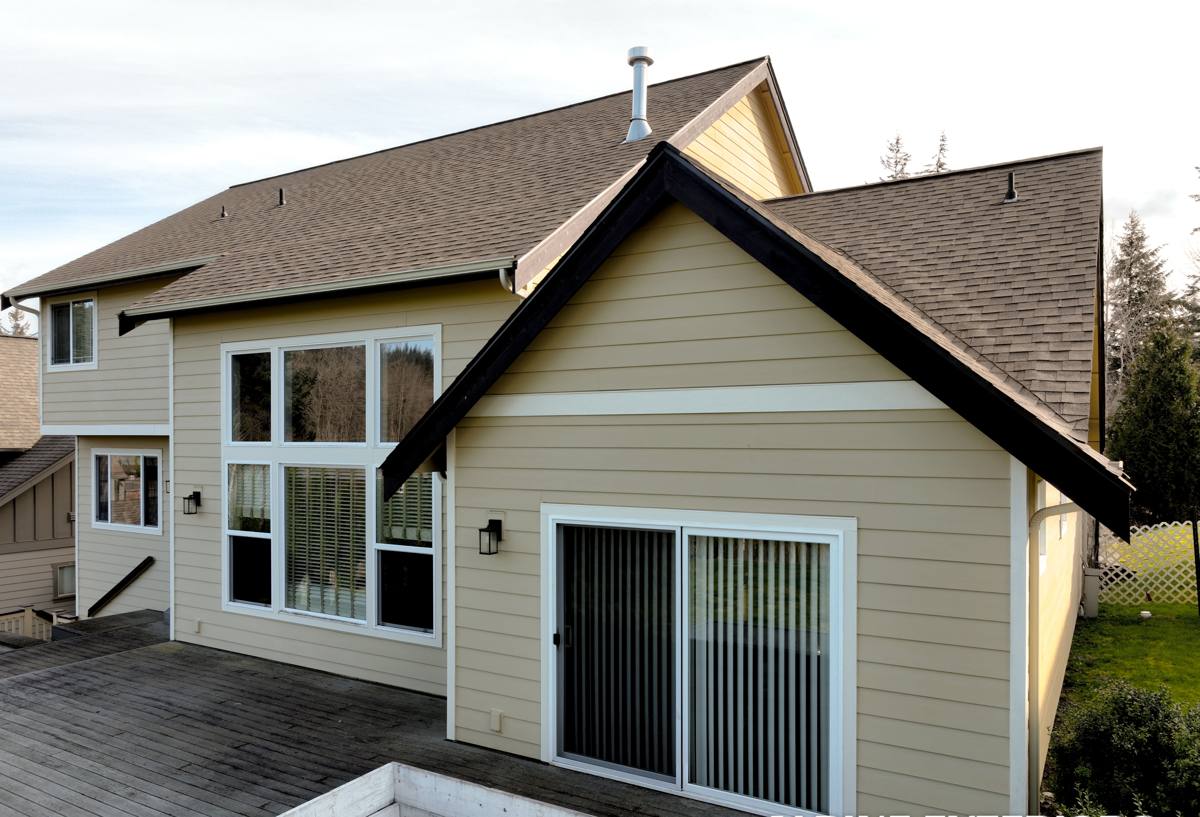
Why Silver Beach's Climate Changes the Board & Batten Equation
Salt-Tinged, Moisture-Heavy Air
Lake Whatcom isn't the ocean, but the humidity that sits over and around the water behaves similarly to a coastal environment — persistent moisture in the air, slower drying times after rain, and surfaces that stay damp longer than they would just a mile or two away from the shoreline. Board and batten's vertical battens create dozens of extra seams compared to lap siding, and every one of those seams is a place water can sit if it's not detailed correctly.
Driving Rain Off the Water
Storms that track across Lake Whatcom often arrive with wind-driven rain that hits siding at an angle instead of falling straight down. On board and batten, that means water gets pushed sideways against the vertical boards and can work its way behind battens that aren't fastened and flashed properly. The house sheds water fine in a light drizzle; it's the sideways, wind-pushed rain that exposes weak installation.
A Long Moss Season
Between tree cover and the amount of shaded, damp wall area many Silver Beach lots have, moss and algae growth isn't a once-a-year nuisance — it's closer to an eight- or nine-month reality. Board and batten's texture and reveal lines give moss more surface area and more shaded pockets to take hold than a flat lap profile does, particularly on north- and west-facing walls that get less direct sun.
What a Correct Board & Batten Install Actually Requires Here
Board and batten looks simple — vertical boards, battens over the seams — but the assembly underneath is what determines whether it holds up in a lake-adjacent climate. A correct install in Silver Beach conditions includes:
- A drainable water-resistive barrier behind the siding, so any moisture that does get past the surface has somewhere to go besides your sheathing.
- Proper fastening into structural framing at both the boards and the battens — not just into sheathing — so the assembly doesn't loosen or telegraph movement over time.
- Correct reveal and gap spacing so boards can expand and contract seasonally without buckling or opening gaps at the battens.
- Flashing at every horizontal transition — window heads, trim boards, roof-to-wall intersections — since these are the spots where wind-driven rain finds its way in first.
- Factory-finished material so the board and batten's color and seal isn't dependent on a field-applied coat holding up through a wet Whatcom County winter.
Skip any one of these and the siding may look fine for a year or two before the underlying problems show up as staining, soft spots, or paint that starts peeling at the seams.
Why We Only Install It in James Hardie Fiber Cement
Board and batten shows up in a lot of materials — engineered wood, vinyl, primed cedar, spruce — and each one has a real weak point in a climate like Silver Beach's. Engineered wood products need their cut edges and seams meticulously sealed and maintained or moisture gets into the core. Vinyl board and batten can look convincing from the street but it's a thin, flexible material that doesn't hold up well against algae staining and can warp with sustained damp-cool cycling. Primed wood species need a maintenance schedule most homeowners don't stick with, and once moisture gets past a compromised paint film on real wood, rot follows.
James Hardie fiber cement is what we've standardized on for board and batten because it's dimensionally stable in wet-dry cycling, it's non-combustible, and its ColorPlus finish is baked on at the factory rather than relying on a field-applied coat to survive a Whatcom County winter. Hardie's HZ5 product line is engineered specifically for the kind of freeze-thaw and moisture exposure common in the Pacific Northwest, which matters more here than in most of the country. We don't install LP SmartSide, vinyl, Cemplank, Allura, primed spruce, or cedar board and batten — not because those products don't have a place somewhere, but because we've made a standard for what goes on the homes we build, and Hardie is what we're comfortable standing behind for the long term in this specific climate.
Board & Batten Material Comparison for Lake-Adjacent Conditions
| Material | Moisture Behavior | Moss/Algae Resistance | Maintenance in This Climate |
|---|---|---|---|
| James Hardie Fiber Cement | Dimensionally stable, doesn't absorb and swell | Factory finish resists staining better than raw wood | Low — periodic wash, no repainting cycle needed |
| Engineered Wood (LP SmartSide) | Vulnerable at cut edges/seams if not fully sealed | Moderate, depends on coating integrity | Moderate — edge sealing and inspection needed |
| Vinyl Board & Batten | Doesn't rot, but can warp with sustained damp-cool cycling | Low — textured surfaces trap growth | Low-moderate — prone to visible staining over time |
| Primed Cedar/Spruce | Absorbs moisture readily once coating fails | Low without regular treatment | High — repainting/staining on a recurring schedule |
Our Process for a Silver Beach Board & Batten Project
1. On-Site Assessment
We walk the specific walls in question, checking sun exposure, shading, existing moss or staining patterns, and how the current siding (if any) has performed. Every lot around the lake gets a different amount of shade and wind exposure, and that shapes the recommendations we make.
2. Water Management Plan
Before a single board goes up, we plan the water-resistive barrier, flashing details, and drainage path for the whole wall assembly. This is the part of the job that doesn't show once the siding is on — and it's the part that determines whether the house stays dry.
3. Install to Manufacturer Spec
Hardie board and batten has documented fastening patterns, reveal spacing, and clearance requirements. We follow them, because that spec is what keeps the transferable warranty intact and what keeps the assembly performing the way it's designed to.
4. Final Detailing
Trim, caulking at appropriate joints (not as a substitute for flashing), and a final check of every horizontal transition where wind-driven rain off the lake is most likely to test the work.
Why Local Experience in Silver Beach Matters
A crew that only occasionally works this area might install board and batten correctly by the book and still miss something specific to this shoreline — like which walls hold moisture longest given the tree cover, or how a particular lot catches wind off the lake during a fall storm. We work in Sudden Valley and the surrounding Whatcom County lake communities regularly enough to know these patterns, and we build that knowledge into the water management plan before the first board is cut.
Signs Your Current Siding Isn't Handling Silver Beach's Climate
- Dark streaking or green staining that returns within weeks of cleaning
- Soft or spongy spots when pressed near the base of walls or under windows
- Visible gaps opening up at seams or battens where there weren't gaps before
- Paint or finish peeling specifically at horizontal joints and trim intersections
- Moss establishing itself in the reveals between boards rather than just on the surface
Any of these point to moisture getting past the surface — worth a look before it becomes a sheathing problem.
What Affects the Cost of a Board & Batten Project Here
| Factor | Why It Matters in Silver Beach |
|---|---|
| Wall exposure and shading | Shaded, damp walls may need extra flashing detail at transitions |
| Existing sheathing condition | Moisture-damaged sheathing found during tear-off adds repair scope |
| Access around the lot | Sloped or wooded lots common near the lake can affect staging and material handling |
| Trim and reveal complexity | More window/door transitions mean more flashing and detail work |
| Color and finish selection | ColorPlus factory finishes vary slightly in cost by line and color |
Get a Straight Answer for Your Home
Every wall around Silver Beach carries a different amount of shade, wind, and moisture exposure, so a board and batten project here deserves a look at your specific lot rather than a one-size answer. If you're weighing options or already know you want it done in James Hardie fiber cement, we're happy to walk the property, explain what we'd do differently for your walls, and give you a straightforward, no-pressure estimate.