 Sudden Valley
 Sehome's Siding Problems Aren't Generic — They're Whatcom County Problems
Every siding repair call is a little different, but homes around Sehome and Sudden Valley tend to show the same handful of failure patterns, and they're almost always tied to three things: salt-laden marine air moving in off the water, long stretches of driving rain, and a moss season that can run half the year in a shaded, damp corner of Whatcom County. None of those are exotic problems. What's different here is how often they show up together on the same wall, and how quickly a small issue turns into a bigger one if it's ignored through a wet Pacific Northwest winter.
A generic "we fix siding" page doesn't account for that combination. A repair plan for a dry-climate house that occasionally gets rain is not the same plan a Sehome home needs, where siding can stay damp for days at a time and where moss and algae have a real foothold on north- and shade-facing walls. Repairing siding correctly here means treating moisture management as the actual problem, not just patching the cosmetic damage on top of it.
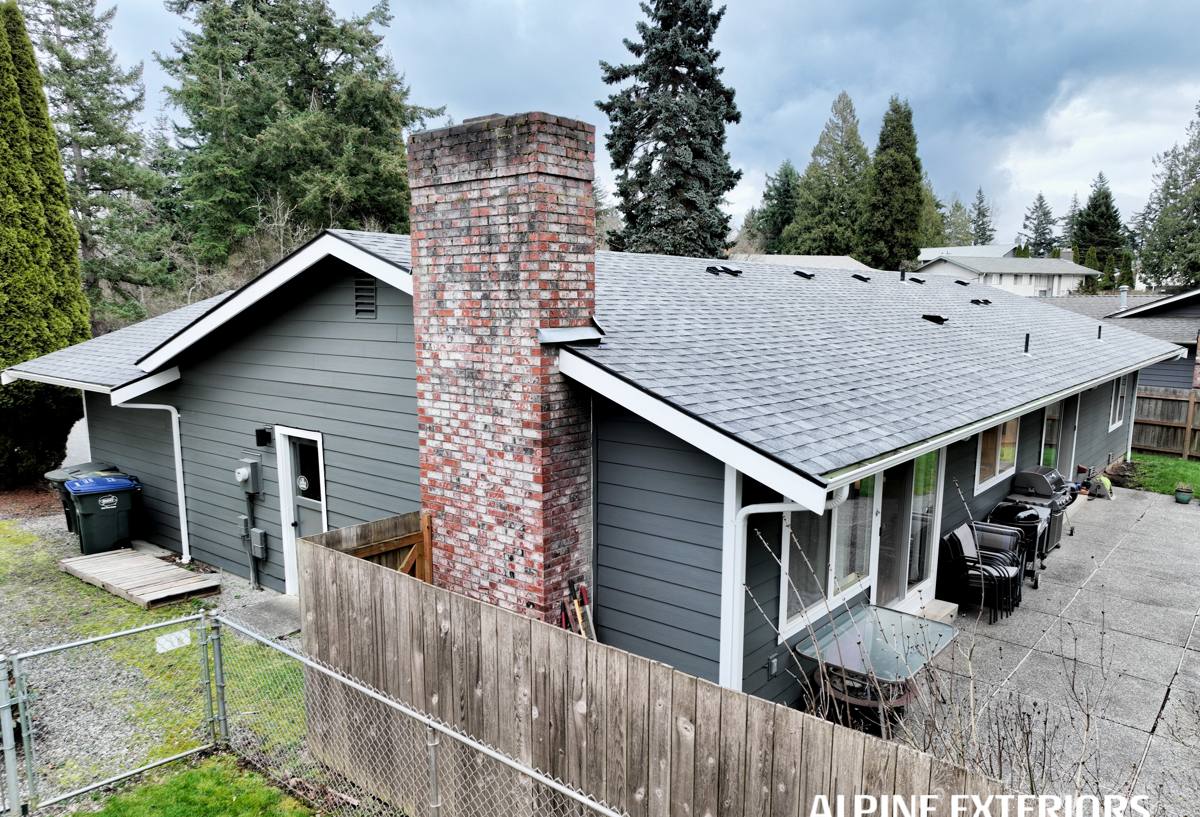
What Local Conditions Actually Do to Siding
Salt Air and Slow Corrosion
Homes closer to the water pick up airborne salt that settles on siding, fasteners, and trim. Over years, that accelerates corrosion on exposed nail heads, flashing, and any metal trim pieces, and it can degrade paint finishes faster than inland homes experience. Siding that looks fine from the ground sometimes has fastener corrosion or finish breakdown that only shows up on close inspection.
Driving Rain and Wind-Driven Moisture
Whatcom County storms don't just fall straight down — wind pushes rain sideways into wall assemblies, especially on exposed elevations and around windows, corners, and butt joints. If caulking has failed, if a joint was never sealed correctly, or if flashing was installed short, driving rain finds those gaps and gets behind the siding instead of running off of it.
Moss, Algae, and Trapped Moisture
Shaded, tree-covered lots near Lake Whatcom and the surrounding hillsides hold moisture longer than open, sunny sites. Moss and algae growth on siding isn't just a cosmetic nuisance — where it's thick and long-standing, it holds water against the surface and can accelerate rot in wood-based products or breakdown in lower-grade composites, and it's a sign a wall isn't drying out between rain events the way it should.
Signs a Sehome Home Needs Siding Repair
- Soft, spongy, or crumbling spots when you press on the siding, especially near the bottom courses or below windows
- Visible gaps, cracks, or separation at butt joints, corners, and trim
- Persistent moss or algae staining that comes back quickly after cleaning
- Paint or factory finish that's peeling, bubbling, or chalking unevenly in patches rather than uniformly with age
- Water stains, discoloration, or a musty smell on interior walls that back up to exterior siding
- Fastener corrosion — rust streaks bleeding down from nail or screw heads
- Warping or buckling panels, particularly after a hard freeze-thaw stretch or a wind event
Any one of these can be a localized, inexpensive fix. Several of them together, especially combined with interior signs of moisture, usually mean water has been getting behind the siding for a while and the repair needs to address the water-resistive barrier and flashing, not just the visible panel.
What a Correct Repair Actually Involves
Diagnose Before You Patch
The most common mistake in siding repair isn't a bad patch — it's fixing the symptom without finding the cause. Replacing a rotted panel without checking why water got there in the first place just buys a few more years before the same spot fails again. A proper repair starts with pulling back damaged material to look at the underlying flashing, house wrap, and framing, not just cutting out the visible bad section.
Match the Water Management, Not Just the Look
Flashing at windows, doors, and horizontal joints has to shed water down and out, lapped correctly with whatever water-resistive barrier is behind it. If the original installation had flashing errors — a common issue on older homes in this area that were sided before current best practices were standard — a cosmetic patch over that same flashing mistake will fail again, usually in the same spot.
Match the Material and the Finish
Patching in a mismatched panel is one of the more obvious signs of a rushed repair. On a Hardie fiber cement home, that means matching the plank profile, exposure, and factory ColorPlus finish so the repair blends in rather than reading as an obvious patch. When we repair a Hardie wall, we work to keep the finish and texture consistent across the whole elevation, not just the section that was damaged.
Repair Approach by Damage Type
| Damage Type | Likely Cause | Typical Fix |
|---|---|---|
| Soft or crumbling panel | Trapped moisture, failed flashing behind siding | Remove damaged section, correct flashing/water barrier, replace with matched material |
| Persistent moss/algae | Shade, poor airflow, siding staying wet | Clean, treat, and address the moisture source; may include trimming back vegetation or improving drainage |
| Cracked or separated joints | Failed caulking, movement, original installation gaps | Re-seal or reflash joint correctly; replace panel if water has already gotten behind it |
| Corroded fasteners | Salt air exposure, incorrect fastener type used originally | Replace with corrosion-resistant fasteners rated for coastal exposure |
| Peeling or chalking finish | UV and moisture breaking down paint or coating | Panel replacement with factory-finished material rather than repeated field repainting |
Why We Only Repair and Match With James Hardie
We install James Hardie fiber cement siding exclusively, and that carries into how we handle repairs. When we're patching a Hardie wall, we're matching into a non-combustible, engineered material with a factory-applied ColorPlus finish designed to hold color and resist the exact conditions Sehome deals with — moisture cycling, UV, and coastal air. We're not mixing in vinyl, LP SmartSide, or a painted wood patch to save a trip, because those materials weather differently than Hardie does, and a mismatched patch shows up fast, both in texture and in how it ages over the following seasons.
If a home we're repairing wasn't originally Hardie — say it's vinyl, cedar, or another fiber cement brand — we'll be straight with you about what a patch can realistically achieve versus what full replacement with Hardie would solve permanently. Sometimes a targeted repair is the right, honest answer. Sometimes the damage is widespread enough, or the original material and installation are compromised enough, that repeated patching is just delaying a bigger job. We'll tell you which situation you're in rather than defaulting to the more profitable answer.
Our Process for a Sehome Repair Call
- Inspection: We look at the damaged area and the surrounding siding, plus flashing, trim, and any interior signs of moisture on the same wall.
- Diagnosis: We identify the actual cause — installation gap, failed sealant, trapped moisture, storm impact, or material fatigue — before recommending a fix.
- Honest scope: We tell you plainly whether this is a contained repair or whether the damage extends further than the visible spot, and why.
- Correct the water path first: Any flashing or barrier issue gets fixed before new siding goes back on, not covered over.
- Matched materials: Repairs use matching Hardie profile, exposure, and finish so the wall reads as one consistent job, not a patchwork.
- Cleanup and check: We clean up the work area and walk the repair with you before we consider the job done.
Why Hiring a Crew That Already Works in This Area Matters
Siding repair in Sudden Valley and the Sehome area isn't the same trade as siding repair in a dry inland climate, and it shows in the details a crew either knows to check or doesn't. A contractor who works this area regularly already knows which elevations tend to take the worst of the driving rain, which lots hold moisture long enough to grow moss fast, and where salt air exposure tends to accelerate fastener and finish problems. That's not a marketing point — it changes what gets inspected, what gets flagged as a risk even if it isn't failing yet, and what gets built back differently so the same failure doesn't repeat in a few years.
It also matters for material sourcing and matching. A crew that regularly works with James Hardie siding in this region keeps profiles and ColorPlus finishes on hand or knows how to source an exact match quickly, instead of guessing at a close-enough substitute that ages differently and stands out on the wall.
Maintaining a Repair So It Lasts
- Rinse siding annually to keep moss, algae, and salt residue from building up, especially on shaded or north-facing walls
- Keep gutters clean and downspouts directed away from the foundation so runoff doesn't wash down the siding face repeatedly
- Trim back vegetation and tree cover that keeps a wall section shaded and slow to dry
- Re-inspect caulking at joints, trim, and penetrations every year or two, since sealant fails well before the siding itself does
- Address small issues — a soft spot, a lifting piece of trim, a fresh crack — as soon as you notice them rather than waiting for the next dry season
Repair or Replace? Making the Right Call
Repair makes sense when the damage is localized, the underlying wall assembly is sound once you get behind the siding, and the surrounding material is still in good shape. Replacement becomes the more honest recommendation when damage keeps recurring in the same spots, when moisture has clearly gotten into multiple areas rather than one isolated section, or when the existing siding is old enough or degraded enough that further patching is really just delaying a full re-side. Either way, the decision should come from what we find during inspection, not from which answer is easier to sell.
If you're noticing damp spots, moss buildup, or damage on your siding in Sehome or Sudden Valley, we're happy to take a look and give you a straight answer about what it needs. Reach out for a free, no-pressure estimate — there's a form below to get started.