 Sudden Valley
 Decking in Happy Valley Has to Work Harder Than It Does Most Places
Happy Valley sits inside the stretch of Whatcom County where Lake Whatcom's moisture, coastal air movement, and heavy tree cover all overlap. A deck here doesn't just sit outside — it sits in a microclimate that stays damp longer than open, sunnier parts of the county. Homeowners who install decking meant for a drier region often find out the hard way, a few seasons in, that the product simply wasn't built for what this area throws at it.
Composite decking, installed correctly, is one of the few products that holds up to this combination of conditions without turning into a maintenance chore. But "composite decking" isn't one product — it's a category with a wide range of quality, and the installation details matter as much as the material choice. This page covers what actually matters for a Happy Valley deck, not generic decking advice.
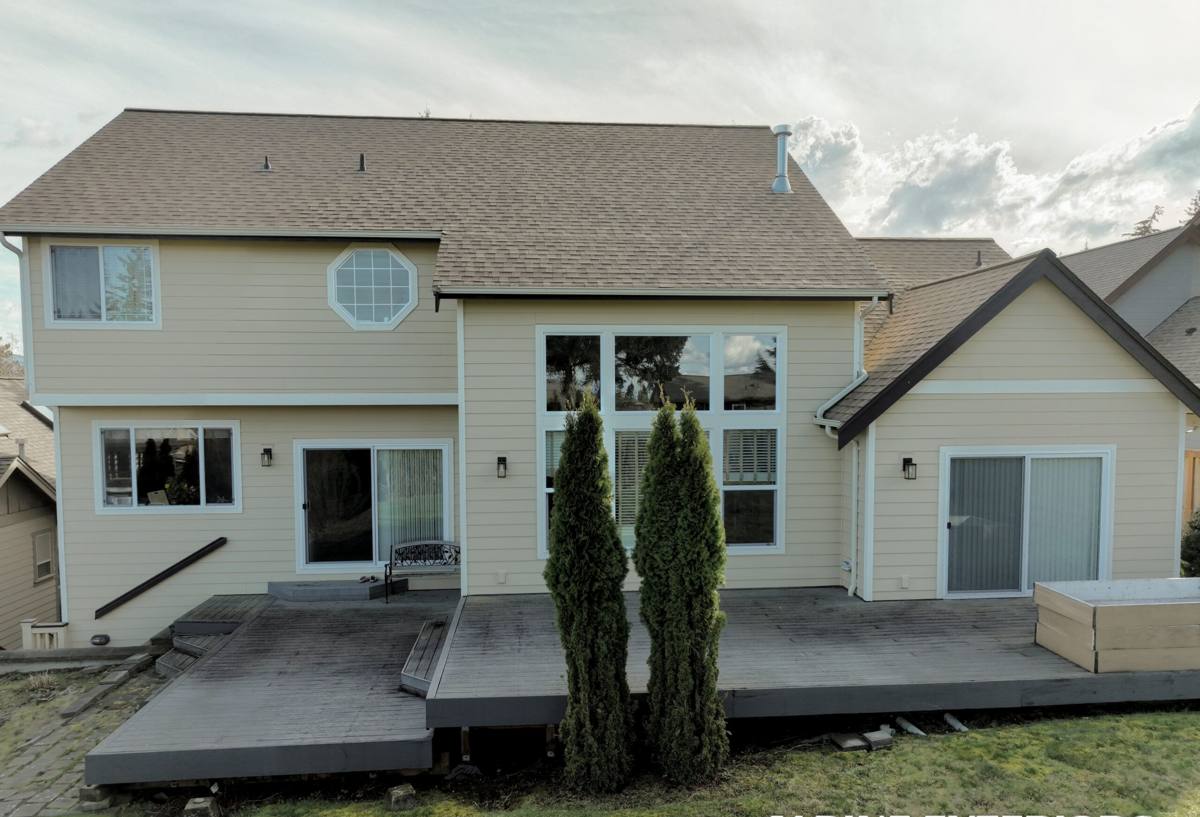
What the Local Climate Actually Does to a Deck
Driving Rain and Standing Moisture
Whatcom County gets long stretches of steady, driving rain rather than short downpours. That matters for decking because it's not really about how much water falls — it's about how long a surface stays wet. Wood absorbs and releases moisture with every cycle, which is what eventually causes cupping, splitting, and fastener pop. A deck near Lake Whatcom or tucked into tree cover can stay damp for days after a storm passes, especially on the north or shaded side of a house.
Salt Air and Corrosion
Homes closer to the water pick up salt-laden air that accelerates corrosion on fasteners, flashing, and any exposed metal hardware. This doesn't ruin composite decking boards themselves, but it will eat through the wrong screws, brackets, or ledger flashing over time — which is why hardware selection is part of doing this job right, not an afterthought.
Moss and Algae Season
Between the shade from mature trees and the length of the wet season, Happy Valley properties deal with a moss and algae window that runs longer than it does in drier parts of Washington. Any decking surface with texture or porosity becomes a foothold for growth if airflow underneath is poor or boards are laid tight against each other. This is one of the most common complaints we hear from homeowners who installed decking without planning for drainage and gap spacing.
Why Composite Decking Fits This Environment
Composite decking is made from a blend of wood fiber and plastic polymer, which means it doesn't absorb water the way solid wood does. It won't rot, it won't splinter, and it doesn't need annual staining or sealing to keep moisture out. For a property that spends a good part of the year damp, that's a real advantage — not a marketing point.
That said, composite isn't maintenance-free, and it isn't immune to moss and mildew sitting on the surface. The difference is that with composite, growth sits on top of the board rather than working its way into the material. A wash keeps it looking right; it doesn't threaten the structure underneath the way trapped moisture does in wood.
Comparing Decking Materials for a Happy Valley Property
| Material | Moisture Behavior | Moss/Algae Resistance | Maintenance | Typical Lifespan Here |
|---|---|---|---|---|
| Pressure-treated wood | Absorbs and releases moisture; prone to cupping/splitting | Needs regular cleaning and sealing to resist growth | Annual sealing/staining recommended | 10-15 years with upkeep |
| Cedar | Naturally moisture-resistant but still absorbs water over time | Better than treated pine, still needs care in shade | Periodic sealing, more if shaded | 15-20 years with upkeep |
| Composite (mid-grade) | Does not absorb water; core stays stable | Surface can host growth if drainage/spacing is poor | Occasional washing, no sealing | 20-25+ years |
| Composite (capped, higher-grade) | Fully sealed shell resists moisture intrusion at the surface | Smoother cap sheds moss/algae more easily | Occasional washing | 25-30+ years |
The lifespan ranges above assume correct installation. A poorly installed composite deck — wrong fastener spacing, no ventilation underneath, boards run against manufacturer spec — can develop problems well before a well-installed wood deck would. The material only performs as well as the install.
What a Correct Composite Deck Installation Involves
The Substructure Comes First
Composite boards are only as good as what they sit on. Joists, beams, and ledger connections need to be sized and spaced to the manufacturer's specifications for composite specifically — composite has different span ratings than solid wood decking, and using lumber-era spacing leads to bounce and long-term sag. Any wood substructure in this climate should be pressure-treated and properly flashed where it meets the house, since that ledger connection is one of the most common points of hidden water intrusion on any Whatcom County deck.
Fasteners and Hardware
Given the salt air exposure closer to the lake and the general moisture load, we use fasteners and structural hardware rated for coastal or high-moisture environments — not general-purpose exterior screws. Hidden fastener clip systems, where the product supports them, also reduce the number of surface penetrations that can trap moisture at the screw head.
Gapping, Airflow, and Drainage
Board spacing isn't cosmetic — it's what lets water drain through instead of sitting on the surface, and it's what keeps air moving underneath the deck so the underside doesn't stay damp. In a shaded, moisture-heavy setting like Happy Valley, underdeck airflow is one of the biggest factors in how long a deck goes before it needs cleaning for moss.
Picture-Framing and Trim Details
Border boards (picture-framing) around the deck perimeter and stair edges need to be cut and fastened in a way that still allows water to escape at the edges. A tight, sealed-looking border is a common cosmetic choice that traps moisture if it isn't detailed correctly.
Our Process for a Happy Valley Composite Deck
- On-site assessment: we look at sun exposure, tree cover, drainage slope, and proximity to the lake to understand what this specific deck will deal with over time.
- Substructure evaluation: for replacement decks, we check whether the existing frame is sound enough to reuse or needs rebuilding to current span and flashing standards.
- Material selection: we walk through composite grades and colors with the realistic trade-offs for this property — not just what looks good in a sample.
- Installation to spec: proper joist spacing, coastal-rated fasteners, correct gapping, and ledger flashing done to manufacturer and code requirements.
- Final walkthrough: we go over the maintenance a composite deck actually needs here, so there are no surprises the first wet winter.
What Drives the Cost
Composite decking costs more upfront than pressure-treated wood, and the range is wide depending on grade, deck size, height off grade, railing choice, and how much substructure work is needed. Rather than quote a number that won't fit your situation, here's what actually moves the price:
| Factor | Why It Matters |
|---|---|
| Composite grade | Capped, higher-grade boards cost more but resist moisture and staining better long-term |
| Substructure condition | Reusing a sound frame costs far less than rebuilding joists and beams |
| Deck height and railing type | Elevated decks need code-compliant railing and stairs, which adds material and labor |
| Site access | Sloped lots and lakeside lots common in this area can add complexity to material staging and footings |
| Drainage/underdeck needs | Adding under-deck drainage systems for living space below adds cost but pays off in a wet climate |
Maintenance: What Composite Still Needs in This Climate
Composite decking cuts down maintenance significantly, but "low maintenance" isn't "no maintenance," especially in a shaded, damp setting. Here's a realistic seasonal checklist for a Happy Valley composite deck:
- Sweep debris (needles, leaves, seed pods) off the surface regularly — trapped organic matter holds moisture against the boards and feeds moss growth
- Wash the deck surface with a soft-bristle brush and a composite-safe cleaner once or twice a year, more often in heavily shaded areas
- Check that gaps between boards stay clear of debris so water keeps draining through
- Inspect fasteners, railing connections, and stair hardware annually for corrosion, especially on homes closer to the lake
- Confirm underdeck airflow paths (vents, lattice, skirting gaps) aren't blocked by stored items or overgrown landscaping
- Trim back overhanging branches where practical to reduce shade and debris load on the deck surface
Why It Matters That We Already Work This Area
A crew that only occasionally works Whatcom County will build a deck to a generic standard. A crew that works Sudden Valley and Happy Valley regularly knows which slopes hold water, which lots get shaded enough that moss shows up within a season, and which fastener and flashing choices actually hold up near the lake. That local pattern recognition is the difference between a deck that needs babying by year three and one that's still doing its job with light seasonal care fifteen years in.
If you're planning a new composite deck or replacing a tired one in Happy Valley, we're glad to take a look and talk through what your specific lot and sun exposure call for. Request a free, no-pressure estimate using the form below.