 Sudden Valley
 Fairhaven's Climate Is Harder on Siding Than Most Homeowners Realize
Fairhaven sits close enough to the water that salt-laden air is a daily fact of life, not an occasional weather event. Add Whatcom County's long stretch of driving rain from fall through spring, and a moss and algae season that can run most of the year in shaded, north-facing spots, and you've got a combination that punishes siding that isn't built for it. Wood-based products swell, split, and rot faster here. Vinyl chalks and can warp under sun-to-rain temperature swings. Even good products fail early when the install skips the details that matter in this exposure.
None of this is unique to Fairhaven, but the intensity and combination of factors — salt exposure, sustained moisture, and moss pressure — is what separates a siding job that lasts 30-plus years from one that needs attention in year eight or ten. That's the standard we hold every Fairhaven job to.
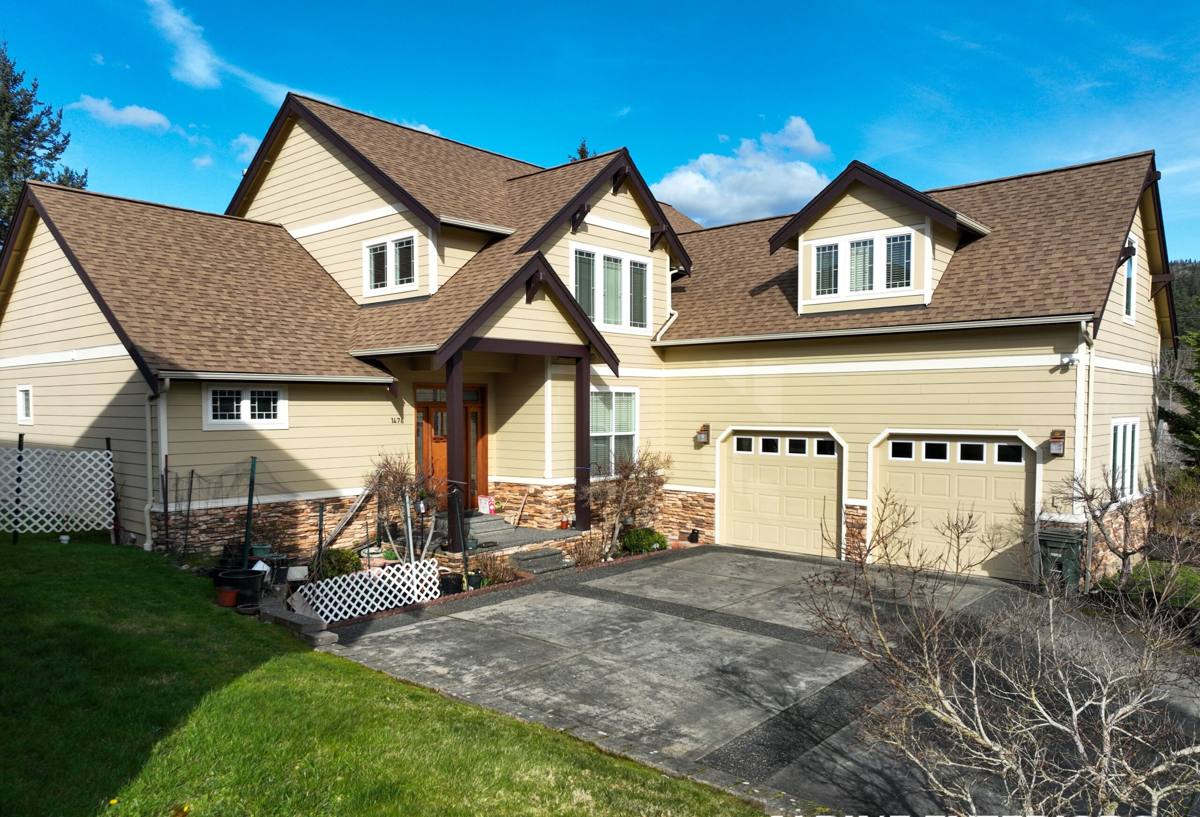
Why We Install Only James Hardie in This Climate
We don't offer LP SmartSide, vinyl, Cemplank, Allura, primed spruce, or cedar. That's not a marketing position — it's a decision we made after weighing how each of those products actually behaves in a wet, salt-exposed, moss-prone coastal climate over decades, not just the first few years.
Wood siding — cedar or primed spruce — looks good on day one but needs a maintenance commitment (recoating, caulking, moisture monitoring) that most homeowners underestimate, and it's the least forgiving of the group when a gutter overflows or a downspout gets clogged with moss debris. Vinyl is low-maintenance but it's a thin product that flexes with temperature and can crack in a hard freeze or distort near a dark-painted wall that heats up in summer sun; it also can't be painted a darker color without risking warp. LP SmartSide is an engineered wood product — it performs reasonably where moisture exposure is moderate, but wood-based cores remain more vulnerable to the sustained dampness this area sees than a fiber cement core. Cemplank and Allura are fiber cement competitors to Hardie with legitimate engineering behind them, but they don't carry the same factory-finish track record or the transferable warranty structure we want standing behind a Fairhaven install.
James Hardie's fiber cement is non-combustible, dimensionally stable in wet-dry cycling, and its ColorPlus factory finish is baked on under controlled conditions rather than field-applied — which matters enormously in a climate where a field-painted finish gets tested by rain within days of going up. That's the whole reason we standardized on one product line instead of offering five.
Choosing the Right Hardie Product Line for a Fairhaven Site
James Hardie builds its siding in climate-specific formulations — HardieZone HZ5 for regions with freeze-thaw cycling, and HZ10 for consistently wetter, milder coastal zones. Western Washington falls in the zone where HZ5 engineering is standard, and Hardie's plants ship the correct formulation for this region automatically. The practical benefit for a Fairhaven home is a board engineered for the moisture-cycling and biological growth pressure this specific climate produces, not a generic national product.
Within that, homeowners choose a plank profile (lap siding is the common choice for most Fairhaven home styles), panel siding for modern or accent applications, and trim and soffit to match. ColorPlus finishes come in a curated palette engineered to resist fading from UV and salt exposure — which matters here more than in an inland climate, since the paint layer is doing double duty against sun and airborne salt.
Lap vs. Panel: What Fits Fairhaven Homes
- Lap siding — the most common choice for traditional and craftsman-style homes in the area; horizontal overlap sheds driving rain effectively when installed with correct exposure and flashing.
- Panel siding — used for modern facades or as an accent material; requires careful joint and seam detailing since it has fewer overlap points to shed water naturally.
- Trim and soffit systems — matched HardieTrim closes out corners, window and door surrounds, and fascia so the whole envelope is one consistent, factory-finished system rather than a mix of materials aging at different rates.
What a Correct Installation Involves in This Exposure
Fiber cement siding is only as good as the assembly behind it. In a high-rain, salt-air environment, the details that get skipped on a rushed job are exactly the details that determine whether a home stays dry for decades or develops hidden rot behind the siding within a few years.
The non-negotiables we build into every job
- A drainable rain screen gap behind the siding so any moisture that gets past the cladding can drain and dry instead of sitting against the wall sheathing.
- Correct weather-resistive barrier installation, lapped shingle-style, with all penetrations properly flashed before the first board goes up.
- Manufacturer-specified fastener placement and exposure — Hardie's warranty is conditional on installation to their published instructions, and fastener spacing/depth is one of the most commonly botched details on lower-quality installs.
- Proper clearance at grade, decks, and roof lines — fiber cement that sits too close to soil, concrete, or a roof surface will wick moisture regardless of how good the board itself is.
- Sealed and back-primed cut edges on every field cut, since a factory-finished board that's cut without sealing the exposed edge creates a moisture entry point the paint layer was never meant to cover.
- Corrosion-resistant fasteners and flashing metal appropriate for a salt-air environment, not standard-grade hardware that will show rust streaking within a few seasons this close to the water.
Climate Stressors and How the Job Has to Respond
| Fairhaven Climate Factor | What It Does to Siding | How the Install Has to Account for It |
|---|---|---|
| Salt-laden air | Accelerates corrosion of fasteners, flashing, and trim hardware | Corrosion-resistant fastener and flashing specification, sealed penetrations |
| Driving, sustained rain | Drives water horizontally into laps, seams, and penetrations | Correct lap exposure, rain screen drainage gap, proper flashing sequence |
| Long moss and algae season | Traps moisture against the wall surface in shaded areas | Adequate standoff/ventilation, factory finish resistant to biological staining |
| Temperature swings, wet-to-dry cycling | Causes dimensional movement in the cladding material | Dimensionally stable fiber cement core, correct joint gaps and caulking |
Our Process on a Fairhaven Job
We start with an on-site walk of the exterior — not just the siding surface, but the water-management system behind it: gutters, downspouts, grading, deck ledgers, and any spots where past moisture damage shows. That assessment determines whether we're doing a straightforward re-side or whether sheathing repair is needed first.
From there: tear-off of the existing cladding, inspection and repair of the sheathing and framing underneath, installation of the weather-resistive barrier and rain screen, then the Hardie siding, trim, and flashing system installed to manufacturer specification. We close every job with a walk-through so the homeowner sees exactly what's been done and where the warranty documentation applies.
We don't skip steps to speed up a bid. In this climate, the steps most tempting to skip — rain screen gaps, edge sealing, flashing detail — are the ones that determine whether the siding is still performing in year 20.
Why Hiring a Crew That Already Works Fairhaven Matters
A crew that installs siding across a range of climates treats every job the same way. A crew that works this stretch of Whatcom County regularly knows which details actually matter here — where moss pressure runs highest on a lot, how much clearance a home needs at grade given local rainfall, and what fastener and flashing spec holds up against salt air over years, not just through the manufacturer's minimum spec sheet. That local pattern recognition is the difference between a generic install and one that's actually built for this address.
It also matters for accountability. A local crew is still around in five or ten years if a warranty question comes up — not a name that did one job in the area and moved on.
Maintenance Checklist for Long-Term Performance
James Hardie siding installed correctly needs far less upkeep than wood, but "far less" isn't "none" — especially in a climate this wet and salt-exposed. A short annual routine keeps the system performing to spec:
- Rinse siding annually (garden hose pressure, not a pressure washer) to clear salt residue and organic buildup before it stains the finish.
- Keep gutters and downspouts clear so water isn't overflowing directly onto siding runs, especially near rooflines and decks.
- Inspect caulking at trim joints, window and door surrounds annually, and recaulk where it's cracked or pulled away.
- Trim back vegetation and tree cover that keeps siding shaded and damp longer than necessary, since that's where moss pressure concentrates.
- Watch for any soft spots, staining, or fastener corrosion and address them early — small issues caught during routine inspection stay small.
If you're weighing a siding replacement in Fairhaven, we're glad to walk your home, look at what's driving the decision — age, damage, moisture issues, or just wanting something that will actually hold up here — and put together a straightforward, no-pressure estimate. The form below gets that started.