 Sudden Valley
 Board & Batten Around Lake Whatcom: A Different Set of Demands
Homes on Lake Whatcom and throughout Sudden Valley sit in one of the wetter, greener pockets of Whatcom County. Tree cover holds moisture against exterior walls longer than it lingers in more open parts of the county, and the marine-influenced air that moves inland off the Salish Sea brings a steady mix of driving rain, humidity, and a fine layer of airborne salt that settles on siding, trim, and fasteners year-round. Add a moss season that can run half the year on shaded, north-facing walls, and you have a climate that is genuinely harder on vertical siding than most manufacturers' generic installation guidance assumes.
Board and batten is a popular choice out here for good reason — the vertical lines suit the wooded, cabin-and-lakehouse character of the area, and the style hides seams well on tall gable walls. But the same reveals and joints that make board and batten attractive are also where water, moss, and UV exposure do the most damage if the material and the install aren't matched to this climate. This page covers what that actually means for a Lake Whatcom home, not board and batten in general.
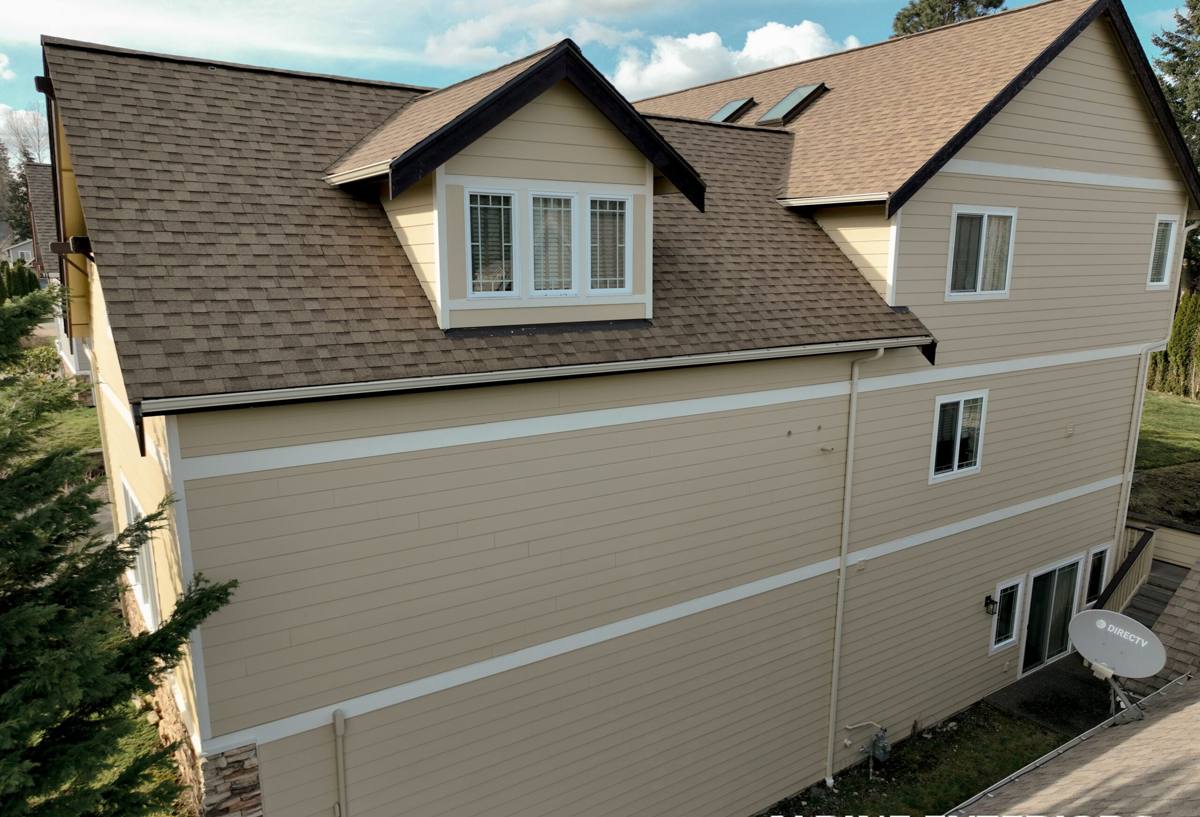
What Local Homes Need From Board & Batten Siding
Moisture Management First
Every board and batten wall has more vertical joints than a horizontal lap wall of the same size, and more joints means more places for water to find its way behind the cladding. In a climate that gets sustained rain events rather than short showers, the assembly behind the siding — housewrap, flashing, and drainage plane — matters as much as the siding itself. A batten that's caulked tight with no drainage path will trap the moisture that does get behind it instead of letting it out.
Resistance to Moss and Algae Staining
Shaded lake-front and tree-lined lots hold humidity against north and east-facing walls, which is exactly what moss and algae need to take hold. The siding material itself won't stop moss from growing on a wall that never dries out, but it does determine how much damage that moisture does once it's there — and how easily the wall cleans up.
Color and Finish That Doesn't Chalk in Marine Air
Airborne salt and UV exposure both accelerate finish breakdown on painted or primed siding. A factory finish engineered for coastal Pacific Northwest exposure holds color and sheds grime differently than a field-primed board that's counting on a homeowner repaint cycle to keep up.
Why We Install James Hardie for This Application — and Not the Alternatives
Board and batten is available in vinyl, engineered wood, and fiber cement, and each behaves differently once it's on a wall in this climate. We install James Hardie fiber cement exclusively, and on a lake-adjacent, moss-prone property the reasons are practical, not just brand preference.
| Material | Moisture Behavior | Moss/Algae Exposure | Long-Term Maintenance |
|---|---|---|---|
| James Hardie fiber cement | Non-combustible, dimensionally stable; doesn't swell or rot when battens stay wet longer than expected | Won't feed fungal growth the way wood-based products can; surface cleans without damaging the substrate | ColorPlus factory finish is engineered for UV and moisture exposure; repaint cycles are much longer |
| Engineered wood (e.g. LP SmartSide) | Wood-strand core; manufacturer specs require strict edge sealing and gap maintenance to control swelling | Any breach in the factory coating exposes a wood-based substrate to moisture and organic growth | Depends on the coating staying intact; touch-up and caulk maintenance is more time-sensitive |
| Vinyl board and batten | Won't rot, but expands and contracts more with temperature swings; can bow or loosen over time | Moss and algae grow on the surface film readily in shaded, damp conditions | Low maintenance but color fades and the panels aren't repairable in sections the way fiber cement is |
| Cedar or primed spruce | Natural wood; absorbs and releases moisture with the seasons, which drives cupping and checking | Highest susceptibility to moss, mildew, and rot without disciplined maintenance | Requires the most frequent inspection, refinishing, and caulk renewal of any option here |
None of these alternative products are junk — vinyl is inexpensive and low-maintenance in the right setting, engineered wood has real fans, and cedar has a look some homeowners specifically want. But on shaded, moisture-heavy lots around Lake Whatcom, we've standardized on Hardie because it holds up to sustained wet exposure and marine air without asking the homeowner to manage a tight maintenance schedule just to keep the wall performing as installed.
What a Correct Board & Batten Installation Involves
The Drainage Plane Behind the Boards
A board and batten wall in a high-rainfall area needs a real drainage gap behind the siding, not just a housewrap stapled flat to the sheathing. Water that gets past the battens — and some always will, given enough sustained rain — needs a path to run down and out rather than sitting against the wall assembly. This is one of the most commonly skipped details on lower-bid jobs because it adds labor and material without being visible once the siding is up.
Panel and Batten Layout
James Hardie's vertical siding system is engineered with specific fastening patterns, batten spacing, and panel-to-panel joint treatment. Battens need to land over solid backing, fasteners need to hit framing at the specified spacing, and butt joints need to be flashed, not just caulked. Caulk is a maintenance item; flashing is the actual water barrier.
Flashing at Windows, Corners, and the Foundation Line
Vertical siding concentrates water flow at every horizontal interruption — window heads, corner boards, and the bottom termination near grade. These are the spots that fail first when flashing is skipped or undersized, and they're also the hardest to fix after the fact without pulling siding.
Board & Batten Installation Checklist
- Drainage gap or rainscreen behind the siding, not siding fastened flat against housewrap
- Fasteners set to Hardie's specified pattern and depth, landing in solid framing
- Metal flashing — not just caulk — at window heads, butt joints, and corners
- Proper clearance at the foundation line and any grade-adjacent siding runs
- Battens and panels pre-finished with ColorPlus coating, touched up only at factory-approved cut edges
- Final walk-through checking reveals, fastener lines, and joint alignment before cleanup
What Happens When It's Installed Wrong Here
The failures we see most often on board and batten walls in this area aren't dramatic — they're slow. Moss builds up in a batten reveal that never dries between rain events. A caulked joint with no flashing behind it lets water track down inside the wall for a season or two before a stain shows up on the interior drywall. A batten nailed without hitting framing works loose over a few winters of wind-driven rain. None of these show up on install day. They show up two, five, or ten years later, which is exactly why the install details matter more than the finished look in photos.
Our Process for Lake Whatcom and Sudden Valley Jobs
1. On-Site Assessment
We look at sun and shade exposure, existing moss or moisture staining, current wall assembly, and any problem areas around windows or grade before quoting anything.
2. Tear-Off and Sheathing Check
Old siding comes off and we inspect the sheathing underneath for rot or water damage before anything new goes up — this is where hidden problems from a prior install usually surface.
3. Weather Barrier and Drainage Plane
We install a proper drainage plane suited to the wall's exposure, sized for the level of rain and shade the specific elevation gets.
4. Hardie Panel and Batten Installation
Panels and battens go up to Hardie's fastening and spacing specs, with flashing detailed at every joint, window, and corner as we go — not patched in afterward.
5. Final Inspection and Walk-Through
We walk the finished wall with the homeowner, checking reveals, fastener lines, and any touch-up needs before calling the job done.
Maintenance in a Wet, Mossy Climate
Correctly installed Hardie board and batten needs less maintenance than the alternatives, but "less" isn't "none." In this climate, a light annual rinse on shaded walls to knock back early moss growth, a periodic check of caulk joints at trim and penetrations, and prompt attention to any gutter overflow or sprinkler spray hitting the siding will keep a wall performing for decades instead of just looking fine for a few years.
Cost Factors for a Lake Whatcom Board & Batten Job
| Factor | Why It Matters Here |
|---|---|
| Wall height and gable complexity | Many Lake Whatcom homes have tall, steep gables that add labor and staging cost |
| Existing wall condition | Sheathing rot found during tear-off, common on shaded, moisture-exposed walls, adds repair cost before siding goes on |
| Drainage plane upgrade | Adding or upgrading a rainscreen behind the siding costs more up front but reduces moisture problems later |
| Access and site conditions | Sloped lake-adjacent lots and tree-heavy sites can add staging and material-handling time |
| Color and finish selection | Factory ColorPlus finishes vary slightly in cost by color but are a fixed, predictable line item versus field painting |
We give a firm, written number after seeing the specific wall — broad online estimates rarely hold up once tear-off reveals what's actually behind the old siding.
Why a Crew That Already Works Lake Whatcom Matters
A contractor who regularly works Sudden Valley and the Lake Whatcom area already knows which walls in this neighborhood tend to hold moisture, where moss builds up fastest, and how the local building department wants flashing and drainage details handled. That familiarity shows up in fewer surprises during tear-off and a wall assembly built for the exposure it's actually going to get — not a generic spec pulled from a manual written for a drier climate.
If you're planning a board and batten project on Lake Whatcom or anywhere in Sudden Valley, we're happy to take a look at your walls and put together a straightforward, no-pressure estimate. There's no obligation — just an honest read on what your home needs and what it would take to do the job right.