 Sudden Valley
 Why New Construction Is the Right Time to Get Windows Right
When you're building new, windows only get installed once without tearing into finished walls. That makes new construction the single best opportunity to match the right window product, the right frame type, and the right installation detail to the actual conditions the house will face — not just the conditions on the day of the walkthrough. For homes going up in and around Alger, that means planning for a wet, coastal-influenced Pacific Northwest climate from the framing stage forward, not treating windows as a fixture you pick from a catalog and bolt into a rough opening.
A correctly installed new-construction window and a poorly installed one can look identical for the first year or two. The difference shows up later — as staining below the sill, soft trim, fogged glass, or a draft that never quite goes away. Getting it right the first time costs less than fixing it after drywall, siding, and paint are already in place.
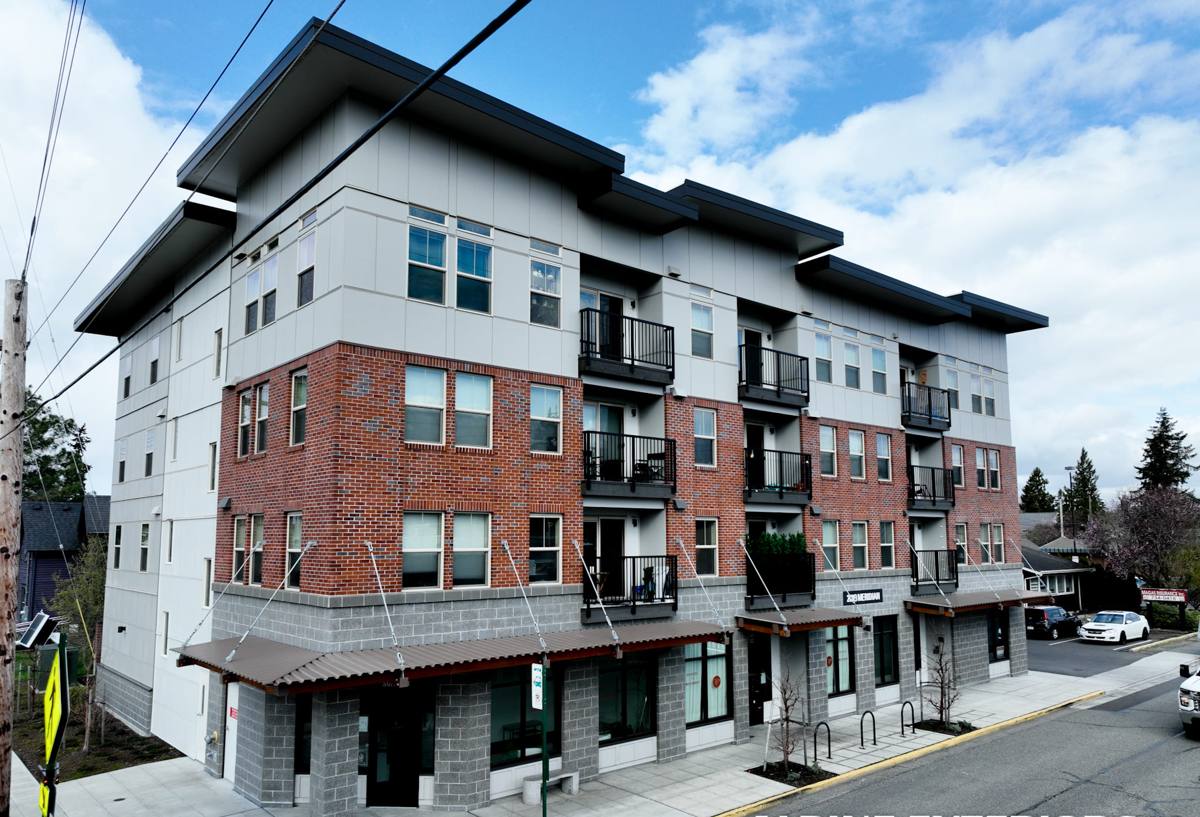
What This Climate Actually Does to New Windows
Whatcom County sits close enough to the Salish Sea that salt-laden air, long stretches of driving rain, and a shoulder-season moss climate all put real, measurable stress on a home's exterior envelope — windows included. None of these factors are dramatic on their own. What matters is that they're constant, year after year, which is exactly the kind of slow wear that shows up as a problem five or ten years down the road if the install wasn't done with them in mind.
Salt Air and Corrosion
Salt-bearing air accelerates corrosion on exposed metal hardware — hinges, cranks, screws, and cladding fasteners — faster than it would inland. This is one of the reasons frame and hardware material selection matters more here than in a drier, inland build. It's not that any one product fails; it's that the wrong hardware finish or an unprotected fastener will show its age sooner in this air than the manufacturer's generic spec sheet assumes.
Wind-Driven, Sideways Rain
Rain here doesn't just fall — it's frequently pushed sideways against the wall plane by wind, which means water gets tested against a window's flashing and drainage path far more often than in climates where rain mostly falls straight down. A window that's watertight against a garden hose test can still leak under real wind-driven rain if the flashing sequence around it wasn't built correctly. This is the single most common source of new-construction window callbacks, and it's almost always an installation issue, not a product defect.
A Long, Damp Moss Season
Cool, shaded, and persistently damp stretches of fall through spring create ideal conditions for moss and algae growth on any surface that stays wet longer than it should — including window sills, trim, and the wall area directly around a window opening. Left unmanaged, that sustained moisture is what eventually works its way into wood trim, sheathing, and framing. A new-construction install that gets the drainage plane and sill pan right keeps water moving out and away instead of pooling where moss and rot can take hold.
What a Correct New-Construction Window Installation Actually Involves
New-construction windows are installed before the siding goes on, using a nailing flange set directly against the housewrap and sheathing. That gives a builder the chance to integrate the window into the wall's drainage plane properly — but only if every layer is sequenced correctly. Skipping or rushing any one of these steps is how a window that looks fine on install day ends up leaking two winters later.
The Flashing and Water Management Sequence
- Rough opening checked for square, level, and correct sizing before the window ever goes in
- Sloped sill pan installed at the bottom of the opening so any water that gets past the window drains back out, not into the wall
- Housewrap and flashing tape integrated in the correct shingle-lap order — sill first, then jambs, then head — so water sheds down and out at every layer
- Backer rod and compatible sealant at the frame perimeter, sized and installed to stay flexible through freeze-thaw and wind-load movement
- Nailing flange fully and evenly fastened per the manufacturer's schedule, not just "enough to hold it"
- Interior air seal completed separately from the exterior water seal — these are two different jobs that both need to be done, not one seal doing double duty
Any one of these steps done out of order or skipped to save time is invisible once siding and trim go on. It's also exactly the kind of shortcut that shows up as a warranty claim once the house has been through a couple of real Whatcom County winters.
Frame Materials That Hold Up Locally
We don't push one frame material as universally "best" — the right call depends on the home's design, budget, and exposure. What we do insist on is being honest about trade-offs in this specific climate rather than reciting a sales sheet.
| Frame Type | How It Handles This Climate | Trade-Offs to Know |
|---|---|---|
| Vinyl | Good moisture resistance, no corrosion risk, low maintenance | Can expand/contract more with temperature swings; quality varies widely between manufacturers |
| Fiberglass | Very stable dimensionally, holds paint well, strong moisture performance | Higher upfront cost than vinyl |
| Wood-clad | Warm interior look, solid performance when the exterior cladding is intact | Any breach in the cladding exposes wood to our wet season; needs a disciplined install and long-term upkeep |
| Aluminum | Strong and slim sightlines | Poor thermal performance and more prone to condensation without a thermal break; hardware needs a corrosion-resistant finish near salt air |
Choosing Window Products for a New Build Here
Beyond frame material, a few product-level decisions matter more in this climate than they might in a drier region:
- Glass package: A quality low-E, dual-pane (or triple-pane where budget allows) unit reduces condensation risk on cold, damp mornings — a common complaint in homes that got a builder-grade glass package to hit a price point.
- Weep holes and drainage: Confirm the window's designed drainage path is clear and functional, not blocked by sealant or trim during install — this is what lets water that does get past the glass and gasket escape instead of sitting in the frame.
- Hardware finish: Ask specifically about corrosion resistance on cranks, locks, and hinges, especially for homes with more direct air exposure.
- Warranty structure: Understand what's covered by the manufacturer (glass seal failure, hardware) versus what's covered by the installer (workmanship, flashing, sealant). Both matter, and they're not the same thing.
What Affects Your New-Construction Window Costs
Costs vary by opening size, quantity, glass package, and frame material, but the main cost drivers on a new build are consistent:
| Cost Factor | Why It Moves the Price |
|---|---|
| Frame material | Vinyl is generally the most budget-friendly; fiberglass and wood-clad cost more but bring different performance and appearance trade-offs |
| Glass package | Upgraded low-E coatings, gas fills, and triple-pane glass improve comfort and reduce condensation but add cost per unit |
| Opening size and shape | Larger openings, custom shapes, and taller great-room windows cost more in both product and labor |
| Number of openings | Per-unit pricing typically drops somewhat as total window count on the build goes up |
| Site access and timing | Coordinating install around framing and weather windows affects labor efficiency |
We give straight, itemized numbers before work starts — no vague allowances that turn into surprises at final walkthrough.
Our Process for New-Construction Installs in Alger
- Plan review: We review window schedules and rough opening sizes against the actual plans before product is ordered, catching sizing or spec mismatches early.
- Product selection: We walk through frame material, glass package, and hardware options based on the home's exposure and budget — not a one-size-fits-all recommendation.
- Coordination with the builder's timeline: Windows go in at the right point in the framing sequence, with housewrap and flashing details planned before the crew is on site, not figured out on the fly.
- Installation: Sill pans, flashing, sealant, and fastening are done to a documented sequence, not "how we usually do it."
- Inspection and sign-off: Every opening gets checked for level, square, operation, and a clean exterior seal before we consider the job complete.
A Checklist Before Windows Go In on Your Build
- Confirm rough openings match the approved window schedule, not just the framer's estimate
- Confirm sill pan flashing is part of the written install plan, not assumed
- Ask how weep holes and drainage paths will be verified after install
- Confirm which sealant and backer rod products will be used and that they're rated for this climate
- Get a clear answer on what's covered under the manufacturer's warranty versus the installer's workmanship warranty
- Ask how installation timing will be adjusted around wet-weather windows
Why a Crew That Already Works This Area Matters
A crew that regularly installs new-construction windows around Alger and greater Whatcom County isn't guessing at flashing details from a generic manual — they've seen what actually fails here and what holds up. That includes knowing how to sequence work around our wet season instead of installing sealant or housewrap in conditions that compromise the seal, understanding which hardware finishes hold up against salt air over time, and recognizing early signs of the moisture and moss issues this climate produces before they become structural. It also means fewer surprises with local inspection expectations and a crew that isn't learning this region's weather on your project.
After Move-In: Keeping New Windows Performing
A correctly installed window still benefits from basic upkeep in this climate. Clear debris from sill tracks and weep holes each season so water can keep draining as designed. Keep an eye on caulking and sealant lines around the frame exterior — normal weathering means these need occasional attention over the years, not because the install failed, but because sealant is a maintenance item everywhere in a climate this wet. If moss or algae starts forming on trim or sills, treat it early rather than letting sustained moisture sit against wood or painted surfaces.
If you're planning windows for a new build near Alger, we're happy to walk through your plans, talk through frame and glass options for your specific site, and give you a straightforward, itemized estimate — no pressure, no sales script. Use the form below to get started.