 Sudden Valley
 Roof Repair Built for Bellingham's Weather
Bellingham sits where Puget Sound weather meets the foothills of the North Cascades, and that combination is hard on roofs. Homes near Bellingham Bay deal with salt-laden air moving inland, driving rain that comes in sideways off the water, and a moss season that can run eight months or longer in a wet year. A roof repair here has to account for all three, not just patch the spot that's leaking. We work on homes throughout Bellingham and out toward Sudden Valley on Lake Whatcom, and the repair calls we get from each area follow a pattern shaped by this climate.
This page covers what actually goes wrong with roofs in this region, what a correct repair looks like, and how our process works when you call us out for a leak, missing shingles, or a soft spot you noticed after a windstorm.
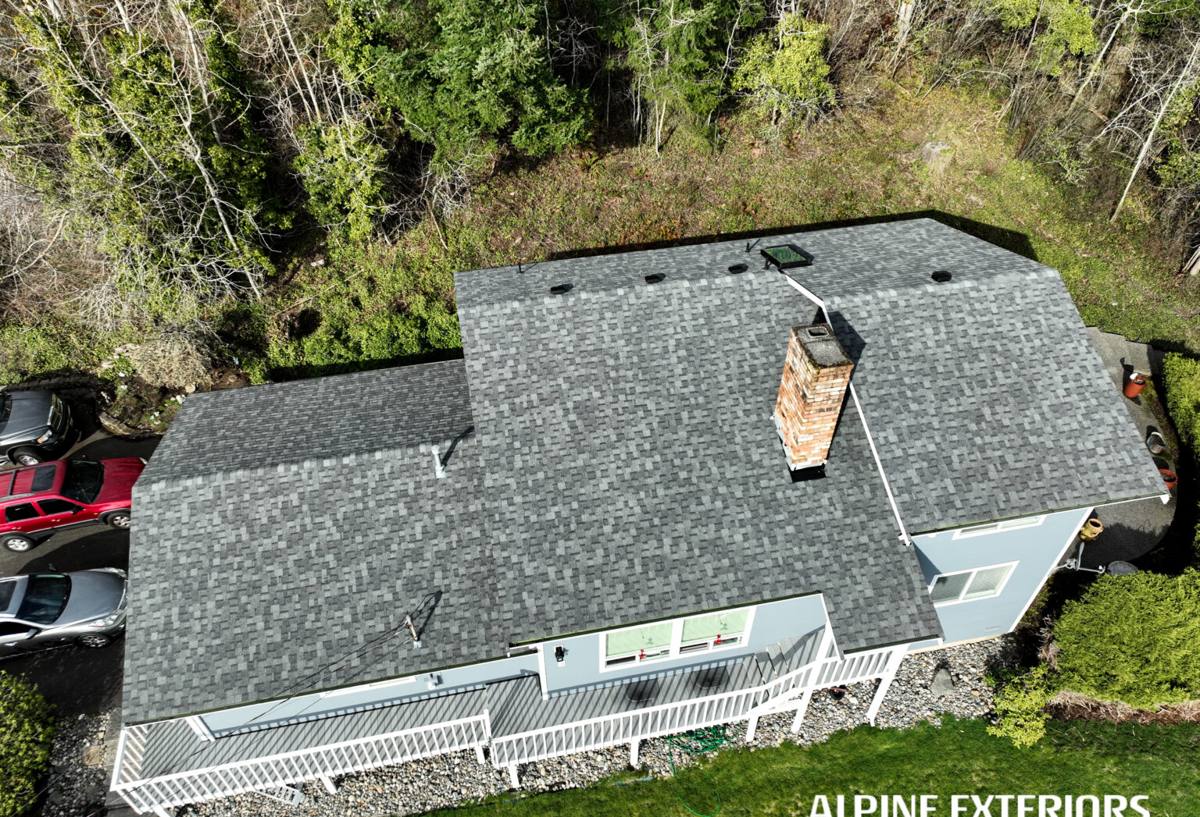
What Whatcom County Weather Does to a Roof
Moss and Organic Growth
Moss doesn't just look bad — it holds moisture against the roof surface year-round, which accelerates granule loss on asphalt shingles and rot on wood-framed sections underneath. In Bellingham's shaded, tree-covered lots, moss can establish itself within a couple of years of a roof going untreated. Once it works under shingle tabs and starts lifting them, water finds a path in that wasn't there before.
Wind-Driven Rain
Storms moving through the Salish Sea often bring rain at an angle rather than straight down. That matters because a roof detail that sheds water fine in a calm rain — a flashing lap, a vent boot, a valley — can still leak under wind-driven conditions if it wasn't installed with enough overlap or sealed correctly at the edges. Most of the "mystery leaks" we diagnose in Bellingham trace back to a detail that was adequate for light rain but not for a sideways storm.
Salt Air and Corrosion
Homes closer to Bellingham Bay see salt air move inland on a regular basis. It accelerates corrosion on exposed metal — flashing, nail heads, gutter hardware, and fasteners on any roof-mounted equipment. Corroded fasteners back out or fail quietly, and a flashing edge that's rusted through no longer does its job even if it still looks intact from the ground.
Signs You Need Roof Repair, Not Replacement
Most roofs don't fail all at once — they show localized problems first. If you're seeing any of the following, a repair is usually the right call rather than jumping straight to a full tear-off:
- A stain on an interior ceiling or wall that appears after heavy or wind-driven rain
- Shingles that are cracked, curling, or missing in one section rather than across the whole roof
- Heavy moss buildup concentrated on north-facing or shaded slopes
- Visible daylight or gaps around a chimney, skylight, or vent pipe from the attic
- Granules collecting in gutters after storms, especially from one particular area
- Soft or spongy decking felt underfoot in one spot during an inspection
- Flashing that's visibly rusted, lifted, or separated from the roof surface
If the damage is spread evenly across the whole roof and the shingles are past their expected service life, replacement is usually the more honest recommendation — we'll tell you that instead of stacking repairs on a roof that's done.
Common Repair Jobs We Do Around Bellingham
| Repair Type | Typical Local Cause | What a Correct Fix Involves |
|---|---|---|
| Flashing replacement | Corrosion from salt air, or original flashing undersized for wind-driven rain | Remove and replace with new step or counter-flashing, properly lapped and sealed at all penetrations |
| Moss removal and treatment | Extended shade and moisture from Bellingham's tree cover and long wet season | Careful removal without scraping granules, followed by a treatment appropriate for the roof material |
| Shingle section replacement | Wind lift or granule loss in a localized area | Matching material where possible, proper nail placement, and re-sealing adjacent courses |
| Vent boot and pipe flashing repair | Rubber boot material cracking with age and temperature swings | Full boot replacement, not just a caulk patch, since caulk alone fails under repeated rain |
| Valley repair | Debris buildup and wind-driven rain overwhelming an undersized valley | Clear debris, inspect underlayment, rebuild valley metal or membrane as needed |
What a Correct Repair Actually Involves
A patch that only addresses the visible symptom tends to come back. A repair done right starts with finding the actual entry point, which is often several feet away from where the water showed up inside the house — water travels along rafters and decking before it drips.
Diagnosis First
We inspect from both the roof surface and, when accessible, the attic side. Water stains, dark decking, or damp insulation on the underside tell us more about the real path of a leak than the surface alone.
Address the Cause, Not Just the Spot
If moss caused the lift that let water in, removing moss without addressing drainage or shade issues just delays the repeat problem. If corroded flashing failed, we replace the flashing rather than caulking over rust.
Match Materials Where It Matters
For visible shingle repairs, we try to match existing material so the patch doesn't stand out and so the repaired section ages at a similar rate to the rest of the roof. For underlayment and flashing, we use current materials even if the original roof used something older — there's no reason to replace a failed part with the same design that failed.
Check Adjacent Areas
A roof old enough to develop one leak often has other spots close to failing. We'll flag those honestly rather than only fixing what you called about, so you can decide whether to address them now or plan for later.
Repair vs. Replacement: What Drives the Decision
| Factor | Leans Toward Repair | Leans Toward Replacement |
|---|---|---|
| Age of roof | Roof is well within its expected lifespan | Roof is at or past the manufacturer's expected service life |
| Extent of damage | Localized to one section or detail | Widespread granule loss, curling, or moss across most slopes |
| Decking condition | Decking is solid where inspected | Soft or rotted decking found in multiple areas |
| History of repairs | First significant issue on this roof | Roof has needed several repairs in recent years |
| Budget timeline | Repair buys reasonable time before a planned replacement | Cost of repeated repairs starts approaching replacement cost |
Straightforward repairs are often a few hundred to low thousands of dollars depending on scope and access; full replacement is a much larger investment. We'll walk you through where your roof actually falls on this spectrum rather than defaulting to whichever job is bigger.
Our Repair Process
- Initial call to understand what you're seeing — location of leaks, roof age, and any past repair history
- On-site inspection of the roof surface, flashing details, and attic access where available
- Written explanation of what's causing the problem and what fixing it properly requires
- Straightforward estimate covering material and labor, with any additional findings noted separately
- Repair work scheduled around the weather — we don't seal or patch during active rain, since materials need dry conditions to bond correctly
- Final walk-through so you can see what was done and ask questions before we leave
Why a Crew That Already Works Bellingham Matters
Roofing details that hold up in a dry climate don't always hold up here. A crew that's done repair work across Bellingham and out toward Sudden Valley has already seen how local moss patterns develop, which flashing details tend to fail first near the water, and how wind-driven storms off the Sound expose weak spots that wouldn't show up in a calmer climate. That local pattern recognition shortens the diagnosis and means less guesswork on your roof.
It also means we're not learning Whatcom County's permitting and code requirements for the first time on your project, and we're around after the job is done if something needs a second look.
Maintenance That Extends the Life of a Repair
A good repair lasts longer with basic upkeep. A few habits make a real difference in this climate:
- Keep gutters clear so water isn't backing up under the lowest course of shingles
- Trim back overhanging branches to reduce shade and debris that feed moss growth
- Have moss treated before it thickens rather than after it's visibly lifting shingles
- Check attic ventilation — poor airflow traps moisture that speeds up decking rot from the inside
- After any major windstorm, do a visual check from the ground for lifted or missing shingles
If you're seeing a leak, missing shingles, or moss buildup on a Bellingham or Sudden Valley home, we're happy to take a look and give you a straight answer on what it needs. Reach out for a free, no-pressure estimate using the form below.