 Sudden Valley
 Why Sehome Roofs Wear Differently Than Roofs Inland
Sehome sits close enough to Bellingham Bay that salt-laden air is a daily fact of life for anything metal on your roof, and far enough into Whatcom County's wet season that a roof can go weeks at a time without a real chance to dry out. Add in the tree cover that shades a lot of Sehome's older streets and you get a roof environment that's tougher on fasteners, flashing, and shingles than what you'd see on the drier east side of the county. None of that means a Sehome roof is doomed to constant problems. It means the repair work has to account for salt exposure, sustained moisture, and moss in a way that a generic patch job doesn't.
We've repaired roofs across this part of Whatcom County long enough to know the difference between a cosmetic issue and a roof that's already let water into the structure. That distinction matters more here than in drier climates, because a small leak in a home that stays damp for most of the year can turn into rot, mold, or a failed deck a lot faster than the same leak would in a dry-summer region.
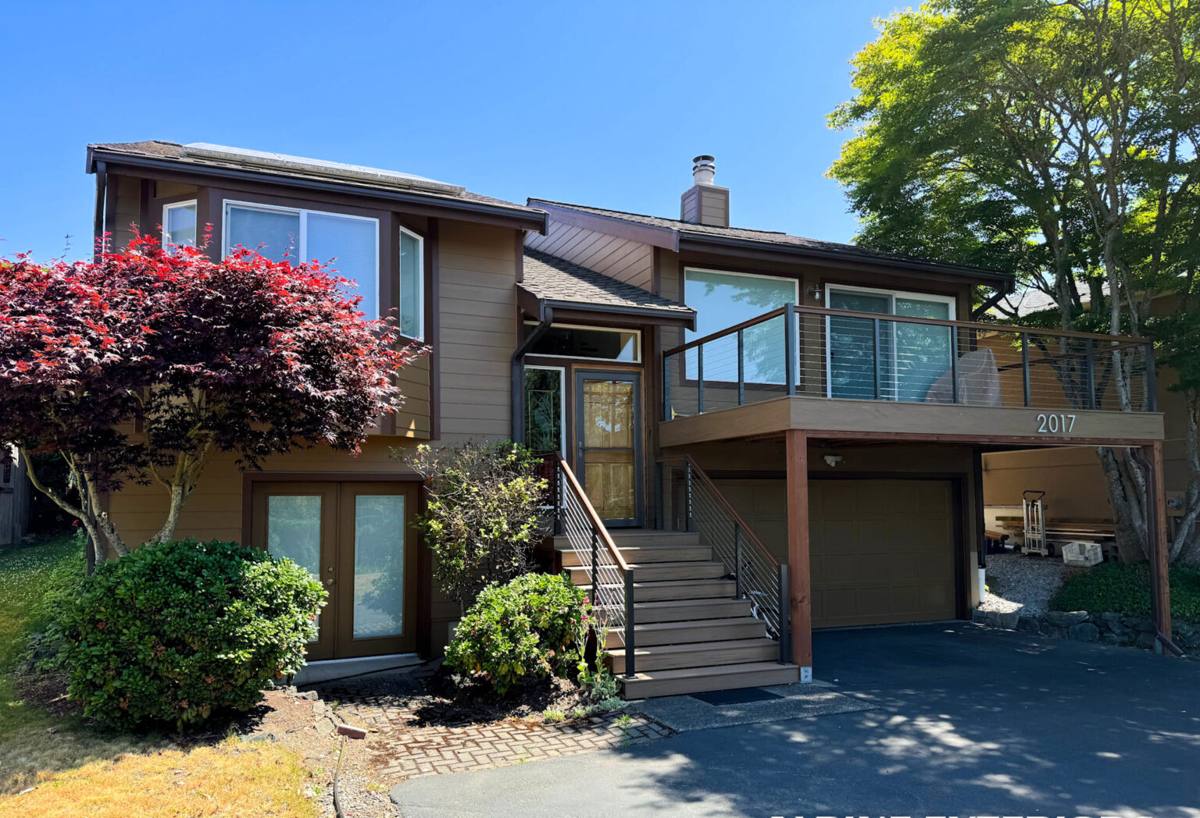
The Climate Factors That Actually Drive Repair Needs
Salt Air and Corrosion
Airborne salt from the bay accelerates corrosion on exposed metal — nails, flashing, and fastener heads in particular. Galvanized flashing that would last decades in an inland climate can start pitting and rusting years earlier this close to saltwater. Once a fastener corrodes, it loses its grip and the shingle or flashing piece it was holding starts working loose, which is how a small, stable roof section turns into an active leak point.
Driving Rain
Whatcom County storms often come in sideways, not straight down. Wind-driven rain finds its way under shingle edges, around poorly lapped flashing, and into any gap that a calmer rain would never reach. Roofs here need repair details — proper overlaps, sealed transitions, correctly pitched flashing — that assume rain is going to attack from an angle, not just fall straight onto the surface.
The Long Moss Season
Between shaded lots, moderate temperatures, and months of damp weather, Sehome roofs support moss and algae growth for a large part of the year. Moss isn't just cosmetic. It holds moisture directly against the shingle surface, works its way under shingle tabs as it grows, and physically lifts the shingle edge over time. That lifted edge is exactly where wind-driven rain gets in.
Common Roof Repair Issues We See in Sehome
- Shingles lifted or cracked from moss growth working under the tabs
- Corroded or failing flashing around chimneys, valleys, and roof-to-wall transitions
- Granule loss on older asphalt shingles from years of moisture cycling
- Soft or spongy decking under a section that's had a slow, unnoticed leak
- Gutter and eave backups that push water up under the first course of shingles
- Nail pops and loosened fasteners from corrosion or original installation shortcuts
- Ridge cap deterioration from constant wind and rain exposure at the roof's highest point
What a Correct Roof Repair Actually Involves
Diagnosing the Real Leak Path
Water rarely shows up where it enters. It travels along the underlayment or decking and drips somewhere downhill from the actual opening. A repair that just patches the spot where a stain appeared on the ceiling often misses the real entry point entirely, and the leak comes back within a season. A correct diagnosis means getting on the roof, tracing the likely water path, and checking flashing, fastener condition, and decking in the area — not just the visible symptom.
Matching Materials and Technique
A repair should match the existing roof's material, profile, and fastening pattern closely enough that it performs the same way the surrounding roof does. Mismatched shingles, the wrong flashing metal, or fasteners that don't match the original spacing all create new weak points instead of fixing the old one. On an older roof, sourcing a reasonably close match matters more than most homeowners expect.
Repair vs. Replacement
Not every roof problem calls for a full replacement, and not every leak can be solved with a patch. The honest answer depends on the roof's age, how much of it is affected, and whether the decking underneath is still sound.
| Factor | Favors Repair | Favors Replacement |
|---|---|---|
| Roof age | Roof is under roughly two-thirds of its expected lifespan | Roof is near or past its expected lifespan |
| Extent of damage | Damage is isolated to one section or detail | Multiple sections show granule loss, curling, or moss damage |
| Decking condition | Decking underneath is still solid | Decking is soft, delaminated, or rotted in multiple spots |
| Leak history | First occurrence, clear single cause | Repeated leaks in different areas over time |
| Material availability | Close material match is available | Original material is discontinued or badly weathered elsewhere |
Materials and Methods for a Coastal-Rain Climate
The materials we choose for a Sehome repair reflect the conditions the roof actually deals with, not just what's cheapest or fastest to install.
- Flashing metal: we favor corrosion-resistant options over standard galvanized steel in areas with direct salt-air exposure, since the added upfront cost is small compared to redoing corroded flashing a few years later.
- Underlayment at vulnerable points: valleys, eaves, and roof-to-wall transitions get self-adhering waterproof underlayment, not just standard felt, because those are the spots wind-driven rain targets first.
- Fasteners: corrosion-resistant nails or screws in place of standard fasteners wherever the repair is exposed to weather, so the fix doesn't fail from the same corrosion that caused the original problem.
- Sealants: used sparingly and only as a secondary defense — a repair that depends on caulk to stay watertight rather than on correct flashing and lapping is a repair that will need to be redone.
Roof Repair Cost Factors in Sehome
Exact pricing depends on what we find once we're on the roof, but the factors below are what typically move a repair estimate up or down. As a general sense of scale, a small, isolated flashing or shingle repair often runs in the low hundreds of dollars, while a repair involving deck replacement, multiple leak points, or hard-to-access roof sections can run well into the low thousands. We'll always walk you through the specific reasons behind your estimate before any work starts.
| Cost Factor | Why It Matters |
|---|---|
| Size and number of affected areas | More area and more separate leak points mean more material and labor time |
| Decking condition | Rotted or soft decking has to be cut out and replaced before shingles or flashing go back on |
| Roof pitch and access | Steeper roofs and hard-to-reach sections take longer and require more safety setup |
| Material match | Sourcing an older or discontinued shingle or metal profile can add time and cost |
| Moss and debris removal | Heavy moss buildup often needs to be cleared before the actual damage can even be assessed |
Moss, Algae, and Keeping a Repair From Becoming a Repeat
A repair fixes the immediate problem, but in a moss-prone climate like Sehome's, ignoring the conditions that caused it just invites a repeat visit in a year or two. Zinc or copper strips installed near the ridge let rainwater carry trace metal down the roof slope, which discourages new moss growth over time without any ongoing chemical treatment. Gentle, low-pressure cleaning removes existing moss and algae without stripping granules the way a pressure washer can. Keeping gutters clear and trimming back overhanging branches where practical also cuts down on the shade and standing debris that moss needs to take hold.
None of this is about scaring anyone into unnecessary work. It's about making sure a repair we do this year is still holding up three and five years from now, instead of being the first of several visits for the same underlying cause.
Why a Crew That Already Works in Sehome Makes a Difference
Roof repair is diagnostic work as much as it's construction work, and local experience shortens that diagnosis. A crew that regularly works Sehome roofs already has a feel for how the local mix of tree cover, roof age, and coastal exposure tends to show up as damage — which cuts down on guesswork and unnecessary exploratory work on your roof. There's also a practical side: being local means we can respond to an active leak quickly rather than fitting your roof into a schedule built around jobs an hour or more away, which matters when Whatcom County's rainy stretches don't leave much of a dry window to work in.
We also stand behind the repair itself. If something we fixed isn't holding up the way it should, we come back and make it right — that's a more useful guarantee than a warranty document you'll never need to read if the repair is done correctly the first time.
Signs Your Sehome Roof Needs Repair Now
Some roof problems can wait for a scheduled inspection. Others shouldn't. Use this list as a general guide for when to call sooner rather than later:
- Water stains on ceilings or upper walls, even if they seem to have dried up
- Visible daylight through the roof deck from inside the attic
- Shingles that are cracked, curling, or missing after a windstorm
- Thick moss growth that's visibly lifting shingle edges, not just staining the surface
- Granules collecting in gutters or at downspout outlets in noticeable amounts
- Sagging in any part of the roofline when viewed from the street
- A musty smell or visible mold in the attic, which often points to a moisture source above
If any of that sounds familiar, or you'd just like an honest read on where your roof stands, we're glad to take a look. Fill out the form below for a free, no-pressure estimate — no obligation, just a clear picture of what your Sehome roof actually needs.