 Sudden Valley
 Siding Replacement in Sehome: A Different Job Than Most Regions
Sehome homes sit in a part of Whatcom County where the exterior of a house works harder than it does almost anywhere else in the state. Between the salt-laden air coming off the water, driving rain that hits siding sideways instead of straight down, and a moss season that can stretch across most of the year in shaded and north-facing spots, siding here ages differently than it does inland. A replacement job that doesn't account for that climate is a job you'll be redoing sooner than you should have to.
This page covers what siding replacement actually involves for homes in and around Sehome and Sudden Valley — what the climate does to siding over time, what correct installation looks like, and why local experience with this specific weather pattern matters as much as the product itself.
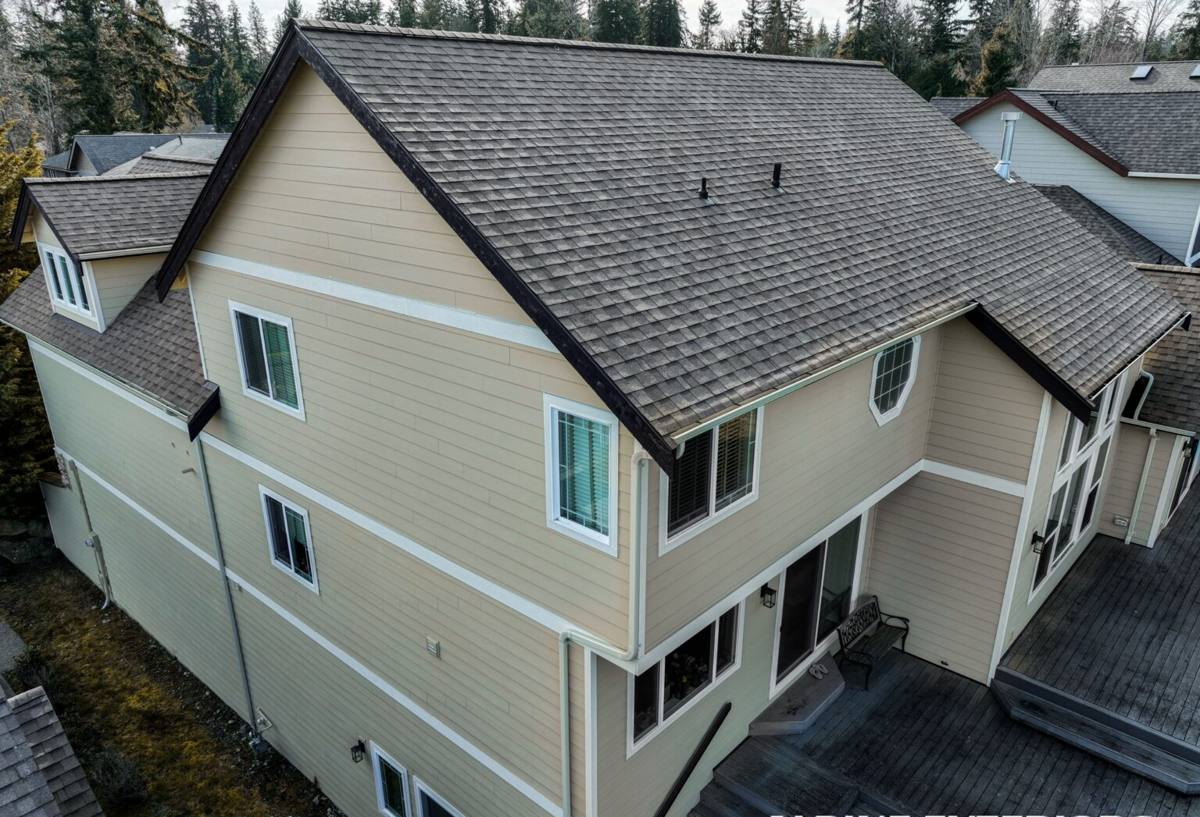
What This Climate Does to Siding Over Time
Salt Air and Coastal Exposure
Homes closer to the water deal with airborne salt that settles on exterior surfaces, accelerates corrosion of fasteners and trim metal, and breaks down lower-quality paint finishes faster than manufacturers' published timelines suggest. It doesn't take a beachfront lot to feel this — moisture-laden air moves inland with the weather, and siding on homes several miles from the coast still shows the effects over a couple of decades.
Driving Rain and Wind-Driven Moisture
Whatcom County doesn't just get a lot of rain — a meaningful share of it arrives at an angle, driven by wind off the water. That matters because siding systems are engineered to shed water moving downward; wind-driven rain pushes moisture up under laps, around trim, and into any gap in flashing or caulking that a calmer climate would never expose. Homes here need siding and flashing details built for that reality, not the minimum spec for a dry-climate installation.
The Long Moss and Shade Season
Tree cover and cloud cover both work against fast drying. On shaded elevations and north-facing walls, siding can stay damp for days after a storm, which is exactly the environment moss, algae, and mildew need to take hold. Once organic growth gets established on a siding surface, it holds moisture against that surface even longer, which is why the cycle tends to accelerate rather than stay steady once it starts.
Signs a Sehome Home Needs Siding Replacement
Not every problem means a full replacement, but these are the signs that usually point that direction rather than a patch or repaint:
- Soft or spongy spots when you press on the siding, especially near the bottom courses or under windows
- Persistent moss or algae staining that returns within a season or two of cleaning
- Visible warping, cupping, or separation at the seams between boards or panels
- Paint that's peeling or bubbling rather than just fading, which often points to moisture trapped behind the surface
- Rot or discoloration at trim boards, corner boards, or anywhere siding meets a roofline or deck
- Rising energy bills alongside visibly aging siding, which can mean the wall assembly behind it is compromised
- Siding that's original to a home built more than 20-25 years ago, particularly older wood or lower-grade composite products
What a Correct Siding Replacement Job Involves
Tear-Off and What's Underneath
A proper replacement isn't just stripping the old siding and nailing up new material. Once the old siding is off, the sheathing underneath gets inspected for rot, soft spots, or water damage that's been hidden for years. In a climate like this one, it's common to find some degree of moisture damage behind older siding, especially around windows, doors, and lower wall sections — and any of that has to be addressed before new siding goes on, not covered over.
Water-Resistive Barrier and Flashing
This is the step that matters most for driving-rain climates and the one most likely to get shortcut on a rushed job. A correctly installed water-resistive barrier, properly lapped and taped, combined with correct flashing at every window, door, and horizontal trim transition, is what actually keeps wind-driven rain out of the wall assembly. The siding itself is the visible layer; this is the layer doing the real work.
Installing the Siding to Manufacturer Spec
Fiber cement siding has specific requirements for fastener type and placement, gapping at butt joints, clearance from grade and roof lines, and caulking at penetrations. Skipping or guessing at any of these doesn't show up as a problem on day one — it shows up two, five, or ten years later as exactly the kind of moisture intrusion this climate is quick to exploit.
Why We Install Only James Hardie Fiber Cement
We install James Hardie fiber cement siding exclusively. We don't install vinyl, LP SmartSide, or other composite or engineered-wood products, and that's a deliberate standard, not a limitation in what we're able to offer.
In a climate defined by salt air, driving rain, and extended damp periods, the material matters as much as the installation. Fiber cement is non-combustible, dimensionally stable in wet-dry cycles, and resistant to the rot and moisture absorption that shorten the life of wood-based and some engineered products in this kind of environment. James Hardie's ColorPlus factory finish is baked on and warranted against fading and flaking, which matters in an area where UV exposure is inconsistent but moisture exposure is constant. Their HZ5 product line is engineered specifically for climates with freeze-thaw cycling and high moisture, which describes this region well.
| Consideration | What It Means Locally |
|---|---|
| Moisture resistance | Fiber cement doesn't swell, rot, or delaminate the way wood-based products can under sustained damp conditions |
| Salt air durability | Non-combustible fiber cement doesn't corrode; factory finish resists breakdown from airborne salt better than field-applied paint systems |
| Moss and algae resistance | Dense, stable material surface is less hospitable to organic growth than porous or fibrous substrates |
| Warranty structure | Transferable, product-backed warranty rather than one that depends heavily on maintenance schedules |
| Long-term appearance | Factory-applied finish holds color and texture longer under UV and moisture cycling than site-finished materials |
Our Process, From Estimate to Finished Job
We walk the exterior with you, note the condition of the current siding and any trim, flashing, or sheathing concerns we can see or reasonably anticipate, and give you a straightforward estimate — no pressure, no inflated scope. If we find hidden damage once tear-off starts, we'll show you what we found and talk through the fix before doing any additional work, not after the invoice arrives.
Installation follows manufacturer spec on fastening, gapping, and flashing at every transition point, because that's the difference between siding that performs for decades and siding that looks fine for a few years before problems start showing up. We clean up thoroughly at the end of each work day and leave the site ready to walk before we call the job done.
Why Local Crew Experience Matters Here
Siding installation isn't identical everywhere, and a crew that's mostly worked drier, calmer climates doesn't automatically know how to detail flashing for wind-driven rain or account for the moss cycle on a shaded, tree-covered lot. A crew that already works Sudden Valley and the surrounding Whatcom County communities has seen how homes in this specific environment actually age — which elevations fail first, where moisture tends to find its way in, and what details are worth extra attention versus what's genuinely fine. That's not something a general contractor from outside the region picks up on the first job.
What Siding Replacement Typically Costs Here
Every home is different, and an accurate number requires a walk-through, but these are the factors that move the price up or down on most siding replacement projects in this area:
| Factor | Why It Affects Cost |
|---|---|
| Home size and wall complexity | More square footage and more corners, gables, and trim transitions mean more labor and material |
| Condition of existing sheathing | Hidden rot or water damage found during tear-off adds repair work before new siding goes on |
| Siding profile and trim choices | Lap width, panel style, and trim detailing affect both material cost and installation time |
| Access and site conditions | Steep lots, tree cover, or limited staging space can add time to the job |
| Number of stories | Multi-story homes require more scaffolding, staging, and safety setup |
We give straight numbers based on what your home actually needs, not a generic square-footage formula.
If your Sehome or Sudden Valley home is due for new siding, we're happy to take a look and walk you through what we see, at no cost and with no pressure to commit. Reach out through the form below for a free estimate.