 Sudden Valley
 A Different Kind of Wear Pattern Around the Lake
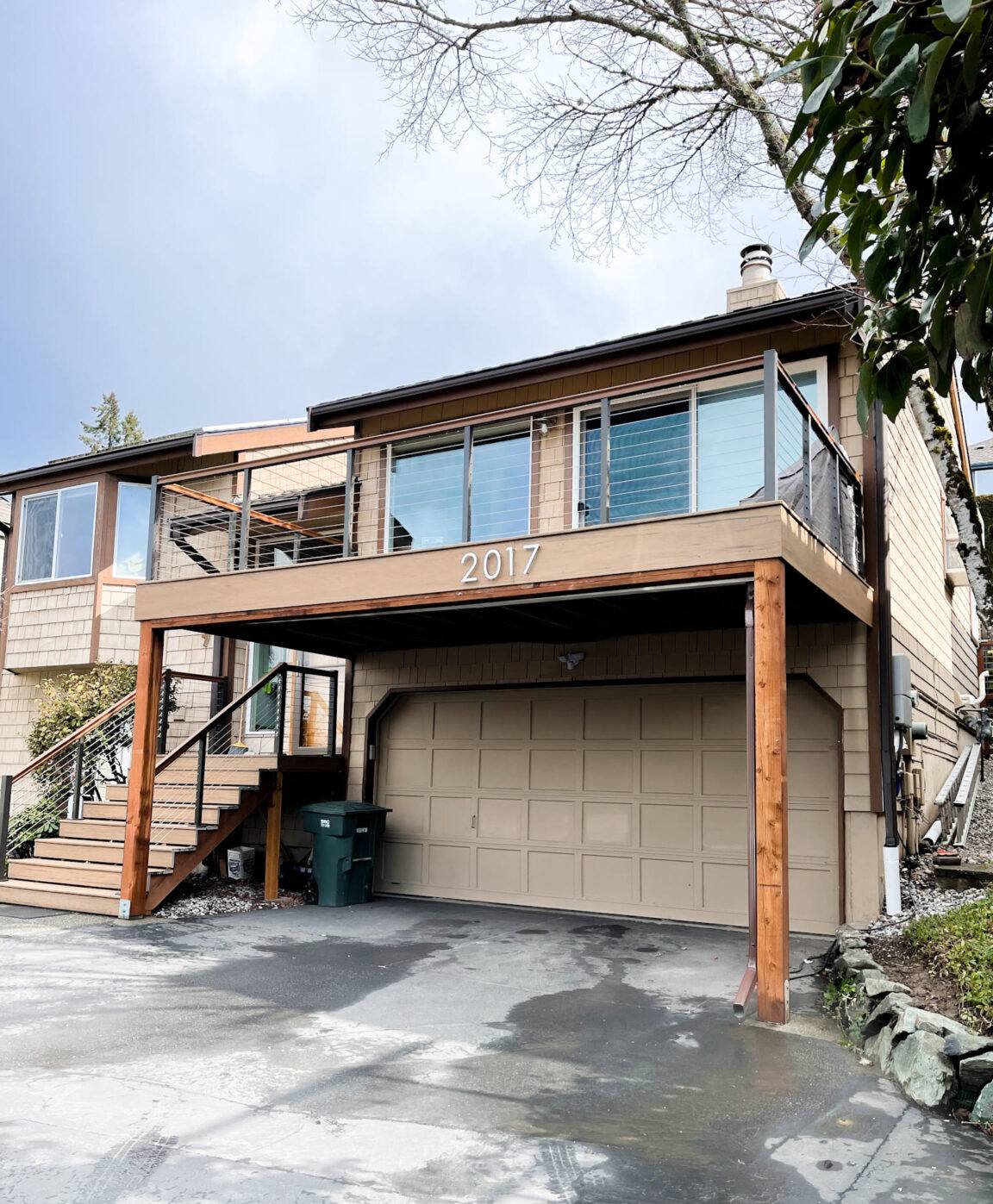
Sudden Valley homes don't age the way a house in a dry, open subdivision does. Sitting against the shoreline and tree line of Lake Whatcom, most properties here get a mix of conditions that are individually manageable but genuinely tough in combination: heavy tree canopy that keeps siding shaded and slow to dry, humid air coming off the lake itself, driving rain that blows in sideways off the hills during fall and winter storms, and a marine-influenced climate typical of western Whatcom County that keeps everything a shade damper, longer, than homeowners moving here from drier parts of the state expect.
None of that is dramatic on any single day. It's the accumulation that matters. A wall that stays damp two or three days longer after every rain event, week after week, year after year, is a wall where moss gets a foothold, paint fails early, and any siding material with a weak point in its moisture defense eventually finds it.
Why Moss and Algae Season Runs Long Here
North-facing walls and anything shaded by fir and cedar canopy — which describes a lot of Sudden Valley lots — stay wet longer after rain and get less UV exposure to dry out and kill off spores. That's the recipe for the greenish-black staining and moss growth that shows up on siding, trim, and roof edges throughout this part of the county. It's not a defect in a house; it's a predictable result of the setting. The real question is whether the siding material and the installation underneath it are built to shed that moisture and hold their finish, or whether they're just going to keep absorbing it.
Wood-based products — cedar, primed spruce, and OSB-based composites like LP SmartSide — depend on paint film and caulking to keep water out of the substrate. In a setting where surfaces stay damp for extended stretches, that paint film is under more stress and fails sooner than the same product would on a drier lot across town. Fiber cement doesn't have that vulnerability, because the material itself isn't wood fiber that swells when wet.
What Homeowners Notice First
- Dark green-black streaking on shaded elevations, especially north and northeast walls facing the lake or tree line
- Caulk joints that crack or pull away at seams and corners within a few years
- Paint that chalks, peels, or blisters faster on shaded sides than sunny ones
- Soft spots or swelling at the bottom courses, where splashback and standing moisture concentrate
- Trim and fascia showing wear before the siding field does, since trim collects more standing water
What a Correct Installation Actually Involves
Siding installation is mostly invisible work. Anyone can nail boards to a wall and have it look fine for the photo. Whether it holds up through a Sudden Valley winter comes down to what's underneath and how the details are handled.
The Weather Barrier and Drainage Plane
Every wall needs a continuous water-resistive barrier with a drainage gap behind the siding, so any moisture that does get past the surface has somewhere to go instead of sitting against the sheathing. On a lake-adjacent, shade-heavy lot, this isn't optional detailing — it's the difference between siding that dries out after a storm and a wall assembly that stays wet.
Flashing at Every Penetration
Windows, doors, hose bibs, light fixtures, deck ledgers — every penetration through the siding is a potential entry point. Correct flashing (installed in the right order, lapped so water sheds outward and down, never trapped behind the barrier) matters more here than in a dry climate because there's simply more water trying to find its way in over the course of a year.
Clearance and Fastening
James Hardie's own installation instructions specify minimum clearances from grade, roofing, decks, and horizontal surfaces, plus specific fastener patterns and gapping at butt joints. Skipping these to save an hour of labor is exactly how a good product ends up with a bad reputation — the material didn't fail, the installation did.
| Detail | Why It Matters Here |
|---|---|
| 6" minimum clearance from grade | Splashback off saturated ground stays wetter longer under tree cover |
| 1-2" clearance from roofing/decks | Prevents wicking where runoff concentrates during heavy rain events |
| Continuous drainage plane behind siding | Lets trapped moisture from humid lake air escape instead of sitting against sheathing |
| Factory-primed or ColorPlus finish, all cut edges sealed | Raw fiber cement edges are the one part of the product that needs protection from moisture |
| Corrosion-resistant fasteners | Consistent dampness accelerates corrosion of the wrong fastener type over the years |
Why We Only Install James Hardie
We standardized on James Hardie fiber cement and don't install vinyl, LP SmartSide, Cemplank, Allura, primed spruce, or cedar. That's a deliberate call, not a sales preference, and it comes directly from what we see holding up on shaded, moisture-heavy properties versus what struggles.
Fiber cement is cement, sand, and cellulose fiber — it doesn't swell, rot, or feed fungal growth the way wood-based siding can when it stays damp. It's non-combustible, which matters to a lot of Whatcom County homeowners given wildfire concerns in wooded, tree-canopy settings like Sudden Valley. Hardie's ColorPlus factory finish is baked on under controlled conditions and backed by a stronger, more consistent warranty than field-applied paint can offer, and it holds color and resists the chalking and fading that shaded, damp walls accelerate. Hardie also engineers specific product lines (HardiePlank HZ10, for example) for climate zones like the Pacific Northwest's, rather than selling one generic board everywhere.
None of this means other products can't be installed correctly by someone. It means that after years of tear-offs and repairs on homes around the lake, fiber cement is what we're willing to put our name behind, and it's what we recommend homeowners here budget for.
Our Process for a Lake Whatcom Project
- On-site assessment — we look at sun exposure, tree cover, drainage patterns around the foundation, and the condition of the existing wall assembly before quoting anything.
- Tear-off and inspection — old siding comes off so we can actually see the sheathing underneath. Hidden rot or moisture damage gets addressed before anything new goes up, not covered over.
- Weather barrier and flashing — a continuous drainage plane and correctly lapped flashing at every window, door, and penetration, installed to manufacturer spec.
- Hardie installation — proper clearances, fastener spacing, and sealed cut edges, following James Hardie's published installation requirements rather than shortcuts.
- Site cleanup and walkthrough — debris removed, and we walk the finished job with you before calling it done.
Why Hiring a Crew That Already Works This Area Matters
A crew that's put siding on homes around Sudden Valley already knows the practical realities: narrow or shared driveways that affect staging and material delivery, tree canopy that limits how quickly a section of wall dries between rain breaks, and that a fair number of properties here fall under community association design guidelines that can affect approved colors or exterior changes. None of that is complicated, but it's the kind of local knowledge that saves a homeowner from delays or surprises mid-project. A crew unfamiliar with the area is learning these things on your job; a crew that already works Lake Whatcom regularly isn't.
What to Ask Before You Hire
- Are they installing to the manufacturer's published fastening, clearance, and flashing specifications, or their own shortcut version?
- Do they remove the old siding to inspect the sheathing, or install over existing material?
- Can they explain, specifically, how their weather barrier and drainage plane work on a shaded, damp wall?
- Is the warranty backed by the manufacturer, the installer, or both — and what does each actually cover?
- Have they worked in Sudden Valley or on similar lake-adjacent, tree-covered properties before?
What to Expect Long-Term
Correctly installed Hardie siding on a Lake Whatcom home should mean far less of the recurring paint failure, caulk cracking, and moss staining that shows up on wood-based products in this setting within just a few years. It won't stop moss from landing on a shaded wall — nothing does — but the surface underneath stays sound, and periodic cleaning is a maintenance task rather than a race against rot. That's the practical payoff of matching the right material to this specific climate instead of installing whatever's cheapest and hoping the shade and rain don't catch up to it.
If you're planning a siding project in Sudden Valley or anywhere else around Lake Whatcom, we're happy to walk your property, look at your sun exposure and tree cover, and give you a straight, no-pressure estimate for what correct James Hardie installation would look like on your home.