 Sudden Valley
 Siding Built for Life Near the Water
Homes around Silver Beach live with a different set of pressures than a house ten miles inland. Tree cover holds moisture close to the walls, moisture off the water keeps the air damp for weeks at a stretch, and the sun that would normally dry out a north wall or a shaded gable never quite gets there. Add in Whatcom County's long stretch of driving rain each fall and winter and a moss season that can run from October into April, and you end up with siding that's under near-constant low-grade attack — not from one dramatic storm, but from month after month of dampness that never fully lets up.
We install siding in Silver Beach regularly, and the pattern is consistent: the houses that hold up best aren't the ones with the fanciest siding, they're the ones where the product and the installation were both matched to this specific environment. That's the whole point of this page — what Silver Beach homes actually need from their siding, what a correct installation looks like here, and why we've standardized on one product system instead of offering a menu of options.
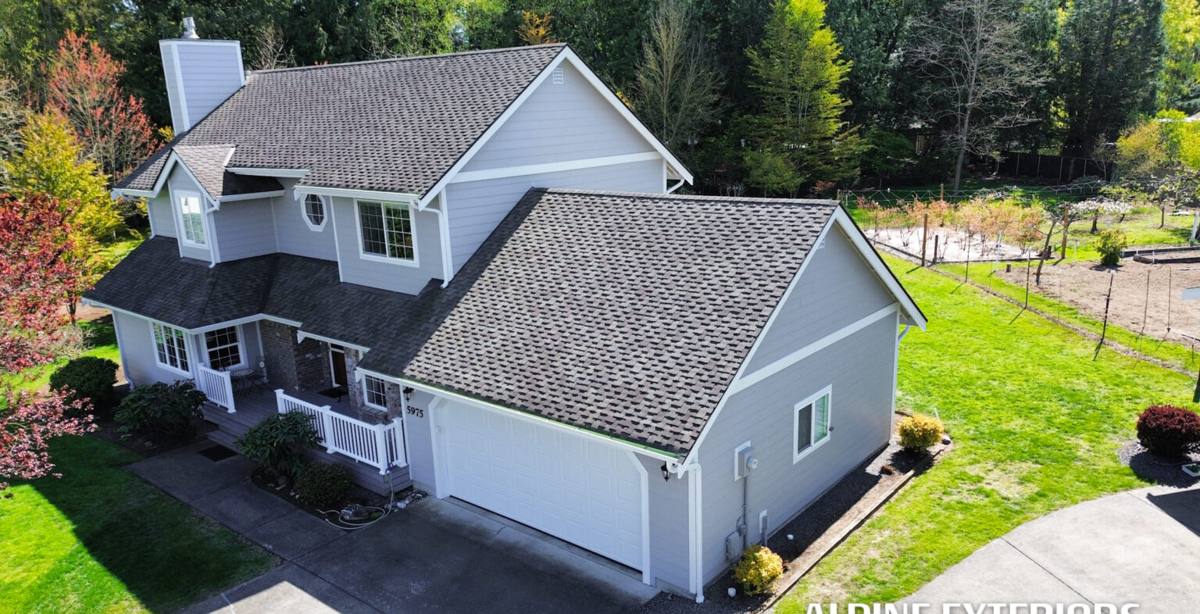
What Silver Beach Homes Are Up Against
Before talking about products or process, it's worth being specific about the stresses that matter most in this neighborhood:
Persistent Dampness and Slow Drying
Shaded lots and tree-lined streets are part of what makes this area attractive to live in, but they also mean siding on north- and east-facing walls can stay damp far longer after a rain than siding on an open, sun-exposed lot. Wood-based and wood-derived siding products depend on drying out between wet cycles to stay stable. When that drying window keeps shrinking, the material never fully resets.
Moss and Organic Growth
A long moss season isn't just a cosmetic nuisance — moss and algae hold moisture directly against the siding surface, and on products that can absorb or wick water, that constant contact accelerates whatever damage is already happening underneath. Homes with heavy tree canopy or north-facing walls near Silver Beach see this every year.
Driving Rain and Wind-Driven Moisture
Storms off the water don't just fall straight down — wind pushes rain sideways into wall assemblies, lap joints, and trim intersections. Flashing details and lap coverage that would be adequate in a drier climate aren't adequate here.
Salt-Tinged Air
The marine-influenced air common to this part of Whatcom County carries a light salt content that, over years, contributes to the breakdown of paint films, fasteners, and trim details that weren't specified for coastal-adjacent exposure.
Why James Hardie Fiber Cement Is the Only Siding We Install Here
We get asked fairly often why we don't offer vinyl, LP SmartSide, primed spruce, cedar, or other fiber cement brands. It's a fair question, and the honest answer is that we made a standard, not a marketing decision.
Wood-based products — including engineered wood siding and traditional cedar or spruce — depend on an intact factory or field coating to keep moisture out. In a climate with this much sustained dampness and moss pressure, any breach in that coating (a nail pop, a cut edge, a scuff during handling) becomes an entry point for water, and wood-based substrates swell, delaminate, or rot from that point outward. Vinyl handles moisture fine on its own, but it expands and contracts significantly with temperature swings, doesn't hold paint, and under wind-driven rain conditions can allow water behind the panels at seams and terminations if it isn't installed with real precision.
James Hardie fiber cement is cement, sand, and cellulose fiber — it has no wood core to rot, and it's non-combustible. Hardie's HZ5 product line is engineered specifically for the kind of freeze-thaw and moisture-cycling conditions found in the Pacific Northwest, and the ColorPlus factory finish is baked on under controlled conditions, which holds up to UV and moisture exposure far better than a field-applied coat and comes with its own finish warranty separate from the substrate warranty. That combination — a substrate that doesn't rot and a finish that's engineered for this climate rather than applied on-site — is why it's the only product we put on Silver Beach homes.
We're not saying every other product is unusable everywhere. We're saying that for the specific combination of moisture, shade, and moss pressure this neighborhood deals with, we won't put our name behind anything else.
Quick Comparison — What Matters for This Climate
| Factor | James Hardie Fiber Cement | Wood-Based / Engineered Wood | Vinyl |
|---|---|---|---|
| Moisture response | Cement substrate does not rot or swell | Absorbs moisture if coating is breached; can swell/delaminate | Doesn't absorb, but can trap water behind panels if poorly installed |
| Moss/algae resistance | Non-organic surface resists growth | Organic substrate is more vulnerable where moss holds moisture | Surface resists growth but seams can trap organic debris |
| Fire performance | Non-combustible | Combustible | Combustible, can deform under heat |
| Finish durability | Factory-baked ColorPlus finish, separate warranty | Field or factory coating, more maintenance-dependent | Color molded in, fades over time, cannot be repainted easily |
What a Correct Silver Beach Installation Involves
The product only performs as well as the installation underneath it. A rushed or generic install of even the best siding will fail early in this climate. A correct job here includes:
Weather-Resistive Barrier and Flashing First
Before a single piece of siding goes up, the wall needs a properly lapped weather-resistive barrier and correctly integrated flashing at every window, door, and penetration. In a driving-rain climate, this layer is what actually keeps water out of the wall assembly — the siding is the second line of defense, not the first.
Rainscreen or Drainage Gap Where It's Needed
On shaded, slow-drying walls in particular, a drainage gap behind the siding gives incidental moisture a path to escape instead of sitting against the back of the panel. This is one of the details that separates a durable install from one that looks fine for a few years and then starts showing problems.
Correct Fastening and Clearances
Hardie siding has specific nailing patterns, fastener types, and minimum clearances from grade, roofing, and decks that are engineered into the manufacturer's install specs. Skipping or eyeballing these is one of the most common ways an otherwise good product fails prematurely — and it can also void the warranty.
Caulking and Sealant Discipline
Butt joints, trim intersections, and penetrations need the right sealant, applied correctly, not as an afterthought. In a wet climate, sloppy caulking is a slow leak waiting to happen.
Our Process, Start to Finish
| Step | What Happens |
|---|---|
| 1. On-site assessment | We walk the exterior, check for existing moisture damage, note shaded/high-moss zones, and assess the current weather barrier condition. |
| 2. Written estimate | Scope, product line, color, and price laid out clearly — no vague allowances. |
| 3. Tear-off and inspection | Old siding comes off, sheathing is inspected for hidden rot or damage before anything new goes up. |
| 4. Barrier and flashing install | Weather-resistive barrier, flashing, and drainage gap where called for, installed to spec before siding starts. |
| 5. Hardie siding installation | Panels, lap, or shingle siding installed per manufacturer fastening and clearance specs. |
| 6. Trim, caulking, final detail | Trim installed, joints sealed, touch-up painting where needed. |
| 7. Walkthrough | Final walk with the homeowner before we consider the job done. |
Product Lines and Color Considerations for This Neighborhood
Hardie's lap siding, shingle siding, and panel products all come in the HZ5 formulation suited to this region's moisture and freeze-thaw exposure. For homes with heavy tree cover, we often talk through color with homeowners specifically because of moss and pollen staining — lighter ColorPlus finishes show organic buildup differently than darker tones, and it's worth discussing upkeep expectations before committing to a color rather than after. The factory finish is the same durable system across the color range, so this is a preference conversation, not a performance trade-off.
Maintenance Checklist for Silver Beach Homes
- Rinse siding annually to clear moss spores and organic debris before they take hold, especially on shaded or north-facing walls
- Keep gutters clear so overflow doesn't run down and pool against siding at corners
- Trim back branches and shrubs that keep siding shaded and slow to dry
- Inspect caulking at trim joints and penetrations once a year, and re-seal any cracked or shrunk sealant promptly
- Check touching or near-touching vegetation, decking, and grade lines — siding needs clearance to avoid trapped moisture
- Watch for any soft spots, staining, or paint failure and address them early rather than waiting
Why a Crew That Already Works Silver Beach Matters
Siding installation isn't identical from one neighborhood to the next, and it shows in the details. A crew that's worked this specific area already knows which walls tend to stay shaded and damp, where moss pressure is heaviest, and how driving rain off the water tends to hit certain wall orientations. That familiarity shapes real decisions on-site — where a drainage gap matters most, where flashing needs extra attention, which walls are worth a frank conversation about color and moss visibility before the homeowner picks a finish.
It also means fewer surprises during the job. Local crews know what's usually hiding behind older siding in homes of this vintage and this exposure, and they plan for it instead of discovering it mid-tear-off. That's not a marketing claim — it's just what repeated, direct experience in one area gives you that a crew driving in from somewhere else doesn't have.
If your Silver Beach home needs new siding or you're dealing with an aging installation that's starting to show its age, we're happy to come take a look. A free, no-pressure estimate gives you a clear, honest read on your home's exterior and what correct James Hardie installation would involve — no obligation, just straight information you can use.