 Sudden Valley
 Why Siding Wears Out Faster Around Geneva and Sudden Valley
Homes along the Lake Whatcom shoreline near Geneva deal with a slower, wetter version of Whatcom County weather than homes out on open ground. Mature tree cover holds shade and humidity against exterior walls, lake-effect moisture lingers longer than it does a few miles inland, and driving rain off the water finds every gap in trim, caulk, and lap seams. Add in a moss season that can run from fall through spring in this part of Washington, and you have siding that's under near-constant moisture pressure for most of the year.
That combination — shade, standing moisture, and salt-tinged wind — behaves differently than what you'd see on a home a few miles away on more open, sun-exposed ground. Two houses built the same year with the same siding can age at very different rates depending on how much afternoon sun and airflow they get, which is why a repair plan built for a typical Whatcom County home doesn't always fit a shaded, lake-facing wall in Geneva.
Wind events that push air up from Bellingham Bay can also carry a faint salt component this far inland, which accelerates corrosion on fasteners, flashing, and any exposed metal trim. None of this means siding is doomed here — it means the material and the workmanship have to be matched to the job. That's the lens we use on every repair call in Geneva: fix what's actually failing, understand why it failed, and don't let the same problem come back in two years.
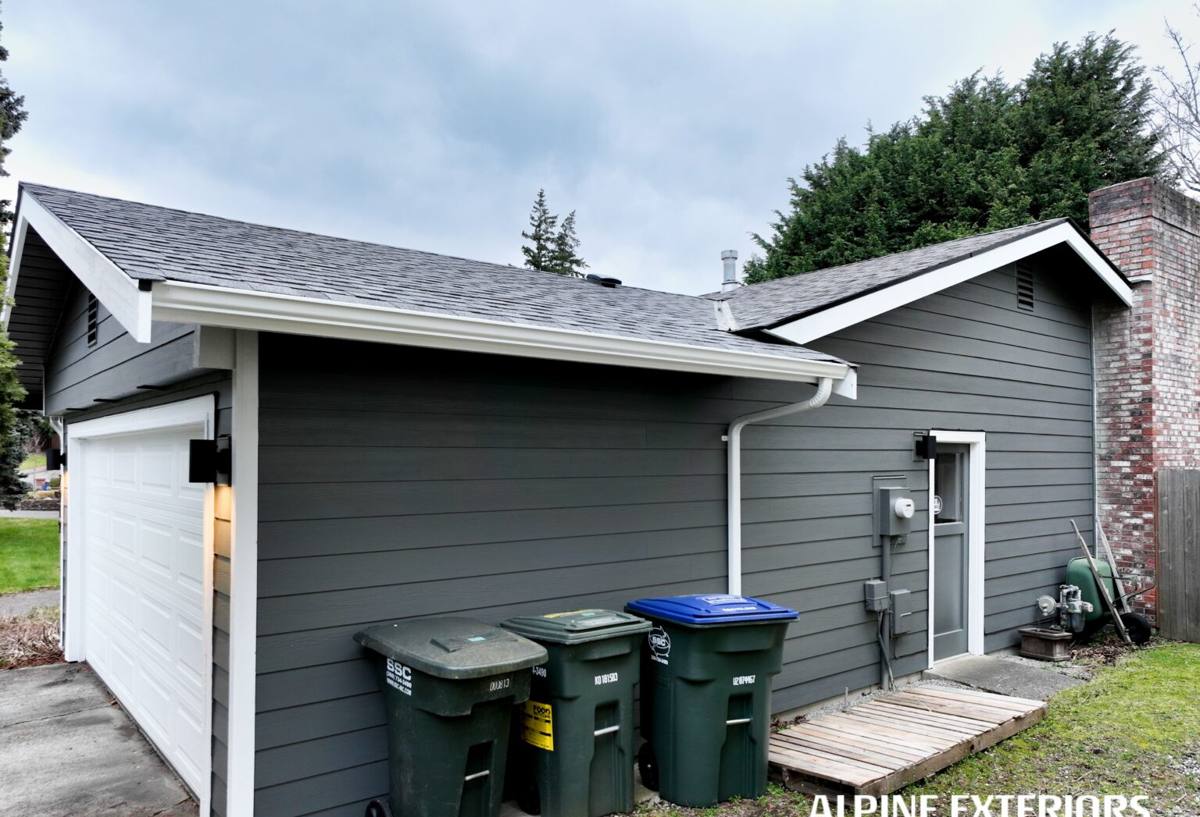
Signs a Geneva Home Needs Siding Repair, Not Full Replacement
Most siding problems we see on lake-adjacent homes are localized long before they're structural. Catching them early is what keeps a repair affordable and contained — left alone through another wet season, a small stained board can turn into rotted sheathing that changes the whole scope of the job. Watch for:
- Soft, spongy, or slightly bowed sections when you press on the siding, especially near the bottom courses or under windows
- Paint that's bubbling, peeling, or flaking in patches rather than evenly across the whole wall
- Dark streaking, green film, or moss buildup concentrated on shaded or north-facing walls
- Visible gaps opening at seams, corners, or where siding meets window and door trim
- Nail heads popping through the surface or fasteners showing rust streaks below them
- Cracked, split, or missing panels after a windstorm, especially in exposed spots near the water
- Warping or cupping in individual boards while the surrounding siding still looks flat and sound
If damage is confined to a wall section, a corner, or a run of boards below a leaking gutter, repair is almost always the right call. Full replacement becomes the honest recommendation when the damage is widespread, when the substrate underneath has been wet for a long time, or when the siding is old enough that matching material is no longer realistic.
What a Correct Siding Repair Actually Involves
Finding the Water Path First
Patching over a stained or cracked board without figuring out how water got behind it in the first place just delays the next repair call. A proper repair starts with tracing the moisture source — a failed piece of flashing, a gap in the house wrap, a clogged gutter dumping water onto one section of wall, or caulk that's shrunk and pulled away from a window frame. On homes near Lake Whatcom, we also check whether shade and tree cover are keeping a specific wall wet longer than the rest of the house, since that changes how urgently it needs attention.
Matching Material So the Repair Doesn't Stand Out
A repair that's structurally sound but visually obvious wasn't done right. Matching profile, reveal, and finish matters as much as matching color. This is one of the reasons we standardized on James Hardie fiber cement rather than juggling multiple siding brands and product lines — Hardie's plank profiles and ColorPlus factory finishes are consistent and available long-term, which makes blending a repair into existing siding far more predictable than it is with products that get discontinued or reformulated every few years.
Water Management, Not Just a Patch
Every repair we do re-establishes proper water shedding — correct lap overlap, flashing integrated behind the siding rather than caulked on top of it, and fasteners set to manufacturer spec so the panel can move slightly without cracking. Sealant is used at penetrations and transitions, not as a substitute for flashing.
Repair vs. Replacement: How We Help You Decide
A few things drive the total cost of a repair beyond square footage: whether trim, flashing, or house wrap need to come out along with the siding, how accessible the damaged wall is, and whether the existing color or profile is still in production for an exact match. None of that shows up until we've actually opened up the wall, which is why we quote after inspection rather than off a phone description.
| Factor | Points Toward Repair | Points Toward Replacement |
|---|---|---|
| Extent of damage | Isolated to one wall, corner, or run of boards | Spread across multiple elevations |
| Age of existing siding | Under 15–20 years, materials still sound | Original siding nearing or past its service life |
| Moisture behind the panels | Surface-level, caught early | Sheathing or framing already showing rot |
| Material match | Same product line still available | Discontinued or mismatched product, poor color match |
| Underlying cause | One-time or fixable water source | Systemic issue — grading, ventilation, original install |
We'll tell you honestly which side of that table your home falls on. A repair quote that ignores a systemic moisture problem isn't doing you any favors — it's just deferring a bigger bill.
Our Siding Repair Process in Geneva
- Inspection. We walk the exterior, check every elevation, and look above and below the visible damage — gutters, flashing, window trim, and grade line.
- Moisture check. Where damage suggests water has been sitting, we check the sheathing underneath before quoting anything.
- Scope and quote. You get a clear explanation of what's failing, why, and what it takes to fix it correctly — not just a price for new boards.
- Repair. Damaged material comes out, the water source is corrected, flashing and house wrap are restored, and new James Hardie material goes in to match existing profile and reveal.
- Finish and cleanup. Caulk, paint match, and site cleanup so the repair blends in rather than standing out as a patch job.
Why We Repair With James Hardie Fiber Cement, Not a Mixed Patch
When a homeowner's existing siding isn't Hardie, we still recommend Hardie fiber cement for the repaired section whenever it's a realistic match, rather than sourcing a lookalike vinyl or engineered wood patch. Fiber cement doesn't rot, doesn't feed moss and mildew growth the way wood-based siding can, and holds a factory ColorPlus finish far longer than field-applied paint on other materials. It's also engineered for Pacific Northwest moisture exposure in Hardie's HZ5 product line, which matters directly for a lake-adjacent, shaded lot like the ones common around Geneva and Sudden Valley.
Mixing materials in a repair — patching fiber cement with vinyl, or vinyl with LP SmartSide — usually creates more problems than it solves. Different materials expand and contract at different rates, age and fade differently, and can trap moisture against each other at the seam. We don't do mixed-material patch jobs as a shortcut. If your home isn't Hardie siding today, we'll walk you through whether a like-for-like repair, a transition to Hardie on the damaged section, or a broader conversation about replacement makes the most sense.
Seasonal Checklist for Geneva Homeowners
Between full inspections, a few minutes a couple times a year catches problems while they're still cheap to fix:
- Clear moss and organic buildup off shaded walls before it holds moisture against the siding through winter
- Check gutters are flowing freely and not overflowing onto siding below during heavy rain
- Look for caulk that's cracked, shrunk, or pulled away around windows, doors, and trim
- Press on lower courses and corners after storms to check for soft spots
- Watch for streaking or discoloration that appears in the same spot after every rain — that's usually a repeat leak, not a one-time event
Why a Crew That Already Works Geneva and Sudden Valley Matters
Lake-adjacent lots around Geneva often mean tighter access, mature landscaping to work around, and wall orientations where one side of a house sees dramatically more moisture and shade than another. A crew that's already worked homes in this specific pocket of Whatcom County knows to check the lake-facing and shaded walls harder than the street-facing side, understands how the local moss season behaves compared to more open parts of the county, and isn't guessing at material behavior in this microclimate for the first time on your house.
On top of that, working this area regularly means we're not learning the terrain for the first time — narrower access points, mature landscaping close to the walls, and the general layout of lake-facing properties all factor into how a crew stages equipment and moves material without doing yard damage in the process. That familiarity shows up in faster, more accurate diagnosis and fewer surprises once the siding comes off.
After the Repair: Keeping It That Way
A correct repair should outlast the reason you called in the first place. Keep gutters clear, keep vegetation from holding moisture against walls, and do a quick visual check after major storms, especially on shaded or lake-facing elevations. If you ever see the same stain or gap reappear in the same spot, that's worth a call before it spreads — a small follow-up now is always cheaper than a bigger repair later.
If you're seeing signs of siding trouble on a Geneva or Sudden Valley home, we're happy to take a look. Estimates are free, there's no pressure, and you'll get a straight answer about whether you're looking at a repair or something bigger.