 Sudden Valley
 What Geneva-Area Homes Are Up Against
Homes in the Geneva neighborhood and the surrounding Sudden Valley area sit in a stretch of Whatcom County where lake proximity, marine air moving in off the Salish Sea, and heavy tree cover all combine against exterior siding. It's a different exposure profile than a home out on open, dry ground. Moisture doesn't just fall here — it lingers, it wicks, and on shaded north and east walls it can sit against the siding for days at a time before a stretch of sun finally dries things out.
Three factors do most of the damage over time. Salt-tinged air moving inland accelerates corrosion on fasteners, flashing, and any metal trim details. Driving rain, pushed sideways by wind off the lake and the valley terrain, gets forced into laps, seams, and butt joints that a calmer climate would never stress-test. And a long moss season — often six months or more of the year with the right shade and moisture combination — means algae and moss don't just grow on roofs here, they colonize siding surfaces, hold water against the substrate, and slowly break down anything that isn't built to resist it.
Siding that's rated for a generic climate zone, or installed without real attention to water management, tends to show its age fast under these conditions. Siding replacement done right for a Geneva-area home has to account for all three of these stressors at once, not just swap old material for new in the same configuration.
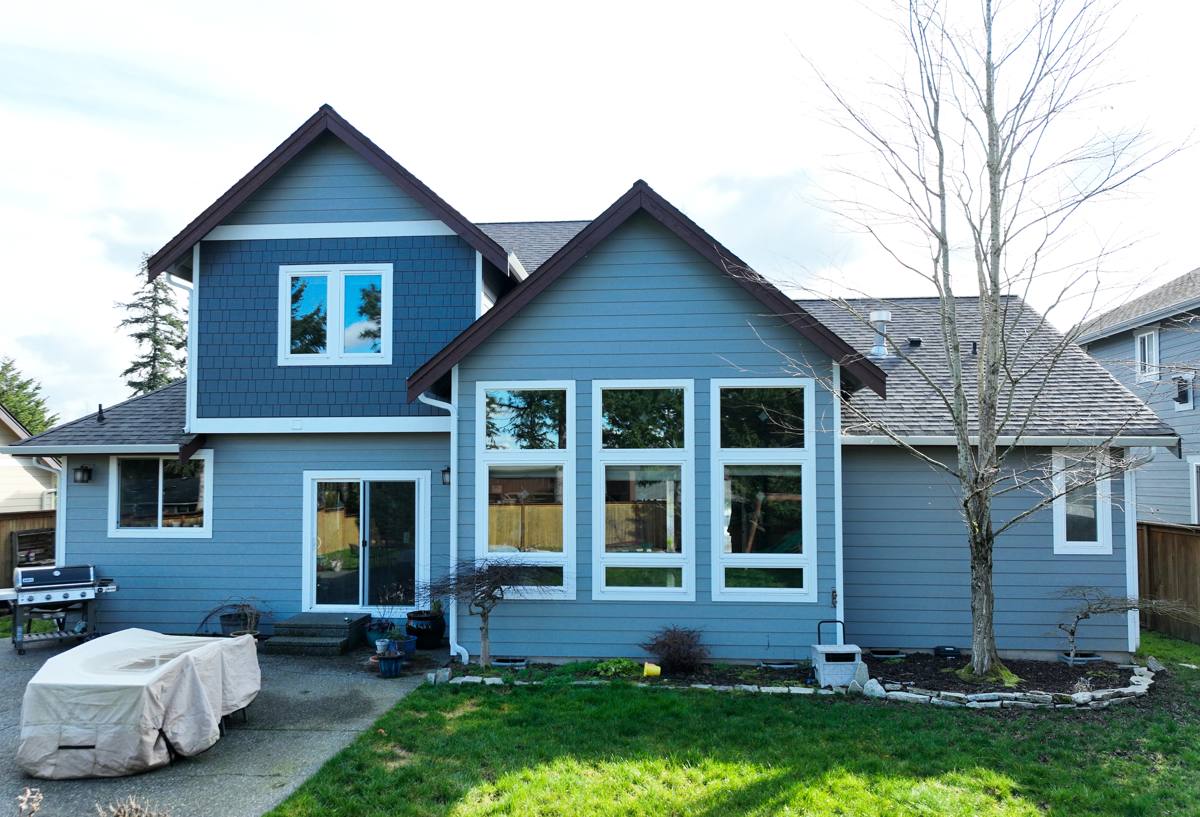
Signs Your Siding Has Reached the End of Its Useful Life
Not every siding problem means a full replacement. But there's a point where patching stops being cost-effective and starts being a way of throwing money at a system that's already failed underneath. Here's what we look for during an assessment:
- Soft or spongy spots when you press on the siding, especially near the bottom courses and around window and door trim
- Persistent moss or algae staining that comes back within a season or two of cleaning
- Visible cupping, warping, or delamination — common on older wood-based or engineered wood products that have taken on repeated moisture cycles
- Paint that won't hold, blistering or peeling faster than a normal repaint cycle would explain
- Gaps opening up at seams, corners, or butt joints that let daylight or drafts through
- Rust streaking from fasteners or flashing, a sign that metal components are corroding under marine air exposure
- A musty smell in adjacent interior rooms, which often points to moisture already inside the wall assembly
Any one of these on its own might be a repair. Several together, especially on the same wall or elevation, usually means the water-resistive barrier behind the siding has been compromised and full replacement is the honest recommendation.
What a Correct Siding Replacement Actually Involves
Siding replacement is not just removing old panels and nailing up new ones. The siding itself is the last line of defense — the real work happens in the layers behind it, and that's where most shortcuts get taken on lower-quality jobs.
Tear-Off and Inspection
Once the old siding is off, we inspect the sheathing underneath for rot, soft spots, or prior water damage. In a climate like this, it's common to find some degree of moisture staining or minor sheathing decay, particularly on walls that catch the most wind-driven rain. Any compromised sheathing gets replaced before anything else happens — installing new siding over damaged sheathing just resets the clock on the same failure.
Water-Resistive Barrier and Flashing
A new weather-resistive barrier goes on correctly lapped, shingle-style, so water is always directed outward and down, never trapped behind the barrier. Flashing at windows, doors, and any roof-to-wall intersections gets integrated into that barrier — not caulked over the top of it, which is a common shortcut that fails within a few years. Given how much wind-driven rain this area sees, flashing detail work is where a lot of long-term siding performance actually gets decided.
Rainscreen and Drainage Gap
For a climate with this much sustained moisture and moss pressure, we install with a drainage gap behind the siding wherever the wall assembly allows it. That gap lets any water that does get past the outer surface drain and dry instead of sitting against the back of the siding — a meaningful upgrade over a direct-to-sheathing installation, especially on shaded elevations.
Fastening and Trim
Fasteners are matched to the product and climate — corrosion-resistant, driven to the manufacturer's specified depth and pattern, not overdriven, which is a common cause of premature cracking. Trim, corners, and joints are detailed to shed water rather than collect it.
Why We Only Install James Hardie Fiber Cement
We made a standard-issue decision as a company: James Hardie fiber cement is the only siding product we install, on every job, in every neighborhood we serve. We don't offer vinyl, LP SmartSide, Cemplank, Allura, or primed wood species like spruce or cedar as siding options — not because those products have no merit, but because after years of doing exterior work in this specific climate, we don't think they hold up as well as fiber cement does against sustained coastal-adjacent moisture, moss pressure, and salt air.
Vinyl can warp and fade under UV and temperature swings, and its seams give moss and algae plenty of edges to grip. Engineered wood products like LP SmartSide perform well when installation and maintenance are perfect, but they're more sensitive to sustained moisture exposure than fiber cement, and this area doesn't give siding many dry months to recover in. Primed cedar and spruce are beautiful but demand a maintenance schedule most homeowners can't realistically keep up with in a climate this wet — repainting and resealing on a tight cycle, or moisture works its way in.
James Hardie fiber cement is non-combustible, dimensionally stable across wet and dry cycles, and doesn't feed moss and algae growth the way wood-based products can. Its ColorPlus factory finish is baked on and warrantied against fading and peeling, which matters in a climate that alternates between damp shade and intense summer sun. It's not a product that overcomes bad installation practices, either — but paired with the water management detail work above, it's the product we trust to hold up through a genuine moss season year after year.
Choosing the Right Hardie Product for Your Home
James Hardie makes several product lines, and picking the right one depends on your home's style, exposure, and budget. We also specify the HZ5 climate-engineered formulation appropriate for the Pacific Northwest, which is designed for moisture-heavy climates like this one rather than a generic national spec.
| Product Line | Best For | Notes |
|---|---|---|
| HardiePlank Lap Siding | Traditional and craftsman-style homes | Most common choice; multiple textures and exposure widths |
| HardiePanel Vertical Siding | Modern, farmhouse, or accent sections | Often paired with lap siding for visual contrast |
| HardieShingle | Cottage or shingle-style homes | Staggered or straight-edge panels, no individual shingle upkeep |
| HardieTrim | Window, door, and corner trim | Matched fiber cement trim resists the same moisture issues as wood trim |
ColorPlus finishes come in a range of factory-applied colors designed to hold their tone through years of PNW weather, which matters here since UV exposure and driving rain both work against a painted finish over time.
How Our Process Works, Start to Finish
- On-site assessment. We walk the exterior, check problem areas you've flagged, and look at sheathing condition wherever we can access it.
- Written estimate. A clear scope of work and price, broken out so you understand what's included — tear-off, sheathing repair allowance, barrier and flashing work, material, and labor.
- Material selection. We help you choose the right Hardie product line, profile, and color for your home and budget.
- Tear-off and inspection. Old siding comes off, sheathing gets inspected and repaired as needed before anything new goes up.
- Water management installation. Barrier, flashing, and drainage gap installed to spec, not shortcut.
- Siding installation. Hardie product installed per manufacturer fastening and clearance specifications.
- Final walkthrough. We go over the finished job with you before calling it complete.
What Drives the Cost of a Siding Replacement
Every home is different, but the same handful of factors tend to move the price up or down. We won't quote a number without seeing the house, but this gives you a sense of what to expect going into an estimate.
| Factor | Why It Matters |
|---|---|
| Sheathing condition | Rot or moisture damage found during tear-off adds repair scope before new siding can go on |
| Home size and wall complexity | More corners, dormers, and roof-to-wall intersections mean more flashing and cutting labor |
| Product line and profile | Lap, panel, and shingle profiles carry different material and labor costs |
| Story height and access | Two-story and steep-site homes require more scaffolding and safety setup |
| Trim scope | Full trim replacement adds cost but keeps the whole exterior system consistent |
Why a Crew That Already Works This Area Matters
A crew that regularly works Geneva and the greater Sudden Valley area already knows what this specific stretch of Whatcom County does to exterior surfaces. We know which elevations tend to hold moisture longest, how much moss pressure to expect on shaded, tree-covered lots, and how wind-driven rain off the lake tends to attack flashing and seams that a drier-climate installer might not think twice about. That local pattern recognition shows up in the details — where we add extra flashing attention, which walls we prioritize for drainage gaps, and how we set expectations with you about maintenance in a genuine moss season.
It also means a straightforward relationship if you ever have a warranty question or want a maintenance check a few years down the road — you're calling a crew that already knows your house, not starting over with someone new.
Keeping New Siding Looking Right
Fiber cement is low-maintenance compared to wood or vinyl, but "low-maintenance" doesn't mean "no maintenance" in a climate like this. A yearly rinse-down to knock back early moss and pollen buildup, prompt caulk touch-ups where movement or settling opens a small gap, and keeping gutters clear so water isn't sheeting down onto siding all go a long way toward getting the full lifespan out of the system we just installed. We're happy to walk you through a simple seasonal checklist at your final walkthrough.
If your siding is showing signs of wear, or you're just ready to stop fighting moss stains and soft spots every season, we'd be glad to take a look. Reach out for a free, no-pressure estimate — no obligation, just an honest read on what your home actually needs.