 Sudden Valley
 Why Silver Beach Homes Wear Out Siding Faster Than Most
Silver Beach sits close to the water, and that proximity is a mixed blessing. The same lake views that make the neighborhood desirable also mean homes here take a steady beating from moisture-laden air, wind-driven rain off the lake, and a shade-and-humidity combination that keeps moss and algae active for a good chunk of the year. Add in the freeze-thaw swings that show up most winters in Whatcom County, and you've got an exterior envelope that's working overtime compared to a house twenty minutes inland.
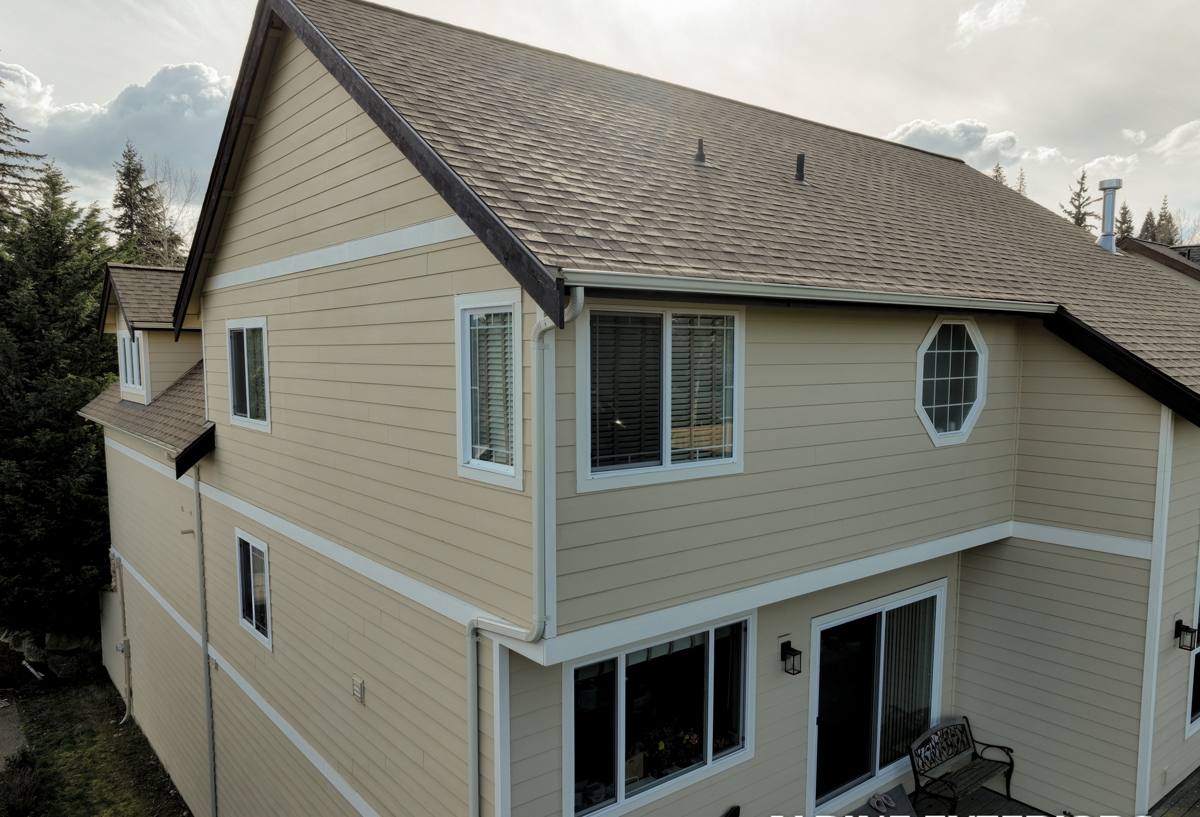
Siding that's marginal on a dry inland lot in Bellingham can fail outright on a lake-facing wall in Silver Beach. We've walked enough of these homes to know the failure pattern before we even get out of the truck: north- and west-facing walls with soft trim, dark streaking under the eaves, and paint that's given up years before it should have. This page is about what actually holds up out here, and what a correctly installed James Hardie system looks like on a Silver Beach home specifically.
What the Local Climate Actually Does to Siding
Salt and Mineral-Laden Air
Lake Whatcom isn't the ocean, but the air moving off the water still carries moisture and fine mineral content that settles on exterior surfaces day after day. Over years, that residue accelerates coating breakdown on lower-grade siding materials and creates a film that holds moisture against the wall longer than it should sit there.
Driving Rain
Wind off the lake pushes rain sideways into walls rather than letting it fall straight down and shed. That means water gets forced into seams, laps, and fastener points that a calm-weather installation might never test. Siding and flashing details that are "good enough" in a sheltered yard get exposed here.
Extended Moss and Algae Season
Shade from mature trees, damp shoulder seasons, and slow-drying north walls give moss and algae a long runway — often eight or nine months of the year in this microclimate. Porous or poorly sealed siding surfaces give spores something to grip. Once moss establishes at a seam or fastener head, it holds water against the substrate continuously, which is where rot actually starts.
Why James Hardie Is the Right Material for This Site Condition
James Hardie fiber cement is engineered specifically to resist the combination Silver Beach throws at it: it's non-combustible, dimensionally stable when wet, and doesn't feed moss and mildew the way wood-based or wood-fiber products can. The ColorPlus factory finish is baked on under controlled conditions, which gives it meaningfully better fade and moisture resistance than field-applied paint — a real advantage on a wall that's getting hit with lake spray and shade-driven damp for most of the year.
Hardie's HZ5 product line is formulated for regions with freeze-thaw cycling and wind-driven rain, which describes Silver Beach's winter pattern well. That's not a marketing distinction — it affects how the board is engineered to handle moisture absorption and temperature swings without cracking or delaminating at the surface.
We install James Hardie exclusively. We don't offer LP SmartSide, vinyl, Cemplank, Allura, primed spruce, or cedar as alternatives, and on a site like Silver Beach that's not a marketing preference — it's because the trade-offs on those products (moisture sensitivity, coating maintenance, or combustibility) show up faster in this exact climate than they would somewhere drier and more sheltered.
What a Correct Installation Involves Out Here
Hardie siding is only as good as the installation underneath it. On a lake-adjacent, moisture-heavy lot, the details below aren't optional upgrades — they're the difference between a wall that lasts decades and one that fails at year eight.
- Correct weather-resistive barrier installed and lapped properly, with all seams taped per manufacturer spec
- Rainscreen or drainage gap on lake-facing and shaded walls so any moisture that gets behind the siding can actually drain and dry
- Flashing at every window, door, and roof-to-wall intersection — the majority of real-world siding failures start at a missed or undersized flashing detail, not the field of the wall itself
- Manufacturer-specified fastener pattern and correct nail set depth — overdriven fasteners crack the board's edge and create a moisture entry point
- Proper clearance from grade, decks, and roof lines so the bottom edge of the siding isn't sitting in standing water or snowmelt runoff
- Factory-cut and factory-primed edges wherever possible, with field cuts sealed per Hardie's application instructions
- ColorPlus touch-up done correctly at cut ends, not skipped, so the factory finish's moisture protection isn't compromised at every joint
Skipping any one of these on a sheltered inland lot might not show up for years. On a Silver Beach wall taking direct wind-driven rain, it can show up in a single wet winter.
Our Process for a Silver Beach Project
1. Site-Specific Assessment
We walk the exterior and note which walls face the water and prevailing wind, where moss and algae are already established, where the existing siding or trim is soft, and what the current drainage and flashing situation looks like. Lake-facing homes here often need different detailing on the water side than on the street side of the same house.
2. Tear-Off and Substrate Check
We remove the old siding down to the sheathing and check for hidden rot or moisture damage before anything new goes up. On homes near the lake, it's common to find soft sheathing at wall penetrations even when the exterior looked fine from the ground — this step is where that gets caught and repaired before it's covered back up.
3. Weather Barrier and Drainage Plane
New house wrap or weather-resistive barrier goes on with correct lapping, and we install a drainage gap on walls that see direct rain or heavy shade, so bulk water and incidental moisture have somewhere to go besides sitting against the sheathing.
4. Flashing and Trim Details
Every window, door, and roofline intersection gets flashed to shed water outward, not into the wall assembly. This is the step that separates a siding job that survives Whatcom County winters from one that doesn't.
5. Hardie Installation to Spec
Boards go on per James Hardie's fastening and clearance requirements, with attention to grade clearance and any spots where the old siding showed staining or moss buildup — those are addressed at the framing and flashing level, not just covered with new material.
6. Final Walkthrough
We review the finished work with the homeowner, including how to spot early moss growth or coating wear so small maintenance items get caught before they become repairs.
Cost Factors Specific to a Silver Beach Job
Every home is different, but a few factors consistently move the price on lake-area projects more than they would on a typical inland home:
| Factor | Why It Matters Here |
|---|---|
| Existing moisture damage | Homes near the lake more often have hidden sheathing or framing damage that needs repair before new siding goes on |
| Access and slope | Many Silver Beach lots have steep grades to the water, which affects staging, scaffolding, and material handling |
| Drainage/rainscreen detailing | Lake-facing and shaded walls often warrant a drainage gap, which adds material and labor over a standard install |
| Trim and flashing scope | Homes with heavy moss history usually need more flashing repair or replacement at penetrations |
| Siding profile and color | Board-and-batten, shake-style panels, and deeper ColorPlus tones vary in material cost |
We provide a written, itemized estimate after the on-site assessment — no ballpark numbers over the phone, because the moisture and substrate condition behind the existing siding genuinely changes the scope.
Signs a Silver Beach Home Needs Siding Attention Now
- Persistent moss or algae staining that returns within a season of cleaning
- Soft or spongy trim boards, especially around windows and at the base of walls
- Paint that's peeling or bubbling on north- or west-facing walls specifically
- Visible gaps or warping at siding seams and corners
- A musty smell or visible staining on interior walls that back up to exterior siding
- Fastener heads showing rust streaks or backing out of the siding face
Any one of these on its own isn't necessarily an emergency, but on a lake-facing wall they tend to compound quickly once moisture gets a foothold.
Why Local Experience on This Specific Terrain Matters
A crew that's only worked drier, inland Whatcom County lots can install Hardie correctly by the book and still miss the details that matter on a lake-facing wall — where the drainage gap needs to go, which walls need extra flashing attention, where moss has historically taken hold on similar homes nearby. We've worked enough homes in and around Sudden Valley and the Lake Whatcom shoreline to know which walls typically need the most attention before we ever pull the old siding off, and that shows up in fewer surprises during the project and a better-performing wall assembly afterward.
If you own a home in Silver Beach and your current siding is showing its age, we're happy to take a look and give you a straightforward, no-pressure estimate — no invented urgency, just an honest read on what your walls actually need. Use the form below to get started.