 Sudden Valley
 Why Silver Beach Roofs Wear Differently Than Most
Silver Beach sits in a pocket of Whatcom County where three things overlap: damp marine air pushing in off the Sound, tree canopy that keeps roofs shaded and wet longer than open lots nearby, and a rain season that doesn't really end so much as taper off. None of that is unique to one street or one house — it's the baseline for lakeside and forested lots throughout the Sudden Valley area. But it does mean a roofing material and installation detail that holds up fine in a drier, sunnier part of the state can fail early here.
Metal roofing, done correctly, is one of the better answers to that combination. Done poorly — wrong fastener metal, wrong panel gauge, sealant used where flashing should have been — it can fail just as fast as anything else, sometimes faster, because a metal roof problem tends to show up as a leak at a seam or penetration rather than a slow shingle failure you can see coming.
The Three Stressors That Matter Most Here
- Persistent moisture — long stretches of drizzle and fog keep roof surfaces wet, which accelerates corrosion on unprotected metal and feeds moss and algae growth.
- Salt-bearing marine air — even set back from open water, the region's air carries enough salt content to matter for fastener and flashing selection over a 20-30 year roof life.
- Shade and debris — mature tree cover common around Sudden Valley and Silver Beach properties means needles, leaves, and pollen collect on the roof and in valleys, holding moisture against the surface.
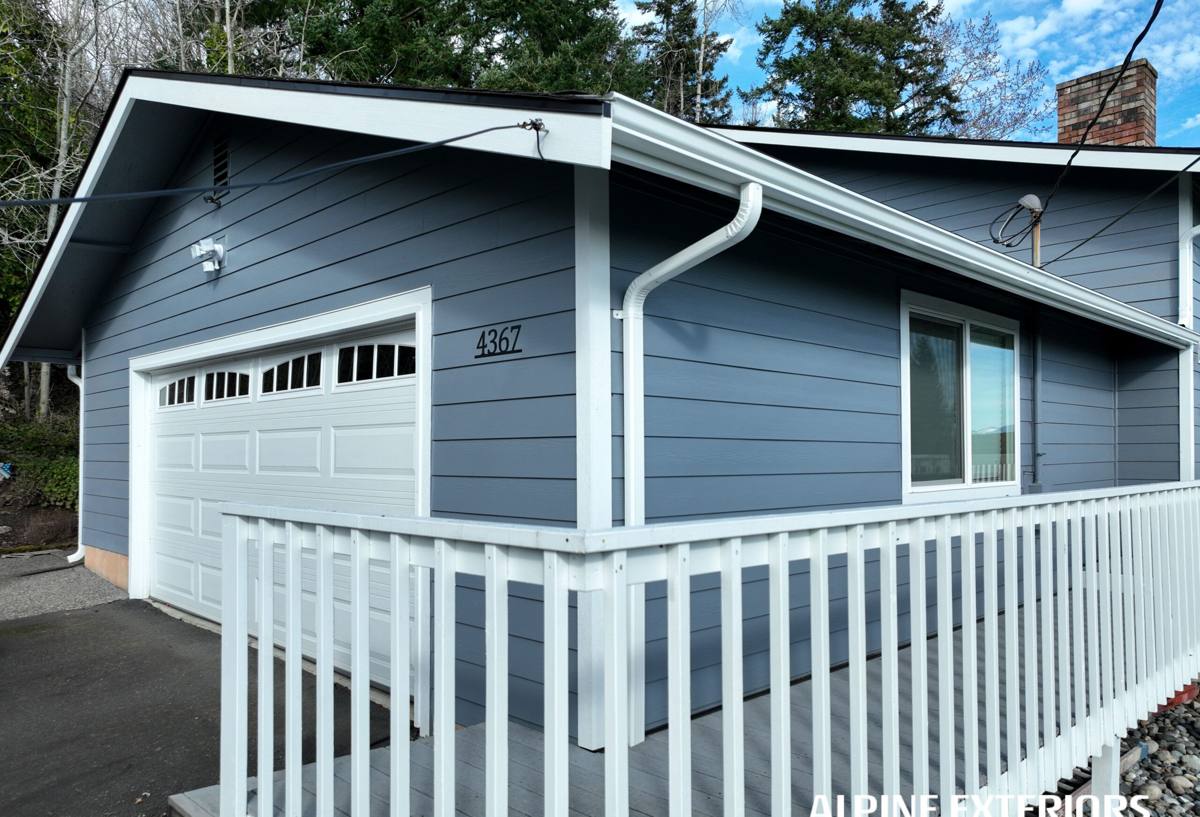
What a Correctly Specified Metal Roof Looks Like on This Property Type
"Metal roofing" isn't one product — it's a category, and the right spec changes based on your roof's pitch, tree exposure, and how close you are to open water. For most homes in this area we're specifying one of two systems.
Standing Seam
Concealed-fastener standing seam is the stronger long-term choice for lower-slope sections, valleys, and anywhere water sits or moves slowly across the panel before it drains. Because the fasteners are hidden under the seam rather than punched through the panel face, there's no exposed screw head for water or salt-laden moisture to work on over time. It costs more up front than exposed-fastener panel, and that's the honest trade-off — you're paying for fewer future maintenance calls.
Exposed-Fastener (Screw-Down) Panel
This is a legitimate, less expensive option for steeper roof pitches with good drainage and less tree litter. The trade-off is real: exposed fasteners have neoprene washers that compress and eventually harden or crack, and in a wet, shaded climate that timeline runs shorter than the panel's own service life. We use it where the roof geometry and budget make sense, but we tell homeowners up front that it comes with a fastener re-check and occasional washer replacement as routine maintenance — not a defect, just the nature of the system.
Panel Gauge and Coating
Thinner, cheaper panel gauges dent more easily under branch drop and foot traffic during install or gutter work, and they don't hold a flat seam line as well over time. On the coating side, a PVDF (Kynar-type) finish holds color and resists chalking far longer under UV and damp cycling than a lower-grade SMP-type coating — that difference shows up most on south- and west-facing slopes that get more weathering.
The Moss and Algae Problem on Shaded, Wooded Lots
Moss doesn't grow on metal roofing the way it grows on shingles, but it absolutely can grow in the debris that collects on metal — in valleys, behind chimneys, along the low edge of a panel run, anywhere leaves and needles pile up and stay wet. Once organic matter builds up on a metal surface, it holds moisture against the coating and against any exposed fastener, and that's where you start seeing early coating breakdown or corrosion.
What Actually Prevents It
The fix isn't a chemical moss treatment marketed for shingles — most of those products aren't meant for painted metal and can affect the coating. The real prevention is design and maintenance: adequate panel slope and clean drainage paths, wider open valleys instead of tight closed ones, gutter guards or larger gutters sized for a heavy tree-drop property, and a yearly debris clear-off before the wet season sets in. Zinc or copper strips near a roof's ridge can help suppress moss and algae growth over time on shaded sections, and we'll discuss whether that's worth adding based on your specific tree cover.
Fasteners, Flashing, and the Details That Actually Leak
Almost every metal roof failure we get called out to inspect traces back to one of a handful of details, not the panel itself. Metal roofing sheds water well when the field of the roof is all that's being asked to do the work — it's the transitions that need real skill.
Fastener Metallurgy
In a marine-influenced climate, mixing incompatible metals causes galvanic corrosion — a cheap steel screw against an aluminum panel, for example, will corrode faster than either metal would on its own. We match fastener and flashing metal to the panel system, and in exposed-fastener applications we use fasteners rated for the coastal exposure category, not the standard interior-grade hardware.
Flashing Over Sealant
Sealant/caulk has a service life measured in years; properly formed and lapped metal flashing has a service life measured in decades. Around chimneys, skylights, dormers, and wall-to-roof transitions, we form and layer flashing so water is mechanically directed off the roof, using sealant only as a secondary backup — never as the primary defense against a leak.
Underlayment
A high-temperature synthetic underlayment under the full roof, with self-adhered ice-and-water shield at eaves, valleys, and penetrations, gives you a backup layer if wind-driven rain ever gets past the panel seams during a hard storm — something this part of Washington sees a handful of times most winters.
Metal vs. Asphalt Shingles for a Silver Beach Home
We install both, and metal isn't automatically the right call for every house. Here's how they actually compare for a shaded, damp lakeside-area lot rather than in generic marketing terms.
| Factor | Metal Roofing | Asphalt Shingles |
|---|---|---|
| Typical service life here | 40-60+ years (panel/coating dependent) | 18-25 years, often shorter under heavy tree cover |
| Moss/algae resistance | Resists growth on the panel itself; debris still needs clearing | Granule surface holds moisture and organic debris more readily |
| Upfront cost | Higher | Lower |
| Storm/wind performance | Strong when properly fastened and seamed | Good, but shingle tabs are more vulnerable over time |
| Maintenance | Occasional fastener/washer check, debris clearing | Periodic moss treatment, granule loss monitoring |
| Repair approach | Panel or seam-specific repair; color matching can be a factor after many years | Individual shingle replacement is straightforward |
For homes with heavy tree cover, north-facing slopes that stay damp longest, or owners planning to stay long-term, metal's upfront cost tends to pencil out. For a lower-slope garage or outbuilding roof with less exposure, asphalt can still be a reasonable, honest choice.
Cost Factors on a Metal Roofing Project
We don't quote a per-square-foot number without seeing the roof, because these variables move the price more than anything else:
| Factor | Why It Matters |
|---|---|
| Panel system (standing seam vs. exposed-fastener) | Standing seam requires more labor and specialized tools to form and seam correctly |
| Roof pitch and complexity | Steep pitches, multiple valleys, and dormers add labor time and safety setup |
| Tear-off vs. overlay | Removing old roofing (often required for a proper metal install) adds disposal cost but avoids trapping moisture underneath |
| Tree and access conditions | Limited driveway or crane access on wooded lots can add setup and material-handling time |
| Coating grade | PVDF-grade finishes cost more than SMP-grade but last longer before chalking or fading |
| Ventilation and decking condition | Any rot or inadequate attic ventilation found during tear-off needs to be corrected before panels go on |
Our Installation Process
The steps below are the same core sequence for most Silver Beach and Sudden Valley area homes; what changes is the panel system and how much decking repair or ventilation work is needed once the old roofing comes off.
- On-site assessment — we walk the roof, check the decking from the attic side where accessible, and note tree exposure, valleys, and any existing moisture damage.
- Tear-off — old roofing material is removed down to the deck so we can inspect and repair sheathing, rather than installing over problems we can't see.
- Deck repair and ventilation check — any soft or water-stained decking is replaced, and intake/exhaust ventilation is corrected if it's undersized, which is common on older homes in this area.
- Underlayment — synthetic underlayment across the field, with ice-and-water shield at eaves, valleys, and all penetrations.
- Flashing fabrication — flashing is formed for the specific roof, not pulled generic off a shelf, at chimneys, skylights, and wall intersections.
- Panel installation — panels are run, seamed or fastened per the system spec, with fastener type matched to the panel metal.
- Final detailing and walk-through — ridge caps, trim, and gutter tie-in are finished, debris is cleared, and we walk the roof with you before calling it done.
Maintenance After Installation
A correctly installed metal roof is low-maintenance, not no-maintenance — especially on a shaded lot. This is the realistic upkeep schedule we give homeowners:
- Clear leaves, needles, and debris from valleys and behind chimneys at least once a year, ideally before the wettest months.
- Check and clean gutters more often than you would on an open lot — tree-heavy properties clog faster.
- Visually check exposed fasteners on screw-down panel systems every couple of years for washer wear.
- Look for any dented, scuffed, or scratched panel areas after storms or fallen branches, since bare exposed steel can begin to corrode where the coating is broken.
- Keep overhanging branches trimmed back where practical to reduce debris load and reduce impact risk during windstorms.
Why a Crew That Already Works Silver Beach Matters
Roofing crews that mostly work drier, more open parts of the state don't always adjust their specs for a damp, tree-covered, marine-influenced lot — and on a metal roof, the spec is most of what determines whether it lasts 20 years or 50. Working regularly in the Sudden Valley and Silver Beach area means we already know to plan around limited driveway and equipment access on wooded lots, to size ventilation and gutters for heavy tree drop rather than a generic average, and to spec fasteners and flashing for Whatcom County's moisture and salt-air exposure rather than a drier-climate default.
It also means straightforward logistics — material staging, debris haul-away, and scheduling around this area's weather windows without the guesswork a crew coming from farther away would have to work out on your job.
If you're weighing metal roofing for a home in Silver Beach or elsewhere around Sudden Valley, we're glad to walk your roof, explain what we'd actually spec for your specific pitch and tree exposure, and give you a straightforward, no-pressure estimate — just fill out the form below to get started.