 Sudden Valley
 Why South Hill Siding Wears Out Faster Than It Should
South Hill sits in one of the more demanding pockets of Whatcom County when it comes to what siding has to survive year-round. The combination of salt-tinged marine air moving through the region, driving rain that comes in sideways during fall and winter storms, and a shaded, moisture-retaining tree canopy adds up to a long moss and algae season that most siding products simply aren't built to handle. We've replaced enough failing siding on South Hill homes to know the pattern: it's rarely one catastrophic event. It's years of moisture finding small gaps, sitting against wood-based panels, and slowly rotting the substrate from behind while the face still looks fine from the street.
That's the trap with siding replacement in this area — by the time damage is visible on the surface, the sheathing underneath has often already been compromised. A siding replacement done right here isn't just a cosmetic swap. It's a chance to correct the moisture path the old siding never controlled, and to put a product on the wall that's actually engineered for this climate instead of one that's just tolerating it.
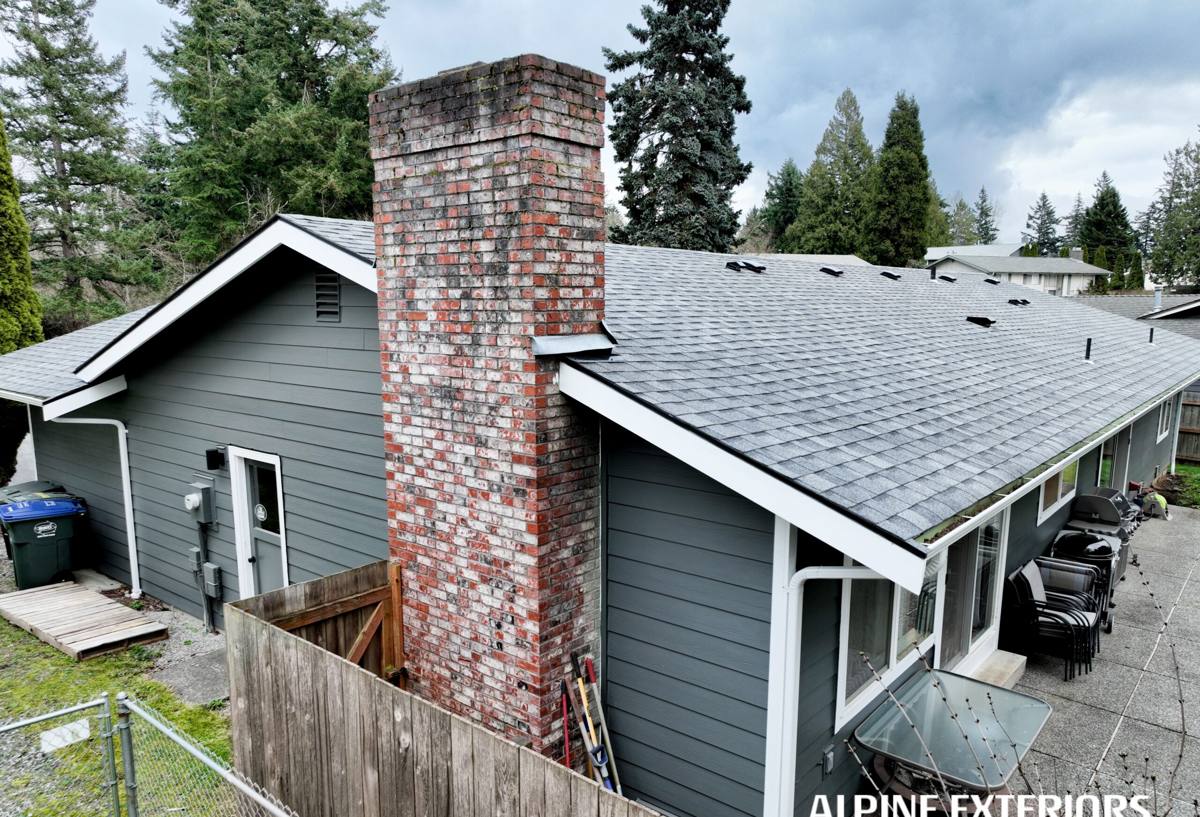
Signs a South Hill Home Needs Siding Replacement, Not Just Repair
Not every siding problem calls for a full tear-off. But there's a point where patching stops making sense and replacement becomes the more honest, more cost-effective answer. Here's what we look for during an inspection:
- Soft or spongy spots when you press on the siding, especially near the bottom courses and around windows
- Visible green or black staining that keeps returning within a season or two of cleaning
- Paint that's bubbling, peeling, or won't hold for more than a couple of years
- Warped, buckled, or delaminating panels, particularly on north- and west-facing walls
- Gaps opening up at seams, corners, or trim that weren't there when the siding was newer
- A musty smell in adjoining rooms, or interior wall staining near exterior walls
- Siding that's original to a home more than 20-25 years old, especially if it's wood-based or an early composite product
If you're seeing two or more of these, especially the soft spots or recurring interior smell, that's usually a sign moisture has already gotten past the surface. At that point, spot repairs tend to buy a year or two at best.
How South Hill's Conditions Affect Different Siding Materials
We get asked fairly often why we don't just repair or replace with whatever a homeowner already has. The honest answer is that some materials hold up to this climate and some don't, and we'd rather tell a homeowner that upfront than sell a repeat job in five years.
| Material | How It Handles Salt Air & Rain | How It Handles the Moss Season |
|---|---|---|
| Vinyl siding | Doesn't absorb moisture itself, but seams and J-channels rely entirely on caulk and lap fit, which loosens over time in wind-driven rain | Traps moisture and debris behind panels where it can't be cleaned or inspected |
| Wood or primed spruce/LP-style panels | Wood fiber and OSB substrates swell and soften with repeated wetting, especially at cut edges and fastener points | Provides an organic surface moss and algae actively feed on, accelerating breakdown |
| James Hardie fiber cement | Cement-based composition doesn't swell, warp, or rot from moisture exposure | Dense, non-organic surface resists moss and algae growth far better than wood-based products |
This is the core reason our company installs only James Hardie fiber cement. It's not a brand preference — it's what held up when we compared how these materials actually perform on homes in this exact climate over the long term.
What a Correct Siding Replacement Actually Involves
Tear-Off and Inspection
Every job starts with full removal of the old siding, not a layer-over installation. That's the only way to actually see the sheathing, framing, and existing moisture barrier underneath. On South Hill homes, this step regularly turns up soft sheathing or compromised house wrap that would have been invisible from outside — and it's far cheaper to catch and fix during replacement than to discover it later.
Moisture Barrier and Flashing
This is the step that separates a siding job that lasts from one that doesn't. We install a continuous weather-resistive barrier, properly lapped and taped, with correct flashing at every window, door, and horizontal trim transition. Given how much driving rain this area sees, water management behind the siding matters as much as the siding itself.
Hardie Panel Installation to Spec
James Hardie publishes specific installation requirements — fastener spacing and type, minimum clearance from grade and roof lines, joint treatment, and caulking at butt joints — and warranty coverage depends on following them. We install to those specs, not to whatever's fastest.
Finishing Details
Trim, corners, and caulking are where a lot of failures start on other installs. We use compatible trim systems and proper sealants at every penetration, so the finished wall doesn't have small entry points for the rain this area gets so much of.
Why We Install Only James Hardie Fiber Cement
We don't offer vinyl, LP SmartSide, Cemplank, Allura, primed spruce, or cedar as options, and that's a deliberate standard, not a lack of access to those products. Each of them has real strengths — cedar looks great, vinyl is inexpensive, wood composites install fast — but in a maritime climate with heavy rain and a long moss season, we've seen the trade-offs cost homeowners more than they saved.
Built for This Climate
James Hardie engineers its HZ5 product line specifically for the wetter, harsher climate zones of the Pacific Northwest. That's a meaningful distinction from a generic siding product sold nationwide with no regional adjustment.
ColorPlus Factory Finish
Rather than field-applied paint, Hardie's ColorPlus finish is baked on at the factory under controlled conditions, which gives it better fade and moisture resistance than paint applied on-site, especially in a climate where fresh paint doesn't get much of a dry-cure window.
Non-Combustible
Fiber cement doesn't burn the way wood-based siding can. That's an added layer of protection worth having regardless of climate.
Warranty Backing
James Hardie backs its products with a strong, transferable warranty — a real asset if a South Hill home changes hands, since it carries forward to the next owner instead of resetting.
What Drives the Cost of a South Hill Siding Replacement
Every home is different, and we won't quote a number without seeing the house, but these are the factors that actually move the price up or down:
| Cost Factor | What Increases Cost | What Keeps It Reasonable |
|---|---|---|
| Tear-off scope | Multiple old layers, or siding that requires careful removal around obstacles | Single-layer siding in generally sound condition |
| Sheathing repair | Rot or soft spots found once old siding comes off | Dry, intact sheathing discovered at tear-off |
| Home shape | Multiple stories, dormers, complex rooflines, lots of corners | Simpler rectangular footprints with fewer transitions |
| Trim & accessories | Full trim replacement, custom corner details | Reusing sound existing trim where it still performs |
| Panel & finish choice | Specialty profiles or premium ColorPlus colors | Standard lap profiles in stock colors |
The one factor we won't cut corners on regardless of budget is the moisture barrier and flashing work — that's the part of the job that determines whether the siding lasts 30-plus years or fails again in a decade.
Our Process, Start to Finish
- Free on-site estimate: We walk the exterior, check for soft spots and moisture signs, and give you an honest read on repair versus replacement.
- Detailed proposal: A clear scope of work and pricing, including any sheathing or moisture barrier work we expect based on the inspection.
- Scheduling: We plan around weather windows, since fiber cement installation and caulking need reasonably dry conditions to cure and seal properly.
- Tear-off and inspection: Old siding comes off, substrate gets inspected, and any needed repairs are addressed before anything new goes up.
- Weather barrier and flashing: Installed to manage water before the first Hardie panel is ever placed.
- Hardie installation: Panels installed to manufacturer spec, with correct fastening, clearances, and joint treatment.
- Final walkthrough: We go over the finished work with you before calling the job done.
Why Hiring a Crew That Already Works South Hill Matters
Siding installation quality depends heavily on details that are easy to get wrong if you don't already know the local conditions — how much clearance to leave at grade given typical rainfall patterns, how aggressively to treat moss and algae exposure on shaded elevations, and which flashing details actually hold up through a wet Whatcom County winter versus one that only gets tested in a drier climate. A crew that's already replaced siding on South Hill homes isn't guessing at any of that. We know what tends to fail here because we've seen it firsthand, and we build every replacement to address it rather than to meet a generic installation minimum.
Caring for Your New Hardie Siding
James Hardie siding is low-maintenance, not zero-maintenance. A simple annual rinse to knock off accumulated moss spores and debris before the wet season sets in goes a long way, along with an occasional check of caulking at trim joints and penetrations. Compared to wood-based siding, the maintenance burden drops significantly, but a five-minute yearly check is still worth doing on any home in this climate.
If your South Hill home is showing any of the warning signs above, or if your siding is simply getting old enough that you'd rather plan ahead than react to a failure, we'll come take a look. The estimate is free, there's no pressure to move forward, and you'll get a straight answer about whether you need a full replacement or just a repair.