 Sudden Valley
 Why Storm Damage Hits Ferndale Roofs Differently
A roof in Ferndale doesn't fail the same way a roof in a dry inland climate does. Sitting close to the water in coastal Whatcom County, homes here take on a mix of stresses that most roofing crews from outside the area simply aren't tuned to: salt-laden air, wind-driven rain that gets pushed sideways under normal flashing details, and a moss season that stretches through most of the year instead of just a few weeks. None of these alone is dramatic. Together, over years, they're what turns a minor storm event into a real repair.
Salt Air and Metal Fatigue
Metal flashing, fasteners, and vent stacks corrode faster this close to the coast. A fastener that would hold fine for twenty years further inland can start weeping rust and losing its grip in half that time out here. Once a fastener backs out or a flashing seam corrodes through, that's exactly where wind and rain find their way in during a storm.
Driving Rain and Wind-Driven Water
Whatcom County storms rarely drop rain straight down. Wind pushes it sideways and up under laps, shingle tabs, and flashing edges that were never designed to shed water from that angle. A roof can look completely intact from the ground after a storm and still have water working its way into the decking through a lifted tab or a flashing gap that only opens up under wind pressure.
A Moss Season That Never Really Ends
Moss doesn't cause storm damage on its own, but it sets the stage for it. Moss mats hold moisture against shingles and under flashing edges long after a storm has passed, keeping wood decking damp and softening the seal around fasteners. A roof with heavy moss going into a windstorm is far more likely to lose shingles or develop a leak than a clean one, because the moss has already been quietly working against the roof's grip and drainage for months.
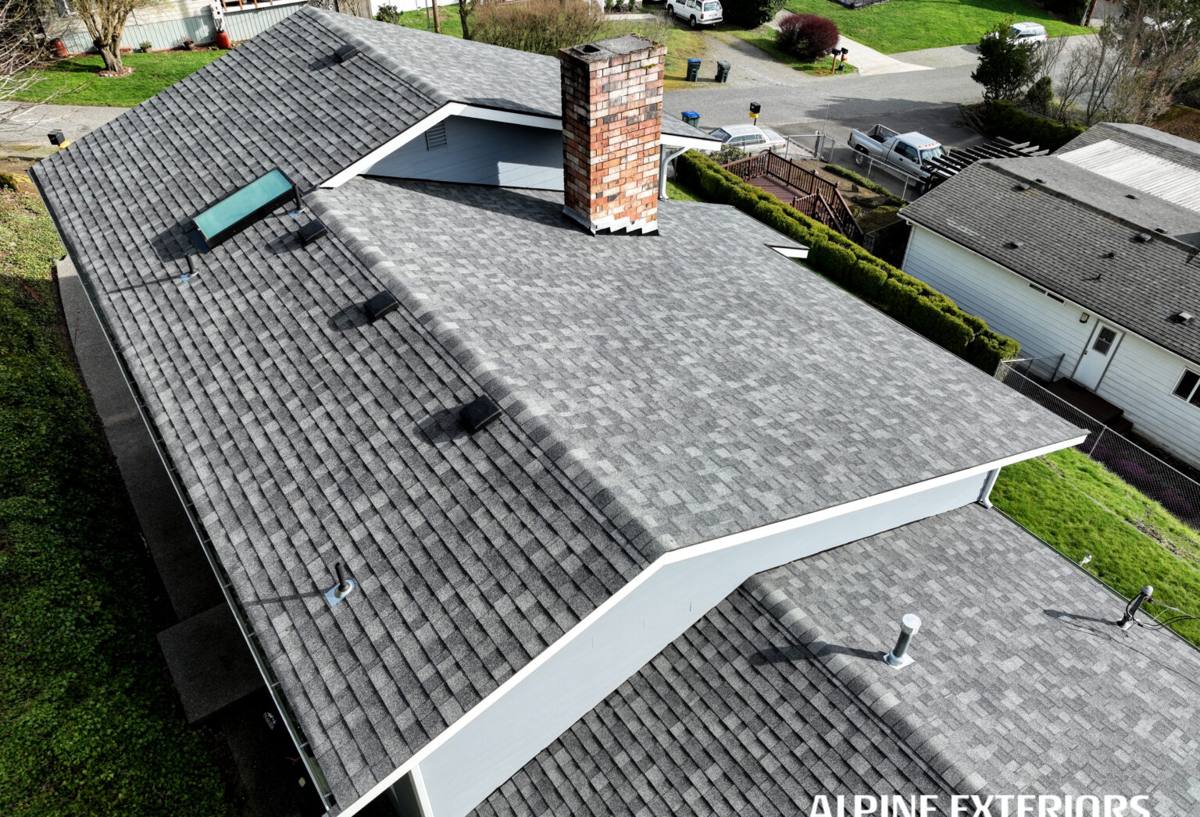
What Actually Counts as Storm Damage
Not every roof problem that shows up after a storm was caused by that storm, and homeowners deserve a straight answer on the difference. Genuine storm damage usually falls into a few categories: wind-lifted or torn-off shingles, exposed nail heads where tabs have peeled back, dented or creased flashing, debris impact damage from branches, and water intrusion through a joint that held fine until the wind direction changed. Wear-related problems — brittle, curling shingles from age, or granule loss from years of sun and moss — aren't storm damage, even if they become obvious right after a storm blows through. An honest inspection separates the two, because it changes both the scope of the fix and, if you're filing a claim, what your insurer will and won't cover.
The Cost of Waiting
A lifted shingle or a small flashing gap doesn't look urgent. The problem is what's happening underneath it. Water that gets past the roofing surface travels — it doesn't necessarily show up as a stain directly below the entry point. By the time a homeowner sees a ceiling stain, the decking underneath has often been wet for weeks or months, and what would have been a straightforward shingle and flashing repair turns into a decking replacement, insulation work, and sometimes interior drywall repair. In a climate with this much rain and this long a moss season, small openings in a roof don't stay small.
What a Correct Storm Damage Repair Involves
Inspection First, Diagnosis Before Repair
A repair is only as good as the inspection behind it. That means getting on the roof (not just looking from the ground or a drone photo), checking the attic side for water tracking and staining, and identifying every point of entry — not just the one that's visibly leaking. Storm damage is rarely isolated to a single spot; wind that lifted one section of shingles usually stressed the fasteners and seals nearby too.
Matching Materials, Not Just Patching
Repairs that don't match the existing shingle profile, color, and granule type stand out and can also create a mismatched water-shedding pattern at the seam between old and new material. A correct repair sources shingles that match as closely as possible, and where an exact match isn't available, blends the transition in a low-visibility area of the roof rather than the most obvious slope.
Flashing, Underlayment, and Moss Treatment Together
Replacing shingles without addressing the flashing or underlayment underneath them is a repair that fails again in the next storm. The corroded step flashing, the valley metal, the underlayment around the repair area — all of it gets checked and replaced where needed, not just the visible shingles. If moss contributed to the damage, treating the surrounding area is part of the job, not an upsell tacked on afterward.
Our Process, Start to Finish
- Call or request an estimate. We ask what happened and when, so we know what to look for.
- On-site inspection. We get on the roof and in the attic, and photograph what we find.
- Written scope and estimate. You get a clear explanation of what's damaged, what needs to be done, and why — not just a number.
- Temporary protection if needed. If there's active leaking or exposed decking, we get it covered before the next rain, not on our next available week.
- Repair. Matching materials, correct flashing detail, and a cleanup that leaves the site the way we found it.
- Final walkthrough. We show you what was done and what to watch for going forward.
Repair or Replace: How We Help You Decide
Storm damage doesn't automatically mean a full roof replacement, and it doesn't automatically mean a cheap patch is the right call either. The honest answer depends on a few specific factors, which we walk through with you rather than defaulting to whichever option is more profitable for us.
| Factor | Repair Usually Makes Sense | Replacement Usually Makes Sense |
|---|---|---|
| Roof age | Roof is well within its expected service life | Roof is already near or past the end of its expected life |
| Extent of damage | Damage is limited to one area or slope | Damage is spread across multiple slopes or the whole roof |
| Decking condition | Decking underneath is sound and dry | Decking is soft, rotted, or wet over a large area |
| Repair history | This is the first significant repair | The roof has needed several repairs in recent years |
| Typical cost range | Often a few hundred to around a couple thousand dollars, depending on scope | A larger investment, but resets the clock on materials, flashing, and warranty |
We'll always tell you plainly when a repair is the right, cost-effective call — and when putting more money into an aging roof is just delaying an inevitable replacement.
What to Check After a Storm
You don't need to get on the roof yourself to do a reasonable first check. Look for these signs from the ground and inside the attic, and call for an inspection if you notice any of them:
- Shingle pieces or granules in gutters, downspouts, or on the ground around the house
- Shingles that look lifted, curled, or out of alignment compared to the rest of the roof
- Visible dents or bent edges on flashing, vent caps, or gutters
- New water stains on ceilings or attic framing, especially near valleys or chimneys
- Damp or musty smell in the attic that wasn't there before
- Daylight visible through the roof deck from inside the attic
- Heavy moss buildup in valleys or along the lower edge of the roof
Insurance Claims: What Homeowners Should Know
If a storm caused the damage, your homeowner's insurance may cover some or all of the repair, depending on your policy and the cause of loss. What we can do is document the damage thoroughly with photos and a written scope, which gives you something solid to bring to your adjuster. We're not your insurance company and we can't promise what they'll approve, but we can make sure the damage is recorded accurately before it's covered back up by a tarp or repair, and we're glad to walk your adjuster through what we found if that's helpful.
Why a Crew That Already Works Ferndale Matters
A roofer who's worked on homes throughout Whatcom County already knows what a coastal storm does to a roof in this specific climate — they're not learning it on your job. That means recognizing salt-related corrosion patterns before they cause a leak, knowing which flashing details actually hold up against driving rain off the water, and not underestimating how fast moss re-establishes itself here. It also means being reachable and local when a storm hits and you need someone who can actually get to your house in the next day or two, not a crew working from three counties away that fits you in whenever their schedule allows.
If a recent storm has left your roof looking rough — or even if you're just not sure whether what you're seeing is a real problem — we're happy to come take a look and give you a straight, no-pressure estimate. There's no cost and no obligation to use the form below to get started.