 Sudden Valley
 Why Deck Replacement Looks Different in Alger's Climate
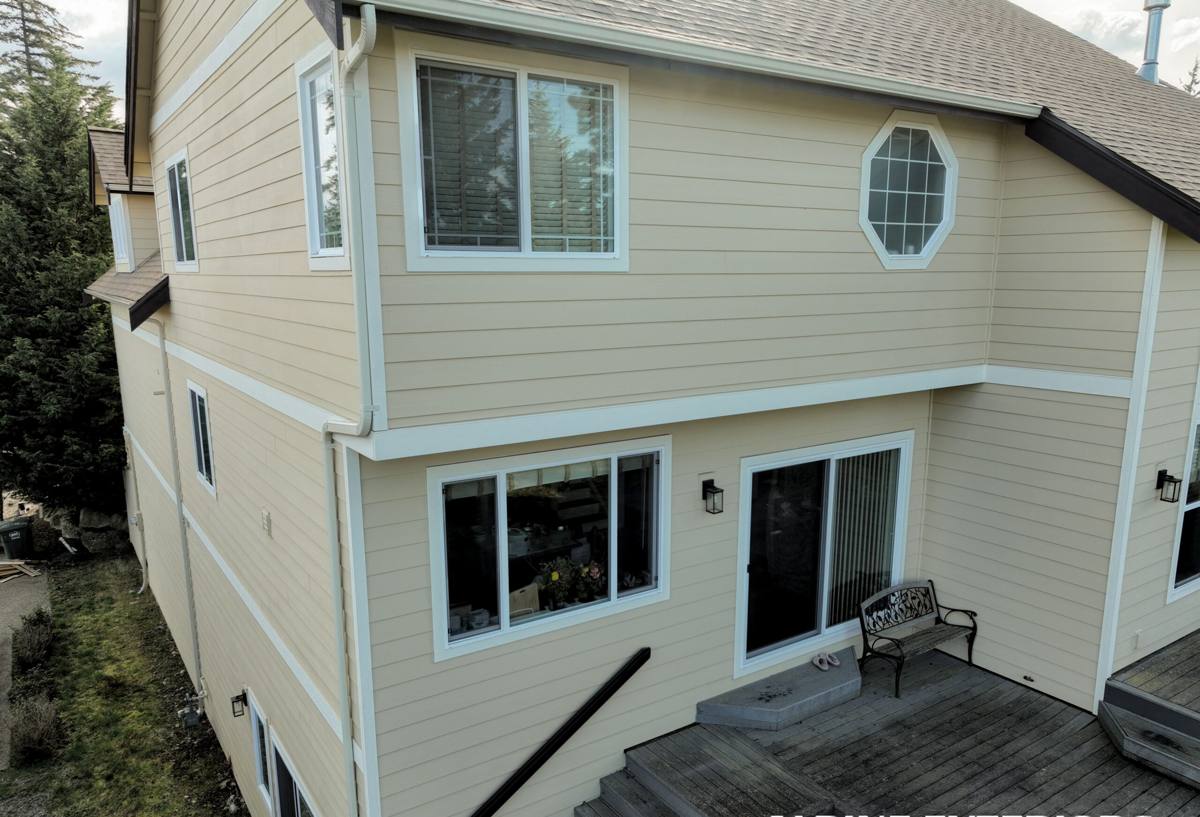
A deck in Alger doesn't fail the same way a deck fails in a dry climate. Out here, the enemy isn't sun bleaching — it's water that never really leaves. Whatcom County gets long stretches of steady, driving rain, heavy morning dew, and enough humid, shaded ground cover to keep wood damp for days after a storm has passed. Add in a moss season that can run from early fall through late spring, and you've got a recipe for decks that rot from the inside before the surface ever looks bad.
Salt-laden air moving in off the water accelerates corrosion on anything metal — fasteners, brackets, railing hardware — long before homeowners notice a problem with the boards themselves. That's the trap with deck failure in this region: the top of the deck can look fine while the framing underneath, the ledger connection, or the fasteners holding it all together are already compromised. A deck replacement done right for an Alger home has to plan for all of that from the ground up, not just swap old boards for new ones.
Signs Your Alger Deck Needs Replacing, Not Just Repair
Not every tired-looking deck needs a full tear-off. But in a climate this wet, waiting too long to make that call usually means the framing has already started to go, and repair stops being an option. Here's what tells us a deck is past the point of patching:
- Soft, spongy spots underfoot, especially near the house or along the rim joist
- Persistent moss or algae staining that comes back within weeks of cleaning
- Rust streaks below fastener heads or around post bases
- Visible gaps opening up between the ledger board and the house
- Railings or stair stringers that flex or wobble under normal weight
- A musty smell coming from underneath the deck, especially after rain
- Boards that have cupped, split, or delaminated at the ends
Any one of these on its own might be a repair. Two or three together, especially involving the ledger or the framing, usually means the structure has been absorbing water longer than it should have, and replacement is the honest recommendation.
What a Correct Deck Replacement Involves
Structural Framing and Footings
Everything starts underground and at the house connection. Footings need to sit below frost depth and bear on solid, undisturbed soil — something we check rather than assume, since fill soil and drainage patterns vary block to block even within the same neighborhood. The ledger board, where the deck attaches to the house, is the single most important connection on the whole structure. It has to be properly flashed so water sheds away from the house framing instead of running down behind the siding, and it has to be bolted, not just nailed, per current code.
Decking Material and Layout
Board spacing, orientation, and ventilation underneath the deck all affect how fast moisture can leave the wood after a rain. Tight spacing traps debris and moisture between boards; too much gap and the deck feels unfinished and collects grime. We set spacing based on the material's expansion behavior in wet weather, not a one-size-fits-all gap.
Fasteners, Flashing, and Hardware
In a marine-influenced climate, stainless steel or heavy hot-dip galvanized fasteners and structural hardware aren't an upsell — they're the difference between hardware that lasts the life of the deck and hardware that's rusting through in five years. Every joist hanger, post base, and structural screw on a replacement we build is rated for exterior, corrosive-prone exposure.
Railings and Code Compliance
Railing height, baluster spacing, and stair guard requirements are set by code, not preference, and inspectors in this region check them. A proper replacement brings the whole structure up to current code, not just the parts that were originally out of compliance.
Choosing the Right Decking Material for This Climate
There's no single "best" decking material — there's a best material for how much maintenance a homeowner actually wants to do, balanced against upfront cost. Here's how the common options hold up against Whatcom County's wet, mossy conditions:
| Material | Moisture & Moss Behavior | Maintenance | Typical Lifespan Here |
|---|---|---|---|
| Pressure-treated wood | Absorbs moisture readily; needs consistent sealing to resist moss and rot | Annual cleaning and re-sealing recommended | 10–15 years with upkeep |
| Cedar | Naturally rot-resistant but still needs finish maintenance in constant damp | Periodic staining/sealing | 15–20 years with upkeep |
| Capped composite | Sheds moisture well, resists moss staining better than wood, doesn't absorb water into the core | Occasional washing, no sealing/staining | 25+ years |
| PVC/cellular decking | Fully moisture-resistant, best moss and mildew resistance of the common options | Low — soap and water cleaning | 25–30+ years |
We'll walk through these trade-offs honestly during your estimate — including where a lower-maintenance material makes sense for your budget and where a traditional wood deck is still the right call, for example on a smaller structure or a tighter budget where long-term upkeep is manageable.
Our Deck Replacement Process, Start to Finish
- On-site assessment — we inspect the existing deck, ledger connection, footings, and framing to confirm replacement is the right call and identify any hidden moisture damage to the house structure itself.
- Written estimate — a clear scope covering demolition, framing, material selection, hardware, and railings, with no vague allowances.
- Permitting — deck replacements of most sizes in Whatcom County require a permit; we handle that paperwork so it isn't left to you.
- Demolition and disposal — full removal of the old structure, checking the ledger area and house framing for water damage once the old deck is off.
- Framing and flashing — new footings or reinforcement as needed, properly flashed ledger, corrosion-resistant hardware throughout.
- Decking and railing installation — installed to current code with attention to drainage and airflow underneath.
- Final walkthrough — we go over the finished deck with you, including what maintenance it will and won't need going forward.
Cost Factors for Deck Replacement in Alger
Every deck is different, so we won't quote a number without seeing the site, but these are the variables that move the price most:
| Factor | Why It Matters |
|---|---|
| Deck size and shape | Multi-level decks and non-rectangular layouts add framing complexity and labor time |
| Framing condition | Hidden rot at the ledger or posts, common in decks that have gone a few years without sealing, adds repair scope beyond a simple deck swap |
| Material choice | Composite and PVC decking cost more upfront than wood but reduce long-term maintenance spending |
| Railing style and height | Cable, glass, or code-driven guard heights require different hardware and labor than standard baluster railings |
| Site access | Steep lots or limited equipment access, common on wooded and sloped properties in this area, can add time for material handling |
| Permit and inspection requirements | Structural changes or larger decks may trigger additional engineering or inspection steps |
Maintenance After Replacement: Keeping Moss and Moisture at Bay
Whatever material you choose, a new deck in this climate still needs a maintenance rhythm to stay ahead of moss and moisture. For wood and cedar decks, that means an annual inspection of the finish and re-sealing before the wet season sets in, not after moss has already taken hold. For composite and PVC decks, it's mostly about keeping debris out of the gaps between boards and off the surface, since trapped leaves and needles hold moisture against the material even when the material itself doesn't absorb water.
Trimming back overhanging branches and vegetation near the deck helps more than any cleaning product — shade and leaf litter are what keep a deck damp long enough for moss to establish. Clearing gutters and downspouts near the deck footprint also matters; a lot of "deck problems" we get called out for actually start as water dumping off a roofline onto or near the structure.
Why a Crew That Already Works Alger Matters
Deck failures in this part of Whatcom County follow patterns — which framing details tend to trap water, which slopes drain poorly, which fastener grades hold up and which don't. A crew that's already replaced decks in and around Alger has seen those patterns enough times to design around them before they become callbacks. That's different from a generalist who treats every deck the same regardless of climate.
Local experience also means fewer surprises during permitting, since we know what the local jurisdiction typically asks for on a deck replacement, and it means we're not learning the area's soil and drainage quirks on your project. That familiarity shows up as fewer change orders and a structure built for the conditions it will actually face, not generic conditions from a manufacturer's spec sheet.
Let's Take a Look at Your Deck
If your deck in Alger is showing soft spots, rust stains, or moss that keeps coming back no matter how often you clean it, it's worth having someone look at the framing before you decide between repair and replacement. We offer free, no-pressure estimates — walk us through what you're seeing, and we'll give you an honest read on where your deck actually stands and what it would take to get it right. Fill out the form below to get started.