 Sudden Valley
 Roofing Around Lake Whatcom Is Its Own Kind of Job
A roof on a Lake Whatcom home works harder than a roof twenty miles inland. Between the tree canopy that rings the lake, the moisture-laden marine air that moves in off the Sound and settles over Whatcom County's low ground, and the driving rain that comes sideways off the water during winter storms, shingles here take a beating that manufacturer warranties are written for "average" climates, not this one. We've worked on enough Sudden Valley and Lake Whatcom roofs to know what actually fails first, and it's rarely the shingle itself — it's the details around it.
This page is about one job in one area: asphalt shingle roofing on homes around Lake Whatcom. Not a general roofing pitch, not every product we carry — just what a correct asphalt shingle roof looks like for this specific setting, and why it matters who installs it.
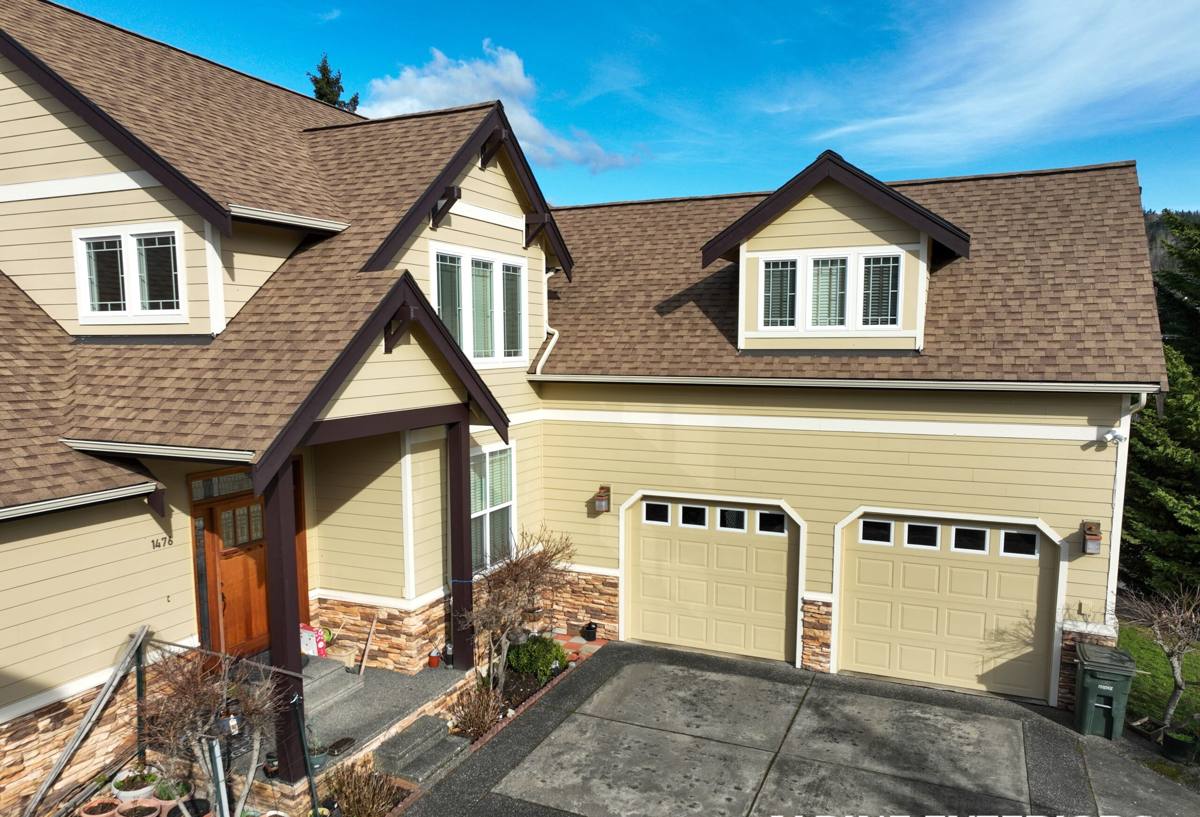
What This Climate Actually Does to a Shingle Roof
Three things drive almost every roofing problem we see in this area:
Moss and algae season runs long
Shaded, north-facing slopes near the lake stay damp for months at a stretch. That damp shade is exactly what moss and blue-green algae need to take hold. Once moss gets a foothold under shingle tabs, it lifts them, holds water against the roof deck, and accelerates granule loss — which is the beginning of the end for an asphalt shingle.
Wind-driven rain finds weak points
Storms off the water don't just fall straight down — they push rain sideways and up under shingle edges, at valleys, and around anything that penetrates the roof (vents, chimneys, skylights). A roof that would be fine in a calmer climate can leak here if the underlayment, flashing, and nailing pattern aren't done right.
The freeze-thaw swing is real, even if it's mild
Whatcom County doesn't get the deep freezes of the mountains, but it gets enough freeze-thaw cycling in winter to stress shingles that already have trapped moisture underneath them from moss or poor ventilation. A shingle that's saturated and then freezes is a shingle that cracks and loses its seal.
What a Correct Asphalt Shingle Roof Involves Here
A shingle roof that's built for Lake Whatcom conditions isn't a different product — it's the same asphalt shingle system installed with the right attention to the parts most roofs skip:
- Ice-and-water shield at eaves and valleys — a self-adhering membrane under the shingles at the spots where wind-driven rain and ice most often find a way in.
- Synthetic underlayment across the full deck — more tear-resistant and more water-resistant than old felt paper, and it holds up better if the roof sits exposed for a day or two during install.
- Proper attic ventilation — balanced intake and exhaust so moisture from inside the house doesn't condense on the underside of the deck and feed rot or mold from below, on top of the moisture pressure from outside.
- Correct nailing pattern and shingle exposure — six nails per shingle in high-wind or high-exposure areas near the water, placed in the manufacturer's nailing zone, not just "close enough."
- Metal drip edge at eaves and rakes — directs water off the roof edge instead of letting it wick back under the shingles and into the fascia.
- Step flashing and counterflashing, not just caulk — at any wall, chimney, or dormer intersection. Caulk is a maintenance item, not a waterproofing system.
None of this is exotic. It's standard trade practice done without shortcuts, which is exactly what a roof exposed to this much moisture needs to actually last its rated lifespan.
Shingle Options and How They Hold Up Here
We install standard 3-tab and architectural (laminate) asphalt shingles. The difference matters more in this climate than it does somewhere drier.
| Type | Typical Lifespan | How It Handles This Climate |
|---|---|---|
| 3-tab shingle | 15–20 years | Flatter profile sheds water fine but has less mass and a thinner seal strip, so it's more prone to wind lift and granule loss under heavy moss/algae exposure. |
| Architectural (laminate) shingle | 25–30+ years | Thicker, heavier, better wind resistance, and the dimensional profile sheds standing moisture better on shaded, low-slope sections. |
| Algae-resistant (AR) shingle | Same as base product | Copper-infused granules slow blue-green algae staining and growth — worth the small upcharge on any shaded or north-facing roof plane near the lake. |
Our default recommendation for most Lake Whatcom homes is an algae-resistant architectural shingle. It costs somewhat more up front than a basic 3-tab, but it's the option that best matches what this climate actually does to a roof over time.
How We Approach a Lake Whatcom Roofing Job
- On-site inspection first. We walk the roof (or use a ladder/drone where pitch or access doesn't allow safe foot traffic), check the deck condition, ventilation, flashing, and how much moss or algae buildup exists.
- Honest tear-off vs. overlay call. If there's existing moss damage, soft decking, or more than one layer of old shingles already, we tear off — overlaying a compromised roof just hides the problem for a couple of years.
- Deck repair as needed. Any soft, rotted, or delaminated plywood gets replaced before a single shingle goes down. This is the step that gets skipped by contractors bidding low, and it's the one that determines whether the roof lasts.
- Underlayment, flashing, and ventilation installed to spec. Not "if there's time" — as the standard part of the job.
- Shingle installation with correct nailing and exposure. Following manufacturer specs for wind zone, not a generic pattern.
- Cleanup and walk-through. Magnetic sweep for stray nails, gutter check, and a final look at ridge lines and valleys before we call it done.
What Drives the Cost
Every roof is priced on its own specifics, but these are the factors that actually move the number on a Lake Whatcom home:
| Factor | Why It Matters |
|---|---|
| Roof pitch and access | Steeper roofs and homes with limited driveway or crane access near the lake take longer and need more safety setup. |
| Number of existing layers | Tear-off of two layers of old shingles costs more in labor and disposal than a single-layer tear-off. |
| Deck condition | Rotted or soft plywood found during tear-off has to be replaced — this is the most common source of a mid-job cost adjustment, and we always show you the damage before repairing it. |
| Ventilation upgrades | Homes with inadequate intake or exhaust ventilation often need vents added or upgraded as part of the job, which is worth doing at the same time as re-roofing. |
| Shingle class chosen | 3-tab, standard architectural, and algae-resistant architectural shingles each carry a different material cost per square. |
| Complexity of the roofline | Valleys, dormers, chimneys, and skylights all add flashing work and labor time. |
As a rough range, a straightforward asphalt shingle re-roof on a typical single-family home in this area runs from the mid four figures to the low five figures, with the final number driven mostly by size, pitch, and how much deck repair the tear-off uncovers. We give a firm number after the on-site inspection, not before.
Maintenance That Actually Matters in This Climate
A well-installed roof still needs upkeep in a moss-and-moisture climate like this one. What's worth doing:
- Have moss and algae growth removed with a soft-wash method — not a pressure washer, which strips granules and shortens shingle life.
- Keep gutters clear of needles and leaf litter from surrounding trees so water doesn't back up under the eave line.
- Trim back overhanging branches where practical — less shade on a roof plane means less moss and faster drying after rain.
- Have flashing around chimneys, vents, and skylights checked every couple of years, since these are the first spots to leak.
- Walk the attic after a hard winter storm and look for daylight, staining, or damp insulation — early signs are easier and cheaper to fix than a full leak.
- Consider zinc or copper strips near the ridge on shaded roof planes as an ongoing moss deterrent between cleanings.
Why It Matters That We Already Work This Area
A crew that already works Lake Whatcom and Sudden Valley isn't guessing at what this climate does to a roof — we've seen which north-facing slopes hold moss the longest, which roof designs collect standing water in valleys, and which older homes in the area were built with ventilation that was fine for its era but isn't enough by current standards. That's not something you can bid accurately from a stock estimate template. It's also worth knowing that Sudden Valley's community association may have its own guidelines on exterior materials or color, and it's worth checking before you finalize a shingle choice — we're happy to work with whatever review process applies to your property.
We stand behind our own installation work, and we'll tell you plainly if a repair is a better call than a full replacement — a straight answer is worth more than an upsell on a roof that has a few good years left in it.
Get a Straight Answer on Your Roof
If you're dealing with moss buildup, a roof that's due for replacement, or you just want an honest read on how many years you have left before it needs attention, we're glad to take a look. Request a free, no-pressure estimate using the form below and we'll walk your roof and give you a straight answer.