 Sudden Valley
 Why Bellingham Roofs Wear Differently Than Roofs Inland
A roof in Bellingham does not age the same way a roof does forty miles inland. The combination of salt-laden air off the Sound, long stretches of driving rain, and shaded, damp conditions for much of the year puts a specific kind of stress on asphalt shingles. None of it is dramatic on its own, but stacked together over years it shows up as premature granule loss, soft or curling shingle edges, and moss colonies that start in the shady north-facing slopes and spread from there.
We install and repair asphalt shingle roofs throughout Whatcom County, and the pattern we see on Bellingham homes is consistent: roofs that were installed correctly for this climate hold up well past their rated life, and roofs that were installed with shortcuts fail early in specific, predictable spots — valleys, eaves, and anywhere moss has been allowed to sit. Getting the details right up front matters more here than in drier parts of the state.
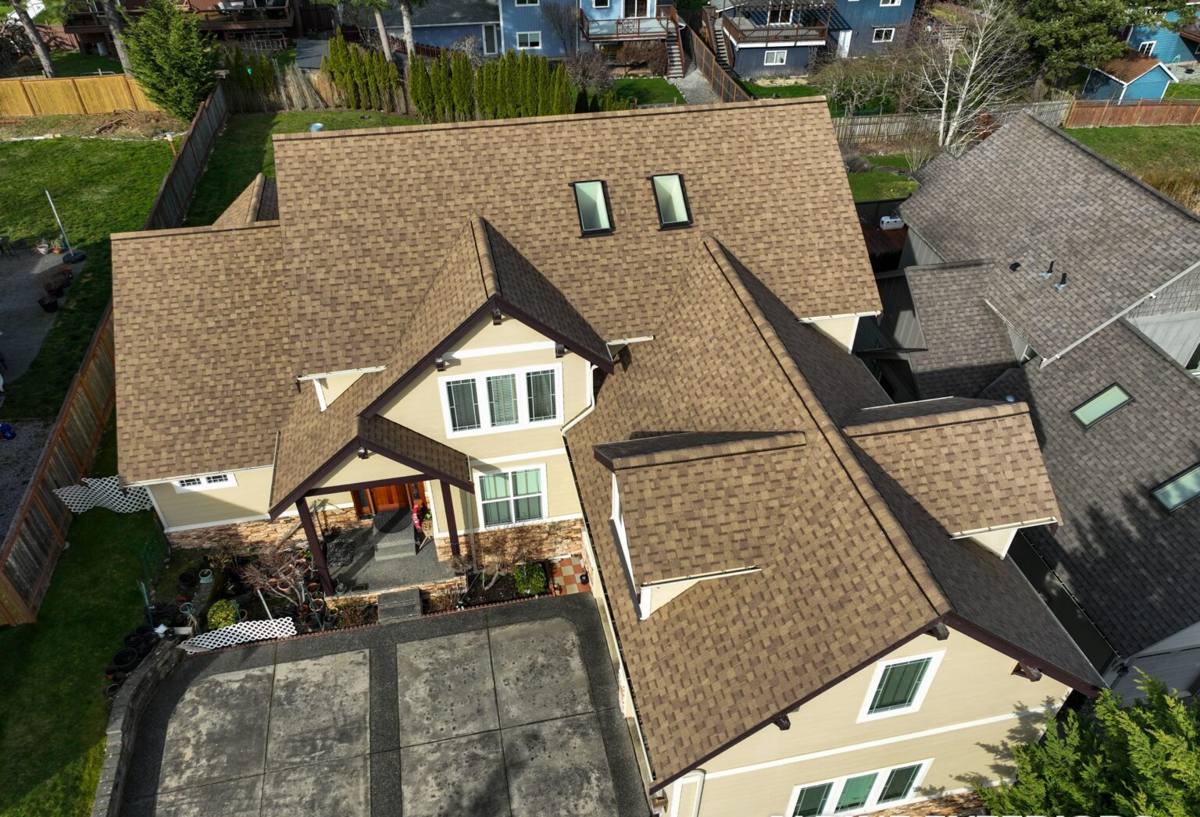
What Bellingham's Climate Actually Does to a Shingle Roof
Salt Air and Metal Fatigue
Homes closer to Bellingham Bay and the surrounding waterways deal with airborne salt that accelerates corrosion on any exposed metal — nail heads, flashing, vent boots, and gutter hardware. Shingles themselves aren't corroded by salt, but the metal components that keep water out of a roof system are, and a flashing failure is one of the most common causes of a leak that homeowners initially blame on "bad shingles."
Driving Rain and Wind-Driven Moisture
Bellingham gets a lot of rain, but the bigger issue for roofs is the direction it often comes from. Wind-driven rain pushes water sideways and upward under shingle tabs and around penetrations in a way that gentle, straight-down rain never tests. A roof that would be watertight in a calmer climate can leak here if the underlayment, sealant strips, and flashing laps aren't installed with that wind pattern in mind.
Moss, Algae, and Shade
Long, mild, wet stretches with limited direct sun — especially on north- and west-facing slopes shaded by mature trees — create ideal conditions for moss and black algae streaking. Moss isn't just cosmetic. Once it establishes itself under shingle tabs, it holds moisture against the roof deck, lifts shingles from the surface they're supposed to lie flat against, and works exactly like a wedge during freeze periods and wind events.
What a Correctly Installed Roof Needs in This Environment
A shingle roof built for Bellingham's conditions is not fundamentally a different product than one built anywhere else — it's the same materials installed with more attention to the details that this climate actually tests. That means:
- Ice-and-water shield membrane at eaves, valleys, and around every penetration — not just where code minimums require it
- Corrosion-resistant flashing and fasteners, particularly for homes closer to the water
- Shingles rated for algae resistance, with granules formulated to resist the staining common in the Pacific Northwest
- Properly lapped and sealed underlayment sequencing so wind-driven rain can't work its way upward under a course
- Balanced attic ventilation so moisture from inside the home doesn't condense against the underside of the roof deck
Skip any one of these and the roof may still look fine for a year or two. The problems that come from cutting corners in a marine climate tend to show up in year three to five, not in month one — which is part of why they're so easy for a homeowner to get talked out of paying for up front.
Shingle Options and How They Hold Up Locally
Not every asphalt shingle line is built the same way, and the differences matter more here than in a dry climate. This is a general comparison of the shingle classes we typically discuss with Bellingham homeowners:
| Shingle Type | Typical Lifespan | Wind Rating | Moss/Algae Resistance | Best Fit |
|---|---|---|---|---|
| 3-tab (economy) | 15–20 years | Lower | Standard granules only | Budget-driven projects, secondary structures |
| Architectural / laminate | 25–30 years | Higher | Algae-resistant granule options available | Most primary homes in this climate |
| Premium/designer laminate | 30+ years | Highest | Enhanced algae-resistant granules standard | Steep-slope, high-visibility, or heavily shaded roofs |
For most Bellingham homes, we steer people toward architectural shingles with algae-resistant (copper- or zinc-infused) granules as the practical minimum, not the upgrade. Given the shade and moisture typical of this area, standard granules on a north-facing slope tend to show streaking within a few years, and that's a cosmetic problem homeowners end up regretting even when the roof itself is performing fine structurally.
Where Product Choice Isn't the Deciding Factor
We don't push any single shingle brand as a cure-all. Every major manufacturer makes a solid architectural product at this point — the bigger differences come from installation quality, ventilation, and how the roof handles moss and moisture over time. We'll talk through warranty structure and color/profile options that fit your home, but we won't tell you one brand name is going to save a poorly ventilated roof.
Our Installation Process
When we replace or install an asphalt shingle roof in Bellingham, the sequence looks like this:
- Tear-off and deck inspection. Old material comes off down to the deck, and we check for soft spots, rot, or old moisture damage that needs to be addressed before anything new goes down. This is often where hidden moss or leak damage from a previous roof gets found.
- Deck repair. Any compromised sheathing gets replaced — patching over a soft deck is one of the more common shortcuts we see on older roofs, and it's the single fastest way to guarantee a future leak.
- Ice-and-water shield. Applied at eaves, valleys, and penetrations, extended further than code minimum in the areas most exposed to wind-driven rain.
- Synthetic underlayment. Covers the remaining deck, lapped correctly for our prevailing wind and rain direction rather than just laid in the fastest order.
- Drip edge and flashing. Corrosion-resistant metal at all eaves, rakes, valleys, and roof-to-wall transitions.
- Shingle installation. Installed to manufacturer nailing specs (this affects both wind rating and warranty validity), with attention to sealant strip activation.
- Ridge and soffit ventilation. Checked and balanced so the attic can actually exchange air — this single step does more to prevent moss regrowth and deck rot than any surface treatment.
- Final walk-through. We go over what was found, what was replaced, and what maintenance (if any) the roof will need going forward.
Moss and Algae: Prevention Built Into the Job, Not Sold Separately
Rather than treating moss control as an add-on service, we build prevention into the roof itself where it makes sense. That includes algae-resistant shingle granules, and — on roofs with heavy shade or a history of moss — zinc or copper control strips installed near the ridge. Rainwater running over these strips carries trace metal ions down the roof slope that discourage new moss growth without harsh chemical treatments.
None of this eliminates the need for basic homeowner upkeep. A roof in a shaded, damp part of Whatcom County will still benefit from periodic gentle cleaning and keeping nearby branches trimmed back to let light and air reach the surface. What good installation does is remove the conditions that let moss take hold aggressively in the first place, so the maintenance that is needed stays light instead of becoming a recurring problem.
Ventilation: The Part of the System Nobody Sees
Ventilation doesn't show up in photos and homeowners rarely ask about it directly, but it's one of the biggest factors in how long a shingle roof lasts in this climate. Warm, moist air from inside the house rises into the attic; if it can't escape through a balanced system of intake (soffit) and exhaust (ridge) vents, it condenses against the underside of the roof deck. Over a wet Bellingham winter, that trapped moisture contributes to deck rot, shingle failure from underneath, and — indirectly — a more hospitable environment for moss and mildew.
We check existing ventilation on every re-roof and correct imbalances where we find them. This is usually a modest add during a roof replacement and a much more disruptive fix afterward, which is why it belongs in the original scope of work, not a future callback.
Maintenance That Actually Extends Roof Life Here
A well-installed asphalt shingle roof in Bellingham doesn't need constant attention, but a few habits make a real difference over its lifespan:
- Keep gutters clear so water isn't backing up under the shingle edge, especially heading into fall storms
- Trim overhanging branches to reduce shade and debris buildup on north- and west-facing slopes
- Have moss removed gently (never pressure-washed) rather than left to spread once it appears
- Check attic ventilation isn't blocked by insulation or storage that's crept over the soffit vents
- Have a professional look at flashing and penetrations every few years, particularly if the home is closer to the water
- Address small leaks immediately — in this climate, a slow drip left over a winter can do deck damage that a same-season repair would have avoided
What Drives the Cost of a Bellingham Shingle Roof
Every roof is priced on its own specifics, but the factors that move the number up or down in this area are fairly consistent:
| Factor | Why It Matters Here |
|---|---|
| Roof pitch and access | Steeper roofs and limited access (trees, tight lots) add labor time and safety staging |
| Layers to remove | Older Bellingham homes sometimes have a second layer under the visible shingles, adding tear-off time |
| Deck condition | Moisture damage from prior moss or flashing issues often isn't visible until tear-off |
| Shingle class chosen | Architectural and premium lines cost more up front but resist algae and wind better long-term |
| Ventilation corrections | Adding or rebalancing ridge/soffit vents is far cheaper during a re-roof than as a standalone job |
| Flashing and metal work | Corrosion-resistant materials cost more but matter more for homes nearer the water |
We'll walk through which of these apply to your specific roof during an on-site look, and we're straightforward about which upgrades are worth it for your situation and which aren't.
Why It Matters That We Already Work in This Area
A roofing crew that mostly works in drier, inland climates isn't wrong about asphalt shingles in general — but they may not default to the ice-and-water shield coverage, flashing metal, or ventilation checks that this climate makes worth the extra step. Crews that work Bellingham and the surrounding Whatcom County communities regularly see the same failure patterns repeat: moss-driven deck damage, flashing corrosion near the water, and leaks from underlayment that wasn't sequenced for wind-driven rain. That pattern recognition shapes how we scope and install every roof, not just the ones where a problem has already shown up.
We're also familiar with the permitting and inspection expectations for roofing work in this area, and we plan around this region's weather windows rather than treating every job like it's happening somewhere dry and calm.
Get a Straightforward Estimate
If your Bellingham home needs a new asphalt shingle roof, a repair, or you just want an honest read on how much life is left in the one you have, we're happy to take a look. There's no pressure and no sales script — just a clear assessment based on what this climate actually does to a roof and what your home specifically needs. Use the form below to request a free estimate.