 Sudden Valley
 Storm Damage on a Bellingham Roof Isn't Like Storm Damage Everywhere Else
A roof around Bellingham and Sudden Valley takes a different kind of beating than one in a drier inland climate. It isn't usually one dramatic event that does the damage — it's the combination of driving rain off the Sound, salt-laden air working into fasteners and flashing, and a moss season that runs long enough to hold moisture against shingles for months at a stretch. When a windstorm or heavy rain event finally does knock something loose, it's often exposing a roof that was already weakened underneath.
That's the context we bring to every storm damage call in this area. A repair that looks fine on a roof in a dry climate can fail here in a season or two if it doesn't account for wind-driven rain, moss growth, and slow corrosion. This page covers what storm damage repair actually needs to look like for a home in Bellingham or Sudden Valley, and how we approach it.
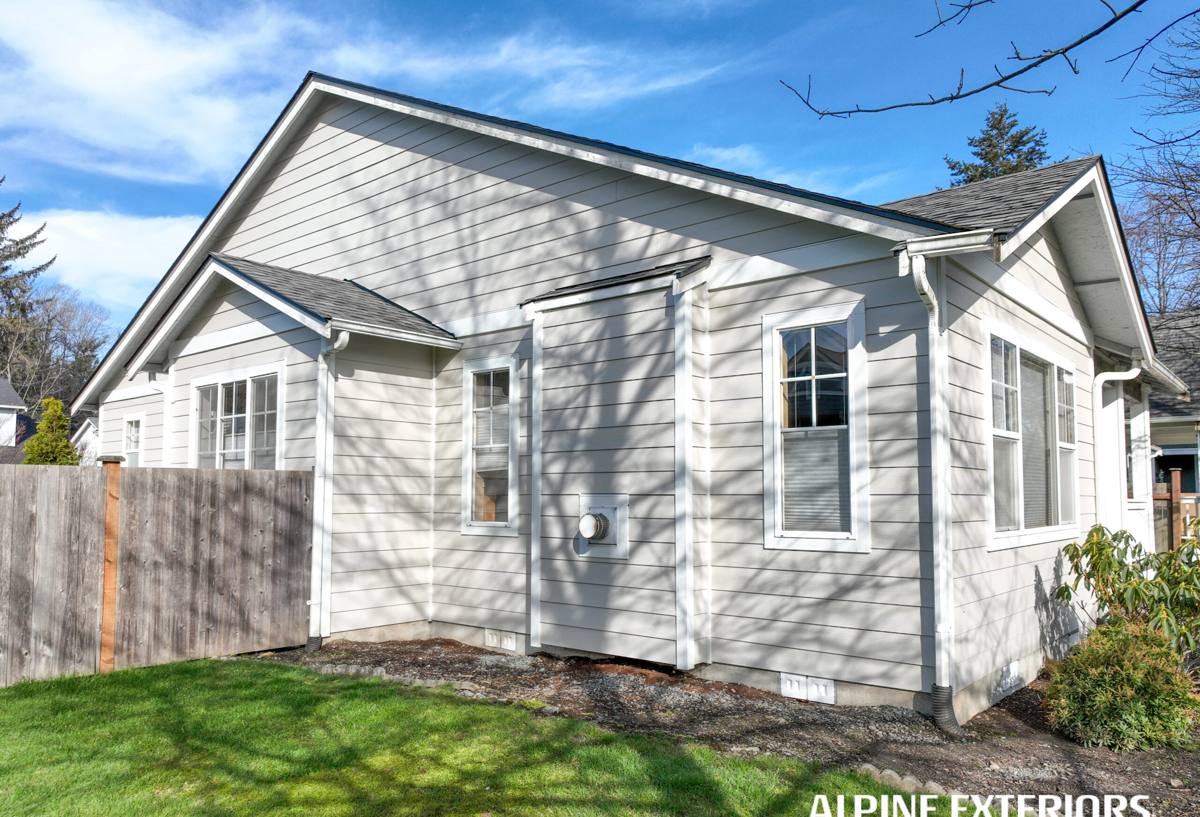
Signs Your Roof Has Storm Damage
Some storm damage is obvious — a tree limb through the roof deck, a section of shingles peeled back overnight. Most of it isn't. The damage that costs homeowners the most is the kind that sits quietly for a year or two before it shows up as a stain on a ceiling. After any significant wind or rain event, it's worth checking for the following:
- Shingles that are lifted, curled at the edges, or missing outright, especially on the side of the roof that faces prevailing wind
- Granules collecting in gutters or at downspout outlets — a sign shingles are wearing thin or were physically abraded by wind-blown debris
- Bent, lifted, or missing flashing around chimneys, vents, and roof-to-wall junctions
- Soft or discolored patches on interior ceilings, especially near exterior walls or skylights
- Moss buildup that's thicker on one slope, which often points to a spot where water is sitting instead of shedding
- Gutters pulling away from the fascia or sagging under debris, which redirects water back under the roof edge
- Daylight visible through the attic roof deck, or damp insulation directly under the roof
Any one of these on its own might be minor. Two or three together usually means water has already found a way in, even if there's no visible stain yet.
What a Correct Storm Damage Repair Actually Involves
Checking the Deck, Not Just the Shingles
Replacing damaged shingles without checking the roof deck underneath is the most common shortcut in this trade, and it's the one that causes repeat calls. In a climate this wet, plywood or OSB decking that's been damp for any length of time can be soft, delaminated, or starting to rot at the edges. A correct repair means pulling back enough of the surrounding roofing to actually see the deck condition, not just patching over the visible hole.
Flashing and Underlayment Before Shingles
Most storm-related leaks trace back to flashing, not the field shingles themselves — step flashing at wall intersections, chimney flashing, valley metal, and vent boots. Wind-driven rain in this area doesn't just fall straight down; it gets pushed sideways and upward under lapped shingles and flashing that's slightly loose or under-lapped. Any repair we do replaces damaged flashing and installs self-adhered underlayment at the vulnerable transitions (valleys, eaves, around penetrations) rather than relying on standard felt alone in those spots.
Matching Materials Honestly
On an older roof, an exact shingle match may not exist anymore. We tell homeowners that up front rather than promising a seamless blend we can't deliver. Where an exact match isn't possible, we look at options like re-shingling the full slope instead of a visibly patched section, so the repair looks intentional rather than pieced together.
Dealing With Moss and Organic Growth
Moss isn't just cosmetic here — it holds moisture against the shingle surface and lifts shingle edges as it grows, which is exactly the kind of pre-existing weakness that turns a moderate storm into a leak. Part of a proper storm repair on an older roof includes clearing moss and debris from the repair area and checking whether zinc or copper strips would help slow regrowth on north-facing or heavily shaded slopes.
Repair Approaches Compared
Not every storm-damaged roof needs the same scope of work. The right approach depends on how much of the roof is affected, its age, and what we find once we're actually up there.
| Approach | Best For | What It Doesn't Fix | Typical Lifespan Added |
|---|---|---|---|
| Spot patch repair | Isolated damage on an otherwise sound, younger roof | Won't address widespread wear, moss, or aging flashing elsewhere on the roof | Matches remaining roof life if deck and flashing are sound |
| Section (slope) replacement | Damage concentrated on one slope, or where an exact shingle match isn't available | Doesn't extend the life of untouched slopes that are aging on their own timeline | Full new-shingle life on that slope |
| Full re-roof | Roofs near end of expected life, or with damage found on multiple slopes plus deck issues | Higher upfront cost than a repair | Full manufacturer-rated life on new materials |
We'll tell you honestly which category your roof falls into once we've inspected it — including when a patch is genuinely the right call and a full re-roof isn't necessary yet.
How Our Storm Damage Repair Process Works
1. Inspection and Documentation
We inspect the full roof, not just the area you flagged, since storm damage rarely stays confined to one spot. We photograph and document findings, which matters if you're filing an insurance claim — you want a record of what the storm caused versus what was pre-existing.
2. Temporary Protection
If there's active or likely water intrusion, we get the area tarped or otherwise weatherproofed before anything else, so a delay in scheduling the full repair doesn't turn into interior damage.
3. The Repair Itself
We do the actual work: deck repair where needed, new flashing and underlayment at the vulnerable points, and shingle or material work matched as closely as honestly possible to what's already on the roof.
4. Final Walkthrough
We walk the completed repair with you, from the ground and, where it's useful, from the attic side, so you can see the underlayment and flashing work that won't be visible once the shingles are down.
Working With Insurance on a Storm Claim
Many storm damage repairs are at least partly insurance-covered, but coverage depends on your policy, your deductible, and how clearly the damage can be tied to a specific storm event versus gradual wear. We provide the documentation and photos an adjuster typically asks for, and we'll give you a straightforward read on which parts of the damage look storm-related and which look like pre-existing wear — insurers distinguish between the two, and it's better to know that going in than to be surprised by a partial denial.
Why Hiring a Crew That Already Works in Sudden Valley and Bellingham Matters
Storm damage repair isn't just a generic skill — it's shaped by the specific conditions of the roof in front of you. A crew that regularly works Whatcom County roofs already knows which flashing details tend to fail first in this wind and rain pattern, how aggressive moss growth gets on shaded, tree-covered lots common around Lake Whatcom and Sudden Valley, and which shingle lines hold up reasonably well against salt air exposure closer to the water versus which don't.
There's also a practical response-time argument. After a regional storm, roofing crews get backed up fast, and companies dispatching from farther away often triage by drive time. A crew already working this area can usually get a tarp up and an inspection scheduled sooner, which matters most in the first 48 hours after damage occurs.
Preventing Repeat Damage After the Repair
A good storm repair should reduce your risk next time, not just patch this time's damage. A few things worth staying on top of:
- Keep gutters and downspouts clear so water sheds off the roof edge instead of backing up under shingles
- Have moss treated or removed on a regular schedule rather than waiting until it's thick enough to lift shingles
- Trim back tree limbs that overhang the roof, both to reduce debris and to cut down on shaded, damp areas where moss thrives
- Check attic ventilation — poor airflow traps moisture that weakens decking from underneath, independent of any storm
- Have the roof looked at after any major wind event, even if nothing looks obviously wrong from the ground
If you've got storm damage, a suspicious stain, or just want an honest read on where your roof stands after this season's weather, we're glad to take a look. Use the form below to request a free, no-pressure estimate.