 Sudden Valley
 Why Columbia Homes Need Siding Built for This Climate
The Columbia community, part of the Sudden Valley area in Whatcom County, Washington, sits in one of the more demanding weather zones in the Pacific Northwest. Storms roll in off the water and drive rain sideways into exterior walls for days at a time. Humidity stays high enough, long enough, to keep moss and algae growing on north-facing walls for most of the year. And salt-laden marine air works its way into seams, fastener heads, and butt joints, slowly breaking down materials that weren't built to handle it. None of this is unusual for the region — it's just the reality of building an exterior that has to perform here for decades, not years.
Siding that looks fine in a showroom or in a drier climate often struggles once it's exposed to this combination of driving rain, sustained moisture, and salt air. That's the starting point for every siding decision we make on a Columbia home: not what looks good on day one, but what will still be doing its job in year fifteen.
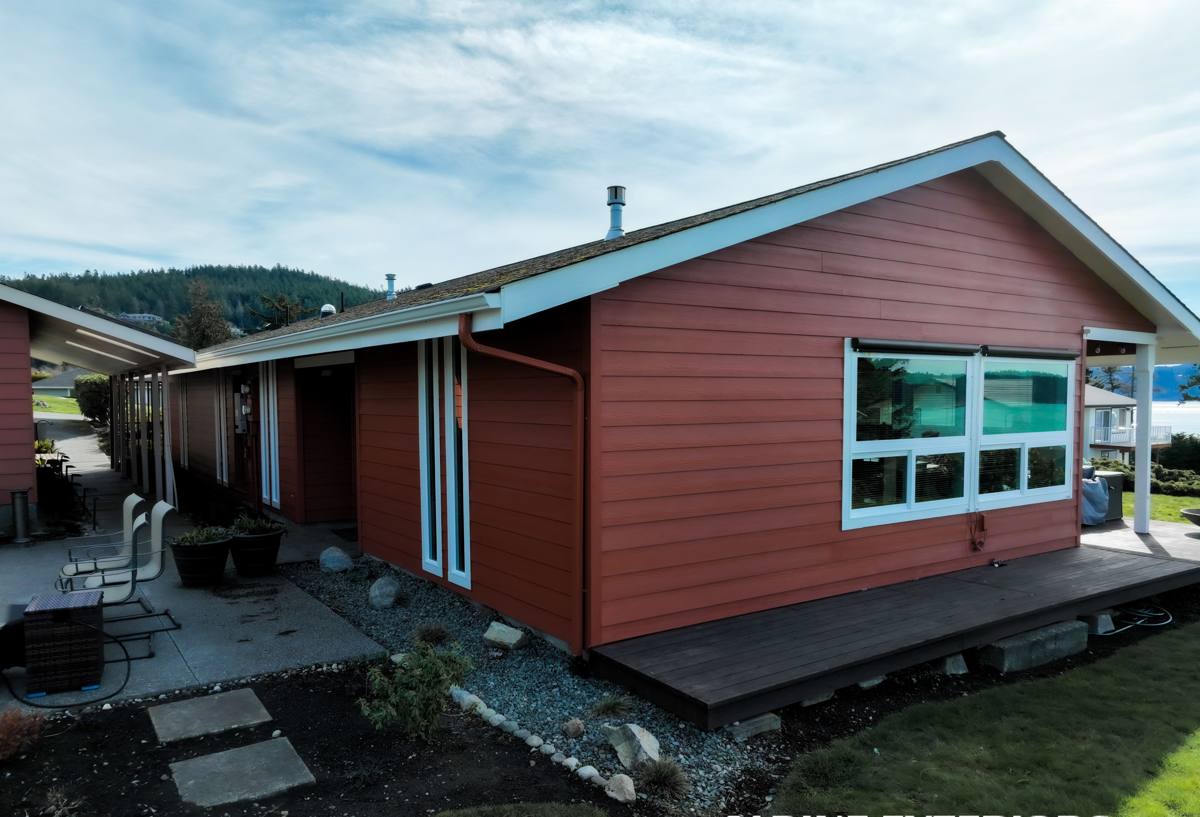
What This Climate Does to the Wrong Material
We see the same failure patterns repeat on homes in this area, regardless of the siding brand:
- Paint and factory finishes chalk, fade, or peel years ahead of schedule because the coating wasn't rated for constant moisture cycling.
- Moss and algae take hold on shaded, north- and west-facing walls and hold water against the surface long after a storm has passed.
- Butt joints and lower courses swell, delaminate, or soften where water collects and doesn't dry out between storms.
- Fastener heads and cut edges left unsealed become the first point of water intrusion, often invisible until the damage reaches the sheathing behind it.
These aren't defects unique to one product — they're the predictable result of using a material or installation method that wasn't matched to this climate. It's why the material choice and the installation details matter more here than in drier parts of the country.
Why James Hardie Fiber Cement Fits This Climate
A Core That Doesn't Feed on Moisture
James Hardie siding is made from fiber cement — a mix of cellulose fiber, sand, and portland cement. It's non-combustible and dimensionally stable, meaning it doesn't swell, warp, or rot the way wood-based products can when they take on repeated moisture. In a climate where a wall can go from soaked to humid to soaked again for months at a stretch, that stability matters more than almost anything else in the product.
ColorPlus Finish and Moss Resistance
Hardie's ColorPlus factory finish is baked on and backed by its own finish warranty, rather than field-applied paint that depends on weather conditions during installation. It holds color and resists the chalking and fading that driving rain and salt air accelerate on lower-grade coatings. It won't stop moss from landing on a wall — nothing does — but the surface doesn't degrade the way a softer or more porous material can once moss and algae take hold.
HZ5 Engineering for Wet, Marine Climates
James Hardie makes climate-specific product lines, and the HZ5 line is engineered for regions with heavy moisture exposure — which describes Whatcom County well. It's a meaningful difference from a one-size-fits-all siding product, and it's part of why we standardized on Hardie rather than juggling multiple brands and specs across projects.
What a Correct Installation Involves in Columbia
Material choice only gets a home halfway there. The other half is installation, and this is where most long-term siding failures actually start — not with the product, but with shortcuts taken during the install.
Drainage Gap and Rain Screen
Hardie siding needs a drainage plane behind it — a gap that lets any moisture that gets past the siding drain and dry out instead of sitting against the sheathing. Skipping this step is one of the most common corners cut in this climate, and it's often invisible until years later when rot shows up on the framing.
Fastening and Clearances
Correct fastener placement, spacing, and embedment depth matter for wind and moisture performance. Clearances at the ground, roofline, and deck ledgers need to be held so water has somewhere to go instead of wicking straight into the bottom edge of the boards.
Flashing and Sealant at Penetrations
Every window, vent, hose bib, and light fixture that penetrates the siding is a potential entry point for driving rain. Flashing needs to be layered correctly — not just caulked over — and sealant needs to be used at the right joints, not as a substitute for flashing.
A Hardie product installed without attention to these details will still develop problems in this climate. Getting the material right and getting the installation right are two separate jobs, and both have to happen.
James Hardie Compared to Other Siding Options
Homeowners in Columbia often ask how Hardie stacks up against the other materials they've seen quoted. Here's an honest comparison based on how each performs in a climate defined by driving rain, extended moss season, and salt-influenced marine air:
| Material | Moisture / Rot Resistance | Moss & Algae Resistance | Maintenance | Typical Lifespan |
|---|---|---|---|---|
| James Hardie fiber cement | Excellent — inorganic, dimensionally stable | Good with factory finish; surface doesn't degrade under growth | Occasional wash; no repainting for years | 30+ years with correct install |
| Vinyl siding | Fair — doesn't rot, but panels can warp and gap | Moderate; growth shows on textured surfaces | Low, but cracked or faded panels aren't repairable | 15–25 years |
| Cedar / wood siding | Poor to fair — organic material, prone to rot without upkeep | Poor — moss and algae feed directly on the wood surface | High; regular sealing, staining, or painting required | 10–20 years without diligent upkeep |
| LP SmartSide (engineered wood) | Fair — treated, but still wood-based and moisture-sensitive at cut edges | Moderate; finish coat needs to stay intact | Moderate; edge sealing and touch-up matter | 20–30 years with careful maintenance |
Every one of these materials has a legitimate use case somewhere. In a climate like this one, though, the trade-offs on the wood-based and vinyl options — ongoing maintenance, edge sensitivity, or a shorter realistic lifespan — are exactly why we standardized on James Hardie rather than offering all of them side by side.
Our Process for a Columbia Siding Project
- Inspection and moisture check. We look at the existing siding, sheathing, and trim for signs of trapped moisture or rot before quoting anything, since that changes the scope of the job.
- Product line and color selection. We walk through Hardie's plank, shingle, and panel options and the ColorPlus color range based on the home's exposure and your preferences.
- Tear-off and sheathing review. Old siding comes off and we confirm the sheathing underneath is sound before anything new goes up — this is the point where hidden moisture damage gets found and addressed.
- Drainage plane and installation. We install the rain screen or drainage gap, then the Hardie siding itself, following manufacturer fastening and clearance specs rather than shortcuts.
- Flashing, trim, and final walkthrough. All penetrations get flashed and sealed correctly, trim is finished, and we walk the job with you before calling it done.
Maintaining Hardie Siding Through Moss Season
Hardie siding is low-maintenance, not no-maintenance. In a climate with an extended moss season, a little routine care keeps it performing the way it's designed to:
- Rinse north- and west-facing walls with a garden hose once or twice a year to knock off early moss and algae growth before it takes hold.
- Avoid pressure washers directly on siding — they can force water behind boards and damage the finish; a soft wash or hand scrub is safer.
- Keep gutters clear so overflow isn't running down the siding face during heavy rain.
- Trim back landscaping that keeps walls shaded and damp, since that's exactly where moss establishes fastest.
- Check caulking at trim and penetration points every year or two and have it renewed before it fails, not after.
Why Hire a Crew That Already Works in Columbia
Siding installed to a generic national spec doesn't always account for what a specific microclimate actually does to a wall. A crew that already works in Sudden Valley and the surrounding Whatcom County communities knows which elevations take the worst of the driving rain, how long moss season really runs here, and which installation details are worth the extra time versus which ones are treated as afterthoughts elsewhere. That local pattern recognition is part of what you're paying for when you hire a contractor who already knows the area, not just the product.
If you're considering new siding for a home in Columbia, we're happy to take a look and give you a straightforward, no-pressure estimate — no obligation, just an honest read on what your home needs.