 Sudden Valley
 Why Cordata's Climate Is Hard on Siding
Cordata sits in the part of Whatcom County where three weather factors stack on top of each other year-round: salt-laden air moving in off the Strait of Georgia and Bellingham Bay, long stretches of driving, wind-blown rain, and a moss season that can run eight months or longer in shaded, north-facing yards. Any one of these will shorten the life of the wrong siding material. Together, they're the reason so many homes in this area show premature paint failure, soft trim, or green-black staining well before the siding is old enough to need replacing.
Salt air is corrosive to fasteners and finishes, driving rain finds every gap in a wall assembly that wasn't detailed correctly, and moss and algae thrive on siding that stays damp between rain events because it doesn't dry out fast. A siding system that handles all three at once — not just one — is what actually holds up here.
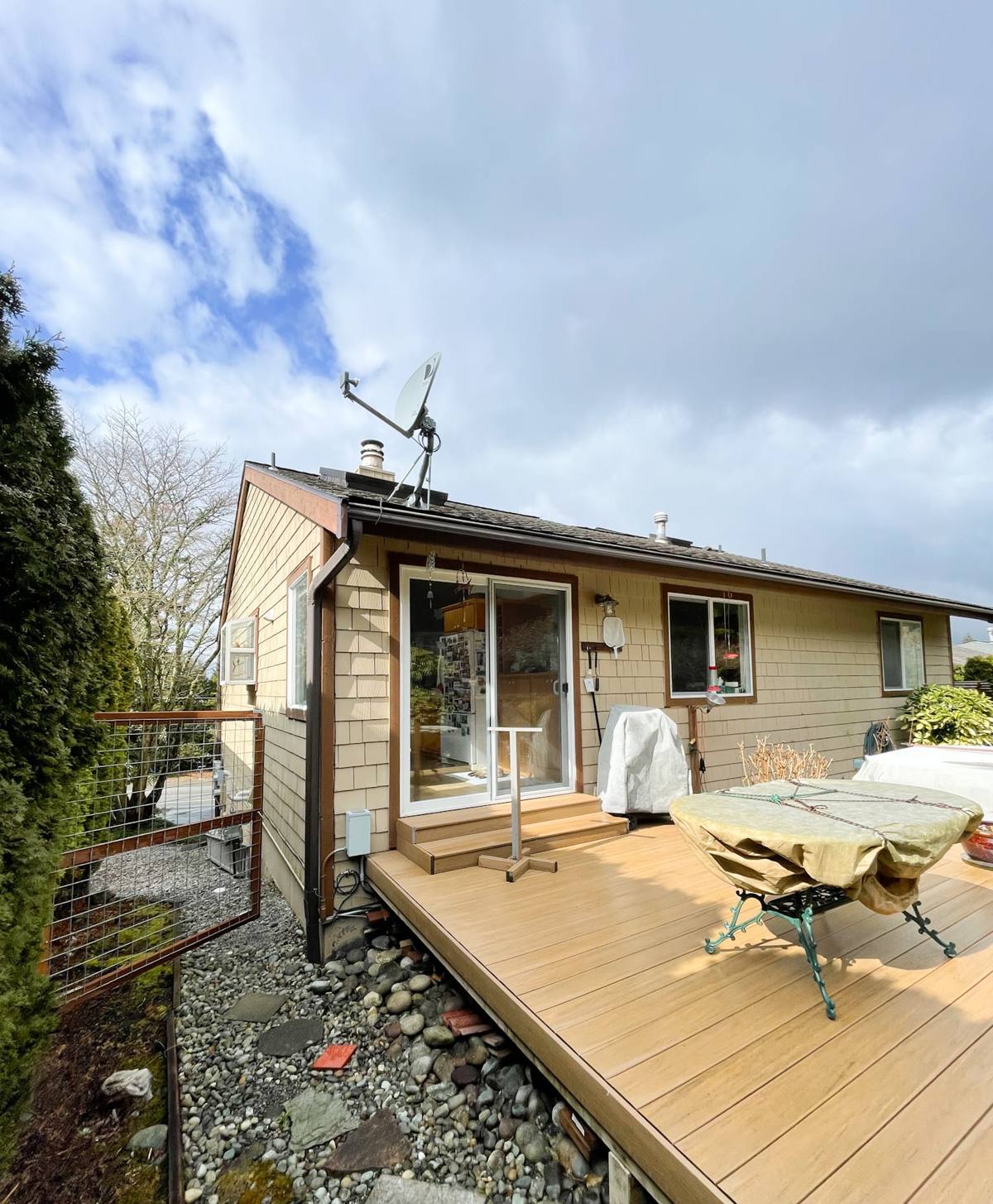
What Correct Fiber Cement Installation Actually Involves
Fiber cement itself is a dense, cement-and-cellulose material that doesn't rot, doesn't feed moss the way wood fiber can, and doesn't expand and contract with humidity the way vinyl and some engineered wood products do. But the material is only half the equation. Most of the siding failures we get called out to inspect in Whatcom County aren't material failures — they're installation failures. Fiber cement is unforgiving of shortcuts in a way that's easy to miss until years later.
The details that matter most in this climate
- A drainage gap behind the siding. A rain-screen gap lets any water that gets past the cladding drain and lets the wall assembly dry from both sides — critical when driving rain is a regular event rather than an occasional storm.
- Correct fastener placement and type. Fasteners that miss framing, are driven too deep, or are the wrong material for a coastal-influenced environment become the first point of failure — either as a leak path or as visible corrosion staining.
- Flashing at every horizontal transition. Window heads, trim boards, roof-to-wall intersections, and butt joints all need flashing detailed to shed water outward, not just caulk relied on to hold it back.
- Manufacturer-specified clearances. Ground clearance, deck and patio clearance, and gaps at roof lines keep the bottom edge of the siding from sitting in standing moisture or getting splash-back during long rain events.
- Factory-finished panels installed to keep that finish intact. Field-cut edges need to be sealed and touched up per spec so the factory finish's warranty protection isn't compromised at every cut line.
None of this is exotic. It's just detail work that takes longer to do right, and it's exactly what gets skipped when a crew is trying to move fast on a bid that was priced too thin.
Why We Install Only James Hardie Fiber Cement
We don't install vinyl, LP SmartSide, cedar, or other fiber cement brands — not because those products can't work anywhere, but because we've standardized on one system we can stand behind fully: James Hardie's HZ5 line, engineered specifically for Pacific Northwest moisture conditions. That means one finish system (ColorPlus factory-applied color), one warranty structure, and one set of installation specs our crews know cold rather than juggling different manufacturer requirements from job to job. For a region where the margin for installation error is small, standardizing on one system we install correctly every time matters more than offering a menu of options.
How siding options compare for a Cordata-area home
| Factor | James Hardie Fiber Cement | Vinyl | Cedar / Primed Wood |
|---|---|---|---|
| Moss & algae resistance | High — dense, non-organic surface | Moderate — can trap moisture behind panels | Low — organic material feeds growth |
| Performance in driving rain | Strong when rain-screen and flashing detail is correct | Prone to water intrusion behind laps in wind-driven rain | Requires diligent maintenance to stay sealed |
| Salt-air durability | Good; factory finish resists fading and chalking | Can become brittle and discolor over time | Finish breaks down faster near coastal air |
| Maintenance burden | Low — occasional wash, repaint not required for factory-finished panels | Low but limited color life and impact resistance | High — regular sealing/painting required |
| Fire resistance | Non-combustible | Combustible | Combustible |
This isn't a claim that other materials always fail — it's the honest trade-off list that led us to put one product on homes rather than several.
Our Process on Cordata Projects
- On-site assessment. We look at existing siding condition, sheathing and framing underneath where accessible, moisture staining patterns, moss/algae buildup, and how the home's exposure (shade, wind direction, roof overhangs) is affecting it.
- Tear-off and substrate check. Old siding comes off in sections so we can inspect the wall sheathing for rot or soft spots before anything new goes up — this is the step that gets skipped on cut-rate jobs and it's the one that causes callbacks years later.
- Weather-resistive barrier and rain-screen installation. A code-compliant water-resistive barrier goes on first, followed by furring or a rain-screen product to create the drainage gap fiber cement performs best behind.
- Flashing at all penetrations and transitions. Windows, doors, roof lines, and any wall-mounted fixtures get flashed before siding closes over them.
- Hardie panel or plank installation to manufacturer spec. Fastener spacing, clearances, and joint treatment follow James Hardie's published installation requirements — not a generalized "how we've always done it" approach.
- Trim, caulking, and touch-up. Cut edges get sealed, trim is fitted tight, and any factory finish touch-up is done with matched product.
- Final walkthrough and cleanup. We walk the exterior with the homeowner before calling the job done, and the site is cleared of debris and old material.
Cost Factors on a Cordata Siding Project
Every home is different, but the line items that actually move a fiber cement project's price are consistent. We won't quote a number without seeing the house, but here's what drives the range:
| Factor | Why It Matters |
|---|---|
| Home size and wall complexity | More square footage and more corners, gables, and dormers mean more cutting and more trim detail |
| Condition of existing sheathing | Rot found during tear-off adds repair scope before new siding can go on |
| Siding profile chosen | Lap plank, panel, and shingle-style Hardie products carry different material and labor costs |
| Trim and accent work | Window trim, fascia, and accent bands add labor time beyond the flat wall area |
| Access and site conditions | Slopes, tight side yards, and multi-story sections affect staging and labor time |
| Color and finish selection | Factory ColorPlus finishes vary slightly in cost by line and color depth |
A practical pre-project checklist for homeowners
- Note any areas of the home with visible moss, algae, or dark streaking — these often point to drainage or sun-exposure issues worth discussing during the estimate
- Check for soft or spongy spots near the bottom of exterior walls, especially near downspouts and grade level
- Look at window and door trim for peeling paint or gaps, a common sign water is getting behind the current siding
- Think through whether gutters, downspouts, or grading also need attention — siding work is a good time to fix drainage issues at the same time
- Decide if you want a color match to existing trim or a full color refresh, since this affects product selection
Moss and Moisture: What Homeowners Can Do Between Services
Even the right siding system benefits from a little homeowner attention in a climate like this one. Keeping tree limbs and shrubs trimmed back from walls improves airflow and sun exposure, which slows moss growth. A gentle exterior wash once a year — low pressure, not a power washer aimed directly at seams — removes surface buildup before it takes hold. Keeping gutters clear during the wet months prevents overflow from running directly down siding faces, which is one of the most common causes of localized staining and premature wear we see on homes throughout Whatcom County.
Why Hiring a Crew That Already Works in Cordata Matters
Siding installation detail requirements don't change from neighborhood to neighborhood, but the judgment calls do. A crew that regularly works in this part of Whatcom County has already seen how local wind direction, tree cover, and rain patterns affect where moss takes hold first, which wall exposures need extra attention to flashing, and how a home's existing drainage setup interacts with new siding. That local pattern recognition doesn't replace following manufacturer spec — it's what tells a crew where to be most careful within that spec. It also means faster response for warranty questions or follow-up work, since we're not driving in from out of the area to take a look.
If you're weighing a siding replacement or repair in Cordata, we're happy to take a look at your home, walk you through what we're seeing, and put together a straightforward, no-pressure estimate — just fill out the form below to get started.