 Sudden Valley
 Why Decks Near Sudden Valley Take a Different Kind of Beating
A deck in Sunnyland doesn't fail the way a deck in a dry climate fails. It doesn't crack from sun exposure or dry out and split. It rots from the inside, corrodes at the fasteners, and grows a slick green coat on every horizontal surface that doesn't drain fast enough. Whatcom County sits close enough to the water that salt-laden air reaches inland further than most homeowners expect, and combined with the long, wet stretch of fall through spring, that air keeps wood and metal damp for months at a time. Add the tree cover common around Sudden Valley and the Lake Whatcom watershed, and you get shade that never quite lets a deck dry between rain events. That's the moss season locals already know about on their roofs — it works the same way on deck boards, especially on the north side of a house or under heavy overhangs.
None of this means a deck can't hold up here. It means the build has to account for moisture from the start, not patch it after the fact with a coat of sealant every spring. The details that matter — flashing, fastener grade, board spacing, drainage under the structure — are mostly invisible once the deck is finished. That's exactly why they're worth getting right the first time.
What a Deck Built for This Climate Needs to Get Right
Moisture Has to Have Somewhere to Go
Every joint, gap, and fastener hole is a place water can sit. A deck designed for driving rain needs consistent board spacing for drainage, a substructure that isn't buried in soil or mulch, and enough clearance underneath for air to actually move. Decks built too low to the ground, or backfilled against the house after construction, are the ones we get called about a few years later — usually for rot at the ledger or soft framing nobody can see until it's already a structural problem.
Shade and Moss Are a Design Input, Not an Afterthought
If a deck sits under mature trees or on the shaded side of the house — common in Sunnyland's more wooded lots — moss and algae aren't a maintenance failure, they're physics. The surface texture of the decking, the gap between boards, and how much direct light the space gets all affect how fast growth returns after a cleaning. We factor that into material and layout recommendations rather than promising a maintenance-free surface that doesn't exist in this climate.
Choosing a Decking Material for Salt Air and a Long Wet Season
There's no universally "best" decking material — there's a best material for a given budget, look, and how much upkeep the homeowner actually wants to do. Here's how the common options hold up specifically against salt air, standing moisture, and moss:
| Material | Moisture Behavior | Maintenance | Typical Lifespan |
|---|---|---|---|
| Pressure-treated fir/hem-fir | Resists rot with proper sealing; end grain and fastener holes are the weak points | Re-seal every 1–2 years; regular moss/algae washdown | 15–20 years with upkeep |
| Cedar | Naturally rot- and insect-resistant, but softer and can gray or streak fast in constant damp | Periodic oil/stain to hold color; still needs cleaning | 15–25 years |
| Composite (capped) | Doesn't absorb moisture like wood; won't rot, but surface algae/moss can still grow in shade | Occasional washdown, no staining or sealing | 25–30+ years |
| PVC | Fully moisture-resistant, best choice for constant shade or ground-level, low-airflow decks | Lowest upkeep of the group | 30+ years |
We'll walk through actual trade-offs on site rather than push one product line. A shaded, low deck near tree cover is a different recommendation than a sunnier, elevated deck on the same street — even within Sunnyland, lot conditions vary enough to change the right answer.
Framing, Fasteners, and Hardware That Won't Corrode
This is where a lot of decks quietly fail years before the surface boards show any wear. Standard zinc-coated screws and joist hangers corrode faster in salt-influenced, high-moisture air, and once a fastener starts rusting, it loses grip strength long before it looks obviously bad. For decks in this part of Whatcom County, we build with stainless steel or hot-dip galvanized fasteners and connectors rated for exterior/coastal exposure — not the cheaper coated hardware that's fine in a dry inland climate but undersized for conditions here.
Framing Lumber and Ventilation
Joists and beams get treated lumber rated for ground contact where they're close to grade, and we keep framing off the soil with proper post bases rather than embedding wood directly. Blocking and joist spacing follow a layout that lets air circulate underneath — a deck framed too tight to the ground, with no cross-ventilation, holds moisture in the structure long after the surface looks dry.
Ledger Board Attachment and Flashing — Where Most Deck Failures Start
If a deck attaches to the house, the ledger board and its flashing are the single most important detail on the entire project. Water that gets behind a poorly flashed ledger doesn't just rot the ledger — it can work its way into the house's rim joist and wall framing, turning a deck problem into a house problem. A correct ledger installation includes:
- Proper flashing that sheds water away from the house, installed over the siding's water-resistive barrier, not just caulked over the top
- Structural lag screws or through-bolts sized and spaced to code — not deck screws, which aren't rated for ledger attachment
- A small gap or flashing detail that keeps the ledger from sitting flush against wet siding
- Sealant used as a backup to flashing, never as the primary water barrier
We inspect existing ledger connections on remodel projects specifically because this detail is so often shortcut, and it's rarely visible without pulling a board or two.
Footings, Drainage, and What's Happening Underneath
A deck is only as stable as what it's sitting on. Whatcom County's frost depth and drainage requirements determine how deep footings need to go, and soil that holds water — common on shaded, lower-lying lots — needs footings sized and placed with that in mind rather than a one-size-fits-all approach. Standing water under a deck accelerates post rot and gives moss and algae a constant moisture source to work with even after the top surface has dried. Where grading allows, we slope the ground under the deck away from the house and, on lower decks, leave enough clearance for airflow rather than boxing the space in completely.
Permits and Guardrail Code Basics
Most raised decks require a building permit through the county or applicable jurisdiction, and inspections typically check footing depth, ledger attachment, and guardrail height and spacing before the project is signed off. Skipping the permit doesn't just risk a fine — it can complicate a home sale later if an unpermitted structure turns up in an inspection. Guardrails on elevated decks generally need to meet minimum height and baluster-spacing requirements to prevent falls, and stair railings have their own graspability and height rules. We handle the permit application and inspection scheduling as part of the build so it isn't left for the homeowner to sort out.
Our Process for a Sunnyland Deck Project
1. Site Visit and Design Conversation
We look at sun exposure, tree cover, grade, and how the deck connects to the house before talking materials. A shaded lot near the lake gets a different drainage and material conversation than an open, sunnier yard a few blocks over.
2. Material and Layout Selection
Based on the site visit, we lay out honest options — wood, composite, or PVC — with real maintenance expectations for each, not a sales pitch toward the highest-margin product.
3. Permitting
We prepare and submit the permit application and schedule the required inspections so the project stays compliant from footings through final walkthrough.
4. Build
Footings, framing, ledger flashing, decking, and railings, in that order, with the hardware and fastener standards described above used throughout — not just on the parts that show.
5. Final Walkthrough
We go over maintenance expectations specific to the material chosen and the site's shade/moisture conditions, so there are no surprises about what upkeep looks like a year or two in.
What Affects the Cost of a Custom Deck
| Factor | Why It Matters |
|---|---|
| Size and shape | More square footage and complex shapes (multi-level, wraparound) increase framing and labor |
| Height off grade | Taller decks need deeper footings, additional bracing, and code-required guardrails |
| Decking material | Wood costs less upfront; composite and PVC cost more initially but less in upkeep over time |
| Ledger vs. freestanding | Ledger-attached decks need house-side flashing work; freestanding decks need more footings |
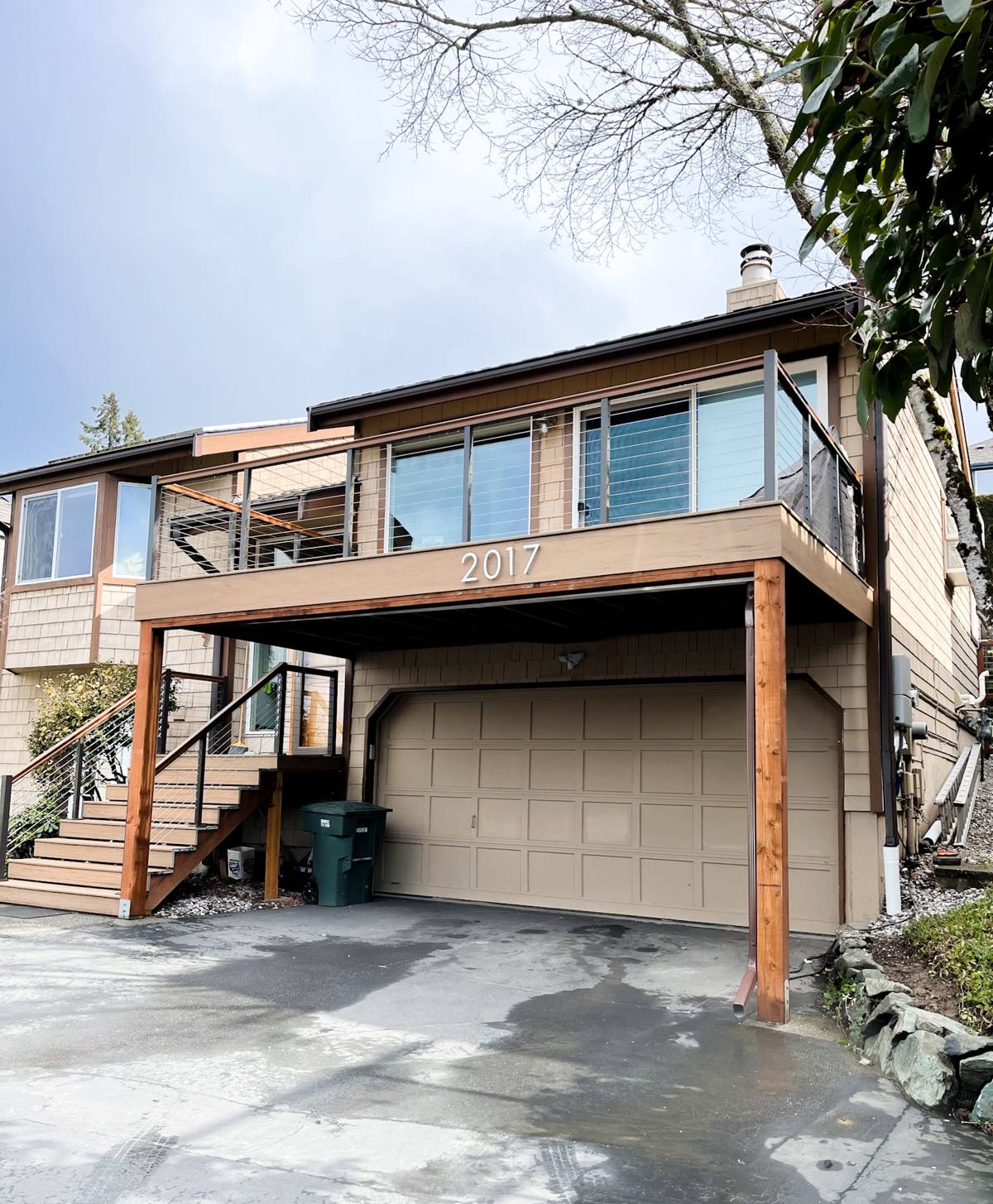
| Railing style | Cable, glass, or custom railing systems cost more than standard baluster railing |
| Site access and grading | Sloped, wooded, or hard-to-access lots common around Sudden Valley add labor time |
We give a written estimate that breaks these factors out so it's clear what's driving the number, rather than a single lump figure.
A Quick Checklist for Evaluating Any Deck Bid
- Does the bid specify stainless or hot-dip galvanized hardware, or just "exterior-rated" fasteners with no grade named?
- Is ledger flashing called out specifically, or lumped into "framing"?
- Are footing depths specified, or left as "per code" with no number?
- Does the contractor mention drainage and ventilation under the deck, or only the visible surface?
- Is the permit included in the bid, and who's responsible for scheduling inspections?
A vague bid on any of these points usually means those details weren't planned for — they'll get decided on the fly, often with the cheaper option.
Why It Matters to Hire a Crew That Already Works Sunnyland
The building code minimums are the same everywhere in the county, but the practical decisions — how much drainage a low deck under trees actually needs, which fastener grade is worth the extra cost given the salt air, how a north-facing deck's moss growth compares to a south-facing one on the same street — come from having built and maintained decks in this specific area, not from a generic checklist. A crew that already works Sunnyland and the surrounding Sudden Valley area has seen which details cause callbacks in this climate and builds past them the first time.
If you're planning a new deck or replacing one that's showing rot, soft spots, or a hardware failure, we're happy to take a look and give you a straightforward, no-pressure estimate — just fill out the form below.