 Sudden Valley
 Building New in Ferndale? The Window Package Deserves Its Own Plan
Ferndale sits close enough to Bellingham Bay and the Strait of Georgia that new construction here has to answer to a different set of conditions than a build twenty miles inland. Salt-laden air, wind-driven rain off the water, and a moss season that can stretch from October into May all put stress on a home's window openings before the family ever moves in. New-construction windows aren't just "install and trim out" — they're one of the most failure-prone details in the entire building envelope if the flashing, sequencing, and hardware choices aren't matched to this climate.
We install new-construction windows for builders and homeowners throughout the Ferndale area as part of our siding and exterior envelope work. This page covers what that job actually requires here, what separates a correct install from a problem waiting to surface, and how we run the process.
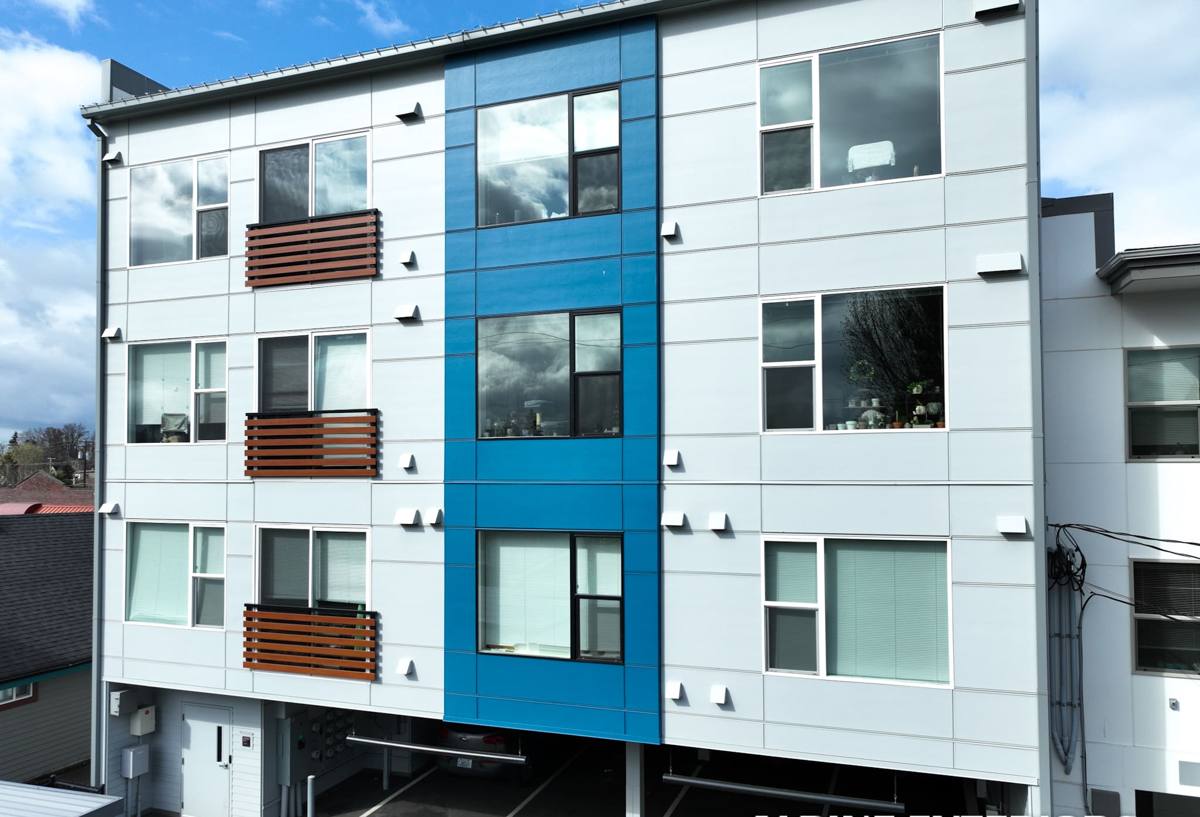
What Ferndale's Climate Demands From a Window Opening
Salt Air and Hardware Corrosion
Homes within a few miles of the water pick up airborne salt that settles on window hardware, cladding fasteners, and metal flashing. Over years, uncoated or lower-grade fasteners and hinges can corrode faster than they would twenty miles inland. This doesn't mean every window needs marine-grade everything — it means the fastener and flashing choices at time of install should account for where the lot sits relative to the water, not just follow a generic spec sheet.
Wind-Driven Rain and Flashing
Whatcom County gets a lot of rain, but the bigger issue for windows is wind-driven rain that hits the wall assembly at an angle instead of falling straight down. That kind of exposure will find any gap in a sill pan, any missed strip of flashing tape, or any sealant joint that wasn't tooled correctly. A window that would perform fine in a low-wind, low-rain climate can leak here within a season or two if the flashing detail was rushed.
Moss and Moisture Cycling
A long wet season followed by warmer, humid stretches creates ideal conditions for moss and algae growth on north-facing and shaded elevations. Around windows specifically, that translates into more moisture sitting against trim and sealant joints for more of the year. Wood-adjacent components that stay damp longer are more prone to rot if the drainage path behind the window isn't built correctly from day one.
New-Construction Windows vs. Replacement: Why the Sequence Matters
New-construction windows have a nail fin (or flange) that gets integrated directly into the water-resistive barrier (WRB) and flashing system before the siding goes on. This is different from a replacement or retrofit window, which gets set into an existing opening after the exterior is already finished. On a new build, we get one clean shot at doing the flashing correctly — there's no old siding to work around, but there's also no room for skipping a step, because everything gets covered up once the siding closes the wall.
That's why window installation on new construction is really a sequencing problem as much as a carpentry one. The order of operations — WRB first, then sill pan, then window, then jamb and head flashing, then siding — has to happen in the right order and be inspected before it's hidden. Get the sequence wrong and the mistake doesn't show up until there's a leak, sometimes years later.
What a Correct Install Actually Involves
Flashing and Water Management
Every new-construction window opening needs a sloped sill pan so any water that gets past the window has somewhere to go besides the framing. Jamb flashing and head flashing (with a drip cap) need to overlap in the right order — always shingle-style, so water sheds down and out, never into a seam. On a wall exposed to wind-driven rain, we pay particular attention to the head flashing detail, since that's the piece doing the most work when rain is hitting the wall sideways.
Energy Code and Glass Packages
Washington's energy code sets minimum performance requirements for window U-factor and solar heat gain, and Whatcom County's climate zone means the glass package matters for comfort as much as compliance. We help builders and homeowners pick glass and frame combinations that meet code without over-spending on performance the house doesn't need, and we flag when a specific elevation (a lot of west or south glass, for example) might justify upgrading beyond the minimum.
Fasteners and Sealants
We use fasteners and sealants rated for exterior, marine-influenced exposure rather than defaulting to whatever's cheapest at the supply house. The sealant at the nail fin and trim joints has to stay flexible through our wet-to-dry seasonal swings — a sealant that skins over but goes brittle in three years is a callback waiting to happen, not a finished job.
Choosing a Frame Material for a Ferndale Build
Frame material is a real decision here, not just a budget line. Salt air, sustained moisture exposure, and UV all factor in differently depending on what the frame is made of.
| Frame Material | Corrosion / Salt-Air Resistance | Maintenance | Typical Cost Position |
|---|---|---|---|
| Vinyl | Good — no metal hardware exposed to corrode | Low; occasional cleaning | Lower |
| Fiberglass | Very good; stable in wet/dry cycling | Low | Mid to higher |
| Aluminum-clad wood | Good exterior protection if clad seams stay sealed | Moderate; interior wood finish upkeep | Higher |
| Bare aluminum | Weaker; more prone to pitting and corrosion near salt air over time | Moderate to higher | Lower to mid |
We don't push one material as universally "best" — a vinyl window installed correctly with proper flashing will outperform a premium frame installed poorly. But for lots with direct water exposure or heavy wind-driven rain, we do steer builders away from bare aluminum frames and toward vinyl or fiberglass, mainly because of long-term hardware corrosion and the maintenance burden that comes with it, not because aluminum windows are inherently defective.
Our Process for New-Construction Window Installation
- Plan review and site walk. We review the window schedule against the framing plan and walk the lot to note its exposure — how close to the water, how much wind-driven rain the elevations will see, and where moss and shade will be a factor.
- Product and glass selection. We help the builder or homeowner match frame material and glass package to the lot's exposure and Washington's energy code requirements.
- WRB and flashing sequencing. We install the water-resistive barrier, sill pans, and flashing in the correct shingle-lap order before the window ever goes in the opening.
- Window installation. Windows are set plumb, level, and square, fastened per manufacturer spec, and sealed with exterior-rated sealant at the fin and trim.
- Siding tie-in. Because we also install the siding, we control the transition between window trim and cladding directly, instead of handing off between separate crews who may not communicate on the flashing detail.
- Final check before close-in. We inspect flashing and sealant work before it's covered — this is the point where a mistake is cheap to fix and after which it isn't.
What Drives the Cost of a New-Construction Window Package
| Cost Factor | Why It Matters |
|---|---|
| Number and size of openings | More and larger windows mean more units, more flashing linear footage, and more labor hours |
| Frame material | Vinyl, fiberglass, and clad-wood carry different unit costs and different long-term maintenance profiles |
| Glass package | Meeting or exceeding Washington energy code requirements affects per-unit pricing |
| Flashing complexity | Bay windows, odd angles, and high-exposure elevations take more time to detail correctly than a standard rectangular opening |
| Story height and access | Second-story and vaulted openings require more scaffolding or lift time |
| Coordination with other trades | Tight sequencing with framers and siding crews can reduce total labor versus multiple separate mobilizations |
We give builders and homeowners a written scope so it's clear what's driving the number, rather than a single lump figure with no explanation behind it.
A Practical Checklist Before Windows Go In
- Confirm the WRB is installed and lapped correctly before any window flashing begins
- Confirm sill pans are sloped to drain outward, not flat or sloped inward
- Confirm head flashing includes a drip cap and laps over the jamb flashing, not under it
- Confirm fastener and sealant products are rated for exterior, marine-influenced exposure
- Confirm the glass package meets Washington's current energy code for the home's climate zone
- Confirm someone inspects flashing before the siding crew closes up the wall
- Confirm whoever installs the windows and whoever installs the siding are coordinating the trim detail, not guessing at each other's work
Why a Crew That Already Works Ferndale Matters
A lot of what separates a good window install from a callback-prone one isn't the product — it's judgment calls made on site, and those calls are better informed by local experience. A crew that already works Whatcom County lots knows which elevations on a given street tend to catch the worst of the wind-driven rain, which lots stay shaded and damp enough to need extra attention to moss and drainage, and which flashing tapes and sealants actually hold up through a full wet season here rather than just on a spec sheet. We also work regularly with local builders and are familiar with the inspection expectations in this area, which keeps a new-construction schedule moving instead of stalling on a flashing detail that needs to be redone.
Because we install both the windows and the siding, there's no gap between trades where a flashing detail gets missed because each crew assumed the other one handled it. One crew, one point of accountability for the whole envelope around each opening.
If you're planning a new build in Ferndale or elsewhere in Whatcom County, we're glad to walk the plans and the lot with you and put together a straightforward, no-pressure estimate for the window package — just fill out the form below.