 Sudden Valley
 Why Metal Roofing Performs Differently in Geneva's Climate
Geneva sits in a part of Whatcom County where the weather works against a roof year-round, not just during the occasional big storm. Moisture-laden marine air drifts in and settles under the tree cover around this end of Lake Whatcom, driving rain comes in sideways during winter fronts, and shade from mature conifers keeps roof surfaces damp long after a storm has passed. That combination is hard on asphalt shingles, which is a big part of why more homeowners in this area are asking about metal roofing before their current roof fails rather than after.
A correctly installed metal roof handles all three of those stresses better than most roofing materials, but only if the installation actually accounts for them. A metal roof put on the way it would be in a dry, inland climate will underperform here. The differences that matter are in the underlayment, the fastener hardware, the flashing details, and the coating system — not just the metal itself.
Moss and Organic Debris Under the Tree Canopy
Homes shaded by evergreens hold moisture longer, and moss doesn't need much of a foothold to start growing in valleys, around penetrations, or in any spot where debris collects. On asphalt shingles, moss lifts the mat and traps water against it. On a properly installed metal roof, moss has a much harder time gaining purchase because the surface sheds water quickly and doesn't have the granular texture organic matter can grip — but debris still needs a clear path off the roof, which is a design and maintenance issue as much as it is a material one.
Driving Rain and Wind-Driven Water
Winter storms here don't just drop rain straight down — wind pushes it sideways and up under laps, flashing edges, and fastener heads. A metal roof's resistance to that kind of intrusion comes almost entirely from installation detail: panel overlap, sealant placement, and how flashing is integrated at valleys, walls, and roof-to-wall transitions. The metal itself is close to waterproof; the seams and penetrations are where a roof actually succeeds or fails.
Salt-Laden Marine Air and Metal Fasteners
Proximity to the Sound means salt content in the air is higher here than it is further inland in Whatcom County, and that accelerates corrosion on unprotected steel fasteners, cut panel edges, and lower-grade coatings. It's a slow process, but it's a real one, and it shows up first at fasteners and cut edges long before the panel field itself shows any wear. Material selection and edge treatment matter more here than they would fifty miles inland.
What Correct Metal Roof Installation Requires Here
A metal roof is a system, not a single product. Every layer under the visible panel does specific work, and skipping or shortcutting a layer is where most of the metal roof problems we get called out to inspect actually started.
Underlayment and Ice-and-Water Protection
Synthetic underlayment rated for the higher temperatures metal panels reach in direct sun is the baseline. In valleys, at eaves, around chimneys and skylights, and anywhere water can pool or back up, self-adhered ice-and-water membrane goes down first. Given how much rain this area sees over a winter, that isn't an upgrade — it's the layer that keeps a wind-driven leak from turning into a rotted deck.
Fastener Selection and Panel Attachment
Exposed-fastener panels rely on a rubber-gasketed screw driven through the panel face; concealed-fastener standing seam panels clip to the deck and have no face penetrations at all. Given the salt exposure in this area, we match fasteners and clips to the coating system on the panel — mixing incompatible metals at the fastener is a fast way to start galvanic corrosion, which shows up as staining and eventually a failed seal years before the panel itself would have worn out.
Flashing, Valleys, and Penetrations
Valleys, wall transitions, and anything that punches through the roof plane — vents, chimneys, skylights — are where leaks actually start on a roof that's otherwise sound. Custom-bent flashing formed to match the panel profile, correct overlap direction, and sealant appropriate for both the metal and the climate matter more than the brand of panel installed. This is also where installation experience shows the most; a flashing detail that looks fine on a dry day can fail the first time wind drives rain up and under it.
Ventilation and Condensation Control
Metal conducts temperature differently than asphalt, and in a climate with this much humidity and cool, damp air, poor attic ventilation shows up as condensation on the underside of the deck rather than as an obvious exterior leak. We check existing ridge, soffit, and gable ventilation as part of every inspection and either confirm it's adequate or recommend correcting it before panels go on — installing a new roof over inadequate ventilation just moves the moisture problem out of sight instead of solving it.
Choosing a Metal Roofing System for a Geneva Property
Not every metal roofing product fits every roof, budget, or maintenance expectation. Here's how the common options compare for a home in this climate:
| Panel Type | Fastening | Typical Lifespan | Best Fit |
|---|---|---|---|
| Standing seam | Concealed clips, no face penetrations | 40-60+ years | Steep or complex rooflines, long-term owners, homes under heavy tree cover |
| Exposed-fastener panel | Screws through panel face, gasketed | 25-40 years | Simpler rooflines, garages and shops, tighter budgets |
| Stone-coated steel or metal shingle | Concealed or clipped, shingle-style profile | 30-50 years | Homeowners who want a traditional shingle look with metal's durability |
For most homes in this area, we lean toward standing seam or metal shingle systems specifically because they have few or no exposed fasteners for salt air to work on over time. Exposed-fastener panels remain a legitimate, lower-cost option for outbuildings, shops, and simpler roof shapes, but the gaskets on the screws are a maintenance item — they harden with age and need periodic attention, which matters more here than it would in a drier climate.
Coatings and Finish
The steel or aluminum substrate is only half of what determines how a metal roof holds up here. The factory-applied paint system is what actually faces the sun, salt air, and rain for the next several decades, and there's a real difference between coating grades. PVDF-based finishes (often sold under trade names like Kynar 500) resist chalking, fading, and coating breakdown noticeably better over time than lower-cost polyester or SMP finishes, particularly in a coastal-influenced climate where UV and salt exposure work against a coating together. We default to PVDF-class finishes on standing seam work in this area for that reason — it costs more up front, and repainting or refinishing a metal roof later is not a simple job, so getting the coating right the first time matters.
Panel Gauge
Panel gauge, or thickness, is the other spec worth understanding. A heavier gauge resists oil-canning — the wavy, rippled look that can develop in flat panel areas — and resists debris impact better than a thinner one. We spec gauge based on panel width and roof exposure rather than defaulting to the thinnest option available, since a roof that looks wavy from day one is a workmanship and material decision, not something that corrects itself with age.
Cost Factors Worth Understanding Before You Get a Quote
Metal roofing costs more upfront than asphalt shingles, and the range on any given house depends on more than just square footage. Rather than throw out a number that won't mean much without seeing the roof, here's what actually moves the price:
| Factor | Why It Matters |
|---|---|
| Panel type | Standing seam costs more installed than exposed-fastener panel, largely due to labor and specialized tooling |
| Roof complexity | Valleys, dormers, and multiple roof planes add flashing work and labor time regardless of panel type |
| Tear-off vs. overlay | Removing the existing roof down to the deck costs more than overlaying in the rare cases overlay is appropriate, but it lets us inspect and correct the deck first |
| Deck condition | Rot or damage found under old roofing during tear-off adds cost but has to be addressed for the new roof to perform as expected |
| Access and pitch | Steep pitches and limited ground access change staging and safety requirements, which affects labor time |
A metal roof is a long-term investment measured in decades, not years, and the lifetime cost — factoring in that most homeowners never repaint or reroof again — is where it makes the most sense. We walk every roof and provide a written estimate based on what we actually find on your specific property, not a phone-quote guess.
Our Process, Start to Finish
- On-site inspection. We walk the roof, check deck condition where accessible, and look at ventilation, flashing points, and tree exposure specific to the property.
- Written estimate. You get a clear scope and price before any work starts — no verbal-only quotes.
- Tear-off and deck check. Old roofing comes off, and we inspect the deck for rot or soft spots before anything new goes down.
- Underlayment and ice-and-water membrane. Installed per manufacturer spec and reinforced at valleys, eaves, and penetrations.
- Panel installation. Panels go down with fasteners or clips matched to the coating system, working systematically across the roof plane.
- Flashing and trim. Custom-formed flashing at every valley, wall transition, and penetration — this is where most of the installation time and skill actually goes.
- Final walkthrough. We go over the finished roof with you, address anything that needs adjustment, and explain what maintenance, if any, the specific system needs going forward.
Maintenance That Actually Extends the Life of a Metal Roof Here
Metal roofing needs far less maintenance than asphalt shingles, but low-maintenance doesn't mean no-maintenance, especially with heavy tree cover and marine air in the mix. A short routine covers most of what matters:
- Clear needles, leaves, and debris from valleys and around penetrations before they break down in place and hold moisture against the panel
- Check gutters and downspouts for the same debris — a metal roof sheds water fast, and clogged gutters back that water up under the eave edge
- Look for developing rust streaks at fasteners, cut edges, or flashing seams, which usually means a coating has been compromised and should be addressed early
- Confirm sealant at penetrations and flashing laps hasn't cracked or pulled away, particularly after a hard freeze
- Trim back branches that overhang the roof to reduce both debris load and physical abrasion on the panel finish
How Metal Roofing and Siding Work Together on the Same House
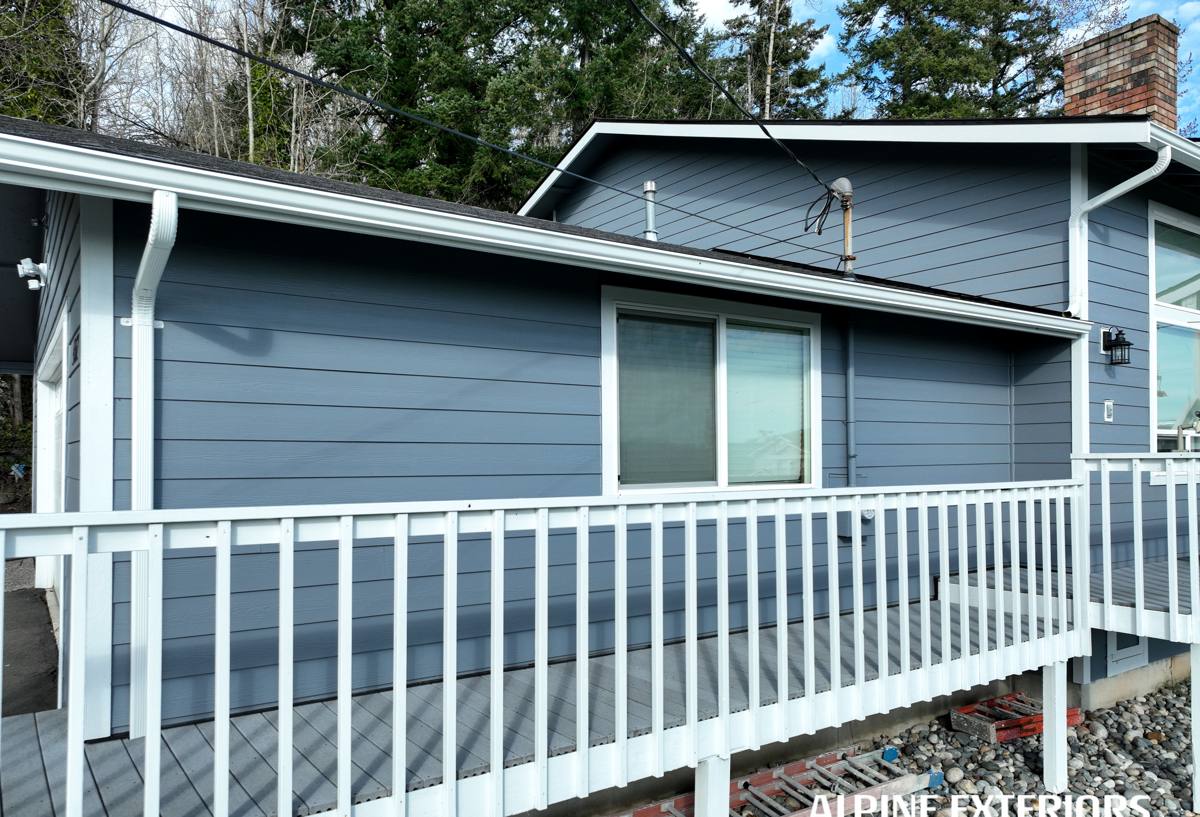
As a siding contractor, we look at a roof and its water management as part of the same system as the walls below it, not as an unrelated project. Roof edge flashing, drip edges, and the spots where a roof meets siding at walls and dormers are exactly where water intrusion problems on the wall side usually trace back to a roof detail, not a siding defect. A metal roof with well-formed kick-out flashing at roof-to-wall intersections protects the siding and trim below it from years of concentrated water runoff that a poorly detailed transition would otherwise dump straight down the wall.
This is one of the practical advantages of hiring a contractor who handles both trades: the roof and the siding aren't treated as two unrelated projects quoted by two separate companies that never talk to each other about how water actually moves off the house.
Why Hiring a Crew That Already Works Geneva Matters
A metal roof installed correctly for a drier or less shaded climate can still fail here — not because the product was wrong, but because the details that matter in Whatcom County's rain, moss, and salt air weren't accounted for. A crew that regularly works this specific area already knows which valleys hold moisture longest, how much tree debris a given roofline tends to collect, and where wind-driven rain tends to find the weak point in a flashing detail. That kind of pattern recognition is hard to get from a crew that mostly works somewhere drier, or from a one-time metal roofing subcontractor who isn't the one you call back in five years.
It also matters for accountability. When the same company installs the roof and handles the siding, trim, and water management around it, there's one point of contact if something needs attention later — not a finger-pointing exercise between separate contractors over whose work actually failed.
If you're weighing a metal roof for a home in Geneva or elsewhere around Sudden Valley, we're glad to walk the roof, look at what the tree cover and exposure are actually doing to it, and put together a straightforward, no-pressure estimate using the form below — no obligation, just an honest look at what your roof needs.