 Sudden Valley
 James Hardie Siding, Done Right, for Cordata
Cordata is one of the neighborhoods we get called into regularly, and it's not a coincidence. Homes here span a wide range of ages and construction styles, which means we see everything from original siding well past its service life to a previous re-side that was never detailed correctly the first time. What we install on every one of those jobs is the same: James Hardie fiber cement siding. We don't offer vinyl, LP SmartSide, Cemplank, Allura, primed spruce, or cedar as alternatives, and this page explains what that means specifically for a Cordata home rather than repeating generic siding advice that could apply anywhere.
This is a local service page, not a company overview. If you're comparing siding options for a home in Cordata, the goal here is to walk through what the local climate actually does to an exterior wall, what a correct James Hardie installation involves, and how our process works from first visit to final walkthrough.
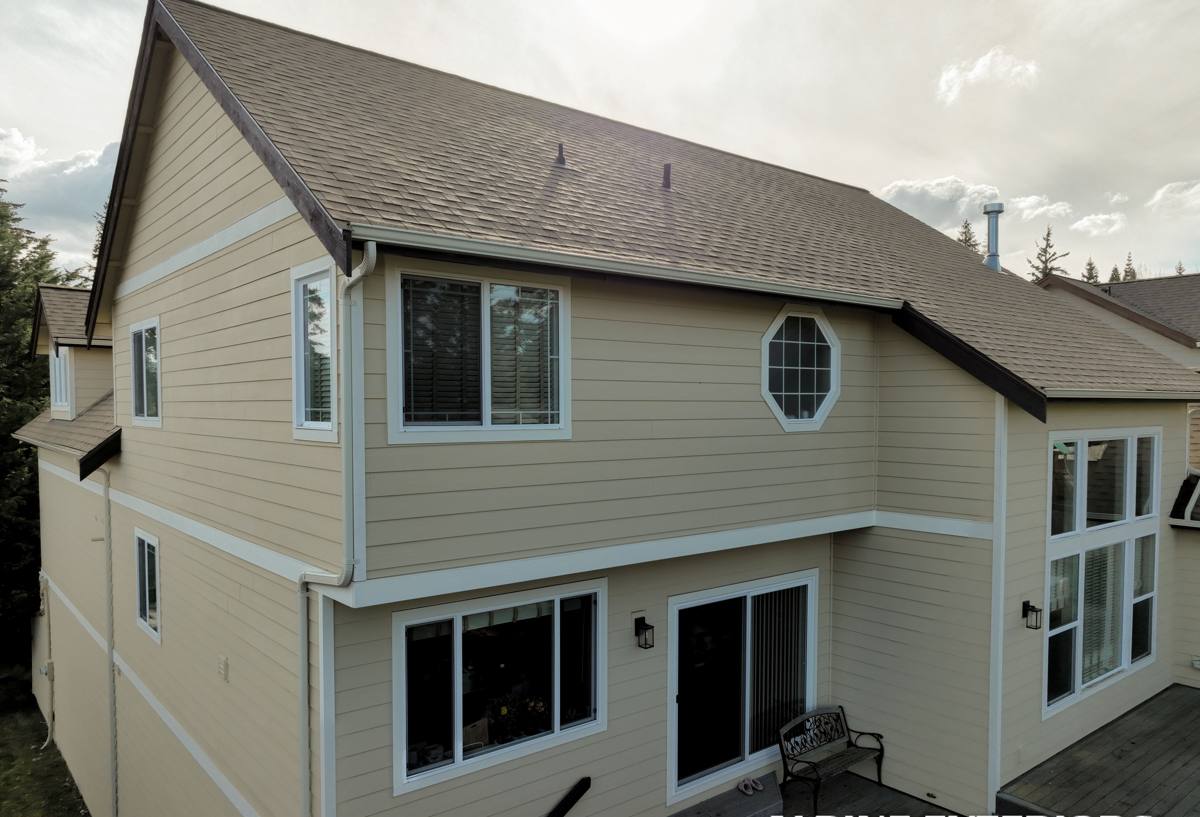
What Cordata's Climate Actually Does to Siding
Whatcom County's marine climate doesn't hit every neighborhood the same way, but the three factors that matter most for siding longevity — salt-laden air, wind-driven rain, and a long moss season — are present across the county, and Cordata homes deal with all three over the life of a siding job.
Salt Air
Even at a distance from the water, salt-laden air moving in off the Sound is part of the regional exposure most Whatcom County homes live with. Salt accelerates the breakdown of site-applied paint finishes and speeds up corrosion on fasteners, flashing, and trim hardware. It's a slow effect — you won't see it after one season — but over ten or fifteen years it's a real factor in why some siding finishes chalk, fade, and fail earlier here than the same product would in a drier inland climate.
Driving Rain
Rain in this region rarely falls straight down for long. Wind pushes it sideways into lap joints, under trim, and into any seam where flashing or caulking isn't detailed correctly. That's a tougher, more sustained test on an exterior wall than a simple annual rainfall number suggests, and it's the reason water management details — not just the siding material itself — end up mattering as much as anything on a Cordata job.
A Long Moss Season
Mild temperatures combined with steady moisture keep moss and mildew active across most of the calendar year in this part of Whatcom County. Shaded elevations and lots with mature trees see it worst, but it shows up on open lots too, just more slowly. Moss and organic growth on a siding surface trap moisture against the wall behind it, which is where a lot of long-term siding problems actually start — not from the rain itself, but from what sits on the surface holding moisture in place after the rain has passed.
Why Fiber Cement, and Why James Hardie Specifically
Fiber cement as a category — a cured blend of Portland cement, sand, and cellulose fiber — is the right direction for this climate because it's inorganic. It doesn't have a wood-based or petroleum-based core that can absorb water and swell, rot, or feed insects, and it's non-combustible. We standardized on James Hardie within that category for three specific reasons that matter on a Cordata home:
- Climate-engineered HZ product lines. Hardie builds its HZ5 formulation for regions with sustained moisture exposure and freeze-thaw cycling, which fits Whatcom County's winters better than a product engineered primarily for hot, dry markets.
- Factory-applied ColorPlus finish. Instead of paint applied on-site, the finish is baked on in multiple coats under controlled factory conditions before the boards ever reach the property, and it's backed by its own finish warranty separate from the substrate warranty.
- Installer network and warranty support in this region. Hardie's presence and support infrastructure in the Pacific Northwest is deeper than most of the other fiber cement brands, which matters when a warranty question comes up years down the road.
We're not going to pretend every other product on the market is unusable — vinyl, engineered wood, and cedar all have legitimate uses elsewhere. Our decision not to install them here comes down to maintenance burden and moisture behavior in this specific climate: a wood-based or vinyl exterior asks a homeowner to stay ahead of sealing, painting, or seam maintenance in a climate that doesn't give a wall many dry stretches to work with. We'd rather install one system we can fully stand behind than offer a cheaper option that quietly shifts long-term upkeep back onto the homeowner.
What a Correct Installation Involves
James Hardie's reputation depends heavily on installation quality, and we're upfront that a rushed or out-of-spec install can undercut even the best siding material. These are the details we hold every Cordata job to:
| Installation Detail | Why It Matters on a Cordata Home |
|---|---|
| Manufacturer-specified clearances from grade, roofline, and decks | Keeps splash-back and standing moisture off the board edge through a wet, rainy season |
| Correct fastener type, spacing, and depth | Prevents cracking and keeps the water-resistive barrier behind the siding intact |
| Flashing at every window, door, and penetration | Directs wind-driven rain away from seams instead of letting it collect there |
| Factory-cut edges used wherever possible; field cuts sealed to spec | Preserves the factory finish's protection at every exposed edge |
| Drainage plane or rain screen behind the siding | Lets moisture that gets past the surface drain and dry instead of sitting against the sheathing |
None of these are optional upgrades. They're the baseline James Hardie's own installation instructions call for, and they're also the conditions its product warranty is written against — an out-of-spec install can leave a homeowner with a denied warranty claim even when the siding material itself wasn't the problem.
How We Approach a Cordata Job
Every project starts the same way: an on-site look at the existing siding and, as best we can tell before tear-off, the condition of the sheathing underneath it. From there we put together a written scope that names the specific Hardie products, colors, and trim details for the job, along with a realistic timeline that accounts for Whatcom County's wet stretches. During the install, we photograph flashing and moisture-barrier work before it gets covered by siding boards, so there's a record of what's actually behind the wall rather than just a finished exterior to look at. At the end of the job, you get the manufacturer's warranty paperwork and our own workmanship warranty in writing, not a verbal assurance.
What This Looks Like in Practice
- Site visit and honest assessment of the current exterior, wall by wall
- Written estimate naming products, colors, and scope before any contract is signed
- Tear-off and inspection of sheathing, with any rot or damage flagged before new siding goes up
- Installation to James Hardie's published spec, including clearances, fastening, and flashing
- Photo documentation of flashing and drainage detailing before it's covered
- Manufacturer and workmanship warranty documentation provided at completion
Why a Crew That Already Works Cordata Matters
A siding crew that treats every job as a first encounter with a neighborhood tends to miss the details that only show up after working a handful of homes in the same area. In a neighborhood with a real mix of home ages and construction eras, that means recognizing older siding assemblies that need extra sheathing repair versus newer builds where the main issue is a maintenance-heavy original material reaching the end of its useful life. It also means having a realistic sense of how Whatcom County's wet season affects scheduling, so a homeowner isn't left with a half-finished exterior exposed to a stretch of driving rain.
Familiarity with a specific area doesn't replace a proper site assessment — every home still gets evaluated on its own conditions — but it does mean fewer surprises once the old siding comes off.
Comparing Exterior Materials for This Climate
| Material | Moisture Behavior | Maintenance Over Time | Typical Longevity Here |
|---|---|---|---|
| James Hardie fiber cement | Inorganic core; doesn't swell or rot | Low; factory finish resists fading and chalking | 30+ years with correct install |
| Vinyl siding | Non-absorbent, but seams and J-channels aren't sealed and can let wind-driven rain behind panels | Low upfront; can warp or fade under sustained UV and temperature swings | Variable; shorter under wind exposure |
| LP SmartSide / engineered wood | Wood-fiber core is moisture-sensitive at cut edges and fastener penetrations | Moderate to high; edge sealing has to hold up for decades | Depends heavily on install quality and upkeep |
| Cedar / primed wood | Absorbs and releases moisture readily | High; needs a consistent paint or stain schedule | Shorter without regular maintenance |
What to Ask Before Hiring Anyone for Siding Work in Cordata
- Ask what siding material they're proposing and why it fits this specific climate, not just what's cheapest to install
- Confirm current Washington contractor licensing and active liability insurance
- Ask whether the installer is manufacturer-certified for the product they're quoting
- Ask what the warranty actually covers, whether it's prorated, and whether it transfers to a future owner if you sell
- Get a written scope naming specific products and colors before signing anything
Warranty and What It Actually Covers
James Hardie backs its siding with a transferable, non-prorated limited product warranty, and the ColorPlus finish carries a separate warranty covering color retention. Transferability is worth understanding upfront: if the home sells before the warranty period ends, that coverage generally moves to the next owner, which is a real point of value in a market where buyers increasingly ask about exterior condition and remaining service life. Both warranties are conditioned on installation following Hardie's published instructions, which is the core reason installation quality and product choice aren't separate conversations — they're the same conversation.
If you're weighing siding options for a home in Cordata, we're glad to walk the exterior with you, point out what we actually see, and give a straight answer about what we'd recommend and why. Use the form below to schedule a free, no-pressure estimate.