 Sudden Valley
 Lake Whatcom Roofs Work Harder Than Most
A roof over a Sudden Valley or Lake Whatcom property earns its keep. These homes sit under heavy tree canopy, close to open water, and squarely in the path of the wet weather systems that move through Whatcom County most of the year. That combination — shade, moisture, and near-constant humidity off the lake — creates conditions that are genuinely tougher on a roof than a typical inland neighborhood a few miles away in Bellingham or Ferndale.
Add in the driving, wind-blown rain that comes off the Salish Sea and the salt-tinged marine air that reaches this corner of the county, and you've got a roof system that's dealing with moisture from above, moisture from the trees, and moisture carried on the wind. A new roof here isn't just about picking a shingle color. It's about building an assembly that can shed water fast, resist moss and organic growth for years instead of months, and keep breathing so trapped humidity doesn't rot the deck from underneath.
The Moss Problem Specifically
Moss isn't cosmetic here — it's structural risk. On a shaded, north-facing slope near the lake, moss spores land, the surface stays damp for days after a storm, and within a couple of seasons you've got moss lifting shingle edges and holding water against the roof deck. Left alone, that moisture migrates under the shingles, works into fasteners, and eventually into the sheathing. A correctly installed roof in this area accounts for that from day one, rather than treating moss as a maintenance problem to deal with later.
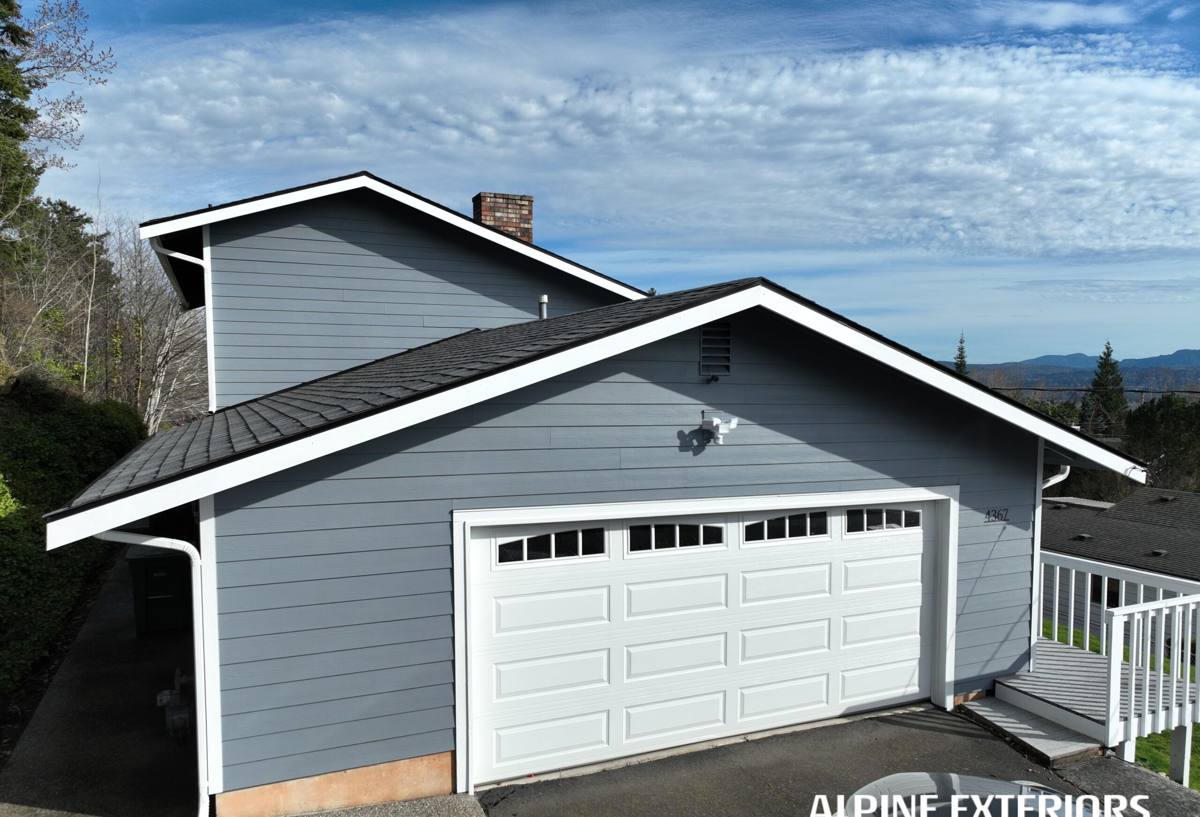
What a Correct New Roof Installation Actually Involves
"New roof" covers a lot of ground, and the difference between a roof that lasts 15 years and one that lasts 30 usually comes down to what's happening below the surface, not the shingle itself. A correct installation for this climate includes:
- Full tear-off to bare deck (not an overlay) so the sheathing can actually be inspected and any soft or water-stained boards replaced
- Ice-and-water shield membrane at eaves, valleys, and around every penetration, not just the code minimum
- A synthetic underlayment rated for extended UV and moisture exposure over the full field of the roof
- New flashing at every chimney, wall intersection, skylight, and valley — reused flashing is a common shortcut that fails early here
- Balanced intake and exhaust ventilation, sized to the actual attic, not guessed at
- Fastening pattern and nail placement that matches the manufacturer's wind and warranty specifications
- Drip edge and starter strip detailing that gets the first few inches of water management right, since that's where most leaks originate
Skip any one of these and the roof may still look fine from the ground for a couple of years. The problems that show up in a wet, shaded, lake-adjacent climate tend to be slow ones — a soft spot in the decking, a slowly rotting fascia board, moss creeping under a poorly lapped shingle — and by the time they're visible, the fix is bigger than it needed to be.
Ventilation and Moisture Control: The Part Most Roofs Get Wrong
An attic that can't breathe traps warm, moist air against the underside of the roof deck. In a climate this humid, that trapped moisture condenses, and condensation rots wood just as effectively as a leak does — sometimes faster, because it's happening from the inside where nobody's looking. Proper ventilation needs a clear path for air to enter low (soffit vents) and exit high (ridge vent), with nothing blocking that path — insulation stuffed into the soffit, for instance, is a common culprit we find on tear-offs.
For homes tucked into heavy tree cover around the lake, we also pay close attention to how much shade a slope gets and how long it stays wet after a storm. That informs both the ventilation plan and, in some cases, the material recommendation for that particular slope.
Roofing Material Options for This Climate
There's no single "best" roofing material for Lake Whatcom — the right choice depends on the home's exposure, the roof's pitch and shade pattern, and what the homeowner wants to maintain over time. Here's an honest comparison of the systems we install most often in this area:
| Material | Moss & Moisture Resistance | Typical Lifespan | Maintenance | Notes for This Area |
|---|---|---|---|---|
| Architectural asphalt shingle | Good, especially algae-resistant granule lines | 25–30 years | Periodic moss treatment on shaded slopes | Best all-around value; wide color range |
| Standing seam metal | Excellent — sheds water and resists moss growth on steeper slopes | 40–50+ years | Low | Higher upfront cost; performs well under heavy tree drip and rain |
| Cedar shake | Requires active upkeep in constant shade | 20–30 years with maintenance | High — regular treatment and inspection | Traditional look, but a real ongoing commitment on lake-facing, shaded slopes |
| Synthetic/composite shake | Very good — engineered to resist moisture absorption | 40–50 years | Low to moderate | Gives the shake look without the moisture upkeep of real wood |
We'll walk through which of these makes sense for your specific roof rather than defaulting to one product for every home — a sun-exposed lake-view slope and a shaded back slope on the same house can sometimes call for different answers.
Signs Your Roof Needs Replacing, Not Just Repairing
Not every roof problem calls for full replacement, but in this climate, certain signs mean the underlying system has been compromised and patching won't hold for long:
- Moss or dark algae staining that returns within months of cleaning
- Granule loss showing as bald or shiny patches on the shingle surface
- Shingles curling, cupping, or lifting at the edges, especially on shaded slopes
- Soft or spongy spots when walking the roof, or sagging visible from the ground
- Daylight, water stains, or damp insulation visible in the attic
- A history of repeated repairs to the same area over the past few years
- A roof approaching or past 20–25 years old, regardless of appearance
- Rusted or lifted flashing around chimneys, vents, or valleys
If more than one or two of these apply, a roofing contractor should be evaluating the whole system, not just patching the spot that's currently leaking.
Our New Roof Installation Process
- Inspection and attic check — we look at the roof surface, the deck condition where visible, and the attic's ventilation and moisture signs before recommending anything.
- Written scope and material walkthrough — you get a clear, itemized plan and see material options side by side before committing to anything.
- Tear-off and deck inspection — full removal down to the sheathing, with any damaged boards replaced and documented, not covered over.
- Ice-and-water shield and underlayment — installed to the full extent this climate calls for, not just the minimum.
- Flashing, drip edge, and starter course — all new, properly lapped and sealed at every transition point.
- Field installation — shingles, panels, or shakes installed to manufacturer fastening specs, with ridge and hip detailing finished last.
- Cleanup and magnetic nail sweep — the property, driveway, and surrounding yard are cleared before we consider the job done.
- Final walkthrough and paperwork — we go over the finished roof together and hand over warranty documentation.
What Affects the Cost of a New Roof Here
| Cost Factor | Why It Matters in This Area |
|---|---|
| Roof size and pitch | Steeper slopes on lake-view homes take longer and require more safety setup |
| Number of existing layers | Tear-off of multiple old layers adds labor and disposal cost |
| Deck repair needed | Moisture-related soft spots, common under moss buildup, add material and time |
| Material choice | Asphalt, metal, and shake systems carry different material and labor costs |
| Ventilation upgrades | Adding proper intake/exhaust venting where none exists is often necessary but not always original to the quote |
| Access and tree cover | Wooded Sudden Valley lots sometimes need extra care or limb clearance to work safely and haul debris |
We give a written, itemized estimate before any work starts, so you know exactly what's driving the number rather than a single lump-sum figure.
Why It Matters That We Already Work in Lake Whatcom and Sudden Valley
Roofing in this specific pocket of Whatcom County comes with details a crew from outside the area often has to learn the hard way. Many Sudden Valley properties fall under a community association with its own exterior guidelines, so we're used to working within that process rather than treating it as a surprise mid-project. Narrow, tree-lined access roads and steep driveways around the lake affect how we stage material delivery and debris removal. And because we're already familiar with how long this area stays wet after a storm system passes through, we plan install windows around actual drying conditions instead of the calendar.
That local familiarity also shows up in smaller ways: knowing which slopes around the lake hold shade longest, which older Sudden Valley roofs tend to share the same original ventilation shortfalls, and how to sequence a tear-off so an open roof deck isn't sitting exposed if the weather turns. None of that replaces a sound installation — but it's the difference between a crew executing a generic process and one that's accounted for the specifics of this address.
If you're weighing a new roof for a home on or near Lake Whatcom, we're glad to come take a look and walk you through what we'd actually recommend for your roof — no pressure, no obligation. The estimate form below is the easiest way to get that conversation started.