 Sudden Valley
 Why Fairhaven Roofs Face a Different Set of Problems
Fairhaven sits close enough to the water that salt-laden air is a constant, not an occasional weather event. Combine that with the driving, wind-pushed rain that comes off Bellingham Bay and the long, wet moss season that Whatcom County is known for, and you've got a roofing environment that's harder on materials than most inland neighborhoods ever see. A roof that performs fine in a drier part of the county can fail early here simply because it wasn't specified or installed for these conditions.
Metal roofing, done correctly, holds up well against all three of those stresses — but "done correctly" is doing a lot of work in that sentence. The metal itself is rarely the weak point. Fastener choice, underlayment, flashing details, and panel coatings are where salt-air and moisture problems actually start.
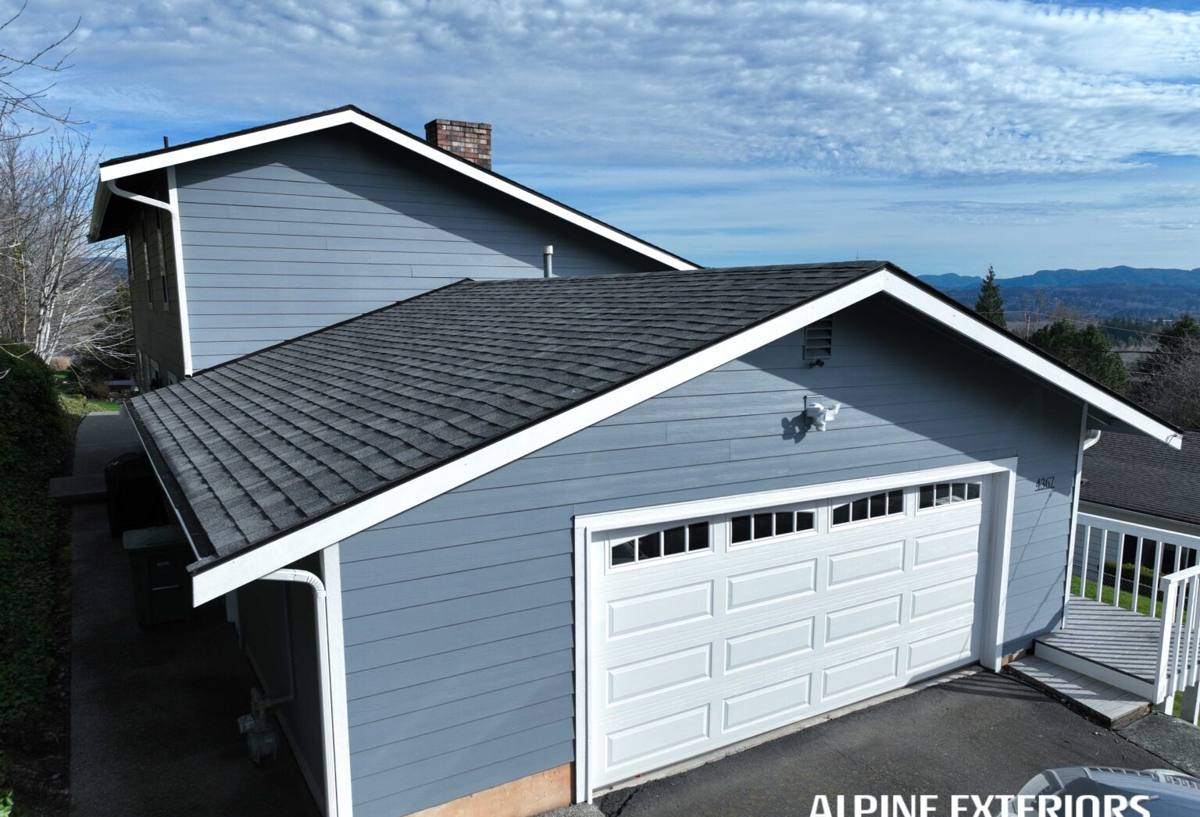
What Salt Air, Driving Rain, and Moss Actually Do to a Roof
Salt air and corrosion
Airborne salt accelerates corrosion on any exposed metal — fasteners, flashing, panel edges, and cut ends. On a roof close to the water, an untreated or poorly matched fastener can start showing rust streaks within a few years, long before the panels themselves show any wear. The fix isn't complicated, but it does mean not cutting corners on hardware.
Driving rain and wind-driven water
Wind off the bay doesn't just drop rain straight down — it pushes it sideways and up under laps, ridge caps, and flashing that would be fine in calmer weather. That means seam design and underlayment matter more here than in sheltered inland lots. A roof detailed for "normal" rain can still leak in a Fairhaven storm if the laps and flashing weren't built with wind-driven water in mind.
Moss and constant moisture
Whatcom County's wet season runs long, and shaded, north-facing, or tree-covered sections of a roof stay damp for extended stretches. On asphalt shingles that means moss roots into the granules and holds moisture against the mat. Metal roofing doesn't give moss the same foothold — there's no organic material for it to grip — but debris, needles, and leaf litter can still pile up in valleys and behind chimneys, holding moisture against the panel and its fasteners if the roof isn't cleaned periodically.
Why Metal Roofing Is a Strong Fit Here
- Sheds water fast — steep-profile metal panels move driving rain off quickly instead of letting it pool or wick under laps.
- No organic surface for moss to colonize — reduces (doesn't eliminate) moss and algae issues compared to shingles.
- Long service life — a correctly installed and coated metal roof is built to outlast several shingle roofs, which matters when you're weighing cost against how long it needs to perform in this climate.
- Coating options built for coastal exposure — factory finishes are available specifically rated for salt-air environments, which is a meaningful spec difference for a Fairhaven property versus a roof going up further inland.
None of that means metal roofing is maintenance-free or bulletproof against every issue. It means the material's natural properties line up well with the specific stresses this neighborhood puts on a roof — provided the installation respects those same stresses.
What a Correct Metal Roof Installation Looks Like Here
Underlayment
In a driving-rain environment, we don't treat underlayment as an afterthought. A high-quality synthetic or self-adhered underlayment gives the roof a second line of defense if wind-driven water ever gets past the panel laps — which it can, in a real coastal storm, no matter how good the metal is.
Fasteners and hardware
This is the single most common corner cut on metal roofs near salt water. Fasteners, clips, and flashing hardware need to be rated for coastal/corrosive exposure, not just the standard-grade hardware that's fine 20 miles inland. Mismatched or under-spec fasteners are the most common cause of early rust staining and leaks on an otherwise sound metal roof.
Flashing and penetrations
Chimneys, vents, skylights, and wall-to-roof transitions are where nearly every roof leak actually originates — metal or not. Flashing needs to be formed and lapped to shed wind-driven rain, not just gravity-fed rain, which means extra attention at every penetration and valley.
Panel seams and laps
Depending on the panel system, seam design (standing seam vs. exposed-fastener) affects how well the roof resists wind-driven water intrusion. We'll walk you through which system makes sense for your roof's exposure, pitch, and budget rather than defaulting to one product for every job.
Ventilation
A metal roof still needs a properly ventilated attic or roof assembly underneath it. Trapped moisture under the deck causes rot and mold regardless of what's on top — good ventilation is part of a correct metal roof job, not a separate concern.
Panel and Coating Options: What Actually Matters for This Location
| Factor | Why it matters in Fairhaven |
|---|---|
| Coating/finish rating | Look for finishes specifically rated for coastal or marine exposure; standard inland-grade coatings can chalk or corrode faster near salt air |
| Panel profile (standing seam vs. exposed fastener) | Standing seam has fewer exposed penetrations, which reduces long-term risk of wind-driven water intrusion |
| Fastener/hardware grade | Stainless or coated fasteners rated for corrosive environments last longer than standard-grade hardware |
| Underlayment type | Self-adhered or high-temp synthetic underlayment adds a backup barrier against driving rain |
| Gauge/thickness | Heavier gauge panels resist denting and hold their seams better over decades of wind and weather cycling |
Our Process for a Fairhaven Metal Roofing Project
- On-site assessment — we look at your roof's exposure, pitch, existing deck condition, ventilation, and any trouble spots (valleys, chimneys, tree cover) before recommending anything.
- Honest scope and options — we'll walk through panel and coating choices that fit your home, your budget, and this specific location, including trade-offs, not just the highest-margin option.
- Deck and ventilation check — if the existing deck or attic ventilation needs attention before a metal roof goes on, we flag it up front rather than finding it mid-install.
- Underlayment and flashing installed to coastal standards — this is where most of the long-term performance is decided, and it's not a step we compress to save time.
- Panel installation — installed to manufacturer spec with fastener and hardware grades appropriate for salt-air exposure.
- Final walkthrough — we go over what maintenance (if any) the roof needs going forward, including debris clearing in valleys and around penetrations.
Maintenance: What a Metal Roof Still Needs
"Low maintenance" doesn't mean "no maintenance," especially this close to the water. A short annual or semi-annual check keeps small issues from becoming expensive ones.
- Clear leaves, needles, and debris from valleys and around chimneys or vents — trapped debris holds moisture against the panel and fasteners.
- Check fastener heads and flashing for early rust or lifting, especially after a rough winter storm season.
- Rinse off accumulated salt spray periodically if your home is in a particularly exposed spot.
- Confirm gutters and downspouts are clear so water actually leaves the roof instead of backing up at the eaves.
- Have any tree limbs overhanging the roof trimmed back to reduce debris and reduce impact/scratch risk.
Why Local Experience with Fairhaven Roofs Matters
A roofing crew that hasn't worked near the water regularly can under-spec hardware, skip the extra flashing detail a wind-driven storm demands, or simply not think about moss and debris accumulation the way a crew working Whatcom County day in and day out does. That's not a knock on skill — it's a knock on familiarity. Coastal Pacific Northwest roofing has its own set of failure points, and they show up years later, after the crew that installed it is long gone.
We work on homes throughout Sudden Valley and the surrounding Whatcom County area, including Fairhaven, and we spec every metal roof for the conditions it will actually face — not a generic inland install. That means the right fasteners, the right underlayment, and flashing details built around driving rain and salt exposure from the start.
What This Typically Costs
Metal roofing costs more upfront than asphalt shingles, and the exact number depends on panel type, roof complexity, pitch, and how much of the existing roof (deck, flashing, ventilation) needs work before installation. Rather than throw out a number that won't match your actual roof, we'll give you a real, itemized estimate after seeing the roof in person — including the coastal-grade hardware and underlayment upgrades that matter for this location.
Questions to Ask Before You Hire Anyone for This Job
- What fastener and hardware grade do you use, and is it rated for coastal/salt-air exposure?
- What underlayment do you install underneath the panels?
- How do you detail flashing around chimneys, valleys, and wall transitions for wind-driven rain?
- Will you check attic/roof ventilation before installing, not just the panels themselves?
- What warranty covers the panels versus the installation labor, and who do you call if something leaks in year six?
If you're weighing a metal roof for a Fairhaven home, we're happy to take a look and give you a straightforward, no-pressure estimate — just fill out the form below and we'll get back to you.