 Sudden Valley
 Why Siding Installation Is Different in Sunnyland
Homes in and around Sunnyland sit in one of the more demanding exposure zones in Whatcom County. You've got moisture moving in off the water, wind-driven rain that doesn't just fall straight down but gets pushed sideways into wall assemblies, and a long stretch of the year — often eight months or more — where surfaces stay damp enough for moss and algae to take hold and never really dry out between rain events. Siding here isn't just a cosmetic layer. It's the first line of defense against a climate that's actively working to get water behind the cladding and into the wall.
That's why "siding installation" as a generic service doesn't really describe what needs to happen on a Sunnyland home. The product, the flashing details, the water-resistive barrier, and the fastening schedule all need to be chosen and executed with this specific exposure in mind — not the exposure a manual assumes for a dry inland climate.
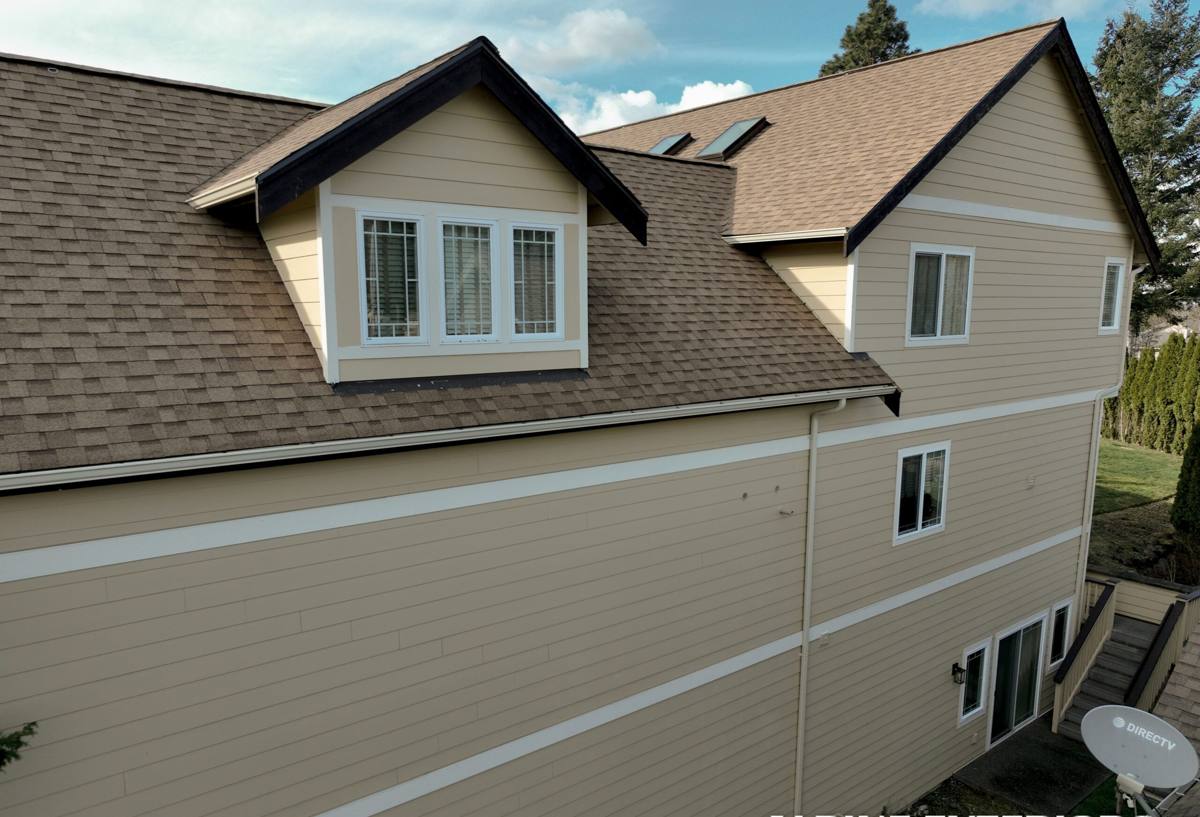
What Salt Air, Driving Rain, and Moss Season Actually Do
Salt Air
Proximity to salt water accelerates corrosion of fasteners, flashing, and trim. Cheap or mismatched metal components pit and stain years before the siding field itself shows any wear, and once flashing corrodes, water finds a path behind the cladding even if the siding panels themselves look fine.
Driving Rain
Wind-driven rain doesn't respect a lap siding profile the way still rain does. It gets forced upward and sideways at butt joints, corner boards, and penetrations — windows, hose bibs, light fixtures. Every one of those is a place where an installer either did the flashing and sealant detail correctly or didn't, and the difference doesn't show up for a year or two.
Moss Season
Extended damp periods feed moss and algae growth on north-facing and shaded walls, on soffits, and anywhere airflow is restricted. Moss holds moisture against the siding surface far longer than open air would, which matters most for products that swell, delaminate, or absorb water when their factory coating is compromised.
What a Correct Siding Installation Involves
A siding job that's actually built for this climate — not just installed to pass a quick visual inspection — includes several layers most homeowners never see once the job is done:
- Water-resistive barrier: A continuous, properly lapped weather barrier behind the siding, integrated with window and door flashing so water is directed out, not trapped in.
- Flashing at every penetration: Head flashing over windows and doors, kick-out flashing where roof lines meet walls, and step flashing done correctly rather than caulked over as a shortcut.
- Correct clearances: Siding held up off decks, patios, and grade by the manufacturer's minimum clearance so splash-back and standing moisture don't sit against the bottom edge.
- Fastener spec: Corrosion-resistant fasteners, driven at the manufacturer's specified pattern and depth — not overdriven, which crushes the material and creates a wick point.
- Caulking discipline: Sealant only where the manufacturer calls for it, with the right joints left open to drain rather than sealed shut and trapping water inside.
Skip or rush any one of these and the siding can look correct for a while — sometimes several years — before the underlying assembly starts failing from the inside out. That lag is exactly why sloppy installations are so common: the mistake doesn't announce itself until it's expensive.
Our Process for a Sunnyland Installation
- On-site assessment: We look at your home's specific exposure — which walls face prevailing wind and rain, where moss is already established, where old flashing or trim shows corrosion — before recommending anything.
- Tear-off and inspection of the wall assembly: Once old siding is off, we inspect sheathing and framing for hidden moisture damage. This is often the first real look anyone's had at the wall in decades.
- Barrier and flashing work: New water-resistive barrier, corrected flashing details, and any sheathing repair happen before a single piece of new siding goes up.
- Installation to manufacturer spec: Panels, fasteners, and joints installed per James Hardie's published installation instructions — not a generalized approach borrowed from a different product.
- Final inspection and walkthrough: We check clearances, caulk lines, and trim details before calling the job done, and walk the property with you so you know what was done and why.
Why We Install Only James Hardie Fiber Cement
We standardized on James Hardie for every siding installation we do, including in Sunnyland, for reasons specific to this climate. Fiber cement doesn't absorb and swell the way wood-based products can, it doesn't provide the same food source for moss and mildew that some organic substrates do, and it's non-combustible. The ColorPlus factory finish is baked on under controlled conditions, which holds up better against the freeze-thaw and constant damp-dry cycling of a marine climate than a field-applied coat.
| Factor | James Hardie Fiber Cement | Vinyl | Wood / Engineered Wood |
|---|---|---|---|
| Moisture behavior | Dimensionally stable, doesn't swell or rot | Doesn't rot but can warp; traps moisture behind panels if installed loose | Absorbs moisture; prone to swelling and rot if coating fails |
| Moss/algae resistance | Factory finish resists staining; surface doesn't feed growth | Resists moisture but surface texture can hold algae film | Organic substrate is a food source once coating wears |
| Combustibility | Non-combustible | Combustible, can deform in heat | Combustible |
| Finish longevity | Factory-baked ColorPlus finish, long repaint interval | Color molded through material, can fade/chalk | Field-applied paint/stain, shorter repaint cycle |
| Installation sensitivity | Moderate — must follow HardieZone specs precisely | Low — forgiving of minor errors | Moderate to high — coating and joint details matter |
We don't install LP SmartSide, vinyl, Cemplank, Allura, primed spruce, or cedar. Each of those has legitimate uses elsewhere, but for the exposure profile we see in Whatcom County — salt air, sustained wind-driven rain, and long damp stretches — we've made Hardie our standard because it holds up with fewer callbacks and less homeowner maintenance over the life of the siding.
What It Costs and What Drives the Price
Every home is different, but the factors below are what actually move the number on a Sunnyland siding job:
| Cost Factor | Why It Matters |
|---|---|
| Wall assembly condition | Hidden rot or sheathing damage found at tear-off adds repair work before new siding can go on |
| Home size and wall complexity | More corners, dormers, and penetrations mean more flashing detail and labor time |
| Siding profile and color | Lap width, shingle-style panels, and ColorPlus color selections vary in material cost |
| Trim and accessory scope | Corner boards, fascia, soffit work done alongside siding adds to the total but avoids a second mobilization |
| Access and site conditions | Slopes, tight lot lines, and existing landscaping affect staging and labor |
We give a written, itemized estimate after the on-site assessment — not a phone-quote guess — because the wall condition and exposure specifics genuinely change the scope.
Signs Your Current Siding Needs Attention
- Persistent moss or dark streaking that comes back within weeks of cleaning
- Soft or spongy spots when you press on the siding, especially near the bottom courses
- Paint or finish peeling in patches rather than fading evenly
- Visible gaps, warping, or separation at corner boards and trim
- Rust streaks running down from fasteners or flashing
- Interior signs — musty smell, peeling interior paint, or soft drywall near exterior walls
Any one of these on its own might be minor. Several together, especially on walls facing prevailing weather, usually mean the wall assembly behind the siding has been taking on moisture for a while.
Why a Crew That Already Works in Sunnyland Matters
A siding crew that regularly works Whatcom County knows which walls on a given lot take the worst of the wind-driven rain before they even climb a ladder, understands how long moss season really runs here versus a manufacturer's generic install guidance, and has already seen what happens to fasteners and flashing left unprotected against salt-laden air. That local pattern recognition shows up in small decisions — where to add extra flashing, which walls need tighter clearance checks, how aggressively to detail a corner — that a crew unfamiliar with this specific coastal exposure might not think to make.
If your Sunnyland-area home needs new siding, or you're not sure whether what's on the walls now is doing its job, we're glad to come take a look. The estimate is free, there's no pressure, and you'll get a straight answer about what your home actually needs — fill out the form below to get started.