 Sudden Valley
 Siding Replacement in Columbia: What the Climate Actually Demands
Homes in the Columbia area near Sudden Valley sit in one of the more punishing climates a siding product can face in western Washington. It isn't extreme heat or hard freezes that wear a house down out here — it's the steady combination of salt-laden air, driving rain that comes in sideways during winter storms, and a moss season that can stretch for months at a time. None of those factors alone is dramatic. Together, over ten or fifteen years, they're exactly what breaks down a siding system that wasn't built for them.
Salt air accelerates corrosion on fasteners and metal flashing. Driving rain finds every gap in a wall assembly that wasn't detailed correctly the first time. And moss doesn't just look bad — it holds moisture against the siding surface for weeks, which is where rot, paint failure, and substrate damage actually start. A siding replacement done right in this area has to account for all three, not just swap old boards for new ones in the same pattern.
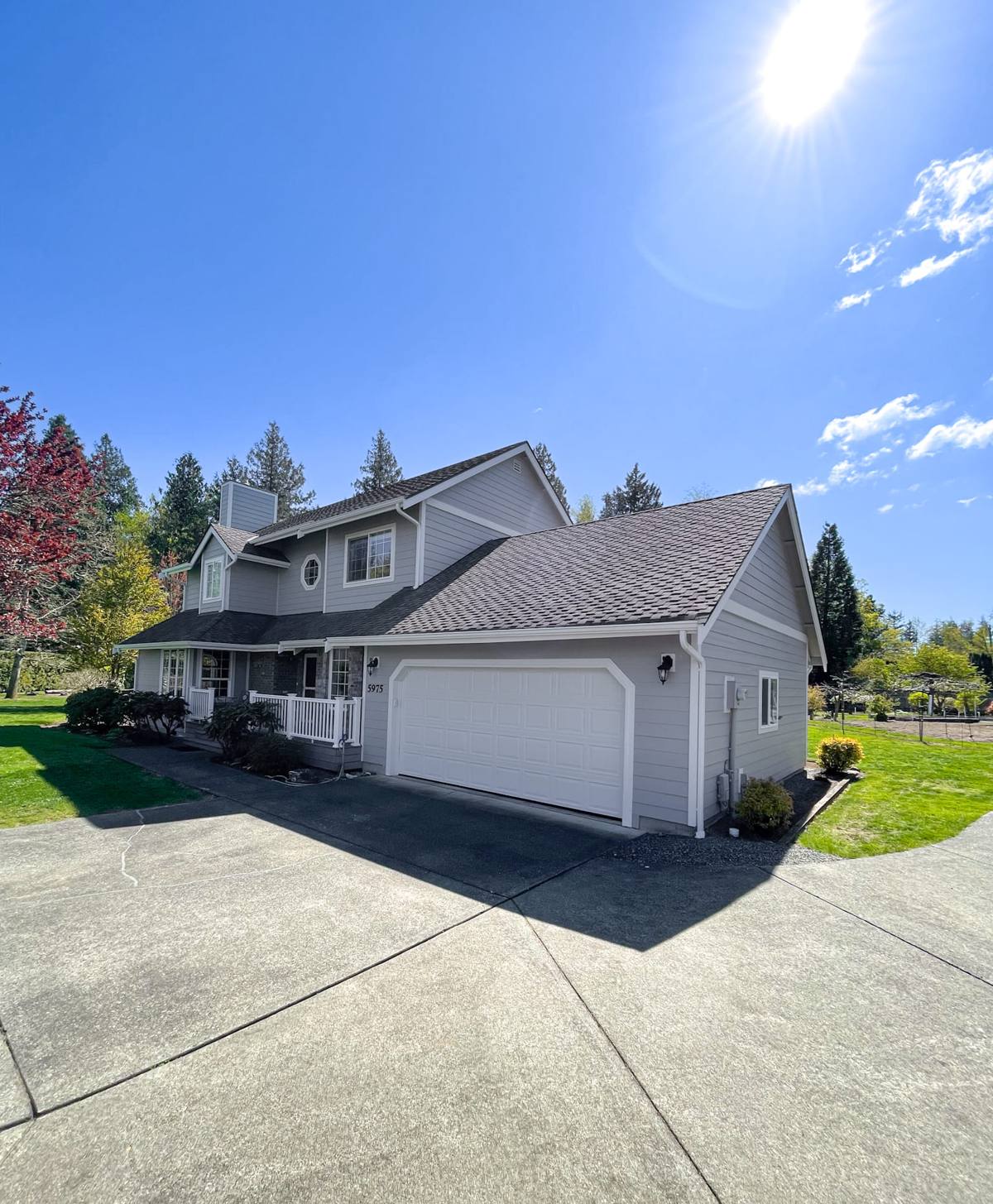
Signs a Columbia Home Needs Full Replacement, Not Another Repair
Plenty of siding problems can be patched. But there's a point where patching stops making financial sense, and pushing past it usually means paying for the same repair twice. Here's what tends to separate a repair situation from a replacement one:
- Soft or spongy spots when you press on the siding, especially near the bottom courses or below windows
- Paint that keeps failing in the same spots within a year or two of repainting
- Visible warping, bowing, or delamination across multiple boards, not just one or two
- Persistent moss or algae staining that comes back within a season of cleaning
- Gaps opening up at butt joints, trim, or corners that weren't there a few years ago
- Rot found at one location during an inspection, which is often a sign of the same problem elsewhere on the wall
If you're seeing two or more of these, it's worth having someone look at the sheathing underneath before committing to another round of caulk-and-paint repairs. Moisture damage on siding is rarely limited to what you can see from the outside.
What a Correct Siding Replacement Job Actually Involves
Tear-Off and Sheathing Inspection
Replacement starts with full removal of the old siding, not installation over the top of it. That's the only way to actually see the wall — the sheathing, the old water-resistive barrier, and any rot or staining that's been hiding behind the old material. In a climate this wet, skipping this step is how a new siding job ends up covering an existing moisture problem instead of fixing it. Any damaged sheathing gets cut out and replaced before anything new goes up.
Water-Resistive Barrier and Flashing
This is the part of the job that determines whether a house stays dry for the next 30 years or starts showing water stains in year six. A correctly lapped water-resistive barrier, properly integrated flashing at every window, door, and roofline intersection, and correct kick-out flashing where rooflines meet walls are what actually keep driving rain out of a wall assembly. The siding itself is the last line of defense, not the first — most water intrusion problems trace back to flashing details that were rushed or skipped.
Fastening, Clearances, and Caulking
James Hardie fiber cement has specific fastening requirements — correct nail type, spacing, and depth matter for both performance and warranty coverage. Proper clearance between the bottom of the siding and grade, decks, or roof surfaces keeps splash-back and standing moisture away from the material. And caulking gets used at the right joints, not as a substitute for proper flashing everywhere else. Every one of these details is more consequential in an area with heavy rain and prolonged damp conditions than it would be in a drier climate.
Why This Crew Installs Only James Hardie Fiber Cement
We don't install vinyl, LP SmartSide, Cemplank, Allura, primed spruce, or cedar. That's a deliberate standard, not a lack of options. Vinyl can warp and fade in strong sun and doesn't hold up structurally the way fiber cement does over decades. Wood-based and engineered wood products carry ongoing maintenance and moisture-sensitivity concerns that are hard to justify in a climate that stays wet for months at a stretch. Cedar looks great new but demands a maintenance schedule most homeowners don't keep up with, and once it falls behind, the damage compounds.
James Hardie fiber cement is non-combustible, holds paint and color far longer than wood-based alternatives thanks to the factory-applied ColorPlus finish, and Hardie engineers specific product lines — including HZ5 — for regions that see this kind of sustained moisture exposure. It's also backed by a strong transferable warranty when installed to manufacturer spec, which matters if you sell the house before the siding's functional life is up. We standardized on it because, installed correctly, it's the product that holds up best against exactly the conditions Whatcom County throws at a house.
Our Siding Replacement Process for Columbia Homeowners
- On-site assessment — we walk the exterior, check for soft spots and moisture signs, and look at trim, flashing, and roofline intersections, not just the siding surface
- Scope and material selection — we go over Hardie product lines, profiles, and colors that fit the home and the site conditions
- Tear-off and sheathing repair — old siding comes off, damaged sheathing gets replaced, and the wall gets a proper look before anything new goes up
- Water-resistive barrier and flashing installation — this step gets done to spec, not rushed to hit a schedule
- Siding installation — correct fastening, clearances, and joint treatment throughout
- Final walkthrough — we go over the finished job with you before calling it done
Siding Replacement Cost Factors for Columbia Homes
Every home is different, and we don't publish blanket prices because the honest number depends on what's actually going on with your walls. But these are the factors that most often move a project's cost up or down:
| Factor | Why It Matters |
|---|---|
| Home size and wall complexity | More corners, gables, and roof-wall intersections mean more flashing detail and labor time |
| Condition of the sheathing underneath | Rot found during tear-off adds material and labor that can't be scoped until the old siding is off |
| Siding profile and product line | Lap width, texture, and whether the project calls for standard or HZ5-engineered Hardie products affect material cost |
| Trim and accent work | Custom trim details and color changes at bands or gables add labor beyond a straightforward re-side |
| Site access | Steep lots, limited driveway access, or tight setbacks near neighboring homes can slow staging and increase labor time |
| Color and finish selection | Factory-applied ColorPlus finishes vary in cost by color and come with different touch-up requirements |
The only way to get real numbers is a walk-through of your specific house, which is why we start every project with an on-site look rather than a phone quote.
Questions to Ask Before Hiring a Siding Contractor in Columbia
Not every contractor who works in Whatcom County actually understands what this climate does to a wall assembly over time. Before you hire anyone, it's worth asking:
- Do you remove the old siding down to the sheathing, or install over it?
- How do you handle flashing at windows, rooflines, and other wall penetrations?
- Are you a certified installer for the siding product you're proposing?
- What does your warranty cover, and is it transferable if I sell the home?
- Can you show me examples of similar work you've done in this region?
- What happens if you find rot or moisture damage once the old siding is off?
A contractor who answers these clearly and specifically, without hedging, is usually one who's done this enough times to know exactly what they're walking into.
Why a Crew That Already Works in Columbia Matters
Siding installation isn't identical everywhere. A crew that's worked homes throughout the Sudden Valley and greater Whatcom County area already knows how the salt air, rain patterns, and moss growth in this region behave against a wall over time — which means they're not guessing at flashing details or fastening schedules, they're applying what they've already seen hold up and what they've seen fail. That local track record matters more than a generic sales pitch, because the failure points in this climate are specific and repeatable if you know what to look for.
Caring for Your New Siding After Installation
James Hardie siding installed correctly is low-maintenance, but "low" isn't "none," especially in a climate prone to moss and sustained damp. A yearly rinse to keep moss and algae from establishing on north-facing or shaded walls, keeping gutters clear so overflow doesn't run down the siding face, and a periodic check of caulking at trim and penetrations will keep the system performing the way it's designed to. None of this is heavy upkeep — it's the difference between a siding job that looks and performs the same in year fifteen as it did in year one, and one that starts showing problems early because small issues went unaddressed.
If you're weighing a siding replacement for a home in the Columbia area near Sudden Valley, we're glad to come take a look and give you a straight, no-pressure assessment of what your walls actually need. Use the form below to request a free estimate.