 Sudden Valley
 Roof Repair Built for Silver Beach's Climate
Silver Beach sits right up against Lake Whatcom, which means homes here deal with a combination most inland Whatcom County neighborhoods don't: near-constant humidity off the water, heavy tree cover that shades roofs from drying out, and long stretches of driving rain that find every weak seam in a roof system. Add in the salt-tinged marine air that moves through the whole Sudden Valley area, and you've got a recipe for roofs that age faster than their paperwork says they should.
We're not here to sell you a full replacement every time you call. Most of the roof problems we see in Silver Beach are fixable — if they're diagnosed correctly and repaired with materials and techniques suited to this specific microclimate. That's the difference between a repair that lasts a few seasons and one that lasts the rest of the roof's service life.
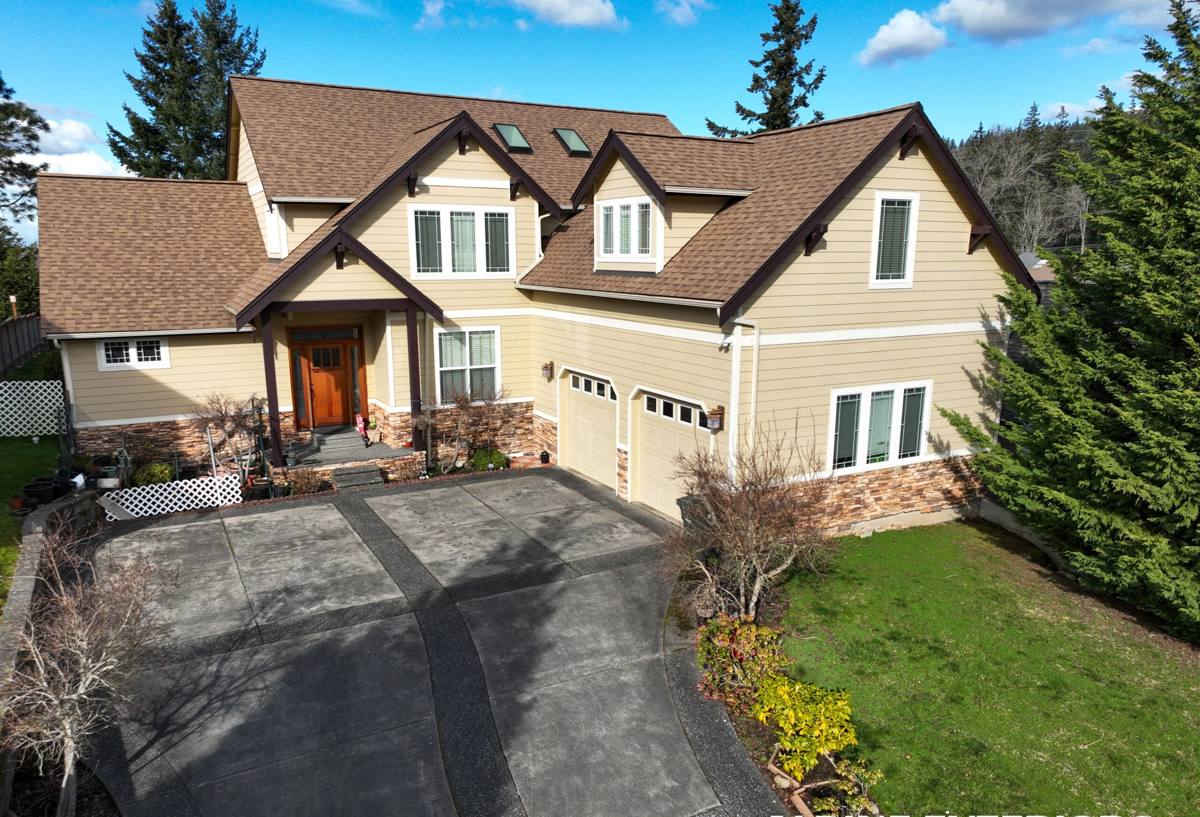
Why Roofs in This Neighborhood Fail the Way They Do
Moss and Organic Growth
The tree canopy around Silver Beach keeps roofs shaded and damp for much of the year, which is exactly what moss, moss spores, and algae need to establish. Moss doesn't just sit on top of shingles looking bad — its root structures work into the granule layer and lift shingle edges, and the mats it forms hold water against the roof deck long after the rest of the neighborhood has dried out. A roof that looks fine from the ground can have moss doing real damage underneath.
Moisture Intrusion at Transitions
Almost every leak we trace back to its source starts at a transition point: flashing around chimneys and skylights, valleys where two roof planes meet, or the step flashing along a wall. Lake-effect humidity and prolonged rain seasons put more cycles of expansion, contraction, and saturation on these details than a typical dry-climate roof ever sees. Sealant that would last a decade in Eastern Washington can fail here in half that time if it wasn't installed with the right technique to begin with.
Salt Air and Metal Fatigue
Lake Whatcom isn't the ocean, but the broader Whatcom County marine air pattern still carries enough salt content to accelerate corrosion on exposed fasteners, flashing, and any lower-grade metal components. Once flashing starts to pit or rust at the edges, it stops shedding water cleanly and becomes a leak point rather than a barrier.
Gutter and Drainage Overload
Heavy rain events dump a lot of water fast, and if gutters are undersized, clogged with needles and leaf litter from the surrounding trees, or pitched wrong, water backs up under the roof edge instead of running off. That backup is one of the more common causes of rot we find at eaves and fascia boards during repair calls.
What a Correct Roof Repair Actually Involves
A roof repair done right isn't just "find the drip, patch the drip." It's a diagnostic process followed by a repair that addresses the actual failure, not just its symptom.
- Interior and attic inspection first. Staining on drywall or attic sheathing rarely lines up exactly with where water enters the roof — water travels along rafters and decking before it shows itself indoors.
- Exterior roof inspection. We check shingles or roofing material condition, flashing at every penetration, valley condition, moss and debris buildup, and the state of the roof deck itself where accessible.
- Root-cause identification. Is it a failed sealant joint, lifted shingles from moss growth, corroded flashing, a clogged gutter backing water up, or nail pops from age and movement? Each has a different fix.
- Repair matched to cause. This might mean replacing a section of flashing, resetting and re-sealing shingles, treating and removing moss growth properly, or replacing rotted decking before anything gets covered back up.
- Follow-up recommendations. If we see a drainage issue or a maintenance gap that will cause the same problem again, we tell you — even if it's not something we're being paid to fix that day.
Common Silver Beach Roof Repairs, Compared
| Repair Type | Typical Cause Here | General Cost Range | Urgency |
|---|---|---|---|
| Moss removal & treatment | Tree shade, prolonged dampness | Low to moderate | Preventive — before it lifts shingles |
| Flashing repair/replacement | Salt-air corrosion, sealant fatigue | Moderate | High if actively leaking |
| Shingle section replacement | Wind, age, moss root damage | Low to moderate | Moderate to high |
| Valley repair | Heavy rain volume, debris buildup | Moderate | High if actively leaking |
| Deck/sheathing repair | Long-term undetected moisture | Moderate to high | High — structural concern |
| Gutter/drainage correction | Undersized or clogged systems | Low to moderate | Preventive, but time-sensitive before rain season |
These ranges are broad on purpose — every roof, pitch, access situation, and damage extent is different. We give you a firm number after a real inspection, not a phone-quote guess.
Signs a Silver Beach Homeowner Shouldn't Ignore
- Dark streaking or visible moss patches on north-facing or shaded roof slopes
- Granules collecting in gutters or at downspout outlets
- Water stains on ceilings, especially after a heavy rain stretch
- Daylight visible through the attic roof deck
- Curling, cracked, or lifted shingle edges
- Rusted or pitted flashing around chimneys, vents, or skylights
- Sagging sections along the roofline or at the eaves
- Gutters overflowing during moderate rain rather than just storms
Any one of these on its own might be minor. Two or more together usually means water has been getting in longer than it looks like from the ground.
Our Process for a Silver Beach Repair Call
We keep the process straightforward because homeowners have enough going on without a contractor making the logistics complicated.
- Inspection and diagnosis — we walk the roof (or use appropriate access equipment) and check the attic side, not just what's visible from the ground.
- Written scope and estimate — you get a clear explanation of what's failing, why, and what fixing it correctly involves, plus the cost, before any work starts.
- Repair work — scheduled around Whatcom County's wetter months when possible, since roofing work needs a reasonably dry window to seal correctly.
- Site cleanup — old material, debris, and moss removal residue hauled off; we don't leave a mess in a lakeside neighborhood.
- Honest follow-up — if we spot something else developing that isn't urgent yet, we'll tell you so you can plan for it instead of getting surprised.
Maintenance That Extends the Life of a Repair
A good repair can be undone by neglect just as easily as it can fail from bad workmanship. In a moss-heavy, wet, tree-shaded neighborhood like Silver Beach, a few habits make a real difference:
- Clear moss buildup annually, ideally before the wet season sets in
- Keep gutters and downspouts clear of needles and leaf litter through fall
- Trim back overhanging branches that keep sections of roof shaded and damp
- Have flashing and sealant checked every couple of years, especially around chimneys and skylights
- Address small leaks immediately rather than waiting for visible interior damage
A Note on Zinc or Copper Strips
Some homeowners ask about zinc or copper strips near the ridge as a moss deterrent. They can help slow regrowth on some roofs, but they're a supplement to removal and maintenance, not a replacement for it — especially in a shaded, high-moisture spot like this one where moss pressure is constant.
Why Local Experience in Silver Beach and Sudden Valley Matters
A roofer who mostly works drier, more exposed parts of Whatcom County can still do competent work, but they may not immediately recognize how much faster moss re-establishes here, or how much extra attention flashing and sealant joints need given the lake's humidity pattern. Crews who already work this specific pocket of Sudden Valley know which roof orientations hold moisture longest, which valley and flashing details tend to fail first in this climate, and how to time repair work around the wettest stretches of the year so the fix actually cures and seals properly instead of getting rained on before it sets.
That local pattern-recognition is what keeps a repair from becoming a callback. It's also why we don't treat every roof problem the same way just because the shingles look similar from the street.
When Repair Makes Sense vs. When It Doesn't
Not every roof issue in Silver Beach needs a full replacement, but not every roof should be patched indefinitely either. As a general rule:
- Repair usually makes sense when the roofing material itself is still in reasonable shape and the problem is isolated — a flashing failure, a localized moss issue, one damaged section.
- Replacement becomes the more honest recommendation when the roof deck has widespread rot, the roofing material is past its expected service life across most of the surface, or repairs would just be chasing new failures every season.
We'll tell you which category your roof falls into and explain why, not just push whichever option costs more.
If you're seeing moss buildup, a slow leak, or aging flashing on a Silver Beach or Sudden Valley home, we're happy to take a look and give you a straight answer. Fill out the form below for a free, no-pressure estimate.