 Sudden Valley
 Building a Deck That Can Actually Handle South Hill's Weather
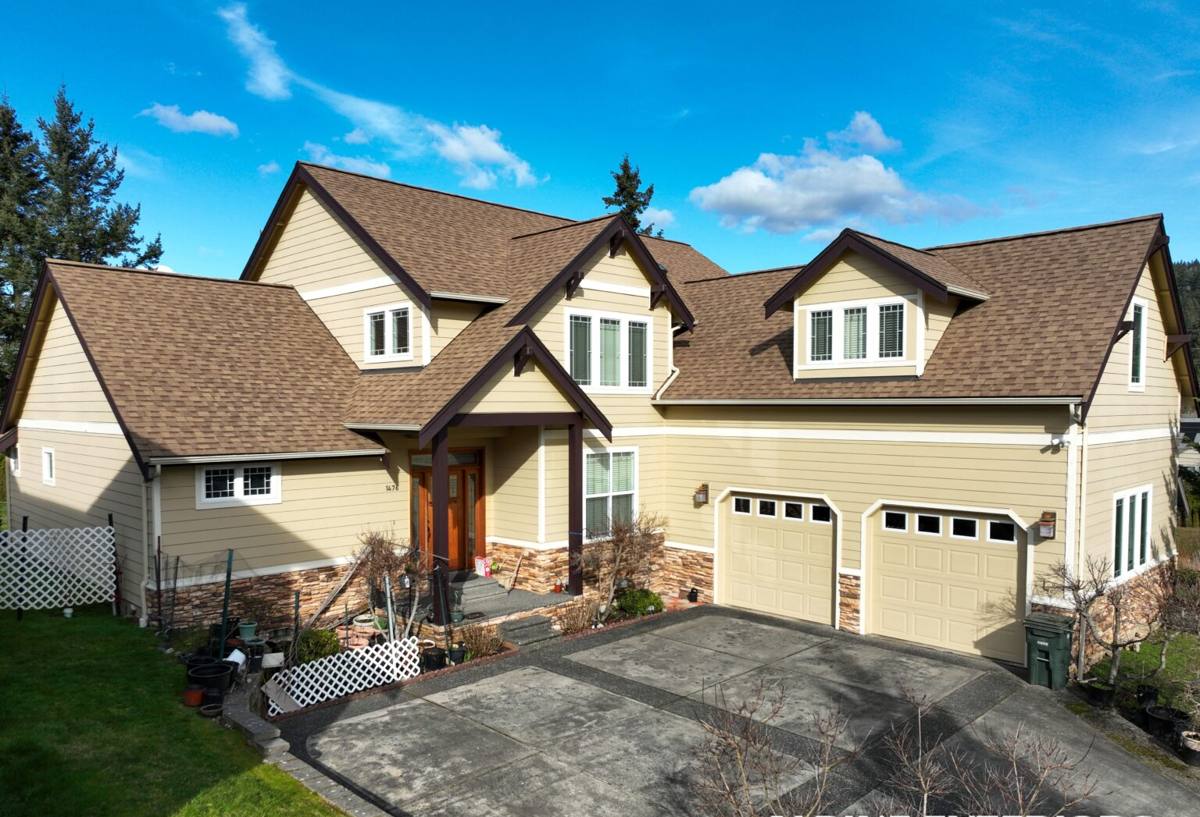
South Hill sits inside the Sudden Valley community in Whatcom County, on wooded, sloped ground under heavy conifer cover. That combination of terrain and tree canopy creates a specific set of problems for outdoor structures: shaded, slow-drying surfaces, a long wet season, driving rain that comes in sideways off the hill, and marine air moving inland off the Sound that carries a fine edge of salt with it. A deck built to a generic, one-size-fits-all spec will show its age here faster than the same deck would in a drier inland climate. A deck built for these specific conditions won't.
This page covers what a custom deck for a South Hill property actually needs to hold up long-term, what we do differently because of the local climate, and how our process works from first visit to finished project.
What the Local Climate Actually Does to a Deck
Moisture and Slow Drying
Whatcom County gets a lot of rain, and South Hill's tree cover means a deck surface often stays damp long after the rain stops. Water that would evaporate off an open, sunny deck in a few hours can sit in shaded corners and against the house for a day or more. That extra dwell time is what turns ordinary rain exposure into rot, especially at the ledger board (where the deck attaches to the house), around post bases, and at any spot where two pieces of wood sit tight against each other with no airflow between them.
Salt Air and Hardware Corrosion
Driving rain in this part of Whatcom County often carries a trace of salt from marine air moving in off the Sound. It's not the same exposure as a beachfront deck, but it's enough to matter over years, and it shows up first in the hardware: screw heads streaking rust down a fresh board, joist hangers pitting, nail heads popping as they corrode and lose their grip. Fasteners and connectors rated for the exposure last; fasteners rated for a dry climate don't.
Moss, Algae, and Surface Wear
Shade plus moisture is exactly what moss and algae need. Left alone, a film builds up on decking boards, especially on the north side or under overhangs, and it does two things: it makes the surface slick underfoot, and it holds moisture directly against the board or composite cap, which shortens the life of whatever's underneath. A deck that never sees direct sun needs a maintenance rhythm built around that reality, not the assumption that sun and wind will keep it dry on their own.
What a Correctly Built Deck Involves Here
None of this is exotic. It's standard deck-building practice applied consistently, in the details that are easy to skip if you're not thinking about this specific climate.
- Ledger flashing: A metal flashing and self-adhering membrane at the ledger board, installed so water is shed away from the house framing rather than wicking into the rim joist. This is the single most common failure point on decks that were built or attached without it.
- Joist tape: A self-adhering membrane over the top of every joist that seals end grain and screw penetrations, so water can't sit in the wood fiber through a long wet season.
- Corrosion-resistant fasteners and hardware: Screws, joist hangers, and structural connectors rated for exterior, coastal-influenced exposure, not the cheapest coated fastener at the hardware store.
- Board spacing for drainage and airflow: Gaps sized so water sheds through instead of pooling on the surface or trapping debris that holds moisture against the board.
- Footings sized for the site: Depth and bearing sized for frost, load, and — on sloped South Hill lots — soil that may shift more than flat ground.
The table below is a quick reference on hardware choice, since it's the detail most often shortcut on a budget build.
| Hardware Type | How It Holds Up Here | Where We Use It |
|---|---|---|
| Standard coated (electro-galvanized) screws | Corrodes visibly within a few seasons under this rain and salt-tinged air | We don't use these on exterior structural connections |
| Hot-dip galvanized | Thicker zinc coating, holds up well to sustained moisture exposure | Structural hardware, joist hangers, framing connectors |
| Stainless steel | Best long-term corrosion resistance, no rust streaking on decking | Visible fasteners, ledger bolts, hardware near the coastal-influenced side of the property |
Choosing Decking Material for a Shaded, Wet Lot
There's no single "right" decking material for South Hill — there's a right material for your specific site, sun exposure, and how much upkeep you actually want to do. Here's the honest trade-off between the two main paths.
Wood Decking
Cedar and pressure-treated fir are less expensive upfront and, when properly maintained, offer good grip underfoot. The trade-off is maintenance: on a shaded lot, wood needs regular cleaning to keep moss and algae from taking hold, and periodic sealing to keep water from soaking into the grain. Skip that maintenance for a couple of seasons on a shaded deck and you'll see it in the wood's condition.
Composite and PVC Decking
Composite and PVC boards don't rot and don't need sealing, which is a real advantage on a lot that doesn't get much sun. They aren't immune to the local climate, though — a smooth-surfaced composite can still grow a thin film of algae in deep shade and gets just as slick as wood if it's not washed off periodically. We steer shaded South Hill decks toward boards with a textured or grooved surface specifically because a slick composite board in the rain is a real fall hazard, not just a cosmetic issue. Composite and PVC also cost more upfront, and warranty terms vary by manufacturer, so it's worth reading what's actually covered before assuming "low maintenance" means "no maintenance."
| Factor | Wood (Cedar / Treated Fir) | Composite / PVC |
|---|---|---|
| Upfront cost | Lower | Higher |
| Maintenance in shade | Annual cleaning and periodic sealing | Periodic washing, no sealing needed |
| Moss/algae resistance | Lower — bare wood absorbs moisture | Higher, but surface film still forms in deep shade |
| Slip risk when untreated | Increases with moss/algae buildup | Increases on smooth caps; lower on textured caps |
| Typical lifespan with proper care | Good, shorter than composite | Longer, backed by manufacturer warranty |
Hillside Lots: Elevation, Footings, and Guardrails
Sudden Valley's terrain means a lot of South Hill decks aren't simple ground-level platforms — they're elevated off a sloped back or side yard, sometimes multi-level to work with the grade. That changes the engineering, not just the look:
- Footings: On a slope, footings may need to go deeper or use a different foundation approach (poured concrete piers or helical piers) to reach stable bearing soil, especially where the ground stays saturated for long stretches of the year.
- Post height and bracing: Taller support posts need additional bracing to resist lateral movement — this isn't optional once you're a few feet off grade.
- Guardrails: Most building codes, including the ones that apply here, require a guardrail once a deck surface is more than 30 inches above the ground below it, with baluster spacing and rail height set by code — not by preference.
- Stairs: Elevated decks mean stairs, and stairs on a wet, shaded property need consistent rise-and-run and, ideally, lighting, since a lot of the year this part of Whatcom County is dark well before a typical evening deck sit-down.
Drainage, Moss Control, and Ongoing Care
A well-built deck still needs upkeep in this climate — the difference is how much and how often. This is the maintenance rhythm we walk every South Hill client through at handoff:
- Sweep needles and leaf debris off the deck surface regularly — trapped organic matter under a shade canopy is what feeds moss and holds moisture longest.
- Route gutters and downspouts away from the deck footprint so roof runoff isn't adding to what the deck already deals with.
- Wash the deck surface once or twice a year to break up moss and algae film before it builds into a slip hazard.
- Check ledger flashing and any visible fastener heads annually for early signs of rust or water staining.
- Keep drainage gaps between boards clear of debris so water keeps shedding through as designed.
- Trim back overhanging branches where practical to increase sun exposure and speed drying time.
- Reseal wood decking on the manufacturer's recommended schedule — don't wait until it visibly needs it.
- Check post bases each season for standing water or soil buildup against the wood or hardware.
Permits and Code Basics
Most new decks and deck replacements that attach to the house or sit above a certain height require a building permit, and inspections typically check footings, framing, and guardrail compliance before the decking goes down. Requirements and review timelines vary by jurisdiction, so we handle the permit application and inspection scheduling as part of the project rather than leaving it for the homeowner to sort out. If your existing deck was built without a permit — which happens more often than people expect on older Sudden Valley properties — we'll flag anything that doesn't meet current code as part of our assessment, rather than build over a problem.
Our Process for a South Hill Deck Project
- On-site assessment: We look at slope, drainage patterns, sun exposure, and how the deck ties into the existing house before recommending a design.
- Design and material selection: We walk through wood versus composite trade-offs for your specific site, not a generic pitch, and settle on a layout that works with the grade instead of fighting it.
- Permitting: We prepare and submit what's required and schedule inspections at the appropriate stages.
- Site prep and footings: Footings are sized and placed for the actual soil and slope conditions on your lot, not a standard flat-ground assumption.
- Framing with flashing and joist tape: Every ledger and joist gets the moisture protection detailed above before any decking goes on.
- Decking, railing, and stairs: Installed with corrosion-resistant fasteners throughout and drainage spacing set correctly the first time.
- Final walkthrough: We go over the maintenance schedule specific to your deck's sun exposure and material so you know what it actually needs, and when.
Why Hire a Crew That Already Works in South Hill
A deck contractor who's worked this specific area knows the local permitting process, has already seen how the slope and tree cover on these lots behave through a wet season, and isn't guessing at hardware specs based on a drier climate's standard practice. That local track record matters more on a deck than almost any other exterior project, because a deck's structural connections are largely hidden once it's built — the quality of the ledger flashing, the fastener grade, and the footing work underneath is exactly what you can't see and can't easily check later. Hiring a crew that treats those details as standard, not upgrades, is what separates a deck that needs real repair work in five years from one that doesn't.
If you're planning a new deck or replacing one that's showing its age, we're happy to come take a look and walk the site with you. There's a free, no-pressure estimate form below — use it to get a straight answer on what your South Hill property actually needs.